

The world of Westeros has always been defined by its long memory. In the original Game of Thrones series, the ghosts of the past—from the "Mad King" Aerys to the tragic Elia Martell—haunted the corridors of power for decades, driving the motivations of protagonists and villains alike. However, as House of the Dragon enters its third season, a growing contingent of the fanbase is voicing a sharp, disillusioned critique: the show appears to have developed a convenient case of amnesia regarding one of its most horrific events.
The recent premiere and subsequent episodes of Season 3 have placed Rhaenyra Targaryen’s ascent to the Iron Throne at the center of the narrative. While the political maneuvering and the "Queen in the West" arc have been praised for their scale, a glaring omission in the dialogue has left viewers questioning the show’s internal logic. The brutal murder of Prince Jaehaerys—the young son of King Aegon II and Queen Helaena—seems to have vanished from the collective consciousness of the characters, leading to accusations of "gaslighting" and "inconsistent writing."
Main Facts: The "Blood and Cheese" Controversy Re-Ignited
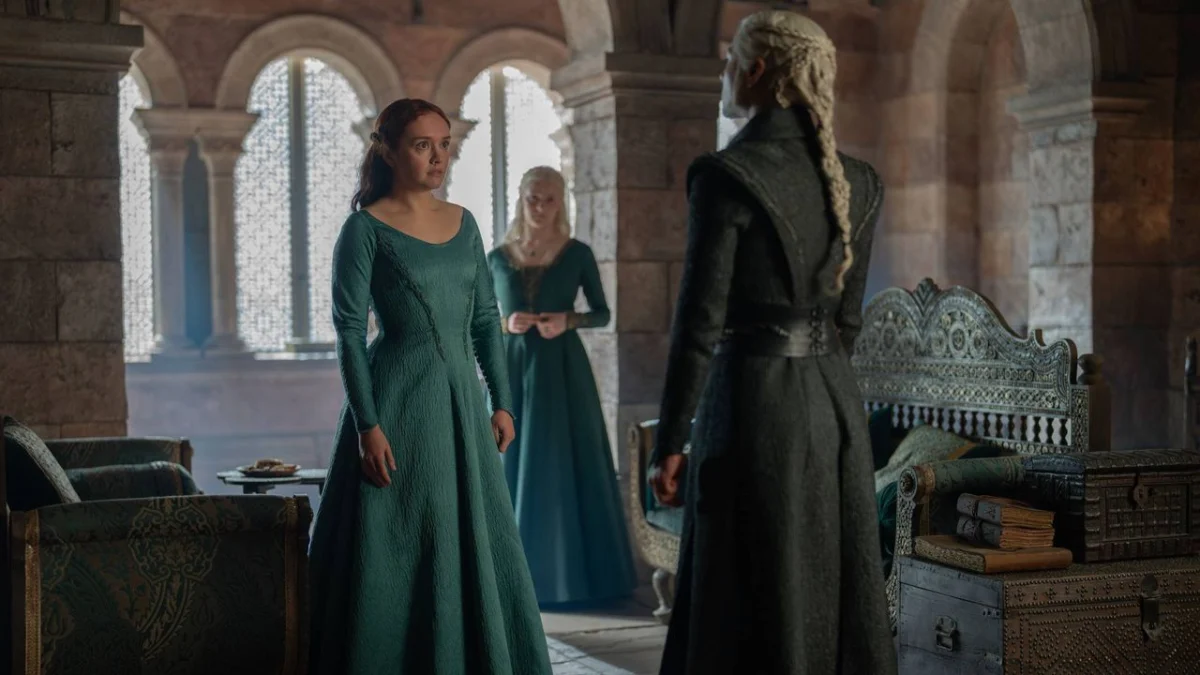
The core of the current controversy stems from a specific interaction in House of the Dragon Season 3, Episode 3. In a pivotal scene, Rhaenyra Targaryen engages in a tense, emotionally charged conversation with her childhood friend-turned-rival Alicent Hightower and Alicent’s daughter, Helaena. During this exchange, Rhaenyra pointedly references the loss of her own sons, Jacaerys and Lucerys, using her grief as a moral shield and a justification for her claim to the throne.
The friction arises from the fact that neither Alicent nor Helaena—the grandmother and mother of the murdered Prince Jaehaerys—bring up the boy’s death in response. For the audience, the irony was deafening. Rhaenyra’s suggestion that she "couldn’t imagine" certain depths of loss while standing before a woman who watched her toddler be decapitated on Rhaenyra’s husband’s orders felt like a narrative oversight of massive proportions.
Fans have taken to social media platforms, most notably Reddit and X (formerly Twitter), to express their disbelief. The sentiment is clear: by failing to acknowledge the "Blood and Cheese" incident in scenes where it is most relevant, the showrunners are accused of sanitizing Rhaenyra’s "Team Black" to the point of narrative dishonesty.
Chronology: From a Son for a Son to Narrative Silence
To understand the weight of this omission, one must look at the timeline of events that led the Dance of the Dragons to its current, blood-soaked state.
The Catalyst: The Death of Lucerys Velaryon
The cycle of personal vengeance began in the Season 1 finale. Aemond Targaryen, riding the massive Vhagar, pursued Rhaenyra’s son Lucerys across the skies of Storm’s End. While Aemond appeared to lose control of his dragon, the result was the same: Lucerys and his dragon Arrax were torn apart. This was the first "blood" shed between the two factions, transforming a cold war into a hot one.
The Retaliation: "Blood and Cheese"
In the Season 2 premiere, Daemon Targaryen, acting as Rhaenyra’s prince-consort, sought "a son for a son." He hired two assassins—a disgruntled City Watchman (Blood) and a Royal Ratcatcher (Cheese)—to infiltrate the Red Keep. Their target was Aemond, but unable to find him, they settled for King Aegon’s heir. In a sequence that mirrored the most harrowing moments of the original series, they forced Queen Helaena to identify her son before sawing off the six-year-old’s head while she watched in frozen horror.
The Immediate Aftermath
The show initially treated this event with the gravity it deserved. Aegon II spiraled into a destructive, vengeful rage, ordering the public execution of every ratcatcher in King’s Landing. A grand, somber funeral procession paraded Jaehaerys’s small casket through the streets, with the Greens using the "child-killer" label to turn the smallfolk against Rhaenyra.
The Season 3 Pivot
However, as Season 3 has progressed, the political and emotional fallout of this event has seemingly evaporated. The "child-killer" reputation that should, by all rights, haunt Rhaenyra’s PR campaign in the capital is rarely mentioned. More importantly, the personal trauma of the characters involved—specifically Helaena and Alicent—appears to have been sidelined in favor of moving the plot toward Rhaenyra’s consolidation of power.
Supporting Data: The Digital Backlash and "The Ned Stark Standard"
The frustration within the fandom is not merely about a single missed line of dialogue; it is about the perceived degradation of the "Westeros Brand" of storytelling. On Reddit, one highly upvoted thread titled "Why T.F. Does No One Acknowledge Jaehaerys?!?!" became a lightning rod for this criticism.
"The Blacks sawed off the head of a 6-year-old little boy in front of his mother and no one will acknowledge it," one user wrote. "I will not be gaslit! Complaining about the loss of her sons in front of the mother and grandmother of the innocent little boy who was decapitated on orders from her prince-consort… Unfathomably shit writing."
The data from social media engagement suggests a growing "nostalgia" for the writing style of the early seasons of Game of Thrones. Fans frequently cite the "Ned Stark Standard." In the original series, the death of Ned Stark in Season 1 was the engine that drove the plot for the next four seasons. It defined Robb Stark’s rebellion, Arya’s kill list, Sansa’s trauma, and Joffrey’s reputation. Similarly, the "Mountain and the Viper" duel was fueled by the decades-old murder of Elia Martell.
In contrast, critics argue that House of the Dragon treats death as a "shock factor" tool rather than a foundational narrative element. "Remember when death mattered?" asked another fan. "Not in HOTD. Babies get beheaded and everybody just forgets."
Official Responses and Creative Context
While the showrunners, including Ryan Condal, have not issued a direct statement regarding this specific Reddit-led backlash, their previous comments on the adaptation process offer some insight into the creative choices being made.
House of the Dragon is based on George R.R. Martin’s Fire & Blood, a "fake history" book written from the perspective of biased maesters. This gives the showrunners significant leeway to interpret what "actually" happened. In the book, Helaena Targaryen is driven to madness and eventual suicide by the grief of Jaehaerys’s death. In the show, Helaena is portrayed as "neurodivergent" or having prophetic "dragon dreams," which the writers use to explain her detached reaction to trauma.
However, this creative choice has backfired for many viewers. By making Helaena so detached that she doesn’t confront Rhaenyra about her son’s murder, the show removes the moral complexity of the conflict. It allows Rhaenyra to remain a "heroic" figure without having to answer for the atrocities committed in her name, a move that some critics label as "protagonist syndrome."
Implications: The Risks of Narratively "Cleaning Up" the Dance
The decision to downplay the Jaehaerys murder has significant implications for the remainder of the series and the broader Game of Thrones franchise.
1. Erosion of Moral Ambiguity
The brilliance of George R.R. Martin’s world lies in its "grey" morality. There are no true heroes in the Dance of the Dragons—only varying degrees of ambition and cruelty. By allowing Rhaenyra to ignore the Blood and Cheese incident, the show risks turning a complex civil war into a standard "Good vs. Evil" story, which traditionally alienates the core audience of the franchise.
2. Loss of Stakes
If the murder of a royal heir in his own bed has no lasting political or personal consequences, the "stakes" of the war are diminished. Viewers are less likely to feel the weight of future deaths if the narrative has a habit of moving on too quickly.
3. Character Inconsistency
Alicent Hightower, established as a fiercely protective mother and a woman of deep religious conviction, seems fundamentally changed if she can stand in a room with the woman responsible for her grandson’s death and not utter a word of reproach. This leads to a sense of "character assassination" where the needs of the plot override the established personality of the players.
4. The "Team Black" Bias
The most frequent accusation leveled against Season 3 is that the writers are biased toward "Team Black." By minimizing the Greens’ losses and maximizing the Blacks’ grievances, the show creates a lopsided narrative that contradicts the source material’s intent to show the tragedy of both sides.
Conclusion: A Need for Narrative Accountability
As House of the Dragon continues its weekly run on HBO and Max, the pressure is on the writing team to bridge the gap between high-octane dragon battles and consistent character work. The "Blood and Cheese" incident was a turning point in the lore of Westeros; for it to be treated as a footnote is a disservice to the source material and the audience’s intelligence.
For the show to maintain its status as a worthy successor to Game of Thrones, it must remember that in Westeros, words are wind—but blood is memory. If the characters continue to forget the children lost in the crossfire, the audience may soon find it hard to care about who eventually sits on the throne.
The upcoming episodes of Season 3 will be a litmus test for the series. Will the writers lean into the uncomfortable reality of Rhaenyra’s complicity, or will they continue to let the ghost of Prince Jaehaerys fade into the background of a story that has forgotten how to bleed?

