

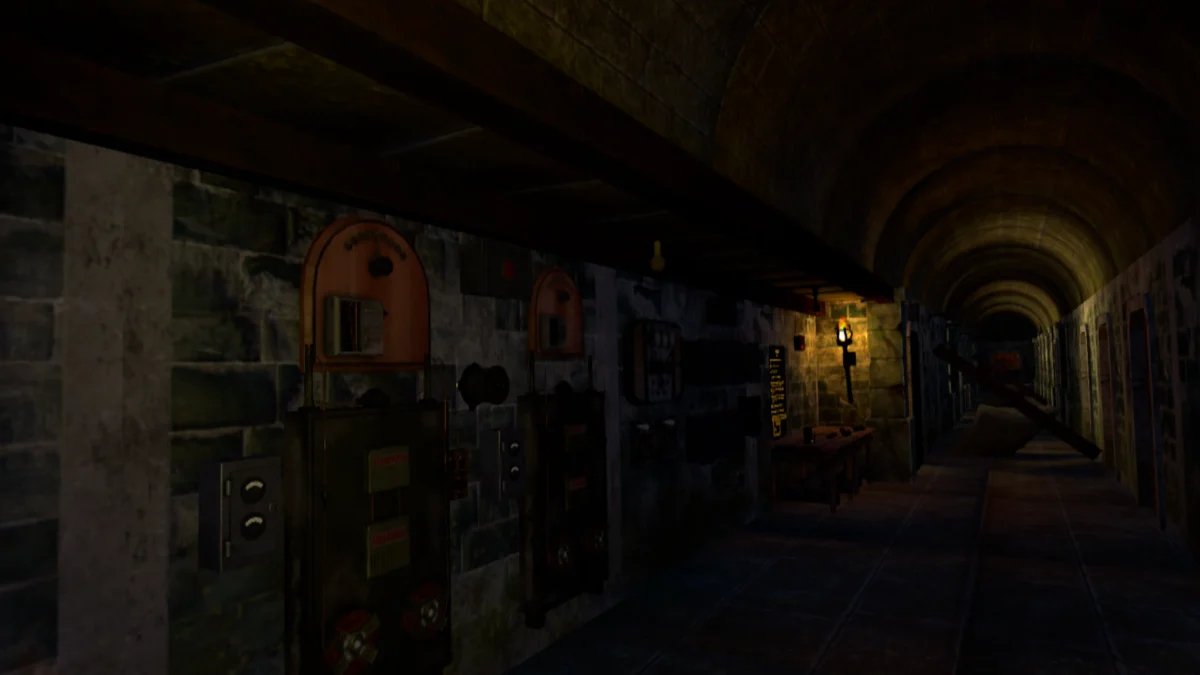
The landscape of modern education is undergoing a seismic shift, moving away from static textbooks and toward interactive, experiential learning. At the recent Augmented World Expo (AWE), one project stood out for its unique marriage of narrative-driven gaming and technical pedagogy: The Castle. Developed by Chameleon Studios, this dungeon-themed virtual reality (VR) experience transforms the often-daunting subject of electrical engineering into a tactile, puzzle-based escape room. By placing users in the shoes of a steampunk-era apprentice, Chameleon Studios is proving that the best way to master complex physics is not by memorizing equations, but by "fixing" the world around you.
The Premise: A Frankenstein-Inspired Laboratory
In The Castle, the player assumes the role of an apprentice to Nigel Kupferman, a retired baron with an unhealthy obsession with Mary Shelley’s Frankenstein. The narrative conceit is as clever as it is ambitious: Kupferman has purchased a sprawling, gothic castle to recreate the infamous experiment that brought life to Victor Frankenstein’s creature.
The game begins at a moment of catastrophic failure. According to Chameleon Studios Managing Director Cecil Colvin, the immense power required to animate a living being would have inevitably caused a massive electrical surge, blowing out every circuit, fuse, and component within the castle’s infrastructure. As the player, your task is to navigate the aftermath, perform essential repairs, and restore power to the dark, labyrinthine facility.
Rather than presenting dry lectures, the game uses Kupferman as a narrative guide. Through voice-over narration, the baron explains the underlying physics of each electrical component you touch, framing technical lessons as vital steps in his quest to conquer death. It is a brilliant example of "stealth learning," where the player is so focused on the narrative stakes that they absorb complex electrical concepts almost by accident.
Chronology: From Concept to the Basement
The development of The Castle represents a long-term vision for Chameleon Studios. The exhibition floor at AWE showcased the first of four planned levels: "The Basement."
Phase 1: The Foundation (The Basement)
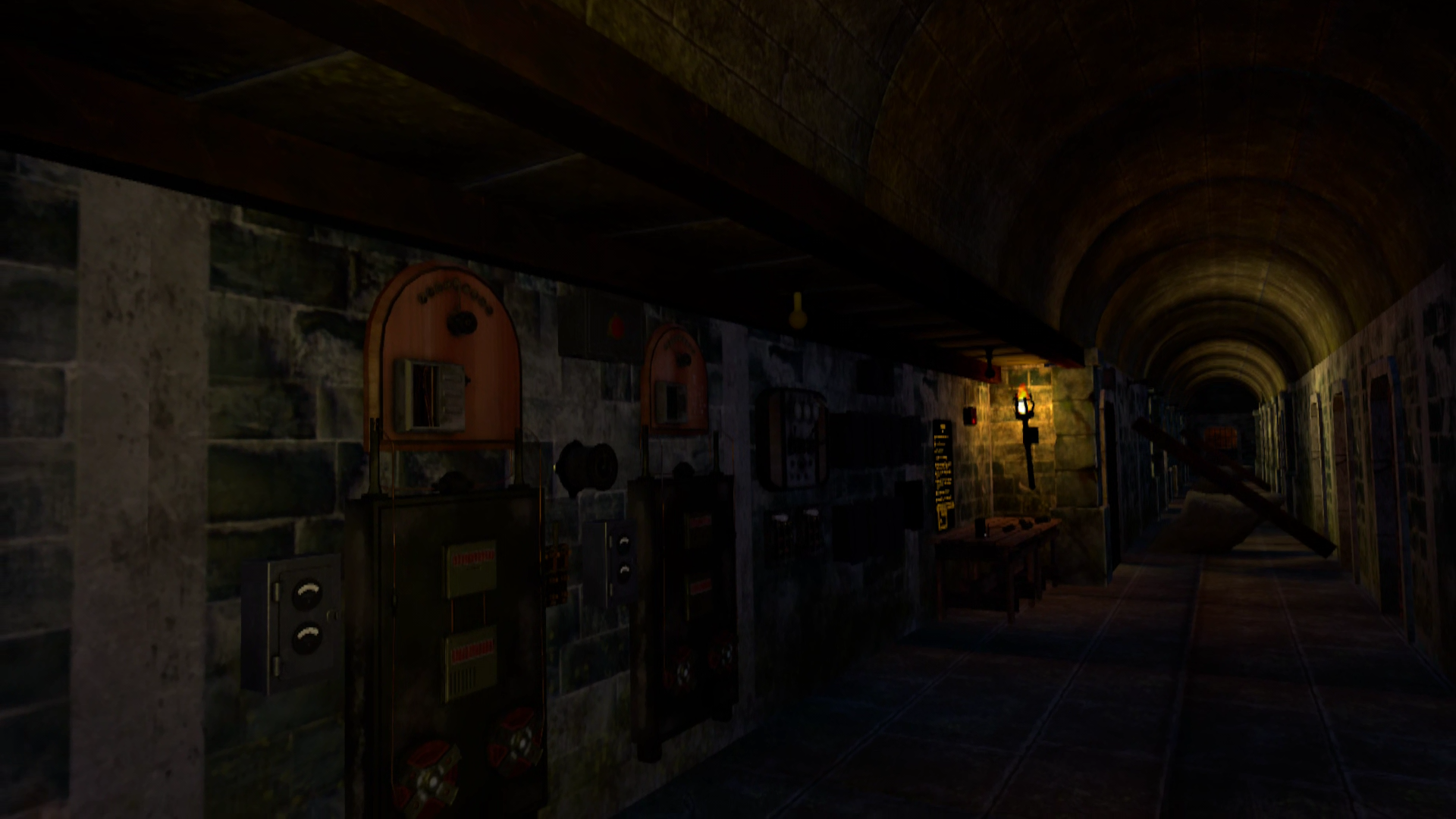
The current demo, which takes approximately 15 minutes to complete, serves as an introductory module. Players are tasked with rudimentary but essential electrical activities: replacing blown fuses, connecting batteries in series and parallel, and taking voltage measurements. The simplicity of the mechanics is deliberate; by removing the clutter of complex inventory systems or convoluted control schemes, the developers ensure that the user’s cognitive load is reserved entirely for the physics at hand.
Phase 2: Scaling Complexity
The roadmap for The Castle involves a modular expansion. According to Colvin, the subsequent three levels will significantly increase in both narrative intensity and technical depth. As the player moves from the basement into the upper reaches of the castle, the electrical challenges will transition from basic circuit repairs to complex, multi-stage engineering problems.
Phase 3: The Narrative Twist
Chameleon Studios has teased that Kupferman’s motives may not be as benevolent as they seem. By layering a sense of mystery and potential "ulterior motives" into the instructions, the developers keep the player engaged on two fronts: the mechanical task of engineering and the narrative intrigue of a mad scientist’s true intentions.
Supporting Data: Why VR Works for STEM
The pedagogical effectiveness of The Castle is rooted in the "learning-by-doing" methodology. Traditional education often suffers from a disconnect between theoretical knowledge—such as Ohm’s Law or circuit resistance—and the physical world. VR bridges this gap by allowing students to perform tactile experiments without the safety risks or costs associated with high-voltage hardware.
Key Learning Features Observed:
- Tactile Interaction: Unlike a simulation on a flat screen, VR forces the user to physically connect wires, twist knobs, and hold components. This spatial memory reinforcement is a well-documented phenomenon in educational psychology.
- Immediate Feedback Loops: If a fuse is inserted incorrectly or a circuit is incomplete, the game environment reacts instantly—or fails to light up. This immediate cause-and-effect relationship is the hallmark of effective scientific inquiry.
- Removal of "Guardrails": The current iteration is designed for accessibility, but as developers move toward future versions, the potential to remove UI "training wheels" offers a powerful assessment tool. By forcing players to rely on their understanding of the physics rather than button prompts, the game becomes a high-fidelity exam of the user’s competency.
Official Perspectives: The Philosophy of Chameleon Studios
During my time at the AWE booth, I spoke at length with Cecil Colvin about the challenges of balancing gameplay and curriculum. In a loud, bustling expo hall, the clarity of the design was immediately apparent. Even without audio assistance—which forced staff to manually relay Kupferman’s instructions—the visual cues provided by the wall signage and the intuitive nature of the object manipulation kept the experience moving.
"Education is first and foremost," Colvin emphasized. This prioritization is evident in the control scheme. Players do not have to struggle with complex VR menu navigation. Instead, they interact with the world through simple, intuitive gestures. For a student who may have never picked up a VR headset, the learning curve is nearly nonexistent. By stripping away the "gaming" fluff, Chameleon Studios has created an environment where the science is the hero of the experience.
The Broader Implications for Education
The success of The Castle serves as a proof-of-concept for the future of vocational training and STEM education. As VR hardware continues to become more affordable and portable, the barriers to implementing these types of tools in high schools and technical colleges are rapidly dissolving.
1. Safety and Accessibility
Training in electrical engineering usually requires expensive equipment and careful supervision to prevent injury. The Castle allows students to fail safely. The "blown-out" nature of the castle provides a consequence-free environment to experiment with high-voltage concepts, allowing students to grasp the dangers of electricity without the real-world risks.
2. Bridging the Engagement Gap
For many students, physics is perceived as a collection of abstract, intimidating numbers. By contextualizing these numbers within a high-stakes, gothic mystery, the content becomes emotionally resonant. A student who struggles to remember the difference between series and parallel circuits might find it much easier to recall when it is the only way to power a mysterious laboratory machine in a VR dungeon.
3. The Future of Certification
Looking further ahead, one can envision a world where VR-based mastery of these concepts could supplement or even replace certain aspects of technical certification. If a student can demonstrate proficiency in a complex virtual circuit-repair task, that data serves as a tangible, quantifiable record of their skill level.
Conclusion: A Blueprint for Tomorrow
The Castle is more than just a VR experience; it is a blueprint for how we might teach the next generation of engineers, electricians, and scientists. By moving away from the "read-and-regurgitate" model of education and embracing the "experience-and-execute" model, Chameleon Studios has created a platform that is as intellectually rewarding as it is entertaining.
While the demo at AWE was a brief 15-minute excursion, it left a lasting impression. The ability to distill complex physical phenomena into tactile, immersive challenges is a powerful weapon in the educator’s arsenal. As the project matures and the narrative arc of Nigel Kupferman reaches its conclusion, it is likely that The Castle will serve as a foundational example of how immersive technology can turn even the most abstract theory into a thrilling, hands-on reality.
For those interested in following the development of this project, further information is available on the official Chameleon Studios website. As the lines between virtual and physical reality continue to blur, projects like The Castle ensure that the future of education will be anything but boring.

