

The journey of Sid Meier’s Civilization 7 since its launch has been, by many accounts, a turbulent one. As the latest entry in one of the most storied franchises in gaming history, the expectations were monumental. However, initial reception was marred by rigid mechanics and design choices that many long-time fans found alienating. Now, over a year into its lifecycle, the tide appears to be turning. With the implementation of the massive "Test of Time" update in May 2026 and subsequent refinements in June, Firaxis Games has demonstrated a newfound willingness to iterate, pivot, and listen to its community. While the game still faces challenges, the current trajectory suggests a bright, albeit evolving, future for the 4X titan.
The Chronology of Change: From Launch to "Test of Time"
To understand the significance of these recent patches, one must look at the state of Civilization 7 at release. The game launched with a controversial "age-swapping" mechanic, which forced players to transition to entirely new civilizations at the start of each historical era. While conceptually ambitious, the execution restricted player agency, effectively forcing historical roles onto players regardless of their previous strategic choices.
The community pushback was immediate and vocal. Players felt that their long-term narratives—the stories of building a singular, persistent empire—were being dismantled by a system that felt more like a series of disconnected mini-games than a cohesive historical epic.
In response, the "Test of Time" update, launched in late May 2026, served as a fundamental pivot point. It introduced the ability to maintain one’s original leader and civilization throughout the entire duration of a match. This shift was accompanied by the introduction of the "Apex Age" system, where civilizations enjoy unique bonuses during their historical peak, followed by a "time-tested" phase that allows them to remain functional and relevant through late-game mechanics like syncretism. By late June 2026, a secondary patch refined the nuances of government policies and happiness, addressing lingering issues in how empires managed internal stability.
Core Structural Improvements: Agency and Identity
The most profound impact of these updates lies in the restoration of player agency. The "Test of Time" patch essentially saved the game’s core identity by allowing for continuity. By opting to stick with a leader, players can now cultivate a true sense of imperial progression.
The Apex Age and Syncretism
The new system of "Apex Ages" and "time-tested" civs provides a much-needed layer of tactical depth. Players are no longer forced to abandon their identity but are instead encouraged to adapt. During a "time-tested" age, the introduction of syncretism—the ability to adopt a feature from another civilization that has reached its Apex—is a masterstroke of design. It allows for a historical "mash-up" that feels organic rather than forced. In a recent playthrough, this flexibility meant the difference between a static, predictable game and one where strategic adaptation felt meaningful. Players can now choose to either "affirm" their traditional bonuses or branch out into new, syncretic paths, creating a level of replayability that was absent at launch.
Victory Conditions: From Gimmick to Strategy
Victory conditions have also undergone a radical overhaul. Previously, winning felt like a frantic, often tedious race to complete specific, unrelated tasks. Today, the economic and cultural victory paths are tied to cumulative metrics. Economic victory is now driven by GDP—a reflection of a nation’s total infrastructure, trade, and resource management—rather than a gimmick involving treasure fleets. Similarly, cultural victory relies on tourism, which integrates naturally into city planning. This shift transforms the endgame from a checklist of chores into a logical culmination of one’s entire strategy.
Supporting Data: The "Triumph" System and Momentum
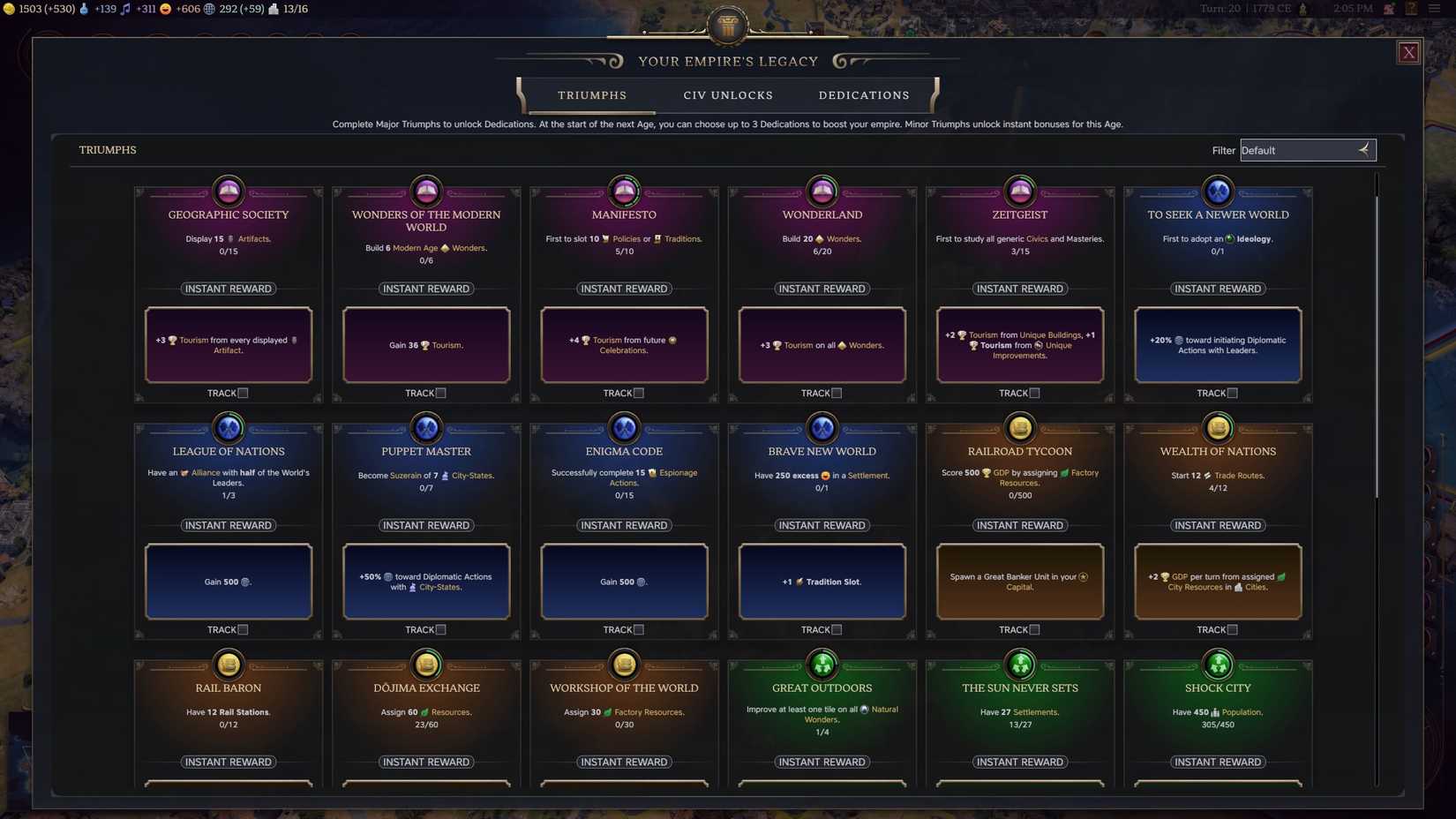
One of the most persistent issues in 4X games is the "mid-game slump." Firaxis has addressed this in Civilization 7 through the introduction of "Triumphs." These are essentially customizable, secondary goals that offer immediate rewards ("dedications").

While the major victory conditions provide the long-term horizon, Triumphs serve as the short-term motivation. Whether through expansion, exploration, or minor military skirmishes, these micro-goals ensure that players are constantly rewarded for their actions. It is a robust, modular system that keeps the momentum flowing, particularly during the Age of Exploration, which remains a pacing bottleneck for many players.
The Lingering Shadows: Where Work Remains
Despite the progress, Civilization 7 is not yet a perfect product. The "checklist" feeling still persists in certain areas, particularly regarding religion and diplomacy.
The Religious and Diplomatic Stagnation
Religion, while updated with new buffs, still feels largely inessential. In several playtests, religious crises—which are intended to cause social upheaval—frequently failed to manifest in any meaningful way. In one instance, a religious crisis was supposed to incite riots; instead, the populace remained blissfully indifferent, undermining the mechanical stakes of the system.
Diplomacy remains the game’s most glaring weakness. Despite having access to advanced government types and a surplus of influence, the actual interaction options with other leaders remain painfully limited. The current diplomatic system functions more like a "global mugging" mechanism—where influence is used to extort cities from opponents—rather than a nuanced system of international relations. The lack of depth here is stark when compared to the complexity of the updated economic and cultural systems.
Happiness and City Planning
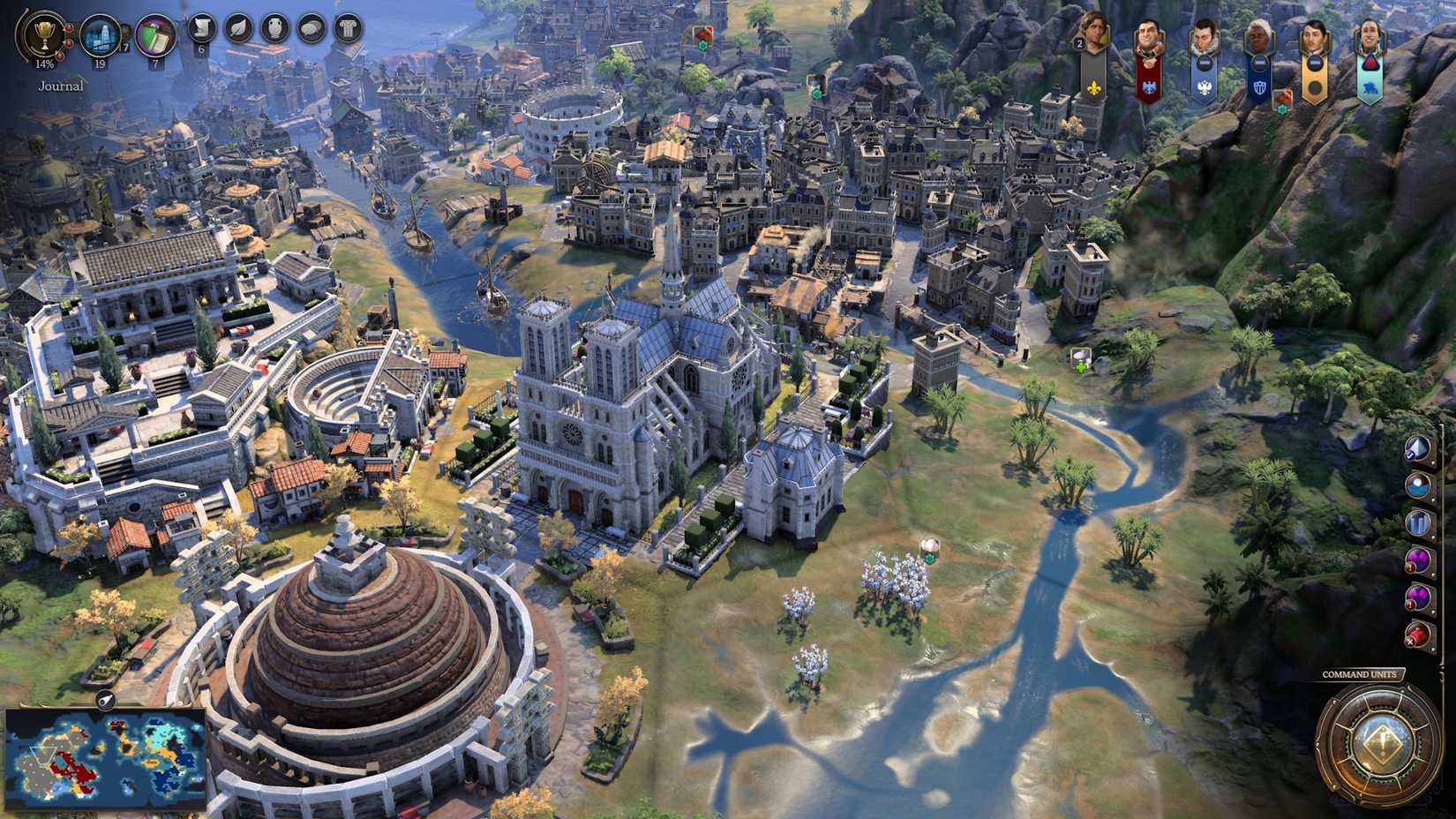
Happiness, while functional, currently serves as a hurdle rather than a genuine challenge. Once a player understands the basic requirements for happiness buildings and policy slots, it becomes a rote task. It currently lacks the "grand design" feel that, for instance, city planning in previous Civilization titles provided.
Official Responses and Developer Outlook
While Firaxis has remained relatively tight-lipped on specific roadmaps, the frequency of updates in the summer of 2026 suggests a dedicated team working to bridge the gap between their original vision and the community’s desires. The tone of recent developer diaries has shifted from explaining the "intended" way to play to acknowledging the feedback regarding player freedom. The success of the "Test of Time" update is a clear signal that the development team is moving toward a model of player-led evolution.
Implications for the Future of 4X Gaming
The trajectory of Civilization 7 carries significant implications for the 4X genre. It highlights a recurring theme in modern strategy gaming: the clash between "visionary" design (the original age-swapping concept) and "player-centric" design (the current, more flexible state).
The fact that Firaxis was willing to walk back such a massive, foundational mechanic is a testament to the influence of the player base. It signals that the "live-service" approach—often criticized in other genres—can actually benefit strategy games when used to refine core loops rather than simply drip-feeding content.
Conclusion
Is Civilization 7 currently the best game in the series? Perhaps not yet. But it is undoubtedly a much better game than it was at launch. By softening the edges of its most rigid systems and empowering players to define their own path through history, Firaxis has successfully re-engaged a skeptical audience.
There is still work to be done. Diplomacy needs a complete overhaul to match the depth of the other systems, and the mid-game, while improved, still lacks the seamless flow of the series’ absolute best entries. However, the "Test of Time" update has provided a solid foundation. If Firaxis continues to iterate with this level of responsiveness and care, Civilization 7 has the potential to shed its "troubled launch" reputation and stand proudly alongside its predecessors. The future of the game is bright, even if the road to reaching its full potential is paved with a few more updates. For fans who were ready to abandon the title, it might finally be time to return to the map.

