

Valve Corporation, the digital titan of the PC gaming world, has officially pulled back the curtain on its latest hardware endeavor: the Steam Machine. While the reveal has been met with enthusiasm regarding its engineering and the flexibility of the accompanying SteamOS, a singular, unavoidable shadow hangs over the product’s launch—the price tag. With a starting entry point of $1,049, the device has triggered a wave of sticker shock within the community, sparking a debate about the intersection of hardware accessibility and the current global state of supply chain economics.
The Financial Reality of the Launch
The headline figure of $1,049 for the base model has effectively placed the Steam Machine in the premium tier of home computing, a segment traditionally occupied by enthusiast-grade pre-built PCs. For many prospective buyers who were looking for an affordable, console-like entry point into the Steam ecosystem, this price represents a significant barrier to entry.
The primary culprit behind this valuation is the ongoing global memory and storage crisis. In recent years, the semiconductor industry has faced unprecedented volatility. For Valve, a company that operates on thin hardware margins, the "commodity" components that once allowed for competitive pricing are now subject to intense market competition and scarcity. As Valve engineers Yazan Aldehayyat and Pierre-Loup Griffais noted in an exclusive discussion with PC Gamer, the procurement process for these components has shifted from a routine logistics operation to a high-stakes negotiation.
"Things that, two years or a year ago—commodity things—you would just say, ‘Yeah, I need that much,’ and you just pay the normal price for it and it’s all good," said Aldehayyat. "Now you have to negotiate really hard just to secure a few thousand."
A Chronology of Valve’s Hardware Ambitions
To understand the current Steam Machine, one must look at the long arc of Valve’s hardware history. The company has long held a "religious" commitment to the idea of an open platform, resisting the closed-system model favored by console manufacturers like Sony, Microsoft, and Nintendo.
- The Early Vision (2012–2015): Valve first experimented with the Steam Machine concept during the mid-2010s. The goal was to provide a living-room-friendly version of the PC experience. However, the initial rollout was plagued by fragmented hardware support and a Linux-based OS that, at the time, lacked the robust library of games available today.
- The Steam Deck Pivot (2021–2023): Valve found massive success with the Steam Deck, a handheld device that effectively proved that Linux-based gaming (via Proton) could compete with Windows. This success created renewed interest in a dedicated home console-like experience.
- The Current Reveal (2026): Following the maturity of the SteamOS ecosystem, Valve felt the time was right to re-introduce the Steam Machine as a high-performance, stationary counterpart to the handheld market.
The Engineering Philosophy: Why $1,049?
Despite the criticism, Valve maintains that the hardware is a triumph of design. The device is specifically tuned to be "perfect" for the target user base, reflecting years of internal data and user feedback. When asked what they would change if they could wave a magic wand, the engineers’ responses were telling.
"Make it cheaper," Aldehayyat admitted with a laugh, highlighting that the high price is as much a source of frustration for the creators as it is for the consumers.
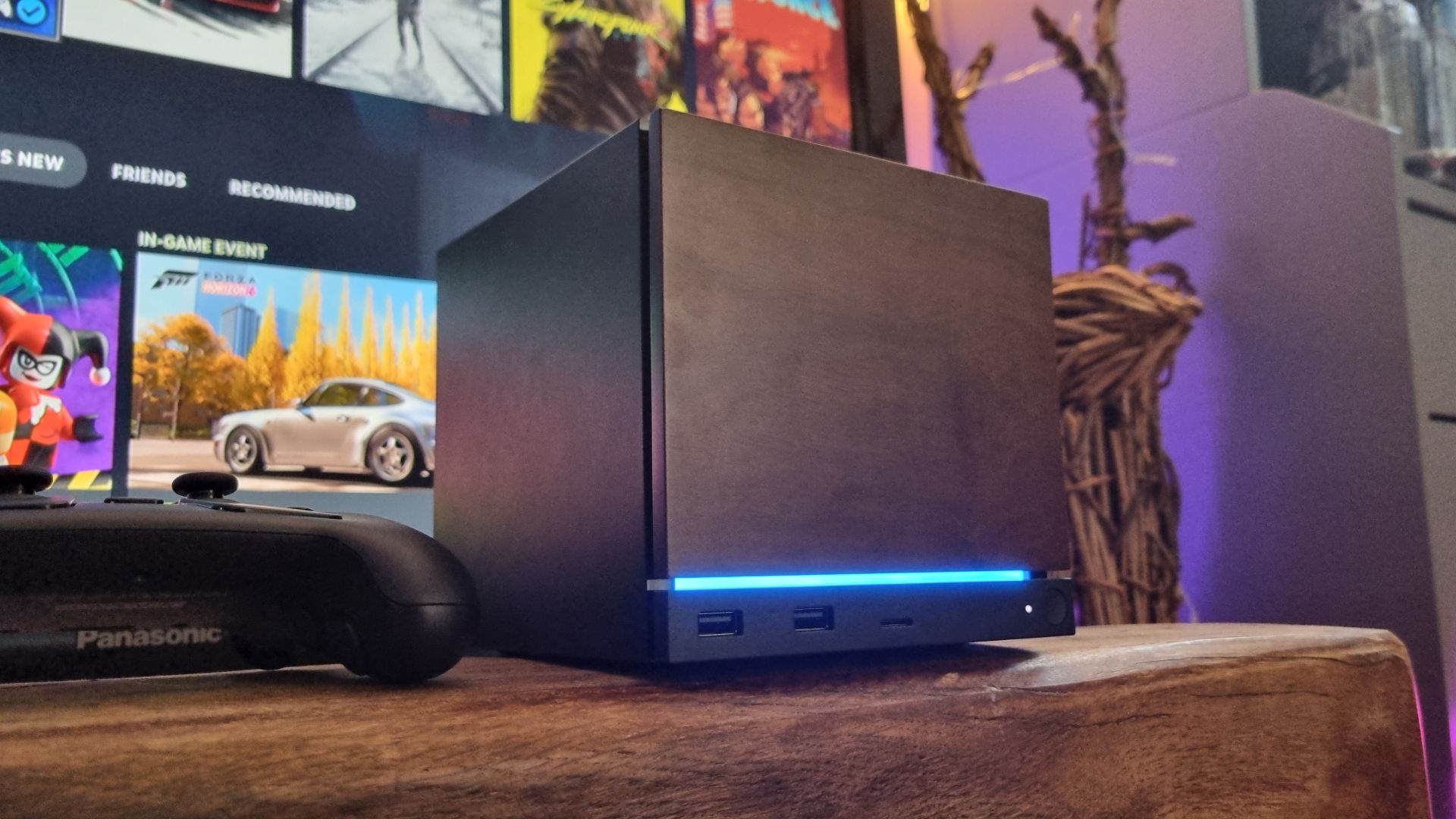
Interestingly, the engineering team noted that their design priorities remain focused on user utility. When probed about potential future iterations, Pierre-Loup Griffais suggested that user demand for connectivity remains the primary driver of design evolution. "People want more ports," Griffais stated. "The thing would be full of ports on all the sides if we listened to everyone." While this is a tongue-in-cheek nod to the "trypophobic" aesthetic of a device covered in connectors, it highlights the conflict between a sleek, minimalist consumer device and the modular, "tinker-friendly" nature of PC gaming.
Implications: The "Religious" Refusal to Subsidize
A critical aspect of this release is Valve’s refusal to subsidize the cost of the hardware. In the console industry, it is standard practice to sell hardware at a loss—or at a razor-thin margin—to recoup costs through software sales and ecosystem lock-in.
Valve has explicitly rejected this model. Their decision stems from a core business philosophy: they refuse to build a "closed system." By avoiding a proprietary, locked-down environment, Valve ensures that the Steam Machine remains a true PC at heart. However, this commitment to openness means that the hardware must pay for itself. Without the ability to enforce a "walled garden" that mandates software purchases through a single storefront, the unit price must reflect the total cost of manufacturing and R&D.
For the consumer, this creates a distinct trade-off. You are paying for the freedom to control your hardware, install your own software, and avoid the arbitrary restrictions found in traditional consoles. But that freedom comes with a four-figure price tag.
The DIY Alternative: Bringing SteamOS to the Masses
Recognizing that the $1,049 price point is prohibitive for a large portion of its user base, Valve has taken a significant step in democratizing the experience. With the release of SteamOS 3.8, the company has officially greenlit the installation of its operating system on non-Valve hardware, provided the machines utilize AMD GPUs.
This move effectively decouples the "Steam Machine experience" from the "Steam Machine hardware." If a user has a spare PC or wishes to build their own, they can now leverage the same optimized, controller-friendly interface that ships with the official device. This is a massive win for the PC community, as it allows users to experience the "console-like" benefits of SteamOS without the premium cost of Valve’s proprietary chassis.
Future Outlook: Where Does the Platform Go?
As the market digests the release, the future of the Steam Machine remains a subject of intense speculation. Will Valve adjust its pricing as the memory crisis eases? Will third-party manufacturers step in to build "Steam Machines" at lower price points using Valve’s software blessing?
The current reality is that Valve is positioning itself not as a mass-market hardware manufacturer in the mold of Sony, but as a curator of a specific, high-end ecosystem. The Steam Machine is for the user who wants the convenience of a console but the soul of a PC. It is a niche, perhaps even a luxury, but it is one that adheres strictly to the philosophy that has defined Valve’s survival in a changing market.
For now, the Steam Machine serves as both a powerful, albeit expensive, piece of hardware and a beacon for the future of open-platform gaming. Whether the market can sustain this model remains to be seen, but one thing is certain: Valve is not interested in compromising its principles for the sake of market penetration. As the company continues to refine its OS and provide the tools for users to "build their own," the Steam Machine may eventually become less of a specific product and more of an standard—a goal that, for a company like Valve, is likely worth the price.

