

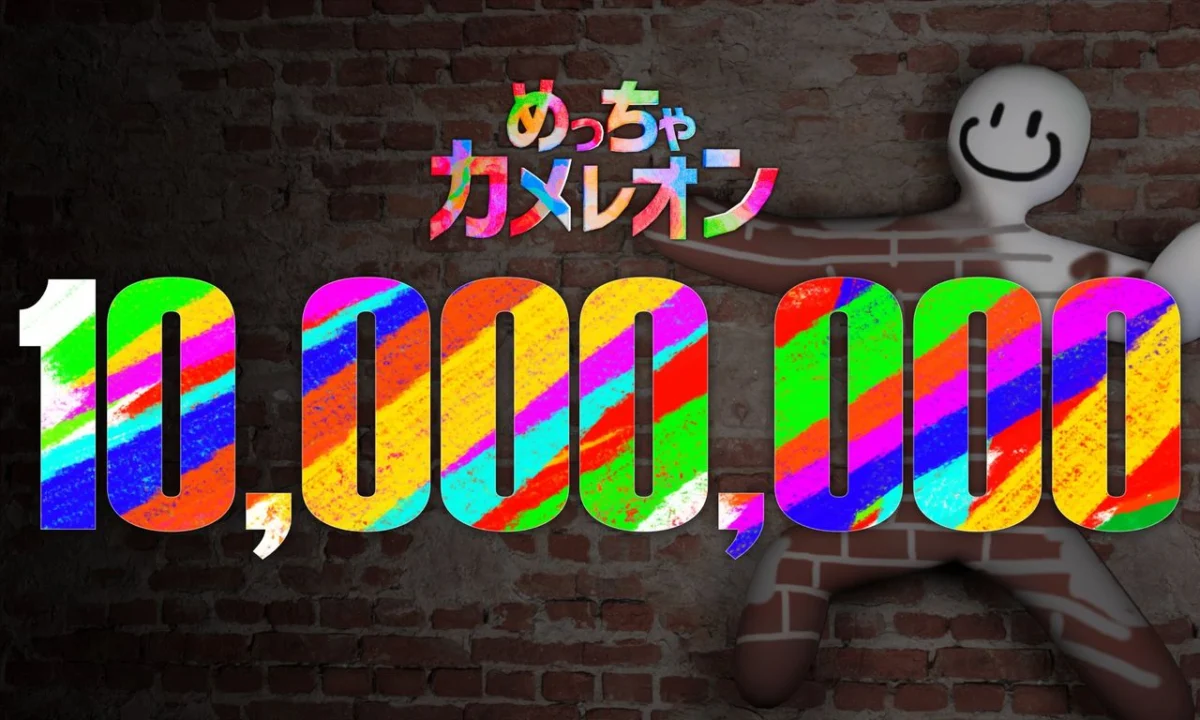
In the high-stakes world of modern game development, where AAA titles often require half a decade of production and hundreds of millions of dollars in capital, the meteoric rise of Meccha Chameleon serves as a jarring, exhilarating disruption. Launched on June 9, the unassuming indie title has achieved what many industry giants dream of but rarely attain: 10 million units sold in just three weeks.
For the two Japanese creators behind the project, Lemorion and Haganeiro, the success of Meccha Chameleon is not just a commercial triumph; it is a case study in efficiency, creative agility, and the unpredictable nature of the modern digital marketplace.
The Anatomy of an Overnight Sensation
The core appeal of Meccha Chameleon—a competitive, hide-and-seek-inspired multiplayer experience—lies in its deceptive simplicity. While the gaming industry is currently obsessed with hyper-realistic graphics and sprawling open worlds, Meccha Chameleon leans into the "less is more" philosophy.
As of late June, the game had already moved over 10 million copies. To put that figure into perspective, it places the title in the company of massive industry juggernauts. Yet, unlike those titles, which often arrive with massive marketing budgets and years of hype, Meccha Chameleon was a virtual unknown until it hit the Steam storefront. The game’s price point of $5.99—often discounted during its initial launch window—has made it an impulse buy for millions, creating a self-sustaining cycle of viral popularity that shows no signs of slowing down.
A Chronology of Rapid Development
Perhaps the most staggering aspect of the Meccha Chameleon story is its development cycle. According to interviews with the developers, the entire project was conceptualized, built, and polished in a mere two months.
In a digital age where "early access" titles often languish in development for years, the creators’ commitment to a "make it exist, then perfect it" methodology proved to be the project’s secret weapon. Rather than agonizing over every asset from scratch, Lemorion and Haganeiro utilized a tactical approach: they repurposed assets from previous, smaller projects they had developed over the past few years.
By building a functional, "barebones" mockup as their first priority, the duo ensured they had a playable loop immediately. This provided the psychological security of knowing that, regardless of future iterations, they had a shippable product. This efficiency allowed them to spend their limited time on refining the core mechanics—the "competitive camouflage" system—which has since received critical acclaim for its addictive, fast-paced nature.
The Economics of a Viral Hit
From a purely fiscal standpoint, Meccha Chameleon is a marvel of low-overhead, high-reward economics. With a price point of $5.99 and a reported zero-dollar spend on traditional marketing, the profit margins are staggering.
Revenue Breakdown
- Total Sales: 10,000,000+ units.
- Estimated Gross Revenue: ~$60 million (before platform fees and regional price adjustments).
- Development Costs: Minimal (primarily labor/time).
- Marketing Spend: $0.
While Steam typically takes a 30% cut of revenue, that fee drops to 20% once a game surpasses $50 million in sales. Meccha Chameleon has almost certainly crossed that threshold, meaning the developers are now retaining a larger share of every sale. When one considers the current strength of the dollar against the yen, the financial windfall for these two creators is, by any standard, transformative.
If we calculate the developers’ return based on a standard 10-hour workday over those two months, the duo has earned approximately $1,667 per hour of work. It is, quite literally, "life-changing money" earned in the span of a single season.
Global Reception and Community Impact
The success of Meccha Chameleon is not limited to its home territory. While the game was developed by a Japanese team, its appeal has proven to be truly global. An analysis of Steam user reviews reveals a robust international player base, with over 20,000 English-language reviews logged to date.
The game’s review score currently sits at an 82% approval rating, a figure that is particularly impressive given that multiplayer titles often struggle with balancing and technical issues at launch. Critics have noted that while the game possesses some minor blemishes, the core experience—a unique take on social deduction and stealth-based movement—transcends its "friendslop" (a casual, low-stakes social game) origins. It has managed to carve out a niche that feels both accessible to casual players and deeply rewarding for those seeking a competitive edge.
The "Secret" Behind the Success
When asked by the Japanese publication GameWith about their process, the developers remained remarkably grounded. They cited their "make it exist first" philosophy as the primary driver.
"We found that creating the entire thing first allows us to hit the finish line more efficiently," the developers stated. By treating their own previous work as a library of assets rather than discarding it, they saved months of labor. This highlights a growing trend in indie development: the "Modular Developer" approach. By iterating on existing foundations, small teams can effectively punch far above their weight class.
Broader Implications for the Industry
The success of Meccha Chameleon serves as a warning and a lesson to the AAA industry. It suggests that players are increasingly hungry for experiences that are fun, accessible, and affordable, rather than just "blockbuster."
We are seeing a trend this summer where fast, lean, and innovative projects are outperforming expectations. The horror film Obsession, for example, recently became the highest-grossing original live-action film of the decade, having been filmed in just 26 days on a budget of $750,000. These successes suggest a paradigm shift: when creative teams are unencumbered by massive corporate oversight and bloated production schedules, they are free to chase the "fun factor" that often gets lost in the pursuit of graphical fidelity.
Conclusion: A New Blueprint for Indies
The story of Meccha Chameleon will likely be studied by indie developers for years to come. It proves that you do not need a studio of hundreds or a budget of millions to capture the world’s attention. All you need is a solid, hook-driven concept, a willingness to iterate rapidly, and perhaps a little bit of good timing.
For Lemorion and Haganeiro, the future is now wide open. Whether they choose to expand Meccha Chameleon into a franchise or move on to entirely new projects, they have secured their place in the annals of indie gaming history. For the rest of us, it is a reminder that in the vast, noisy landscape of the digital storefront, the next massive, record-breaking hit might just be a two-month passion project waiting to be discovered.
As the revenue continues to climb and the servers remain packed with players, one thing is certain: the era of the "lean indie" has officially arrived, and it is more profitable than anyone dared to imagine.

