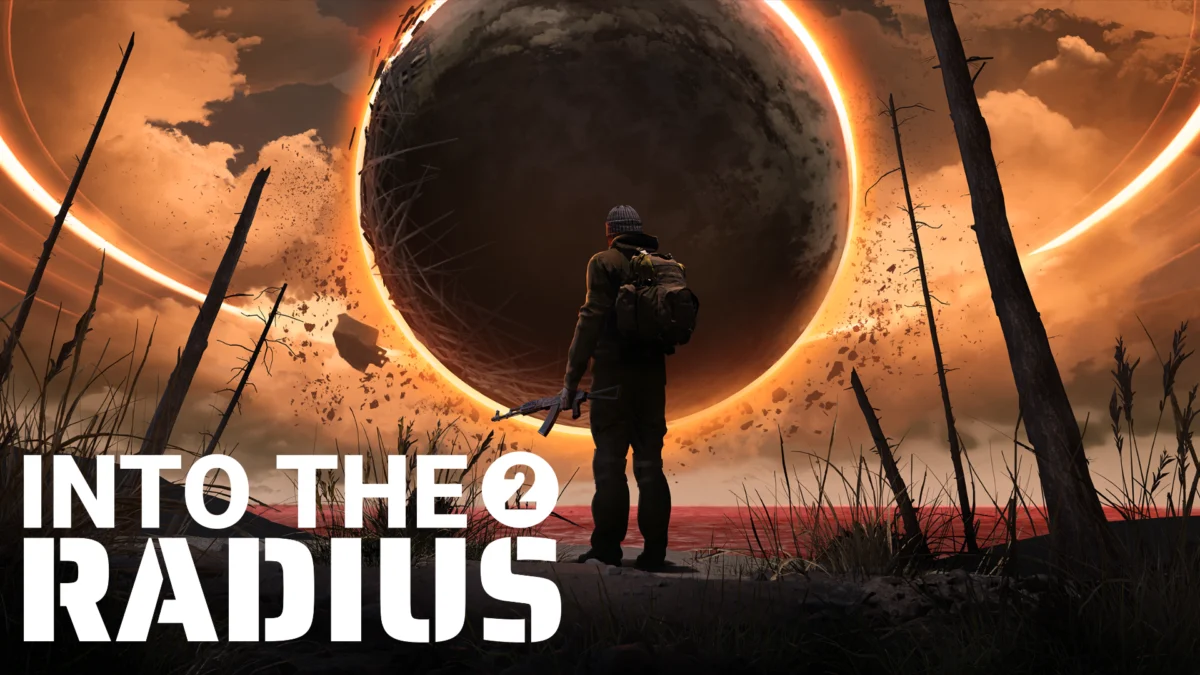
The highly anticipated PlayStation VR2 (PS VR2) port of the atmospheric survival-shooter Into the Radius 2 has officially been delayed. Developer CM Immersive announced that the game’s release date has been pushed back by two weeks, moving from its original launch window of September 24 to a new target date of October 8.
The postponement is directly attributed to unforeseen issues encountered during the final certification stages on Sony’s hardware ecosystem. While the sequel has already successfully navigated its lifecycle milestones on PC via Steam and Meta’s Quest platforms—including a departure from Early Access earlier this year—bringing the title to the PlayStation ecosystem has proven to be a more complex procedural undertaking.
Despite the short delay, CM Immersive has assured fans that the extra time will be strictly utilized to polish the experience, ensuring that players step into the hazardous, surreal landscape of the Pechorsk Security Zone with a stable, optimized build. The game remains fully positioned to leverage the unique hardware capabilities of the PS VR2, boasting native 90 frames-per-second performance, eye-tracked dynamic foveated rendering, headset haptics, and adaptive trigger support. However, the much-anticipated cooperative multiplayer mode remains scheduled for a later rollout, slated for Q4 of this year.
Chronology of Development and Release
To understand the context of the PS VR2 delay, it is essential to trace the journey of Into the Radius 2 from its inception to its current multi-platform footprint.
Early Development and PC Access
The original Into the Radius established itself as a premier benchmark for virtual reality survival horror, drawing heavy inspiration from the classic Soviet sci-fi novel Roadside Picnic and the cinematic adaptation Stalker. Building upon that critical and commercial success, CM Immersive began laying the groundwork for Into the Radius 2, focusing on expanded mechanics, deeper exploration systems, and the implementation of cooperative gameplay.
The sequel initially launched into Early Access on PC VR via Steam, allowing the developers to gather continuous feedback from the community, tweak survival mechanics, and refine gunplay. This iterative development model is standard practice within the PC VR and Meta ecosystems, where developers can deploy hotfixes and updates rapidly without navigating rigid bureaucratic gates.
Transitioning Out of Early Access and Expanding Horizons
Earlier this year, Into the Radius 2 officially exited Early Access on Steam, closely followed by a release on Meta Quest 3 platforms. These milestones marked a major turning point for CM Immersive, signaling that the core single-player and foundational survival loops were complete and stable.
With the PC and standalone mobile-VR versions out in the wild, the studio turned its full attention toward the console virtual reality market, specifically Sony’s PS VR2. Because Sony’s platform traditionally maintains strict policies regarding incomplete or Early Access software, CM Immersive waited until the game reached a mature, feature-complete state before submitting it for console adaptation.
The September Delay Announcement
Originally slated for a September 24 release, the PS VR2 port hit a roadblock in the final hours of quality assurance. During the closing phases of Sony’s submission pipeline, developers identified technical anomalies and compliance discrepancies that required immediate remediation. Rather than rushing a potentially unstable build to meet an arbitrary deadline, CM Immersive made the strategic decision to delay the launch to October 8, communicating the setback transparently to the community.
Supporting Data and Technical Specifications
The delay does not alter the ambitious technical framework that CM Immersive has built for the PlayStation VR2 iteration. Technical data released by the studio highlights the lengths to which the development team has gone to optimize the title for Sony’s proprietary hardware.
Performance and Rendering Metrics
Into the Radius 2 on PS VR2 is engineered to run at a rock-solid, native 90 frames per second (fps). Maintaining a high, consistent frameload is vital in virtual reality to mitigate motion sickness and maintain immersion, particularly in fast-paced survival-horror scenarios where players must manage inventory and engage hostile entities under high-stress conditions.
To achieve this performance standard without sacrificing visual fidelity, the game integrates eye-tracked dynamic foveated rendering. By utilizing the PS VR2’s internal eye-tracking cameras, the engine renders the exact focal point of the player’s gaze in high definition while reducing the rendering workload in the peripheral vision. This technical synergy allows for complex environmental textures, dense vegetation, and atmospheric lighting effects to run smoothly on the PlayStation 5 hardware.
Hardware Integration
Beyond graphical optimizations, the port makes extensive use of the PS VR2 Sense controllers and headset architecture:
Headset Haptics: Subtle vibrations built into the headset provide environmental feedback, conveying the rumble of approaching anomalies, explosions, or physiological tension.
Adaptive Triggers: The resistance of the L2 and R2 triggers dynamically shifts depending on the weapon type, magazine weight, weapon jams, and mechanical wear-and-tear, heightening the tactile realism of gun maintenance and combat.
Roadmap Discrepancies
While the single-player survival campaign will be fully intact upon the October 8 release, players looking for multiplayer experiences will need to exercise patience. Co-op support is not part of the launch build and is currently mapped out for a subsequent update later in the year, ensuring that netcode stability is thoroughly vetted following the single-player release.
Official Responses and Industry Context
The announcement of the delay was accompanied by a direct, candid statement from the development team, shedding light on the rigorous nature of console publishing.
Developer Statement
In an official email distributed to press and community members, CM Immersive detailed the rationale behind the postponed date:
"During the final certification stage, we identified a few things that still need attention. We want to use this time to make sure the PS VR2 version is in the best possible shape before players enter the Radius."
The statement underscores a growing industry trend where developers prioritize launch stability over rigid adherence to marketing deadlines, particularly in the complex realm of virtual reality development.
The Sony Certification Barrier
Industry observers and developers familiar with multi-platform VR deployment have long noted that Sony’s certification and quality assurance (QA) pipeline is considerably more rigorous and time-consuming than those managed by Meta (for the Quest ecosystem) or Valve (for Steam).
While platforms like Steam and Meta permit open beta testing, rapid iteration, and Early Access models that allow players to experience unfinished software, Sony maintains a stringent curation standard. Every game submitted to the PlayStation Network must meet exacting criteria regarding stability, memory management, compliance with UI/UX guidelines, and fail-safe error handling.
Because Into the Radius 2 spent its formative months evolving within the flexible parameters of PC Early Access, transitioning to Sony’s strict compliance framework required navigating a steep learning curve regarding console-specific optimization. The minor two-week pushback from September 24 to October 8 is a direct byproduct of this stringent review mechanism.
Implications for Into the Radius 2 and the PS VR2 Ecosystem
The delay of Into the Radius 2, while disappointing to fans eagerly awaiting a new AAA-grade survival experience on Sony’s headset, carries several broader implications for both the developer and the wider PS VR2 market.
Impact on CM Immersive and Player Trust
For an independent or mid-sized studio like CM Immersive, managing community expectations is critical. By communicating the certification hurdles transparently and opting to delay rather than ship a sub-par product, the studio avoids the launch-day backlash that frequently plagues ports rushed through quality assurance. A polished release on October 8 will likely secure stronger critical reviews and better long-term word-of-mouth recommendations among the PlayStation community.
Ecosystem Health and Standards
The incident also highlights the ongoing maturation of the PS VR2 library. As the platform moves further away from simple arcade ports and embraces complex, systemic survival RPGs like Into the Radius 2, the technical demands placed on developers increase exponentially. Sony’s rigorous certification process, while frustrating for developers facing tight schedules, ultimately serves as a protective barrier ensuring that complex titles arrive in a playable, highly optimized state.
What Players Can Do Now
Fans looking forward to the game can still prepare for their excursion into the surreal Zone. The title is currently available for wishlisting on the PlayStation Store, allowing users to secure automated download notifications the moment the game unlocks on October 8.
As the countdown to the revised launch date ticks away, the virtual reality community will be watching closely to see if CM Immersive’s extra two weeks in the studio yield the stable, immersive, and harrowing survival experience that PC players have already come to celebrate.