

Taipei, Taiwan – The highly anticipated AMD EXPO ULL (Ultra Low Latency) memory kits from G.Skill, positioned as a leading choice for high-performance computing, have officially hit the retail market. While these new modules promise significant performance enhancements through optimized timings and lower latencies, their pricing has come as a considerable surprise to many within the industry and enthusiast community. Contradicting earlier assurances from AMD that EXPO ULL memory kits would be "effectively the same price" as their vanilla EXPO counterparts, G.Skill’s initial offerings carry a substantial premium, reaching up to an astonishing 80% over standard kits.
This significant divergence between expectation and reality immediately sparked discussion, raising questions about the true cost of cutting-edge memory optimization and the strategic positioning of such premium hardware within the competitive PC component landscape. For enthusiasts and builders keen on maximizing their AMD AM5 platform’s potential, the G.Skill Trident Z5 NeoX series represents the pinnacle of current DDR5 optimization, but at a price point that clearly establishes a new tier of high-end memory.
A Divergent Price Reality: G.Skill’s Trident Z5 NeoX Hits Retail
The retail launch of G.Skill’s Trident Z5 NeoX series marks a pivotal moment for AMD’s EXPO ULL initiative. These memory kits are the first to fully leverage the expanded EXPO profiles, allowing manufacturers to embed more granular subtiming tweaks directly into the memory modules. While the technical promise is compelling, the market has quickly focused on the unexpected price point.
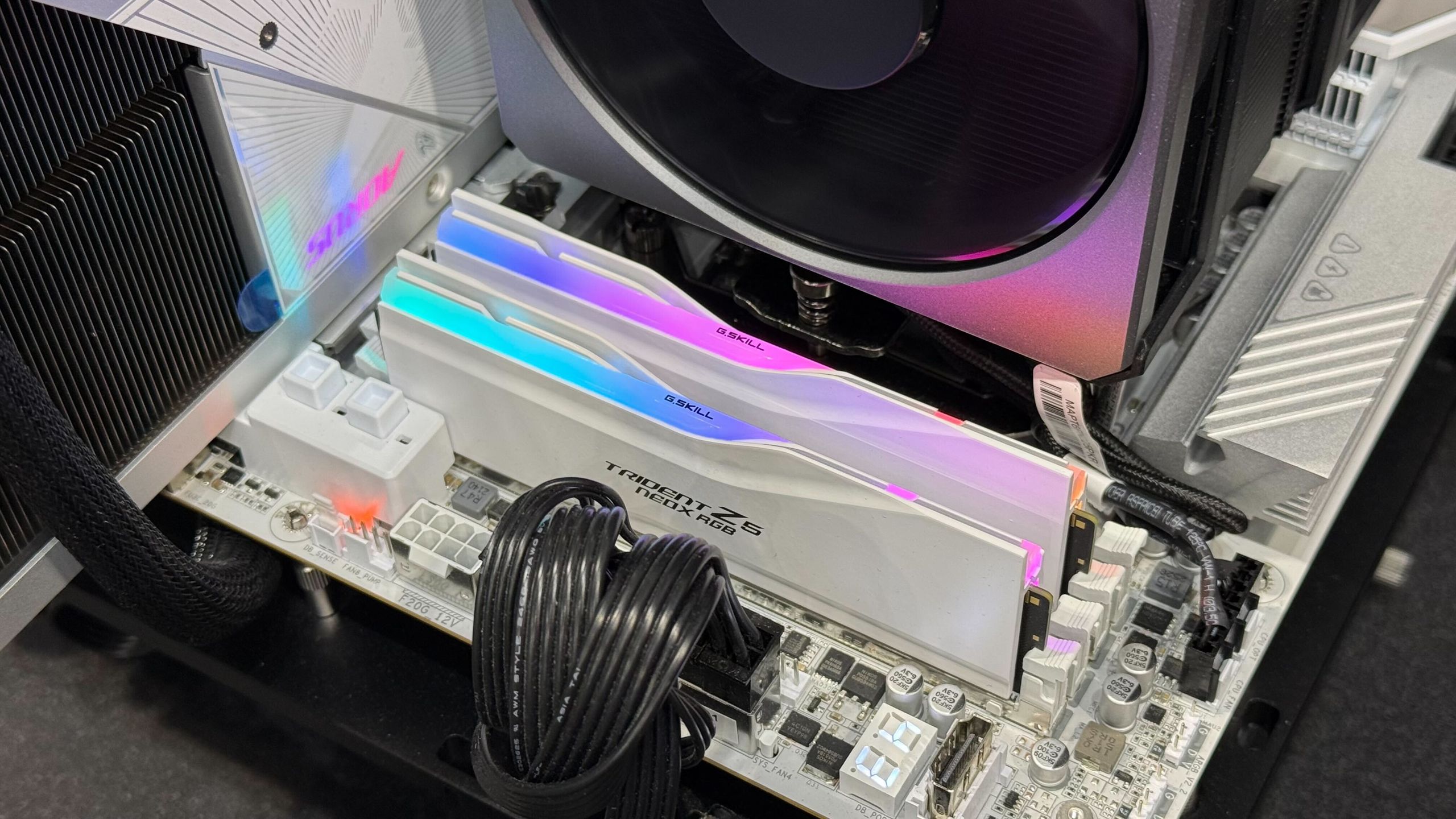
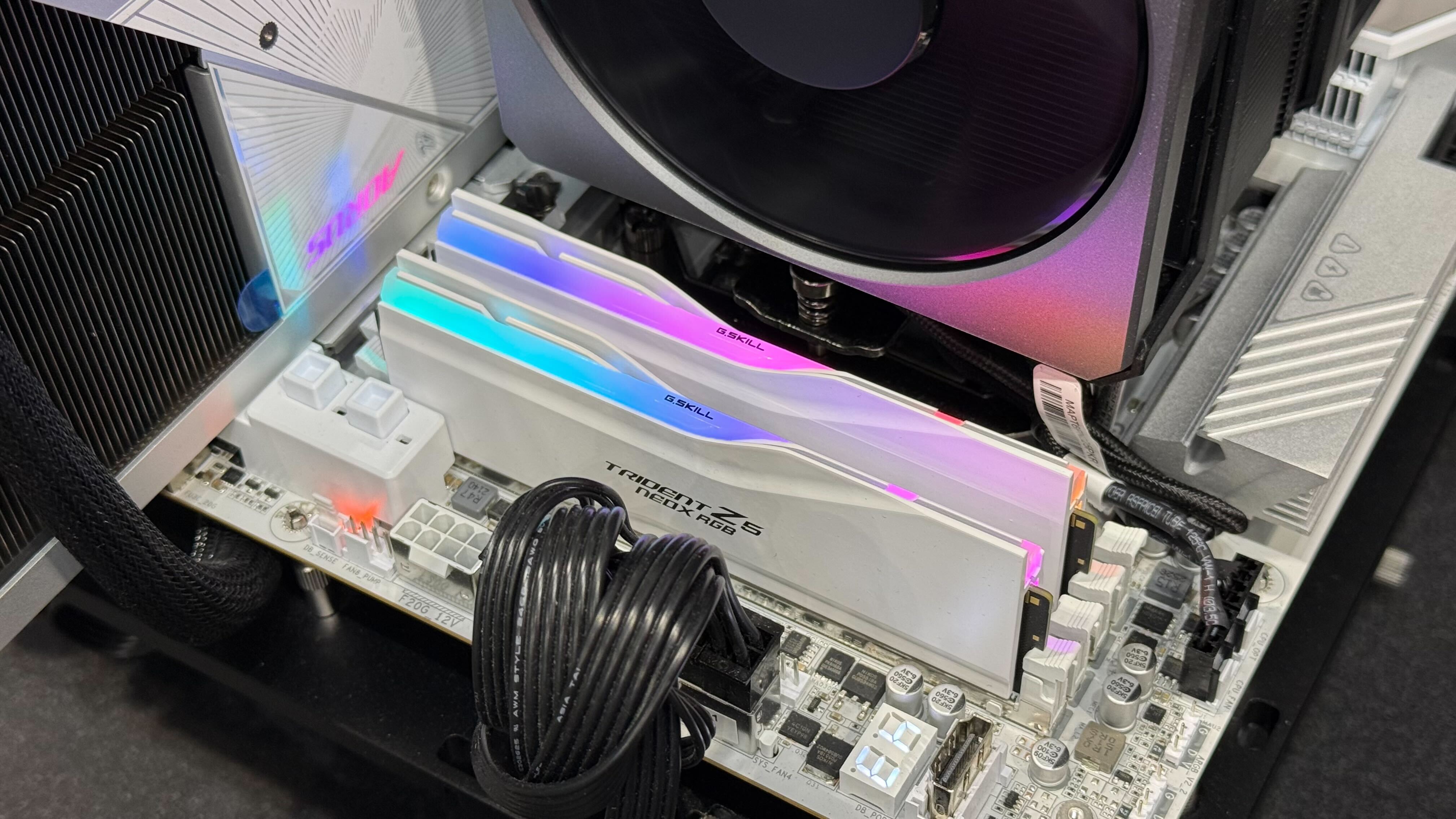
G.Skill, a renowned name in high-performance memory, has introduced the Trident Z5 NeoX as its flagship ULL offering. The series boasts a sleek design, available in three distinct aesthetic options: classic black, a sophisticated glossy black, and a pristine white, designed to complement a wide array of system builds and personal preferences. As of its initial rollout, G.Skill has yet to publish official product pages detailing the full breadth of the Trident Z5 NeoX series, leaving comprehensive information on potential capacities and speeds somewhat limited. However, major retailers like Newegg are already stocking 32GB (2x16GB) dual-channel configurations, predominantly clocked at the sweet spot of DDR5-6000.
The immediate availability of these kits allows for a direct comparison with existing, standard EXPO-certified memory, revealing the scale of the premium. This comparison is crucial for understanding the market’s reception and the true value proposition of ULL technology.
The Promise vs. The Premium: A Chronological Discrepancy
The journey of AMD EXPO ULL memory from concept to retail has been marked by a notable shift in pricing expectations. Understanding this chronology is key to appreciating the current market dynamics.
Initially, AMD had painted an optimistic picture for consumers and the industry regarding the affordability of EXPO ULL technology. Statements made by AMD representatives earlier in the development cycle indicated that the new Ultra Low Latency memory kits would be priced "effectively the same price" as existing, standard EXPO memory kits. This promise was a significant factor, leading many to anticipate that the performance benefits of ULL would be accessible without a substantial financial burden, further enhancing the appeal of AMD’s AM5 platform and its open-standard EXPO technology. The implication was that ULL would be a performance uplift integrated seamlessly into the existing pricing structure, making it a highly attractive option for all AM5 users.
However, G.Skill’s retail launch of the Trident Z5 NeoX series has dramatically altered this narrative. The actual market prices for these ULL-optimized kits are demonstrably higher than their non-ULL counterparts. This direct contradiction between AMD’s earlier assurances and the current retail pricing has created a noticeable discrepancy, challenging the initial perception of ULL as an accessible performance upgrade. The rapid transition from AMD’s initial optimistic projection to G.Skill’s premium pricing structure highlights the complexities of bringing highly optimized hardware to market and suggests that the manufacturing and binning processes involved are far more intensive and costly than initially communicated or anticipated.
Unpacking the Data: Technical Enhancements and Their Price Tag
To quantify the premium and understand the technical justifications, a detailed comparison of G.Skill’s Trident Z5 NeoX ULL kits against their standard Trident Z5 Neo counterparts is essential. This analysis deliberately focuses on direct equivalents within G.Skill’s product lines, excluding entry-level series like Aegis or Ripjaws, and ultra-premium options such as the Trident Z5 Royal Neo, to ensure a meaningful like-for-like comparison for performance-oriented users.
The price disparity is most pronounced at the tighter timing configurations:
- DDR5-6000 C26: The Trident Z5 NeoX DDR5-6000 C26 memory kit commands a staggering 57% premium over the standard Trident Z5 Neo DDR5-6000 C26 kit.
- DDR5-6000 C28: The gap widens further for the DDR5-6000 C28 variant, which carries an even more substantial 79% premium.
- DDR5-6000 C30: For the C30 version, the Trident Z5 NeoX is 14% more expensive.
- DDR5-6000 C36: The C36 variant sees a more modest 9% premium.
These figures clearly illustrate that the most aggressive latency optimizations come with the highest price tags, indicating the extreme difficulty and lower yield rates associated with producing modules capable of operating at such tight timings.
Beyond Primary Timings: The ULL Advantage
Superficial product listings often fail to capture the full extent of optimization inherent in AMD EXPO ULL memory kits. Memory manufacturers and retailers typically only disclose the four primary memory timings: CAS Latency (CL), Row Address to Column Delay (tRCD), Row Precharge Time (tRP), and Row Active Time (tRAS). While these are fundamental, they tell only part of the story regarding overall memory performance. The true magic of AMD EXPO ULL certification lies in the meticulous optimization of numerous secondary and tertiary timings, which are rarely publicized. These include critical parameters like Refresh Interval (tREFI), Row-to-Row Delay Short (tRRDS), and Write Recovery Time (tWR), all of which contribute significantly to real-world latency and throughput but remain largely invisible to the average consumer.
Returning to the example of the Trident Z5 NeoX memory kits, one immediate and highly significant technical differentiator is the dramatically reduced tRAS (Row Active Time) value. The tRAS values in the NeoX series are up to an astounding 67% lower than those found in standard Trident Z5 Neo memory kits. In simple terms, tRAS dictates the minimum number of clock cycles that must pass after a memory row is opened before the memory controller can close it. A lower tRAS value means the memory controller can close and reopen rows more quickly, facilitating faster access to different memory locations and reducing overall latency.
The reason for generally higher tRAS values in DDR5, compared to its predecessor DDR4, resides in its architectural design. Unlike DDR4, which utilized a single 64-bit memory channel, DDR5 employs two independent 32-bit subchannels. This structural change, coupled with a doubling of the burst length from BL8 to BL16, allows each memory command to transfer twice as much data through the channels in a single operation. While this increases bandwidth, it also necessitates that memory rows remain open for longer durations to complete these larger data transfers, thus leading to the inherently higher tRAS values typically observed in standard DDR5 modules. What makes the AMD EXPO ULL memory kits truly unique and technically impressive is their ability to push these tRAS values back down to levels reminiscent of high-performance DDR4 from a previous generation, effectively mitigating one of DDR5’s inherent latency trade-offs.
Voltage Efficiency: A Testament to Quality
Another significant technical advantage of AMD EXPO ULL memory kits, exemplified by the Trident Z5 NeoX series, is their capability to maintain these exceptionally tight timings at reduced operating voltages. The Trident Z5 NeoX kits operate at a consistent 1.35V across their entire product stack. This voltage is notably lower than the 1.45V or 1.40V often required by comparable standard Trident Z5 Neo series kits to achieve their rated speeds.
Lower DRAM voltages translate directly into several tangible benefits for the end-user. Firstly, it results in lower power consumption, which is beneficial for overall system efficiency and can contribute to a greener computing footprint. Secondly, reduced voltage leads to lower operating temperatures for the memory modules. Cooler operation enhances the stability and longevity of the RAM and other nearby components. Lastly, and perhaps most importantly for enthusiasts, lower baseline voltages provide more thermal and electrical headroom for manual overclocking, allowing users to potentially push the modules even further beyond their rated specifications, though this requires advanced knowledge and careful tuning.
The Official Stance and Manufacturer’s Perspective
The significant price premium associated with G.Skill’s AMD EXPO ULL memory kits, particularly when contrasted with AMD’s earlier statements, necessitates an examination of the official and implied rationales.
AMD’s Historical Position:
AMD’s prior assertion that EXPO ULL memory would be "effectively the same price" as standard kits was likely an attempt to position the EXPO platform as a comprehensive, performance-first ecosystem that wouldn’t penalize users financially for opting into advanced features. This statement could have been based on optimistic projections regarding manufacturing yields, the scalability of optimization processes, or an initial underestimation of the engineering effort required to consistently achieve ultra-low latencies at scale. The current retail reality suggests that either the manufacturing complexities were greater than anticipated, or the market dynamics for such highly binned memory are more aggressive than initially hoped. While AMD has not yet issued an updated statement directly addressing the price discrepancy, the market’s response underscores the importance of clear and accurate pricing guidance for new technologies.
G.Skill’s Implied Rationale and Value Proposition:
While G.Skill has not released an explicit statement detailing the pricing strategy for its Trident Z5 NeoX series, the underlying reasons for the hefty premium are clearly inferred from industry knowledge and the technical nature of ULL optimization. The primary drivers are:
-
Extensive Optimization and Validation: Producing memory modules that can operate reliably at ultra-low latencies and tight subtimings requires a significantly more rigorous and time-consuming optimization and validation process. Memory vendors invest heavily in research and development to fine-tune the SPD (Serial Presence Detect) profiles, ensuring flawless operation across a range of AMD motherboards. This involves countless hours of testing on various platforms to guarantee stability and performance, a process far more intricate than for standard JEDEC or even typical XMP/EXPO kits.
-
Meticulous Binning Process: The most critical factor contributing to the premium is the meticulous and labor-intensive binning of memory integrated circuits (ICs). Memory manufacturers purchase large batches of DRAM chips, but only a small fraction of these chips possess the inherent quality and electrical characteristics necessary to consistently operate at the most aggressive timings and lowest voltages (like CL26 or CL28 at 1.35V). The binning process involves extensively testing each chip to identify those "golden samples" that can meet the stringent ULL criteria. This results in lower yields for ULL-certified modules, meaning a significant portion of the purchased chips cannot be used for these premium kits, increasing the cost per usable chip.
-
Increased Manufacturing Costs: The combination of advanced R&D, exhaustive testing, and low-yield binning directly translates into higher overall manufacturing costs per module. These costs must be recouped through the retail price. In essence, consumers are not merely paying for the physical hardware but also for the extensive engineering, quality assurance, and the guarantee that these modules will perform at their advertised, highly optimized specifications right out of the box, without requiring manual tweaking or extensive user knowledge.
The premium, therefore, can be viewed as the cost of guaranteed, top-tier performance and stability that arises from a highly selective and labor-intensive production pipeline. For a select group of users, this investment in pre-optimized, high-quality silicon is a worthwhile trade-off for the peace of mind and performance gains it offers.
Market Implications and Consumer Considerations
The introduction of G.Skill’s AMD EXPO ULL memory at such a significant premium has several implications for the broader PC hardware market and presents important considerations for consumers.
For Consumers: Is the Performance Worth the Price?
The core question for consumers revolves around the value proposition. While ULL promises tangible performance benefits, particularly in latency-sensitive applications like gaming and certain professional workloads, the substantial price premium requires careful consideration. For the vast majority of mainstream PC users, the performance difference between a standard DDR5-6000 CL30 kit and a DDR5-6000 CL26 ULL kit might be marginal in real-world scenarios, often translating to only a few extra frames per second in games or slightly faster task completion in specific benchmarks.
The target audience for EXPO ULL memory is clearly defined: extreme enthusiasts, competitive gamers who demand every last frame, professional overclockers, and benchmarkers where every point matters. For these users, the guaranteed low latency and stability offered by ULL kits might justify the investment. However, for the average builder, allocating that extra budget towards a more powerful GPU, a faster CPU, or a larger SSD might yield a more noticeable and impactful improvement in overall system performance and user experience. This situation highlights the diminishing returns often associated with pushing hardware to its absolute limits.
Consumers should also consider alternative strategies. Many standard EXPO kits, particularly those using high-quality DRAM ICs (e.g., Hynix A-die), possess significant overclocking headroom. Knowledgeable users might achieve similar or even superior timings to ULL kits through manual tuning, albeit with effort, risk, and reliance on the "silicon lottery." However, this requires expertise and is not a plug-and-play solution like EXPO ULL.
For the Memory Market: A New Tier of Performance
The launch of EXPO ULL kits at premium prices effectively establishes a new, ultra-high-performance tier within the DDR5 memory market. This segmentation could prompt other memory manufacturers to follow suit, developing their own ULL-certified kits and fostering competition in this niche segment. Over time, as manufacturing processes mature and binning yields potentially improve, the prices for ULL memory might gradually decrease, making it more accessible. However, for the foreseeable future, it is likely to remain a premium offering.
This development also underscores the increasing sophistication of memory optimization, moving beyond simple speed and primary timings to a holistic approach involving subtimings and voltage efficiency. It signals a trend where manufacturers are investing more in platform-specific optimizations (like EXPO for AMD and XMP for Intel) to extract every ounce of performance.
For AMD’s EXPO Ecosystem: Trust and Evolution
AMD’s initial promise of "effectively the same price" was a strong selling point for the EXPO platform, suggesting that high-performance memory could be achieved without an exorbitant cost. The current price reality might lead some consumers to question future AMD pricing guidance for new technologies. However, the existence of EXPO ULL memory ultimately strengthens the EXPO ecosystem by offering an even higher tier of validated performance for those willing to pay for it. It demonstrates AMD’s commitment to pushing the boundaries of memory performance on its platforms, even if the cost is higher than initially projected. This also encourages continued innovation in memory design and optimization, ensuring that AMD systems can leverage the very best memory available.
Conclusion: A Premium Performance Niche
The arrival of G.Skill’s AMD EXPO ULL memory kits, spearheaded by the Trident Z5 NeoX series, represents a significant leap forward in DDR5 optimization for AMD platforms. These modules offer genuinely ultra-low latencies and improved voltage efficiency, pushing the boundaries of what’s achievable with current memory technology. However, this cutting-edge performance comes at a considerable financial cost, with premiums reaching up to 80% over standard EXPO kits, directly contradicting AMD’s earlier optimistic pricing forecasts.
This discrepancy highlights the extensive and costly processes of meticulous binning and rigorous optimization required to produce memory capable of such exacting specifications. For the average PC builder, the substantial premium might outweigh the incremental performance gains in real-world scenarios. However, for a dedicated segment of enthusiasts, competitive gamers, and professional users who demand absolute peak performance and are willing to invest accordingly, G.Skill’s EXPO ULL kits offer a compelling, albeit expensive, solution. As the DDR5 market continues to mature, it will be interesting to observe how other manufacturers respond to this new performance tier and whether the cost of ultra-low latency memory becomes more accessible in the future. For now, EXPO ULL firmly establishes itself as a premium niche for those who settle for nothing less than the absolute best.
Authored by Zhiye Liu, News Editor, Memory Reviewer, and SSD Tester at Tom’s Hardware.

