

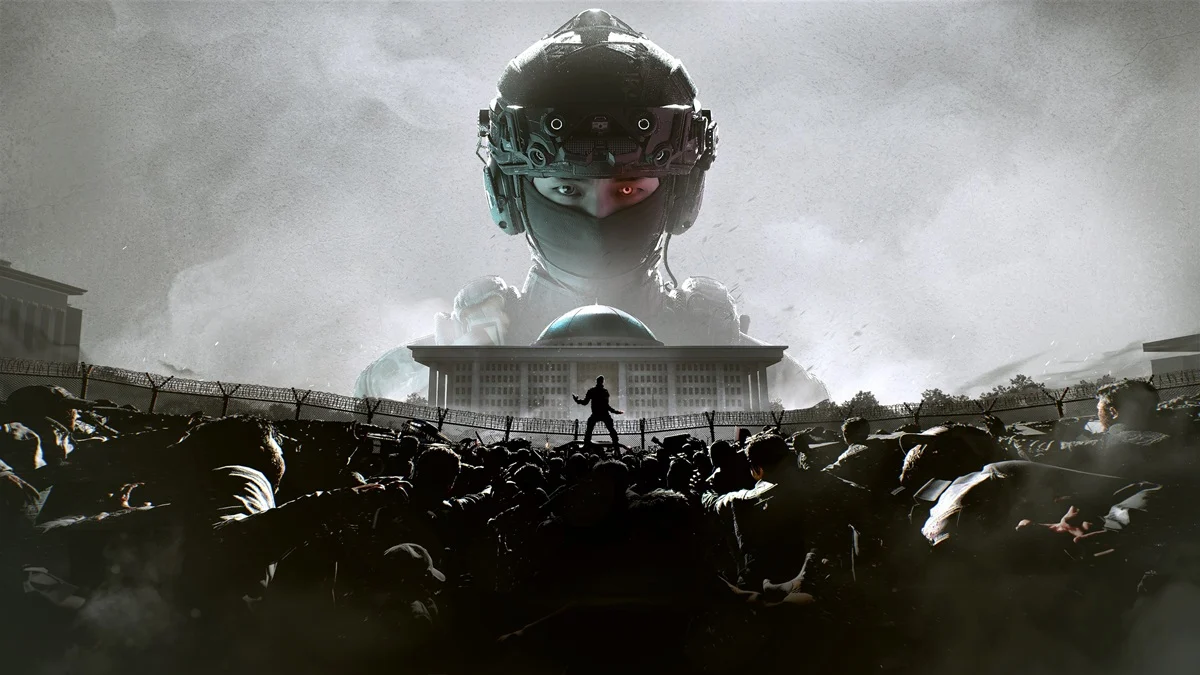
In the volatile landscape of modern game development, few things are as jarring as the sudden evaporation of a promising title. For fans of stealth-action games who were captivated by the slick, atmospheric reveal of Mudang: Two Hearts during the June 2025 Xbox Games Showcase, the news arriving this month is nothing short of a tragedy. The project, which promised to blend the tactical depth of Metal Gear Solid with the high-stakes tension of the Splinter Cell franchise, has effectively been shuttered following the bankruptcy of its developer, South Korean studio EVR Studio.
What was once heralded as a beacon of emerging Korean console development has now become a case study in the harsh economic realities facing mid-sized studios. As the industry continues to consolidate and budgets balloon, even the most visually striking projects are not immune to the silent, suffocating grip of financial insolvency.
The Main Facts: A Project Erased
The confirmation of the studio’s collapse surfaced through investigative community efforts on Reddit, where user kimchamchi unearthed legal documentation confirming that EVR Studio was officially declared bankrupt on June 5, 2026. This legal filing served as the final nail in the coffin for Mudang: Two Hearts.
The game, which featured a gritty, near-future iteration of the Korean Peninsula, had been a point of interest for its unique premise: combining traditional shamanistic lore with modern espionage. With the studio’s official website now offline and social media channels stagnant, the development of the title has ceased entirely. Without a publisher or a third-party developer stepping in to acquire the assets—an unlikely scenario given the studio’s debt profile—the game is considered dead.
Chronology: From ‘Project TH’ to Bankruptcy
To understand how Mudang: Two Hearts reached this point, one must look back at its troubled history, which stretches far beyond its flashy 2025 showcase appearance.
- 2023: The Birth of ‘Project TH’: Long before the cinematic trailers, the title existed in the industry lexicon as "Project TH." It was initially teased with an ambitious 2024 release window, suggesting that the studio was already under immense pressure to deliver a viable commercial product within a tight timeframe.
- Late 2025: The High-Water Mark: Following its showcase appearance, the project garnered significant attention. The developers were confirmed to be handling both development and publishing, a "double-edged sword" strategy that gave them creative control but left them solely responsible for the financial burden.
- Early 2026: The Slow Decline: Behind the scenes, the cracks were forming. Reports indicate that EVR Studio began experiencing severe liquidity issues as early as the beginning of 2026.
- March-April 2026: Mass Layoffs: As the financial runway shortened, the studio initiated a series of mass layoffs. This is often the precursor to total collapse, as talent flight renders a game’s completion technically impossible.
- June 5, 2026: Legal Insolvency: The Seoul Central District Court formally processed the bankruptcy filing, marking the end of the studio’s operations.
Supporting Data: Why the Model Failed
The demise of EVR Studio highlights a systemic issue often overlooked by the gaming public: the "self-publishing trap." While developers often lament the interference of major publishers, the alternative—carrying the entirety of a project’s development and marketing costs—is a gamble that few independent studios can win in the current market.
The Cost of Ambition
Mudang: Two Hearts was attempting to compete in the "AAA" third-person stealth-action space. This is one of the most resource-intensive genres to develop. It requires sophisticated AI, intricate level design, and high-fidelity motion capture—all of which are notoriously expensive.
Market Saturation and Developer Burnout
EVR Studio was operating in a market that has become increasingly unforgiving. With the rise of "Game as a Service" (GaaS) titles dominating player engagement, premium single-player experiences—even high-quality ones—often struggle to find the massive, sustained audience required to break even. When you add the overhead of a large team in an expensive tech hub like Seoul, the burn rate for a project like Mudang likely exceeded what the studio could sustain through venture capital or private funding.
Official Responses and Industry Silence
As of this writing, there has been no official statement from the leadership team at EVR Studio. In the aftermath of the bankruptcy filing, the company’s executive team has maintained radio silence, a common occurrence in liquidation scenarios where legal counsel advises against public comments.
Industry analysts have pointed out that the lack of a formal announcement regarding the game’s cancellation is indicative of the suddenness of the shutdown. Typically, studios will issue a "thank you" to fans or a formal exit strategy if they are winding down operations in an orderly fashion. The fact that the website simply went dark suggests a chaotic and potentially forced dissolution, where the priority shifted from managing public relations to satisfying creditors.
Implications for the Korean Gaming Industry
The collapse of EVR Studio sends a chilling message to the South Korean game development scene, which has traditionally been dominated by massive PC-based MMOs and mobile titles.
A Shift Toward Risk Aversion
For years, the South Korean government and venture capital firms have been pushing for a transition toward console-based, narrative-driven single-player games to diversify the nation’s gaming output. The failure of Mudang: Two Hearts may cause investors to retreat into the "safe" territory of proven mobile and MMO formulas. If a studio with a high-profile, visually impressive project cannot secure funding to cross the finish line, smaller indie teams may find it even harder to attract the capital needed to innovate.
The Danger of Early Reveals
The situation also reignites the debate over "showcase culture." By revealing Mudang: Two Hearts in 2025, the studio essentially entered a "hype debt" cycle. They were committed to a vision that they did not have the long-term financial security to support. For the industry, this serves as a cautionary tale: the spectacle of a reveal trailer is meaningless if the infrastructure underneath is crumbling.
Conclusion: A Lost Potential
The loss of Mudang: Two Hearts is a disappointment, not just for the players who were eager to experience its unique take on the stealth genre, but for the industry as a whole. The game represented a bold attempt to marry Eastern folklore with Western stealth mechanics, a fusion that has historically produced some of the most memorable gaming experiences.
As we look toward the future, the ghost of Mudang will likely haunt discussions regarding studio sustainability. It stands as a stark reminder that in the world of high-end game development, the difference between a visionary project and a forgotten footnote is often measured in months of liquidity and the precarious balance of a studio’s bank account. For now, the files of Mudang: Two Hearts sit in a digital vault, waiting for a savior that, in all likelihood, will never arrive. The industry moves on, but the failure of EVR Studio serves as a sobering epitaph for the risks of modern development.

