

After a protracted and highly anticipated development cycle that captured the attention of the virtual reality community, Disembodied—the innovative mixed reality (MR) platformer—has finally secured a firm release date. Meta Quest 3 and 3S users can mark their calendars for October 15, when this unique physics-driven experience officially arrives on the storefront. By leveraging the advanced sensor suites of modern standalone headsets, Disembodied promises to bridge the gap between digital interaction and physical reality in a way few titles have managed to achieve.
The Core Concept: Redefining Interaction
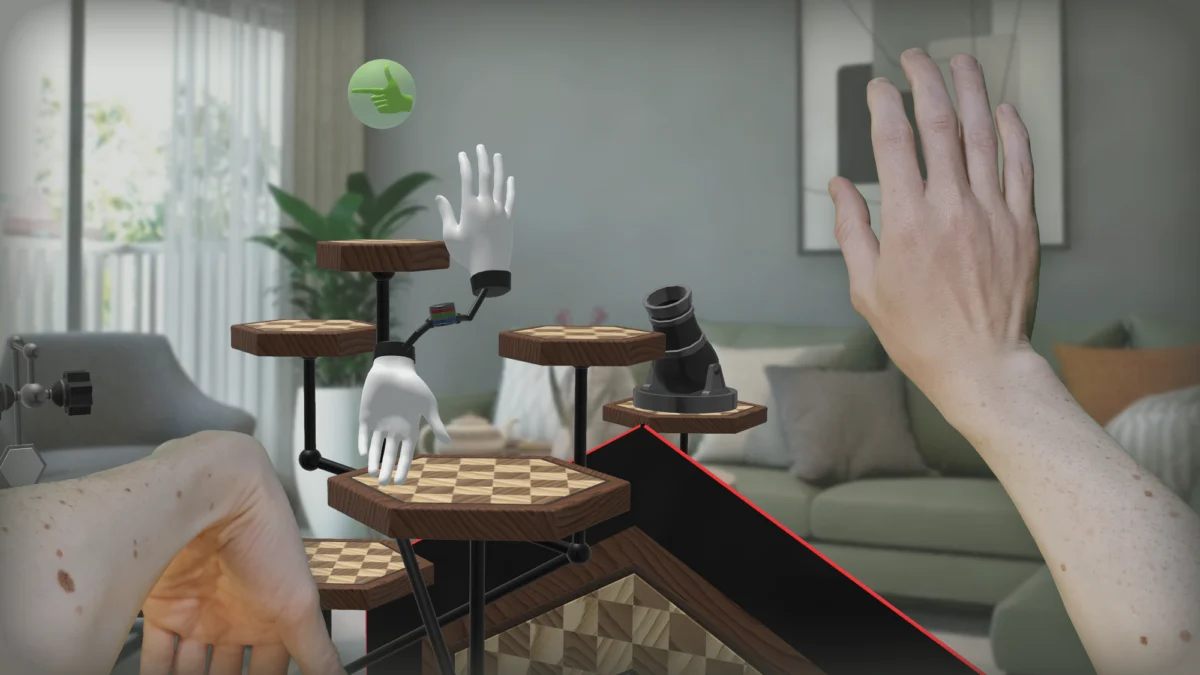
At its heart, Disembodied is an experiment in kinesthetic immersion. The premise is deceptively simple: players control a pair of disembodied hands using their own physical hands as the primary input mechanism. Unlike traditional VR titles that rely on haptic controllers to simulate interaction, Disembodied utilizes high-fidelity, controller-free hand tracking.
The game mirrors the user’s movements 1:1, translating real-world gestures into the digital environment. This creates a "mirroring" effect that is central to the gameplay loop. As players navigate these disembodied limbs through a series of intricately designed levels, they must contend with physics-driven challenges, environmental hazards, and complex puzzles. The reliance on hand tracking alone forces players to think about their physical space differently, turning their living room or play area into a literal playground for their virtual counterparts.
Chronology: A Two-Year Journey
The path to the October 15 release has been a steady climb. The project first entered the public consciousness in 2024, during the UploadVR Summer Showcase. At the time, the prototype showcased a novel approach to spatial computing, focusing on the fluidity of movement rather than button-based inputs.
Following that debut, the developer, Kevin Walker, provided deeper insights into the game’s design philosophy. "In Disembodied, you control your disembodied hands with your… hands," Walker explained during a post-showcase interview. "The game is mixed reality, and uses only hand tracking. Your hand movements are copied 1:1 to the disembodied hands, which you must maneuver through small levels, featuring various mechanics and challenges."
Over the subsequent two years, the development team focused on refining the "physics-feel" of the game. Achieving 1:1 parity without the tactile feedback of a controller is a significant technical hurdle. Throughout 2025, the team worked on optimizing the hand-tracking latency—a critical metric for a game where the player’s hands are the primary interaction point. The announcement of the October 15 launch date marks the culmination of this refinement process, moving the project from a tech demonstration into a fully realized commercial product.
Mechanics and Gameplay Depth
While the core control scheme is the headline, Disembodied offers a robust suite of gameplay mechanics designed to keep the experience fresh. The game is not merely a technical showcase; it is a full-fledged platformer.
The Platforming and Puzzle Engine
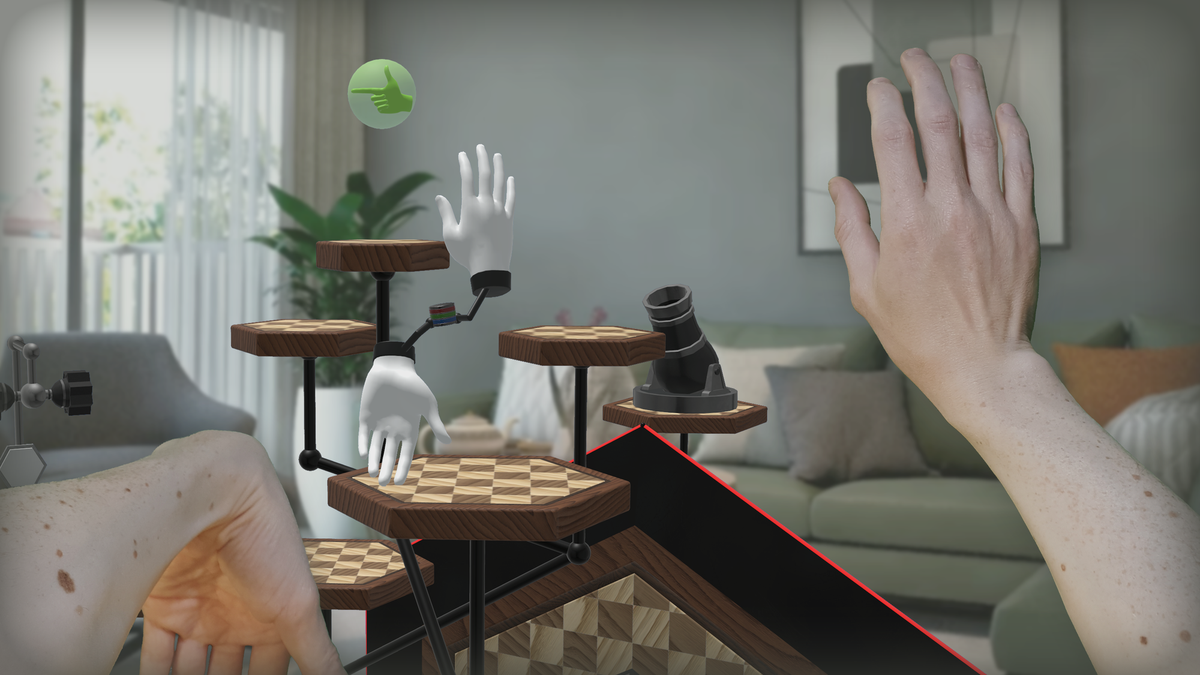
The levels are specifically designed to exploit the limitations and strengths of hand tracking. Players will find themselves traversing gaps, climbing surfaces, and manipulating levers in ways that feel physically grounded. Because the game is set in Mixed Reality, these platforms often appear to "float" within the player’s actual room, creating a seamless integration between the user’s home and the game world.
Stealth and Environmental Interaction
Beyond basic movement, the game introduces stealth elements where players must keep their hands steady to avoid triggering traps or alerts. This adds a layer of tension that is entirely dependent on the player’s fine motor control. The natural interaction model means that if you reach out to push a block, you are physically miming the action, reinforcing the sense of presence that VR developers have sought for a decade.
Power-Ups and Gesture Activation
To add variety, Disembodied incorporates a power-up system. These are not triggered by a menu or a button press; instead, they require specific hand gestures. By performing distinct motions, players can activate abilities that alter the game’s physics or reveal hidden paths. This system rewards players who master the game’s vocabulary of gestures, effectively gamifying the user’s manual dexterity.
Community Integration: The Level Editor
Perhaps the most ambitious aspect of Disembodied is its built-in level editor. Recognizing that the longevity of an MR title often depends on user-generated content, the developers have included a comprehensive suite of tools that allow players to design their own challenges.
Crucially, the level editor itself is controlled via hand tracking. Players can grab, move, and rotate assets within their own physical space to construct custom platforming courses. Once a level is completed, it can be uploaded to a community server, allowing others to download and play it. This feature effectively turns Disembodied into a platform for creativity, ensuring that the content pool will continue to expand long after the initial launch.
The Implications for Mixed Reality
The release of Disembodied comes at a pivotal time for the Quest 3 ecosystem. As Meta pushes its "Mixed Reality" vision, titles like Disembodied serve as the proof-of-concept for a future where controllers might not be the default input method.
The Shift Toward Controller-Free VR
For years, VR has been synonymous with handheld controllers. While these devices provide haptic feedback and buttons, they create a barrier between the user and the virtual environment. By stripping away the controller, Disembodied removes a layer of abstraction. This shift has massive implications for accessibility and immersion. If a developer can successfully build a compelling game that relies solely on hand tracking, it opens the door for a wider audience—including those who may be intimidated by complex button layouts—to enjoy high-quality VR experiences.
The Technical Challenges of 1:1 Tracking
However, the success of the game rests heavily on the fidelity of the Quest 3’s hand-tracking sensors. Journalists and early testers have noted that the game’s reliance on 1:1 movement makes it highly sensitive to lighting conditions and sensor occlusion. The developer’s commitment to this control scheme is a "bet" on the hardware’s capability. If the implementation is successful, it could set a new industry standard for how developers utilize hand-tracking APIs.
Looking Ahead: A New Standard?
As October 15 approaches, the expectations for Disembodied are high. It represents a rare intersection of "pure" VR design and the practical realities of MR. For the development team, the launch is the beginning of a new phase: supporting a community of creators and iterating on the physics engine based on real-world player data.
The inclusion of the level editor suggests that the developers view this game as a "live" service that will evolve alongside the capabilities of the hardware. As Meta updates its tracking software and increases the precision of the Quest’s sensors, Disembodied will likely become even more responsive.
For those interested in witnessing the evolution of interaction, Disembodied is now available for wishlisting on the Meta Quest store. Whether it becomes a genre-defining title or a niche cult classic remains to be seen, but one thing is certain: it is pushing the boundaries of what is possible when you take the controllers out of the user’s hands and replace them with their own.
Conclusion
The journey of Disembodied from a 2024 tech showcase to a 2026 commercial release highlights the maturation of the VR industry. We are moving away from the "novelty" phase of virtual reality and into an era of refined, purpose-built mechanics. By focusing on the elegance of hand movement and the creative potential of user-generated content, the developers have positioned Disembodied to be a key title in the Quest 3 library.
As we look toward the launch date, the industry will be watching closely to see if the promise of controller-free immersion can truly deliver the depth required for a long-term hit. If the physics-driven platforming lives up to the developer’s claims, Disembodied could well be the title that convinces skeptics that the future of gaming isn’t in our hands—it is our hands.

