

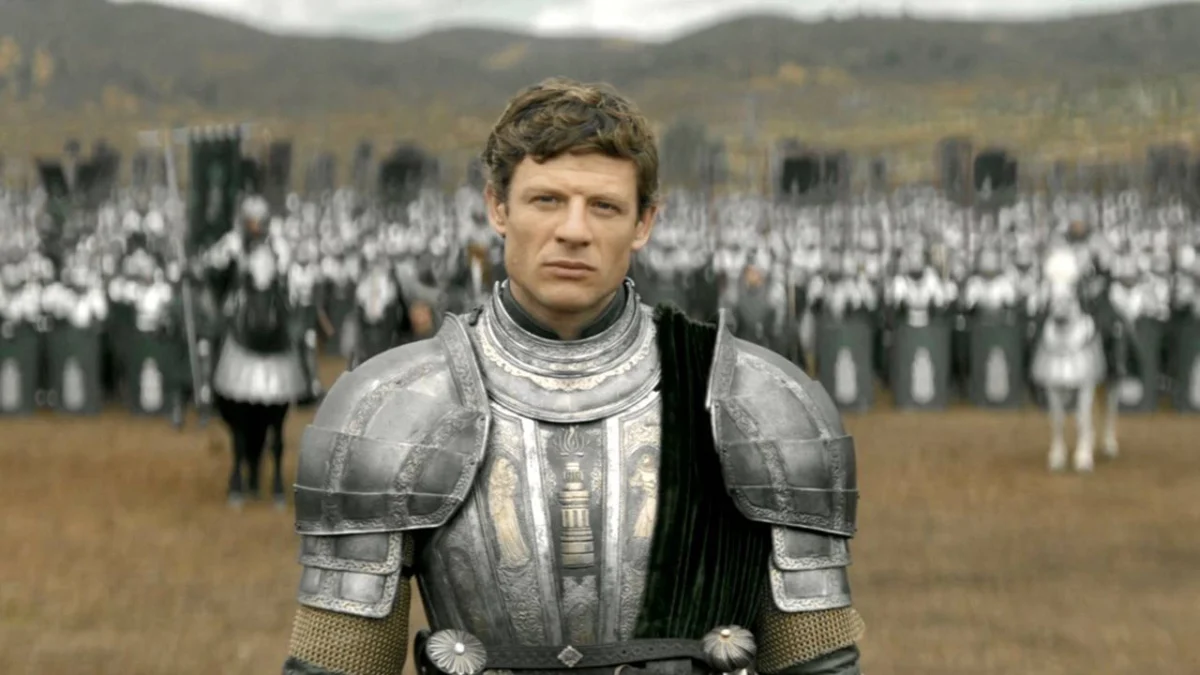
The shifting tides of Westeros are poised to become even more turbulent. As House of the Dragon prepares to expand its scope beyond the immediate confines of King’s Landing and Dragonstone, showrunner Ryan Condal has signaled the arrival of a pivotal figure from George R.R. Martin’s lore: Ormund Hightower. Described as the "Tywin Lannister of this world," Ormund’s introduction marks a significant escalation in the civil war known as the Dance of the Dragons. With the Greens reeling from internal fractures and the Blacks consolidating power, the entry of the Lord of Oldtown into the fray promises to redefine the strategic map of the Seven Kingdoms.
Main Facts: The "Tywin Lannister" of the Reach
The announcement of Ormund Hightower’s role in the upcoming season has sent ripples through the Game of Thrones fandom. Portrayed by the critically acclaimed British actor James Norton (Happy Valley, Little Women), Ormund is not merely another noble joining the fray; he represents the sheer logistical and financial might of House Hightower, a family that has, until now, operated largely through the political machinations of Otto and Alicent.
In a recent interview with SFX Magazine, Ryan Condal laid out the stakes associated with this new character. Condal emphasized that Ormund is the "richest guy who’s not sitting on a throne somewhere." This comparison to Tywin Lannister is intentional. Much like the patriarch of House Lannister during the era of Joffrey and Tommen Baratheon, Ormund possesses the two things most essential for a sustained war effort: an immense treasury and a massive, disciplined standing army.
Crucially, Ormund does not arrive empty-handed in terms of aerial superiority. Condal confirmed that Ormund’s host is accompanied by a dragon, referring to Tessarion, the "Blue Queen," ridden by Daeron Targaryen—the youngest son of Alicent and Viserys who has been notably absent from the show’s first two seasons. By bringing Ormund into the fold, the show is finally connecting the "Green" cause with its most potent base of power in the Reach.
Chronology: From Political Intrigue to Total War
To understand the importance of Ormund Hightower’s arrival, one must look at the chronological progression of House Hightower’s influence throughout the series.
The Era of the Hand (Season 1)
In the early years of King Viserys I’s reign, House Hightower’s power was concentrated in the person of Otto Hightower. As Hand of the King, Otto used his proximity to the Iron Throne to position his daughter, Alicent, as the Queen Consort. During this period, the Hightowers were seen as "soft power" players—using whispers, tradition, and lineage to secure their place. The actual military might of Oldtown remained a distant, theoretical threat.
The Coronation and the Rift (Season 2)
Following the death of Viserys and the disputed coronation of Aegon II, the Greens found themselves in a precarious position. While they held the capital, they lacked the immediate military consensus of the entire realm. Otto Hightower’s eventual dismissal by his grandson, Aegon II, created a vacuum of leadership. The Greens needed a commander who could mobilize the south, and the narrative has been building toward the moment when the Hightowers of Oldtown would finally march.
The March of the Reach (Season 3 and Beyond)
The introduction of Ormund marks the transition from the "War of Whispers" to the "War of Attrition." Chronologically, Ormund’s arrival aligns with the mobilization of the Hightower host from Oldtown. As the Blacks occupy the Gullet and threaten the capital’s supply lines, the Greens’ survival depends entirely on Ormund’s ability to fight his way through the Reach and join the forces in the Crownlands.
Supporting Data: The Might of Oldtown and House Hightower
The comparison to Tywin Lannister is backed by the extensive lore of Fire & Blood. To appreciate the "wrinkle" Ormund introduces, one must examine the supporting data regarding the Hightower resources.
The Economic Powerhouse
House Hightower is one of the oldest and proudest families in Westeros, predating the Targaryen conquest by thousands of years. They reside in the High Tower, a massive lighthouse-fortress that stands taller than the Wall. Based in Oldtown—the realm’s center of religion (The Starry Sept) and knowledge (The Citadel)—the Hightowers control the most sophisticated urban economy in the Seven Kingdoms. While the Lannisters have gold mines, the Hightowers have trade, taxes, and the intellectual capital of the Maesters.
Military Statistics
In the source material, Ormund Hightower leads what is described as the largest and best-equipped army among the Green supporters. This host includes:
- Thousands of heavy knights and men-at-arms.
- The support of powerful vassals such as the Redwynes (providing naval support) and the Rowans.
- The tactical advantage of the "Blue Queen," Tessarion, which allows Ormund to negate the aerial advantage often held by Rhaenyra’s faction.
Character Development
Condal noted that in the book Fire & Blood, Ormund is a "sketch"—a historical figure defined more by his battles than his personality. The show intends to rectify this by creating a "deep, complex, and three-dimensional character." This suggests that Ormund will not just be a general, but a man burdened by the weight of his house’s legacy and the pressure of being the Greens’ last, best hope.
Official Responses: Casting and Production Insights
The production team’s decision to cast James Norton suggests a desire for a character who possesses both gravitas and a certain level of enigma. Norton, known for his range in intense dramas, brings a different energy to the Hightower lineage than the calculating Otto or the anxious Alicent.
The "Newcomer" Perspective
Interestingly, James Norton has been candid about his lack of familiarity with the Game of Thrones universe prior to joining the cast. In an interview, Norton admitted he had never watched the original series and famously did not know who "Littlefinger" (Petyr Baelish) was. While some fans might find this surprising, Condal and the writing staff view this as an asset. By approaching the role without the baggage of the original series’ tropes, Norton can craft Ormund as a fresh entity, independent of the archetypes established by Peter Dinklage or Charles Dance.
Showrunner Vision
Ryan Condal’s official stance is that Ormund is the key to expanding the world-building of House of the Dragon. "Ormund is going to introduce a big old wrinkle into this," Condal stated. This "wrinkle" refers to the logistical reality of war. Up until now, the conflict has been a series of skirmishes and dragon duels. Ormund represents the "standing army"—the slow, grinding force that actually occupies territory and wins wars through endurance.
Implications: How Ormund Changes the Dance
The arrival of Ormund Hightower has several profound implications for the future of the series and the fate of the Seven Kingdoms.
1. The Shift in Green Leadership
With Aegon II incapacitated and Aemond Targaryen ruling as Prince Regent, the Greens have lacked a stabilizing, mature influence. Ormund, as the Lord of Oldtown and a seasoned head of his house, provides a counterweight to Aemond’s impulsiveness. If Ormund is indeed the "Tywin" of this era, he will likely prioritize the long-term survival of the Hightower bloodline over the petty vendettas that have defined the war so far.
2. The Introduction of Daeron Targaryen
Ormund’s presence is the narrative bridge required to bring Daeron Targaryen into the story. Daeron is often cited as the most popular of Alicent’s children among book readers due to his kindness and bravery. By introducing Ormund and his army, the show finally gives Daeron a platform to enter the conflict, potentially shifting the "dragon math" back in favor of the Greens.
3. Escalation of the Reach Subplot
The Reach is the breadbasket of Westeros. By focusing on Ormund, the show will likely explore the internal civil war within the Reach, where House Tyrell remains neutral while their vassals pick sides. Ormund’s struggle to unite the South will be a major narrative arc, providing a grounded, "boots-on-the-ground" perspective of the war that contrasts with the dragon-heavy sequences.
4. The "Tywin" Factor
If Ormund follows the Tywin Lannister blueprint, audiences should expect a character who is ruthlessly efficient. His arrival means that Rhaenyra can no longer rely on the Greens being disorganized. Ormund brings discipline, funding, and a clear-eyed focus on victory. His presence elevates the stakes, moving the show away from a family feud and toward a total continental war.
Conclusion
As House of the Dragon moves into its next phase, the introduction of Ormund Hightower serves as a reminder that the world of Westeros is far larger than the Red Keep. Through the lens of James Norton’s performance and Ryan Condal’s expanded narrative, Ormund is set to become the architectural force of the Green cause. Whether he can live up to the "Tywin Lannister" comparison remains to be seen, but his arrival ensures that the Dance of the Dragons is about to get much more complicated, much wealthier, and significantly more deadly. For the Blacks, the "wrinkle" of Ormund Hightower may prove to be the most difficult fold to iron out in their quest for the Iron Throne.

