

In an industry currently defined by mass layoffs, the relentless pursuit of "live service" engagement metrics, and a growing disconnect between corporate leadership and creative talent, the arrival of a new studio is often met with skepticism. However, //18.bravo, the latest venture from former Infinity Ward creative strategist Robert Bowling, is positioning itself not just as a game developer, but as a systemic disruptor.
Based in Los Angeles, //18.bravo is launching with a manifesto that directly attacks the pillars of modern AAA game development. By promising to eliminate the live-service treadmill, implementing radical profit-sharing models, and pledging to open-source its game code should the studio ever face closure, Bowling is attempting to draft a new social contract for the video game industry.
The Core Philosophy: Redefining Value and Compensation
The primary differentiator for //18.bravo is its approach to human capital. In an era where executive bonuses often balloon while development teams are hit with rounds of layoffs, Bowling has committed to a model that explicitly ties leadership compensation to the success and well-being of the entire studio staff.
"We’re building a studio that ties leadership compensation to employee success," Bowling stated in a recent announcement on LinkedIn. This is not merely a vague promise of "culture-first" development; it is a structural commitment. The studio has unveiled an "employee royalty plan," which extends beyond permanent, full-time staff to include external contributors—a group often overlooked in traditional corporate profit-sharing schemes. This includes voice actors, motion capture performers, and independent contractors, effectively creating a stakeholder model that treats these essential contributors as partners rather than disposable vendors.
A Chronology of Industry Discontent
To understand the urgency behind Bowling’s mission, one must look at the trajectory of his career and the broader decline of the traditional AAA studio model.
The Infinity Ward Era
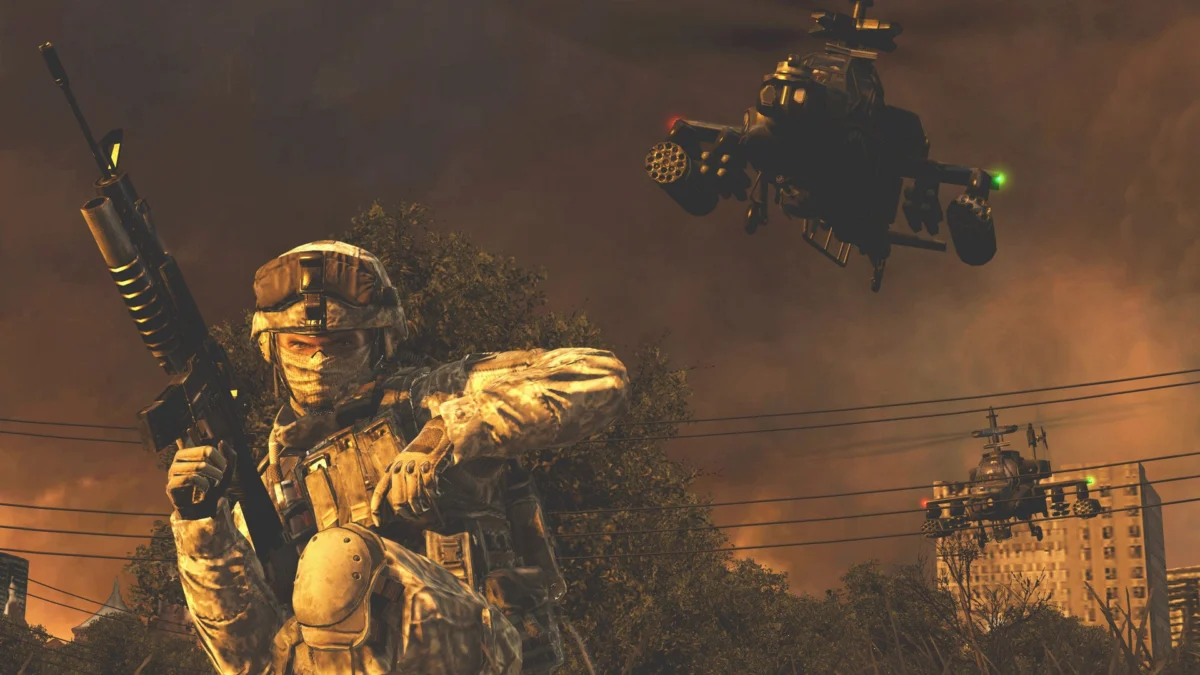
Bowling first rose to prominence as the public face and creative strategist for Infinity Ward, serving as a key figure during the golden era of the Call of Duty: Modern Warfare franchise. During this time, he witnessed the transition of gaming from a product-based industry to the massive, content-hungry machine it has become today.
The Midnight Society Experiment
Following his tenure at Infinity Ward, Bowling co-founded Midnight Society. The studio was initially hailed as a breath of fresh air, promising to bring community-driven development to the shooter genre. However, the studio struggled to navigate the volatile landscape of Web3-adjacent gaming and shifting market trends. Following significant layoffs in 2024, Midnight Society officially closed its doors in February 2025.
The Birth of //18.bravo
The collapse of Midnight Society served as the catalyst for Bowling’s current pivot. Drawing from the failures he witnessed at his previous firm—and the systemic issues pervasive across the industry—he spent the subsequent months architecting //18.bravo. The studio is not just a company; it is an attempt to address the "over-commercialized" state of gaming that Bowling believes has alienated both developers and players.
The Industry Crisis: Why the "Live Service" Model is Failing
Bowling’s critique of the current market is biting. He argues that the industry has reached a breaking point where the pursuit of endless monetization has eroded the quality of the games themselves.
The Human Cost
The "crunch" culture, once the industry’s dirty secret, has been exacerbated by the live-service model. Because these games require constant updates to keep players engaged, developers are locked into an "unending content treadmill." This leads to burnout, high turnover, and a loss of institutional knowledge. Bowling contends that this model is "killing development teams" and that the current AAA studio system is fundamentally broken.
The Player Experience
Beyond the impact on staff, Bowling points to the psychological exhaustion of the player base. The free-to-play (F2P) ecosystem, while accessible, often relies on predatory monetization, battle passes, and "fear of missing out" (FOMO) mechanics that drain players of both their time and money. //18.bravo seeks to combat this by focusing on "forever play"—a design philosophy that prioritizes the longevity of the game experience over the urgency of the storefront.
The "Forever Play" Architecture and Open-Source Commitment
Perhaps the most radical aspect of //18.bravo is its contingency planning. In the current market, when a studio closes or a publisher decides to "sunset" a live-service game, the player’s investment disappears. Digital libraries are rendered useless, and servers are shuttered, leaving consumers with nothing.
Bowling is proposing a "fail-safe" for this outcome:
- Peer-to-Peer (P2P) Infrastructure: By utilizing optimized P2P architecture, the studio aims to ensure that the community can continue to play together even if the company stops supporting the game.
- The Open-Source Pledge: If //18.bravo were to close, the studio has pledged that its assets, code, and foundational tools will become open-source by default. This excludes third-party integrations and licensed music, but otherwise gives the community the keys to the kingdom to maintain the game in perpetuity.
- The Replication Blueprint: Bowling intends to release all legal and procedural documentation required to sustain this model, hoping to provide a roadmap for other studios to adopt similar "community-first" protocols.
Implications for the Broader Gaming Ecosystem
If //18.bravo succeeds, it could set a precedent that creates immense pressure on larger, publicly traded publishers. While major corporations like Electronic Arts, Activision Blizzard, and Ubisoft are incentivized by quarterly profit projections, the rise of a successful, ethical, and sustainable boutique studio could force a cultural shift in how games are greenlit and supported.
Regulatory and Ethical Pressure
With labor unions gaining traction in the gaming sector—most notably at companies like Activision and ZeniMax—the demand for transparent profit sharing and job security is higher than ever. //18.bravo acts as a proof-of-concept that a business can exist without the exploitative overhead of the current AAA model.
The Challenge of Scale
Critics of Bowling’s plan might point to the economic realities of game development. AAA titles now cost hundreds of millions of dollars to produce and maintain. Can a studio that rejects the live-service model and opts for radical profit sharing maintain the necessary runway to produce high-fidelity experiences? Bowling’s answer appears to be a move away from the "bloated" development cycles that define the industry today. By focusing on efficiency and community-driven longevity, he hopes to build a leaner, more sustainable engine for game creation.
Conclusion: A New Standard?
The video game industry is at a crossroads. As player sentiment sours toward the current live-service paradigm and the internal talent pool demands better working conditions, the industry is desperate for a new model.
Robert Bowling’s //18.bravo is undeniably an idealistic project. It challenges the very incentives that have fueled the growth of the largest gaming companies in the world. Whether this model can survive the brutal market forces of the 2020s remains to be seen. However, by formalizing a commitment to player agency and employee equity, Bowling has started a conversation that the industry can no longer afford to ignore.
For now, the gaming community and industry analysts will be watching closely. If //18.bravo can deliver a compelling product while upholding its radical, community-first values, it may well prove that the "AAA studio system" is not the only way to build a successful game—it is simply the most profitable, but perhaps no longer the most viable.

