

Main Facts
- Penguin Colony
- Release Date: October 16, 2026
- Developer: Origame Digital
- Publisher: Fellow Traveller
- Platforms: PC (Reviewed on RX 9070 XT, Core i5 12600K, 32 GB RAM), Steam Deck (Steam Deck Verified)
- Price: $15 / £13
- Genre: Cosmic Horror / Foddian-style Platformer
- Core Premise: An unconventional, genre-recontextualizing adaptation of H.P. Lovecraft’s At the Mountains of Madness, experienced entirely through the perspective of an Antarctic bird. Players can possess various penguin species, using abilities like honking, sliding, swimming, and hopping to navigate alien monoliths while dodging the machinations of an embedded Nazi expedition.
Chronology: A Descent Into Antarctic Madness
Every October, the indie gaming scene braces itself for a wave of low-budget, high-concept psychological and cosmic horror titles vying for seasonal relevance. Yet, few releases over the last decade have managed to disrupt expectations quite as comprehensively as Penguin Colony, developed by Origame Digital and published by Fellow Traveller.
The journey to Penguin Colony’s October 16, 2026 launch was quietly observed by genre enthusiasts, but the finished product has far exceeded initial expectations. The game boldly reinterprets H.P. Lovecraft’s At the Mountains of Madness, casting the player not as a hardened academic or a desperate polar explorer, but as a flightless aquatic bird swept up in a geopolitical and cosmic nightmare.

From its opening moments, the game establishes an uneasy juxtaposition. Players take control of a lone penguin witnessing the horrific unraveling of a doomed Antarctic expedition. Armed with a delightfully absurd yet mechanically limited moveset—honk, slide, swim, and hop—the player must traverse jagged ice shelves and ancient, cyclopean ruins. Rather than being bound to a single bird, the game allows players to possess various species scattered across the frozen landscape. While baby penguins can squeeze through narrow fissures, the true meta-pick quickly becomes the Rockhopper penguin, whose explosive vertical leaps provide a vital traversal advantage in the verticality-heavy mid-game.
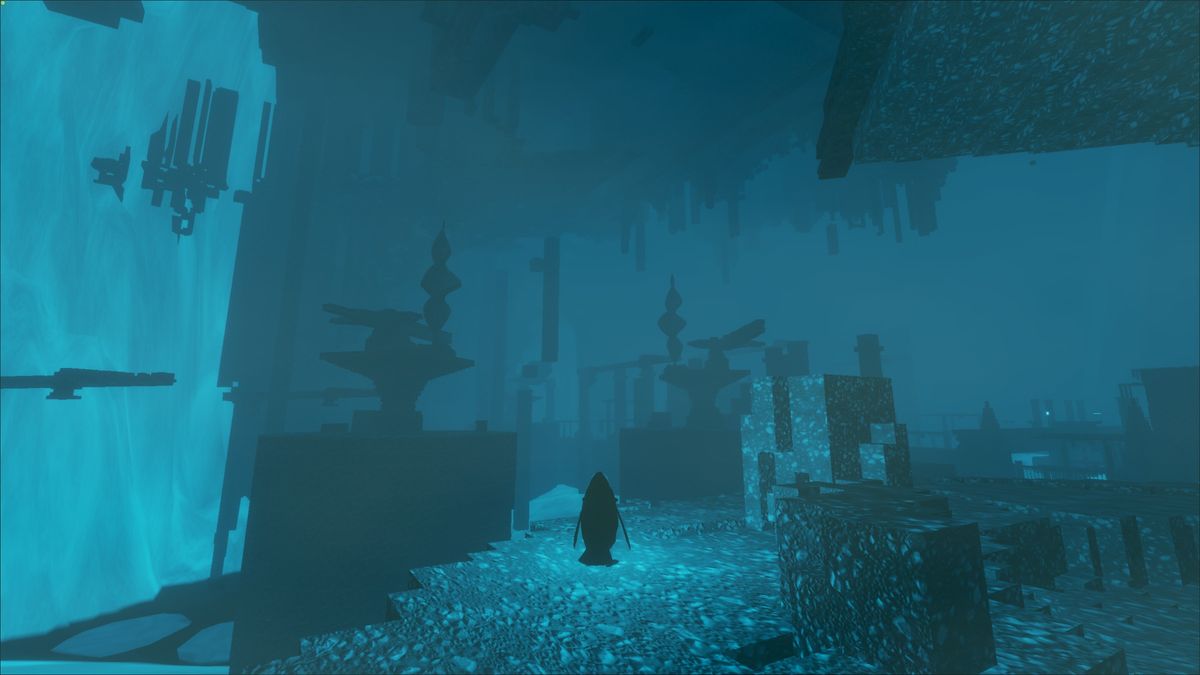
As the narrative progresses deep beneath the ice, the gameplay transitions from a whimsical animal sim into a deeply atmospheric, suffocating Foddian-style platformer. The final third of the experience drops the player into the twisting, incomprehensible megastructures of an ancient alien city, evoking the awe and dread of titles like Scorn and Dark Souls’ Ash Lake.

Supporting Data & Mechanics
Penguin Colony is a tightly packed experience that demands active engagement from its players, utilizing several distinct mechanical and narrative pillars:
- Audio Design & Narration: Veteran voice actor Lenval Brown—famed for his iconic, gravelly delivery as the narrator of Tales from The Hard Drive and his work in Disco Elysium—lends his talents to the game. Brown voices Howard Blakely, a neurotic and verbose American expedition member who serves as a pitch-perfect stand-in for Lovecraft himself.
- Traversal and Physics: Movement is deliberately sluggish and heavy. Waddling across alien geometry often feels clumsy, a design choice that intentionally reinforces the player’s status as a tiny, insignificant animal caught in the periphery of godlike events.
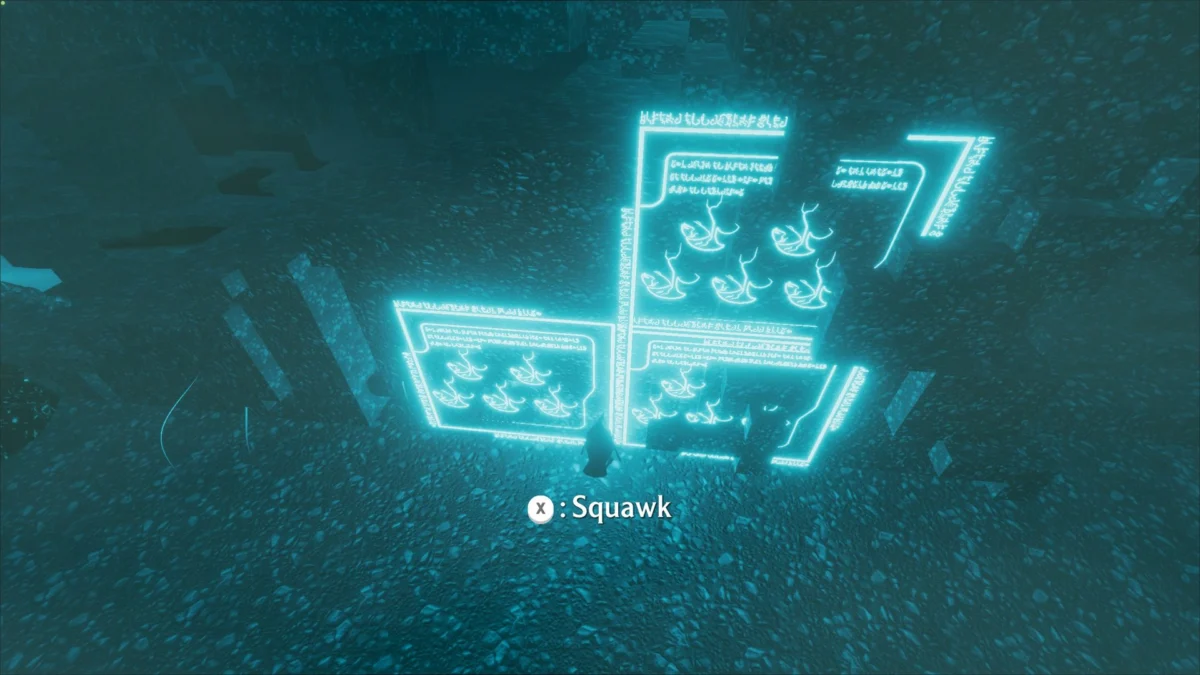
- Secret Languages: The game features a pervasive, cursive hieroglyphic system spread throughout the alien ruins. Players willing to keep a pen and paper nearby can decode this substitution cipher, unlocking deeper layers of the game’s hidden lore.
- System Requirements: The title is exceptionally well-optimized. Verified for the Steam Deck, it runs smoothly on modest hardware while maintaining striking, minimalist artistic direction.
Official Responses & Developer Intent
The minds behind Origame Digital have been vocal about their dual mission: celebrating the spine-chilling world-building of early 20th-century weird fiction while simultaneously dismantling its deeply problematic sociopolitical baggage.

Traditional cosmic horror adaptations have long practiced a form of selective memory, cheerfully adapting Lovecraft’s cyclopean horrors and elder gods while tactfully ignoring his virulent xenophobia and racism. Penguin Colony rejects this sanitized approach. Instead, it weaponizes Lovecraft’s prejudices, embedding them directly into the narrative through Howard Blakely. Blakely is depicted as an educated, modern man who finds himself entirely comfortable collaborating with an embedded Third Reich division—a historical nod to Nazi Germany’s occult and archaeological obsessions.
In sharp contrast to Blakely’s solipsistic navel-gazing, Penguin Colony introduces playable interludes featuring a party of Māori warriors. These indigenous characters possess a generational duty to track and contain the ancient evils slumbering at the bottom of the world. Operating with minimal dialogue, their actions emphasize communal solidarity, self-sacrifice, and active resistance against cosmic corruption—directly opposing both Blakely’s vulgar "scientific" detachment and the brutal nationalism of his Nazi companions.
The developers have also used direct addresses to the player to anchor these themes. The game opens with a respectful land acknowledgment and a content warning, while its post-credits sequence features a pointed political statement regarding modern humanitarian crises, amplifying the game’s overarching message about systemic indifference and marginalization.
Implications for the Cosmic Horror Genre
Penguin Colony proves that indie horror can still subvert a saturated market through sheer creative audacity. By filtering a classic literary text through the helpless, literal gaze of an Antarctic seabird, Origame Digital has engineered a brilliant mechanical metaphor: humanity, with all our self-important geopolitics and scientific hubris, are effectively unknowable, indifferent elder gods to the animal kingdom.

The game is not without its flaws. Inconsistent mantling physics and a jarring, neon-colored stamina meter occasionally disrupt the flow of exploration. Yet these rough edges ultimately serve to highlight the game’s unique texture. It is frustrating, brilliant, uncompromising, and deeply weird.
For $15, Penguin Colony delivers an interactive storytelling masterclass that challenges the foundational biases of weird fiction while delivering a genuinely unforgettable descent into the dark. It is a triumph of indie game design—and a reminder that sometimes, to truly understand the abyss, you have to waddle right into it.

