

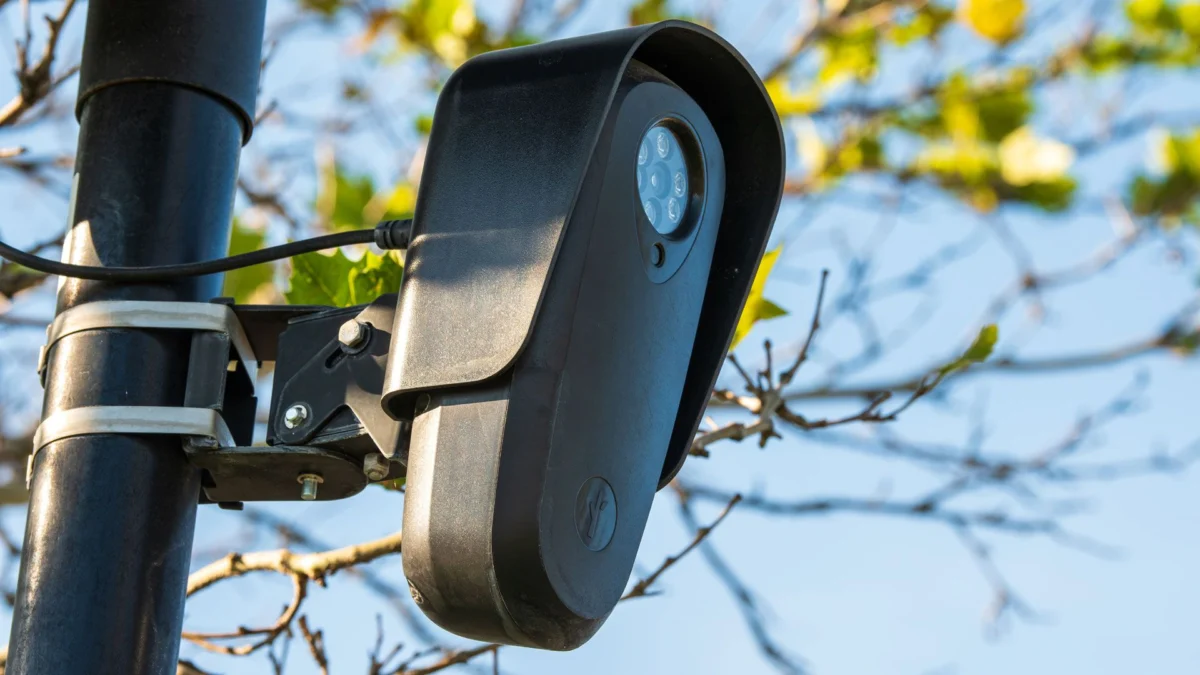
TORONTO — In an era defined by ubiquitous digital surveillance and the quiet erosion of public anonymity, the tables have briefly turned on law enforcement. Anthony Sistilli, a Canadian software engineer and prominent content creator, found himself on the receiving end of an unexpected law enforcement visit after engineering a custom Automated License Plate Recognition (ALPR) system explicitly designed to track police cruisers.
The project, which mimics the high-tech tracking apparatus increasingly deployed by police departments and private security firms against ordinary citizens, highlights a growing friction point between rapid technological advancement, government oversight, and personal privacy. While Sistilli’s experiment began as a technical challenge and a commentary on modern surveillance, it has since ignited a broader international conversation about who watches whom in the twenty-first century.
Main Facts
The core of the controversy centers on a custom-built, fixed-position ALPR camera system assembled by Sistilli. Using off-the-shelf hardware, optical character recognition (OCR) software, and machine learning models, Sistilli constructed a device capable of capturing, reading, and logging the license plates of passing vehicles in real time.
However, unlike commercial or municipal systems programmed to flag stolen vehicles, expired registrations, or general traffic, Sistilli’s apparatus was fine-tuned for a singular, provocative purpose: identifying and cataloging local police cruisers.
The project transitioned from a digital sandbox into reality when two uniformed police officers arrived at Sistilli’s doorstep on September 20. According to a video uploaded to Sistilli’s YouTube channel on October 7, the officers questioned him about the device, seeking to understand his intentions, the technical capabilities of the hardware, and the destination of the data being collected.
Sistilli, maintaining composure throughout the encounter, highlighted the profound irony of the situation. He pointed out to the officers that the anxiety and suspicion directed at his DIY project are the exact feelings experienced by millions of ordinary citizens daily. These citizens are routinely scanned, tracked, and logged by municipal and private ALPR networks without their explicit consent or knowledge.
Chronology of Events
To understand how a software experiment on a residential street drew the attention of law enforcement, it is necessary to trace the timeline of Sistilli’s project and the subsequent police response.
- Late Summer 2024: Motivated by a desire to explore computer vision applications and test the limits of consumer-grade surveillance tech, Anthony Sistilli conceptualizes a localized ALPR system. Rather than tracking general traffic—a common programming task for machine learning engineers—he decides to train the model to recognize police vehicle characteristics and specific municipal plates.
- Early September 2024: Sistilli successfully builds, calibrates, and deploys the camera system, positioning it to monitor traffic near his property. Within days, the system successfully compiles a database of local law enforcement patrols, noting times, frequencies, and specific cruiser license plates.
- September 20, 2024: Two police officers arrive at Sistilli’s residence. During the unannounced visit, the officers question him regarding the camera’s setup, its operational parameters, and his underlying motivations. The interaction is calm but tense, highlighting the legal and cultural sensitivities surrounding civilian surveillance of public servants.
- October 7, 2024: Sistilli publishes a detailed video documenting the project, the police visit, and his thoughts on the systemic asymmetries of modern surveillance technology. The video quickly gains traction across tech forums, privacy advocacy channels, and social media platforms, sparking widespread debate.
- Mid-October 2024 to Present: The story reverberates globally, drawing commentary from civil liberties groups, privacy advocates, and technologists who view Sistilli’s project as a watershed moment for grassroots pushback against mass surveillance.
Supporting Data: The Rise of Mass Surveillance
To fully grasp the societal reaction to Sistilli’s project, one must examine the staggering scale of institutional ALPR deployment, particularly in North America.
Over the past decade, ALPR technology has transitioned from specialized, expensive hardware used primarily by elite highway patrols to a ubiquitous, interconnected network of passive data collection. Cameras mounted on squad cars, utility poles, streetlights, and commercial parking lot entrances capture millions of images daily, converting visual license plate data into searchable, geolocated text strings.
The most prominent driver of this expansion in the United States is Flock Safety, a public safety technology company that has scaled its centralized national surveillance network at an unprecedented rate. According to company disclosures and industry data:
- Flock Safety’s network now encompasses over 120,000 cameras operating across 49 U.S. states.
- The system captures billions of vehicle scans every month, creating a historical archive of travel patterns for everyday citizens.
- This data is often shared across various law enforcement jurisdictions, allowing agencies to track vehicles across state lines without a warrant, establishing a persistent record of citizens’ movements, associations, and daily routines.
Critics argue that while these systems are frequently marketed as tools to solve high-profile crimes like amber alerts, carjackings, and property theft, their routine operation constitutes a form of dragnet surveillance. Every time an ordinary, law-abiding citizen drives past a Flock camera or municipal reader, their location is logged and stored—often for months or years—creating a profile of private habits that violates traditional expectations of public anonymity.
Official Responses and Perspectives
The confrontation at Sistilli’s doorstep underscores a deep philosophical and legal divide regarding who holds the right to monitor public spaces.
Law Enforcement Perspective
Law enforcement agencies generally defend the deployment of ALPRs as essential modern policing infrastructure. From the perspective of police departments, these systems act as force multipliers, compensating for declining staffing levels and enabling rapid response to active threats.
When police officers questioned Sistilli, their primary concern was ostensibly public safety and the potential misuse of surveillance data against individual officers, who increasingly face targeted harassment or security risks. In the view of many law enforcement representatives, civilian deployment of surveillance equipment targeting specific government personnel crosses a line from passive observation into targeted tracking, raising legitimate security concerns for officers in the field.
Furthermore, departments argue that municipal and corporate ALPR data is governed by strict internal policies, retention schedules, and access controls designed to protect civil liberties—though civil rights organizations frequently dispute the adequacy of these safeguards.
Privacy Advocates and Tech Community Perspective
Conversely, civil liberties groups, privacy watchdogs, and the broader tech community viewed the police response to Sistilli as a textbook example of institutional hypocrisy.
Organizations such as the American Civil Liberties Union (ACLU) and the Electronic Frontier Foundation (EFF) have long argued that if passive data collection of citizens in public spaces is legal and acceptable for the state, it must logically be legal and acceptable for private individuals to monitor public actors operating public vehicles on public roads.
Digital rights advocates point out that Sistilli did not hack secure government databases, trespass on private property, or deploy military-grade spyware. He merely used off-the-shelf optical character recognition tools—the exact same category of technology deployed by the state against the public—to observe public servants executing their duties in the public domain.
"The discomfort police felt upon realizing they were being tracked is precisely the discomfort that millions of citizens feel every time they leave their driveways," noted one prominent digital privacy researcher following the incident. "When surveillance flows downward from the state to the citizen, it is called public safety. When it flows upward from the citizen to the state, suddenly it draws a visit from the authorities."
Broader Implications
Anthony Sistilli’s viral experiment is far more than a curious internet anecdote; it serves as a microcosm for the larger battles over digital rights, state power, and the future of civil liberties in the twenty-first century.
1. The Legal Ambiguity of Public Surveillance
As commercial camera technology becomes cheaper, smaller, and more powerful, the legal boundaries governing public observation are being severely tested. In most jurisdictions, filming or photographing police officers carrying out their duties in public spaces is protected as a form of First Amendment (or equivalent constitutional) expression. However, when passive observation is automated, scaled, and transformed into a persistent tracking database, the legal framework becomes murky. Sistilli’s case highlights the urgent need for clear legislative guidelines regarding civilian-operated surveillance networks and their interaction with public officials.
2. The Asymmetry of Power
The core takeaway of the "watcher watched" narrative is the glaring asymmetry of power in modern surveillance capitalism. Governments and massive corporate entities possess the legal authority, financial resources, and institutional backing to monitor populations on an unprecedented scale. When an individual attempts to mirror this capability—even on a micro-scale directed solely at public figures—it immediately triggers a institutional reaction. This dynamic reinforces a troubling societal norm: monitoring is acceptable for the powerful, but suspicious or unacceptable for the powerless.
3. Technological Empowerment vs. Regulation
Sistilli’s project demonstrates the democratization of advanced technology. Machine learning, computer vision, and high-resolution optical sensors are no longer the exclusive domain of intelligence agencies or multi-billion-dollar tech conglomerates; they are accessible to any software engineer with an internet connection and a modest budget. As DIY surveillance capabilities continue to advance, society will face difficult questions about how to regulate public spaces without completely stripping away individual privacy or choking off technical innovation.
Conclusion
Anthony Sistilli never intended to spark a constitutional crisis, nor did he set out to challenge the legal foundations of municipal policing. His project began as a creative exploration of computer vision technology. Yet, by pointing the lens back at those who hold the monopoly on state surveillance, he inadvertently exposed a profound societal nerve.
As the deployment of ALPR networks like Flock Safety continues to expand unchecked across North America, incidents like the one on Sistilli’s doorstep will likely become more frequent. Whether this growing tension leads to meaningful legislative reform, stricter privacy regulations, or a deeper entrenchment of state surveillance remains to be seen. What is certain, however, is that the question of who watches the watchers is no longer confined to philosophical debate—it is playing out on our streets, one license plate scan at a time.

