

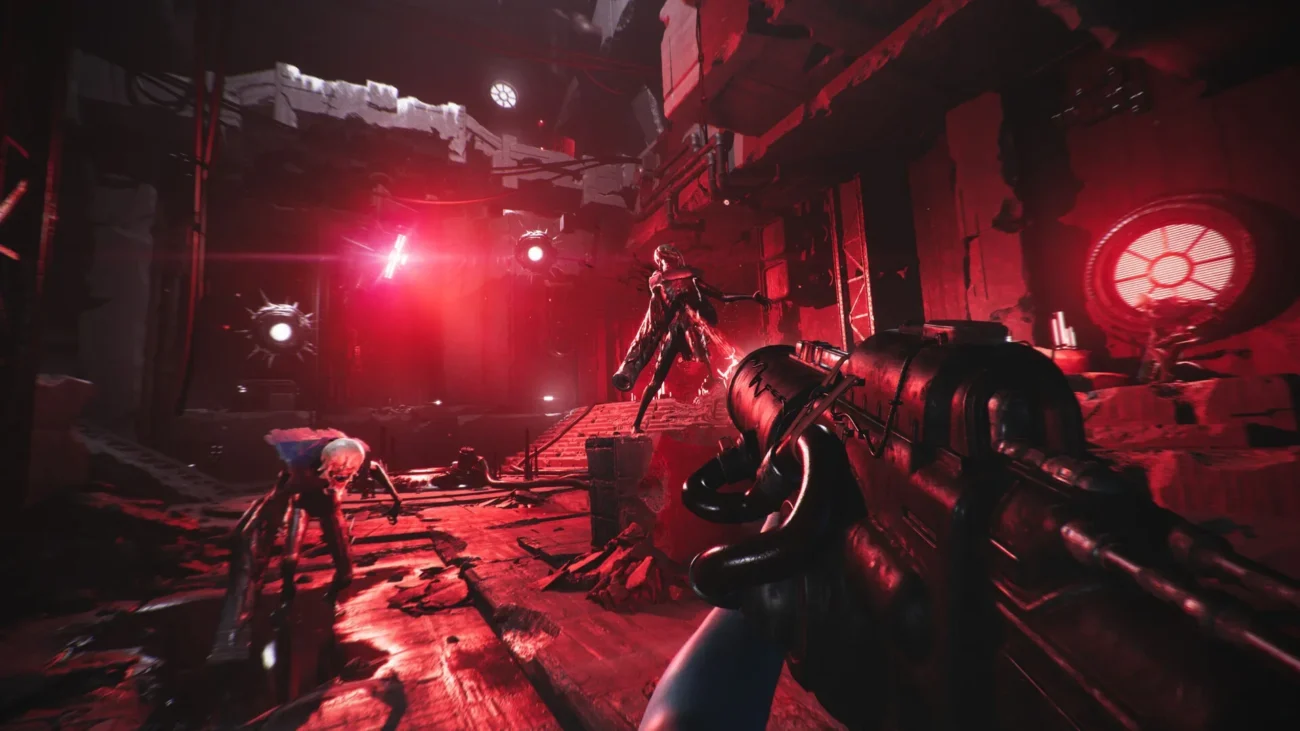
The gaming industry continues to grapple with a period of profound instability, and the latest casualty serves as a stark reminder of the volatility inherent in game development, even for projects that successfully cross the finish line. Kwalee Labs, the studio responsible for the critically acclaimed sci-fi shooter Luna Abyss, has been shuttered only one month after the game’s official release. The closure, which saw the immediate redundancy of the entire nine-person development team, marks a tragic end for a project that had survived significant financial turbulence to reach the public.
The Main Facts: A Studio Extinguished at the Starting Line
On June 21, 2025, the gaming community received the somber news that Kwalee Labs had ceased operations. The studio, which had only recently launched its debut title, Luna Abyss, on PC, PlayStation 5, and Xbox, was effectively dissolved. This development is particularly jarring given the positive reception the game garnered upon its May 21 launch.
The studio was not a legacy entity, but rather a phoenix that had struggled to rise. Originally founded as Bonsai Collective in 2019, the team had faced years of development challenges before being acquired out of administration by UK-based publisher Kwalee in September 2024. Despite the injection of capital and the successful completion of their ambitious project, the team’s tenure under the Kwalee banner was short-lived, lasting less than a year.
A Chronological History: From Bonsai Collective to Kwalee Labs
The trajectory of the studio is a roadmap of the modern indie developer’s struggle to secure stable funding and distribution.
2019–2021: The Genesis and Early Ambition
Bonsai Collective was established in 2019 by Hollie Emery, a veteran of the industry with experience at Team17. Operating as a fully remote studio, the team set out to create Luna Abyss, a narrative-driven bullet-hell shooter set within a derelict, subterranean alien structure. Their vision attracted significant interest, culminating in a $3.5 million investment in 2021 from publisher Super.com (which would later rebrand as Super Good Games).
2022–2024: Financial Storms and Acquisition
The path to release was fraught with industry-wide economic pressures. As the funding environment for mid-sized indie studios tightened, Bonsai Collective found itself in an increasingly precarious financial position. By late 2024, the studio had entered administration—a process designed to protect a company’s assets while attempting to settle its debts.
In September 2024, Kwalee, a prominent UK publisher founded by Codemasters visionary David Darling, stepped in to acquire the assets of the studio. The team was subsequently rebranded as "Kwalee Labs." This acquisition was viewed by many as a lifeline, providing the necessary resources to polish Luna Abyss and navigate the final stages of a demanding development cycle.
2025: The Short-Lived Release
Luna Abyss finally launched on May 21, 2025. It received praise for its unique art direction and tight mechanical gameplay. However, barely four weeks later, on June 21, the studio was shuttered, and its staff were laid off.
Supporting Data: Sales, Reviews, and Industry Context
The metrics surrounding Luna Abyss offer a complex picture of a game that succeeded in its creative mission but failed to meet the unsustainable commercial thresholds required to maintain a studio in the current market.
According to data provided by GameDiscoverCo, Luna Abyss moved approximately 12,000 units on Steam in its first month. While this is a respectable number for a small, independent team, it is often insufficient to cover the overhead costs of a developer, particularly when accounting for marketing, administrative costs, and the expenses incurred during the studio’s time in administration.
The game’s reception was, by all accounts, warm. Critics and players alike lauded the game’s atmosphere and the ambition of the nine-person team. Yet, in an era where "good enough" is often not enough to survive in a crowded marketplace, the game’s niche appeal—a narrative-heavy, sci-fi shooter—may have struggled to break out of the highly competitive "indie" space.
Official Responses and the Human Toll
The closure has been marked by a profound sense of grace and disappointment from leadership. Hollie Emery, the CEO and former head of Bonsai Collective, addressed the closure via a LinkedIn post, expressing both pride in the team’s work and sadness regarding the external forces that led to the shutdown.
"The decision was completely outside of our control," Emery wrote. She noted that while the studio faced numerous challenges throughout its lifespan, the release of Luna Abyss remained the "highlight of our careers." Emery highlighted that the team was "enamoured by the love and support it received both by our industry and critically by journalists and media."
Emery’s primary focus in her public communication was the welfare of her former colleagues. "The entire team are available for work as of today," she stated, effectively acting as an advocate for the nine developers who found themselves suddenly without a home. The professional tone of the announcement underscores the tight-knit nature of the studio and the heartbreak of seeing a project through to completion only to be dismantled immediately thereafter.
Kwalee, the parent company, has remained relatively quiet regarding the specific financial reasons for the closure. As of the time of writing, GamesIndustry.biz has reached out to Kwalee for comment on why the decision was made so soon after the game’s debut, though no official statement has been issued.
The Broader Implications: The "Middle-Market" Crisis
The dissolution of Kwalee Labs is not an isolated event; it is a symptom of a larger, systemic crisis in the video game industry.
The Sustainability of Mid-Sized Studios
Kwalee Labs represents the "middle-market" of game development—studios that are too large to be considered "solo indie" but lack the massive balance sheets of AAA conglomerates. These studios are the first to suffer when publishers tighten their belts. The expectation for a debut title to immediately turn a massive profit has become a baseline requirement for survival, leaving no room for growth or the development of a "long tail" for a game.
The Acquisition Risk
The case of Bonsai Collective highlights the risks of acquisition as a "rescue" strategy. When a publisher acquires a studio out of administration, they are often buying the intellectual property and the talent, but they are also inheriting the historical baggage of the studio’s financial failure. If the first project under the new ownership does not become an immediate "hit," publishers are increasingly willing to pull the plug, viewing the studio as an experiment that failed to reach the required ROI (Return on Investment).
The "One Month" Window
The fact that the studio was closed exactly one month after launch raises questions about the industry’s current tolerance for failure. In the past, publishers might have allowed a studio to move on to a second project or provide ongoing support for the title to build a community. Today, the focus is increasingly on immediate performance. If a game does not set the charts on fire in the first 30 days, the appetite to continue funding the developers behind it appears to have evaporated.
Conclusion: A Legacy Defined by Craft
While the doors at Kwalee Labs have closed, the legacy of Luna Abyss remains. For the nine developers involved, the project was the culmination of years of remote collaboration, overcoming the hurdles of the pandemic, shifting funding landscapes, and the stress of administration.
The closure of the studio serves as a poignant, if unfortunate, case study in the modern gaming landscape. It highlights the disconnect between creative success and financial viability. While the industry celebrates the artistic achievements of titles like Luna Abyss, the reality behind the curtain is one of extreme precariousness. As the industry continues to consolidate and prioritize bottom-line stability, small, talented teams remain the most vulnerable, regardless of the quality of their contributions to the medium.
The story of Kwalee Labs will likely be remembered not as a failure of the developers, but as an indictment of a market that leaves little room for anything less than a breakout success. The nine-person team now enters a job market that is similarly flooded with talent from other recent studio closures, reflecting the broader, ongoing contraction within the gaming sector. For now, Luna Abyss stands as a final, polished testament to the ambition and talent of a team that deserved a longer runway to prove its worth.

