

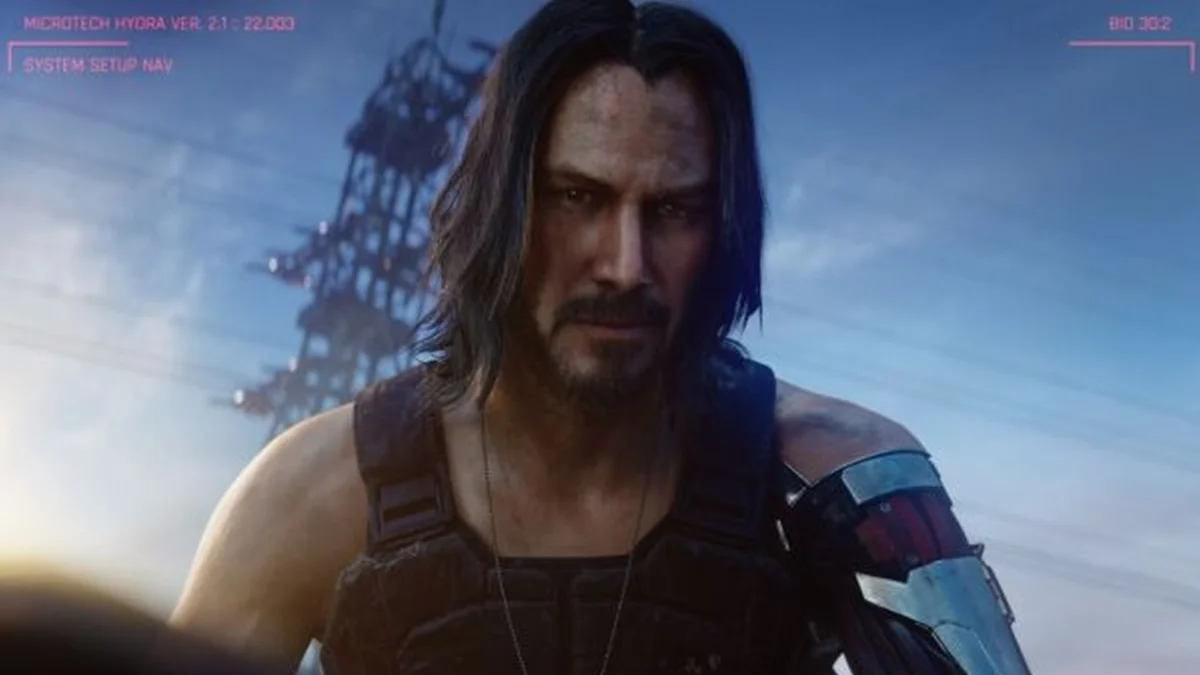
In the rapidly evolving landscape of interactive entertainment, the intersection of generative artificial intelligence and game development has become the industry’s most contentious frontier. While venture capitalists and tech evangelists herald a new era of "automated creation," industry veterans are voicing significant skepticism. Among them is Michał Nowakowski, joint CEO of CD Projekt Red—the powerhouse studio behind the The Witcher series and Cyberpunk 2077—who recently offered a sobering perspective on the viability of games built entirely through algorithmic prompts.
The Looming Wave of AI-Generated Content
The conversation surrounding AI in gaming has shifted from theoretical application to practical implementation. According to Nowakowski, who spoke recently with Edge’s Knowledge newsletter, the arrival of games developed entirely by generative AI is no longer a question of "if," but "when." He revealed that he has engaged in direct discussions with founders of new studios who are betting their entire business model on this automated future.
These studios operate on a philosophy of velocity. Nowakowski recounted a conversation with one such entrepreneur who boasted of a hyper-efficient pipeline: the ability to generate 40 prototypes within a single week, select the five most viable candidates, and finalize a market-ready game in under a month. While such rapid iteration is an enticing prospect for a bottom-line-focused startup, Nowakowski remains unconvinced that this is the path toward meaningful, long-term success in the medium.
"Maybe that’s going to be successful," Nowakowski remarked, "but I have some doubts whether this is really the path to follow."
The Battle for Attention in a Crowded Marketplace
The skepticism expressed by the CD Projekt Red executive is deeply rooted in the current state of the gaming industry. Today, the "fight for attention" is arguably more intense than at any point in history. Developers are no longer just competing with other titles from rival studios; they are fighting for space against an endless barrage of social media algorithms, streaming platforms, and short-form video content that command the average consumer’s limited attention span.
With thousands of games released annually, the market is suffering from a paradox of choice. For a game to break through this "noise," it requires more than just functional code and passable graphics; it requires a unique identity. Nowakowski argues that as the sheer volume of software hitting digital storefronts continues to climb, the ability to cut through that noise will become increasingly difficult.
His core philosophy is one of artistic integrity. He suggests that as long as a project possesses a "fresh idea" and a "soul," it retains a genuine shot at capturing the public’s imagination. The implication is clear: generative AI, by its nature, excels at replication and iterative recombination—it creates content based on existing data. In contrast, the "soul" of a game—those moments of profound emotional connection or innovative design—often stems from human intent, lived experience, and the deliberate defiance of convention.
The Ethical and Structural Implications
Nowakowski’s doubts are echoed across the broader development community. A recent investigation by GamesRadar, which surveyed over 30 game developers, highlighted a deep-seated anxiety regarding the industry’s pivot toward AI. The concerns are multifaceted, ranging from the immediate economic displacement of junior artists and writers to the complex legal questions surrounding intellectual property.
The Human Cost
One of the most pressing concerns is the impact on entry-level positions. In many creative industries, junior roles serve as the training ground for the next generation of directors and leads. If AI is used to replace the fundamental labor of concept art, asset creation, and basic coding, the industry risks "hollowing out" its talent pipeline. Without those entry-level opportunities, studios may find themselves struggling to foster the high-level expertise needed to create the next Cyberpunk 2077.
The Legal and Moral Quagmire
Beyond labor, there is the issue of provenance. Generative AI models are trained on massive datasets—often consisting of the work of human artists, writers, and musicians who have not consented to their output being used to train a machine that may eventually replace them. This has led to a climate of distrust, with many developers viewing the current wave of AI tools not as productivity boosters, but as instruments of plagiarism.
Environmental Impact
The environmental cost of large-scale AI is also beginning to enter the discourse. Training and running massive language models and generative image tools require immense computational power, leading to significant carbon footprints. As studios strive to meet ESG (Environmental, Social, and Governance) goals, the energy intensity of AI integration is becoming a point of friction.
Industry Response and CD Projekt Red’s Strategy
Despite the buzz, CD Projekt Red is maintaining a cautious, balanced approach. The studio has publicly stated that it aims to grow its output—developing more titles simultaneously—without falling into the trap of becoming a "factory" that churns out a massive game every year. This is a deliberate rejection of the "live service" or "rapid-release" models that often prioritize quantity over quality.
This strategy signals a commitment to the "prestige" model of game development. By focusing on high-quality, narrative-driven experiences, CD Projekt Red is positioning itself against the high-volume, low-effort games that the AI-centric studios are looking to produce.
In the broader industry, the response remains split. Some publishers, like Ubisoft and Electronic Arts, have expressed interest in utilizing AI for NPC dialogue and procedural world-building. These companies argue that AI can handle "menial" tasks, freeing up human creators to focus on the big-picture vision. However, critics argue that this is a slippery slope, and that once the "soul" of a game is outsourced to an algorithm, the end result inevitably suffers.
Looking Forward: A Future for Human-Led Design
The clash between the "AI-first" development philosophy and the "human-led" philosophy is likely to define the next decade of gaming. We are approaching a tipping point where the market will be flooded with low-cost, AI-generated titles. This may lead to a bifurcation of the industry:
- The Content-Volume Tier: A sea of AI-generated titles that are cheap to produce and designed for quick engagement. These will likely dominate the lower-cost mobile and indie markets, competing on price and novelty.
- The Premium/Soulful Tier: Projects that emphasize human artistry, complex narrative architecture, and deliberate design choices. These will likely command higher prices and retain the "prestige" status that allows a studio to build a long-term brand identity.
Nowakowski’s warning is a reminder that in the creative arts, efficiency is not synonymous with quality. If a studio can build a game in three weeks, they might have a product, but they may not have a legacy. As the novelty of AI-generated content wears off, players will likely return to the games that resonate on a human level—games that were built, brick by brick, with intent and care.
For CD Projekt Red and studios of a similar stature, the path forward is clear: lean into what the machine cannot replicate. By doubling down on deep storytelling, technical excellence, and the intangible "soul" of their work, they are betting that in a future of automated content, the human touch will become the most valuable commodity of all.
Ultimately, the experiment of AI-generated gaming will provide the data the industry needs to understand its own value. If the market continues to demand high-quality, hand-crafted experiences, the AI-first model will remain a footnote in history. If, however, the audience is satisfied with a constant stream of algorithmic content, the industry as we know it will undergo a fundamental, and perhaps irreversible, transformation. For now, the "soul" remains in the hands of the creators—a fragile, essential component that no prompt has yet been able to define.

