

In the landscape of modern digital entertainment, few platforms have undergone as radical a metamorphosis as Roblox. Once dismissed by industry traditionalists as a niche sandbox for younger audiences, the platform has surged into a dominant force in the global gaming ecosystem. New data released in a joint report by market intelligence firm Newzoo and brand-strategy experts GEEIQ reveals that Roblox is not merely holding its own; it is effectively cultivating a highly lucrative, maturing audience that challenges the dominance of traditional PC and console gaming giants.
The State of the Platform: Unprecedented Engagement
The raw numbers tell a story of immense scale. During the first half of 2026, Roblox generated a staggering 4.05 billion hours of playtime across PC and console platforms, officially cementing its status as the most-played game by total hours globally. This figure is not an anomaly; it is the result of a massive, self-sustaining ecosystem.
GEEIQ’s analysis indicates that the platform currently sustains an average of 14 million concurrent users at any given moment. These users are spread across a vast library of 6.7 million active experiences. Perhaps most indicative of the platform’s "sticky" nature is the concentration of play: roughly 7 million of those concurrent users are engaged within the top 50 experiences alone.
As of January 1, 2026, these high-traffic experiences have been characterized by stability rather than volatility. Unlike the traditional gaming market, which is often defined by the "hype cycle" of new AAA launches, the Roblox ecosystem is dominated by long-running live-service titles. Users are returning to familiar, evolved worlds rather than chasing the latest marketing-heavy releases.
The Maturing Demographic: A Goldmine for Monetization
Perhaps the most significant finding from the Newzoo and GEEIQ report is the economic behavior of Roblox’s older demographic. Contrary to the outdated stereotype that Roblox is strictly for children, the platform has successfully fostered a cohort of players aged 16 and older who are significantly more inclined to spend money than the average gamer.
According to the data, 80% of this older Roblox audience has spent money on games within the past six months. When compared to the 59% spending rate among non-Roblox players, the discrepancy is stark. This 21-percentage-point lead suggests that Roblox is not just a place to play, but a habitual spending environment.
Newzoo market analyst Tianyi Gu notes that this maturing audience is distinct from traditional PC and console demographics. Their engagement is heavily driven by entertainment IP—the desire to interact with brands and franchises they already consume in other media—which suggests that the platform’s future growth is tied directly to its ability to bridge the gap between passive content consumption and interactive play.
Chronology of a Shift: From Sandbox to Service
The current dominance of Roblox was not an overnight success but the result of a multi-year strategy focused on audience retention and technical advancement.
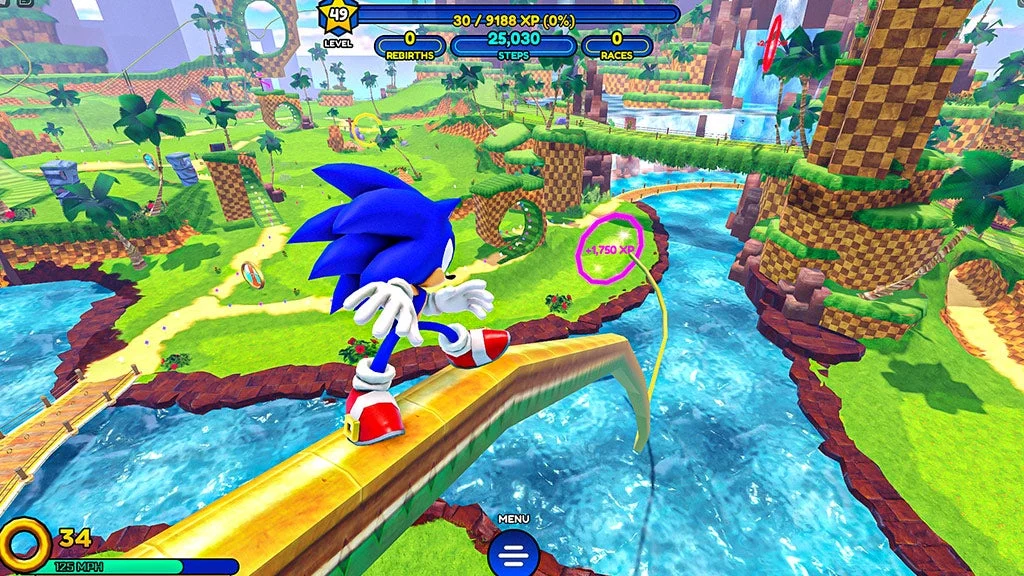
- 2022: The release of Sonic Speed Simulator, developed by Gamefam, marked a turning point for branded content. By leveraging the Roblox Studio engine, the game became a massive hit, proving that high-quality, branded experiences could achieve massive scale.
- 2024: Sonic Speed Simulator became the first branded game on the platform to surpass one billion visits, validating the "owned-world" strategy where brands build and maintain a permanent presence rather than a temporary pop-up.
- 2025 (Throughout): Roblox began implementing stricter age-verification processes. While this led to short-term financial volatility—specifically lower-than-expected average bookings per daily active user (ABPDAU) under the age of 13—it signaled a pivot toward long-term sustainability and safety.
- 2026 (H1): The platform achieved record-breaking playtime hours, solidifying its hold on the PC and console markets.
- Late 2026/Early 2027 (Projected): The expected rollout of "Roblox Reality," an AI-driven upscaler designed to bring photorealistic graphics to existing experiences, promises to further blur the lines between Roblox and traditional AAA gaming.
Supporting Data: The Competitive Landscape
The report highlights a fascinating trend regarding player migration. When users do "lapse" or move away from Roblox, they don’t necessarily leave the gaming ecosystem entirely. A significant portion moves to other established live-service titles like Fortnite and Minecraft.
However, there is a notable 30% segment of the audience that drifts toward realistic shooters, including Call of Duty and Grand Theft Auto Online. This indicates a "latent demand for AAA-style action" within the Roblox user base—a gap that the platform is actively attempting to fill.
The report also provides a sobering look at how the broader gaming industry has failed to capitalize on the platform. Out of 553 media and entertainment activations on Roblox since 2021, only 15 have come from the video game industry itself. The approach has been inconsistent: while Ubisoft has experimented with five integrations, most of these were minor, short-term additions to existing worlds. In contrast, the success of Sega’s Sonic integration, which required a four-year commitment to building an "owned-world," stands as the gold standard for how publishers should view the platform.
Official Responses and Strategic Implications
Roblox’s management has made it clear that they are prioritizing long-term retention over short-term revenue spikes. This is evident in their Q2 results, where the cost of implementing age-verification technology was treated as a necessary investment. By ensuring a safer, more mature environment, they are courting an older demographic that possesses higher purchasing power and long-term brand loyalty.
The introduction of "Roblox Reality" is the next logical step in this strategy. By addressing the "graphical deficit"—the perception that Roblox games lack the visual fidelity of modern AAA titles—the company hopes to retain the 30% of their audience that currently migrates to high-fidelity shooters.
The Broader Implications for the Industry
For traditional game publishers, the message from the Newzoo/GEEIQ report is twofold. First, there is no immediate threat of Roblox displacing the AAA market in the coming quarter. The overlap data confirms that the core audiences, while maturing, are still distinct.
However, the second implication is a warning: the audience is real, it is growing up, and it is highly engaged. The brands that are currently experimenting on the platform are essentially participating in a live-action experiment regarding the future of digital social spaces.
As the report concludes, even for companies that have no intention of building on Roblox, the platform serves as a barometer for what the next generation of gamers values. Whether through the lens of live-service longevity, the integration of entertainment IP, or the future of AI-driven visual fidelity, Roblox is no longer just a "kids’ game." It is a massive, evolving laboratory for the future of the interactive entertainment industry. Publishers who ignore this growth risk being left behind as a significant portion of their potential customer base finds a new home—and a new way to spend—within the Roblox ecosystem.

