

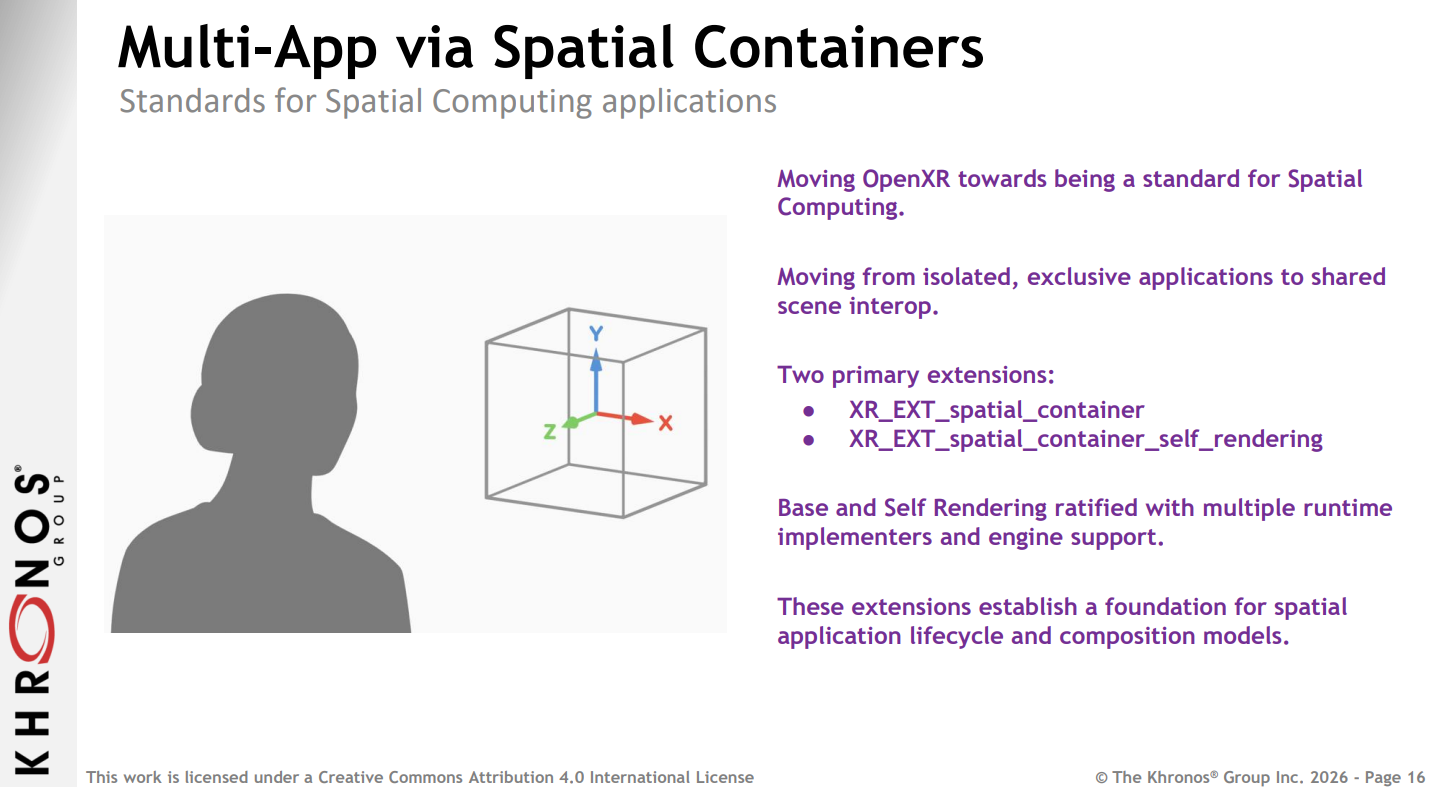
SAN FRANCISCO — The Khronos Group has officially ratified and published the OpenXR Spatial Container extensions, a milestone development aimed at standardizing system-managed environments where augmented reality (AR), virtual reality (VR), and mixed reality (MR) applications can seamlessly display volumetric 3D content.
This move mirrors how conventional operating systems organize 2D software within dedicated windows on a desktop. By extending the capabilities of the widely adopted OpenXR API, the new standard promises to reshape how developers construct cross-platform spatial applications, bridging the historic gap between isolated, fully immersive experiences and multitasking mixed-reality environments.
Main Facts
The newly introduced OpenXR Spatial Container extensions provide a universal framework for developers to build 3D applications capable of shifting fluidly between multitasking modes and full-space immersion.
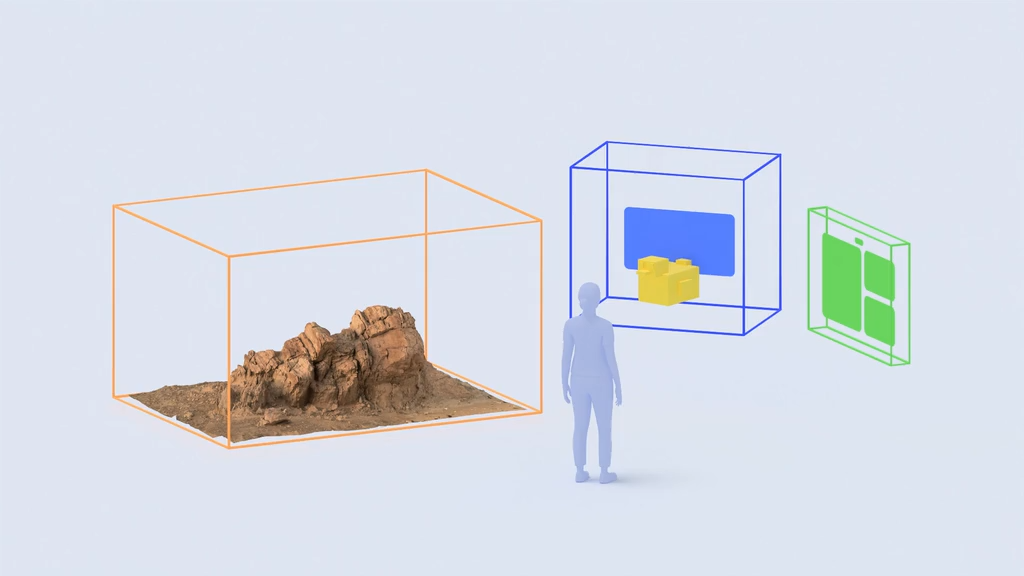
- The Core Mechanism: Spatial Containers are system-managed spaces that host volumetric content. Their physical placement can either be determined and pinned by the user, or dynamically managed by the host system to follow the user during movement.
- OpenXR Ecosystem Reach: OpenXR serves as the premier open standard API for AR, VR, and MR application development and runtimes. Overseen by the Khronos Group—the non-profit consortium behind low-level graphics powerhouses like OpenGL, Vulkan, and WebGL—OpenXR enjoys near-universal hardware and engine support across the XR industry, though notable exceptions like Apple’s visionOS and Sony’s PlayStation VR2 currently maintain proprietary paths.
- Industry Adoption & Intent: Google has already voiced formal enthusiasm for incorporating Spatial Container support into Android XR. Meanwhile, other ecosystems like Pico OS 6 are natively aligning their architectures around similar multi-app volumetric compositing philosophies, setting the stage for a fragmented market to coalesce around standardized interoperability.
Chronology: The Evolution of Spatial Multitasking
To understand the weight of the OpenXR Spatial Container release, it is necessary to examine the architectural evolution of spatial computing over the past several years:
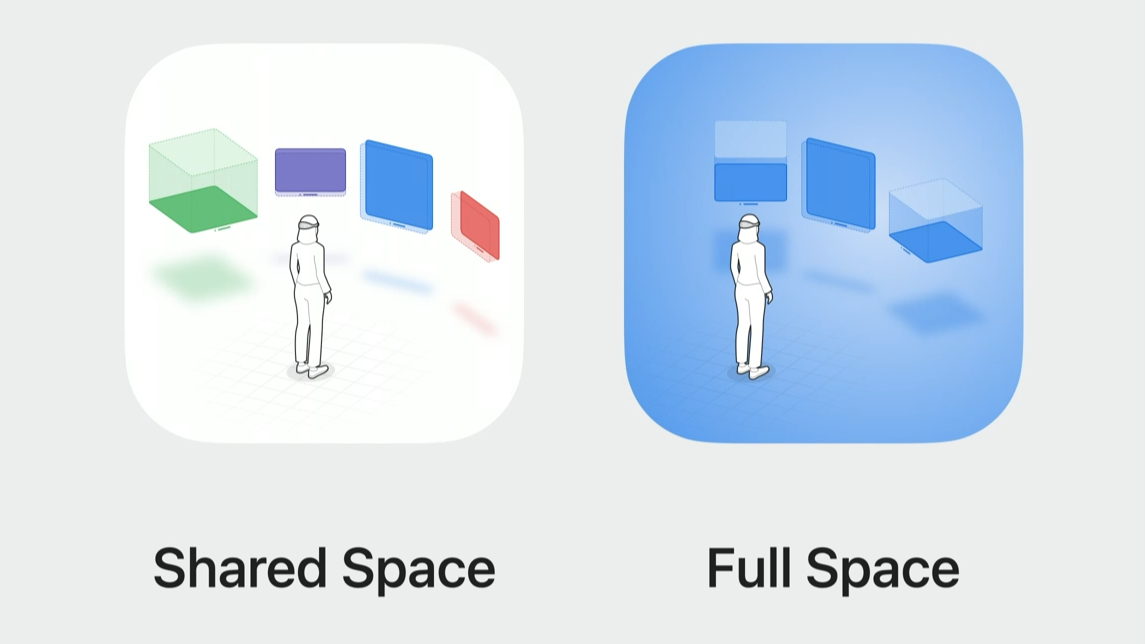
- June 2023 (Apple’s Paradigm Shift): Apple introduced visionOS alongside the Apple Vision Pro. Its "Shared Space" architecture and RealityKit framework fundamentally changed developer expectations by allowing 2D windows and volumetric 3D apps to run side-by-side in a system-managed environment before expanding into fully immersive "Full Space" views.
- September 2023 (Meta’s Early Ambitions): During Meta Connect 2023, Meta previewed "Quest 3 Augments"—persistent, spatially aware digital objects designed to populate a user’s physical living space using Meta Spark Studio assets. However, technical hurdles forced the feature back to the drawing board.
- June–August 2024 (Rebuilding the Foundation): Meta CTO Andrew Bosworth publicly confirmed that Quest 3 Augments were undergoing a ground-up rebuild because the initial iteration failed to meet internal performance and experiential standards.
- August 2025 (Refining Strategy): Bosworth provided additional updates confirming that Meta’s spatial operating system (Horizon OS) was continuing its structural overhaul to improve window and spatial application management.
- Late 2026 (The OpenXR Standard Arrives): The Khronos OpenXR Working Group officially ratified and published the Spatial Container extension specifications and sample code, giving the broader industry a standardized, non-proprietary blueprint for multi-app volumetric environments.
Supporting Data and Technical Architecture
The architecture of OpenXR Spatial Containers is designed to solve one of the most stubborn bottlenecks in spatial user interface design: managing performance, focus, and rendering across disparate software components.
Historically, most mainstream standalone headsets running Android-based derivatives—such as Meta’s Horizon OS and early iterations of Android XR—have supported flexible 2D multitasking (running a browser, chat client, and video player simultaneously) while strictly bottlenecking 3D rendering to a single, monolithic active application. Launching a complex 3D game or simulation required pausing or completely closing out other immersive elements.

The OpenXR Spatial Container specifications change this by introducing a standardized set of extensions now available in the OpenXR Registry. These extensions allow applications to instantiate multiple independent volumetric containers. Key architectural pillars include:
- System-Level Window and Space Compositing: The underlying runtime manages the boundaries, occlusion, and layout of spatial containers, mimicking the window-manager paradigm familiar to desktop and mobile computing.
- Dynamic Transition States: Applications are no longer binary (either windowed or fully immersive); they can scale their volumetric footprint dynamically, transitioning gracefully between ambient multitasking spaces and foreground immersion.
- Optimized System Renderers: Beyond the initial spatial container specifications, the Khronos OpenXR Working Group has confirmed it is actively developing complementary extensions. These upcoming tools will allow apps to leverage hardware-optimized, system-provided renderers tailored to specific device profiles—scaling efficiency smoothly from low-power standalone mobile headsets to high-performance tethered systems.
Official Responses and Industry Stakeholder Positions
The announcement has triggered widespread commentary across the XR landscape, highlighting both unified excitement and notable strategic divergences among tech giants.
Google Embraces the Standard
Jared Finder, Google’s XR Platform and SDK Lead, issued a strong endorsement in the official Khronos announcement. Finder stated that Google is "excited to bring Spatial Container support to Android XR," signaling that future iterations of the company’s spatial computing ecosystem will natively support the open standard rather than relying entirely on proprietary middleware.
Meta’s Quest for "Augments" Redemption
While Meta did not issue an immediate, explicit commitment to adopting the OpenXR Spatial Container extensions on Horizon OS, industry analysts note that the standard arrives at an opportune moment for the company.
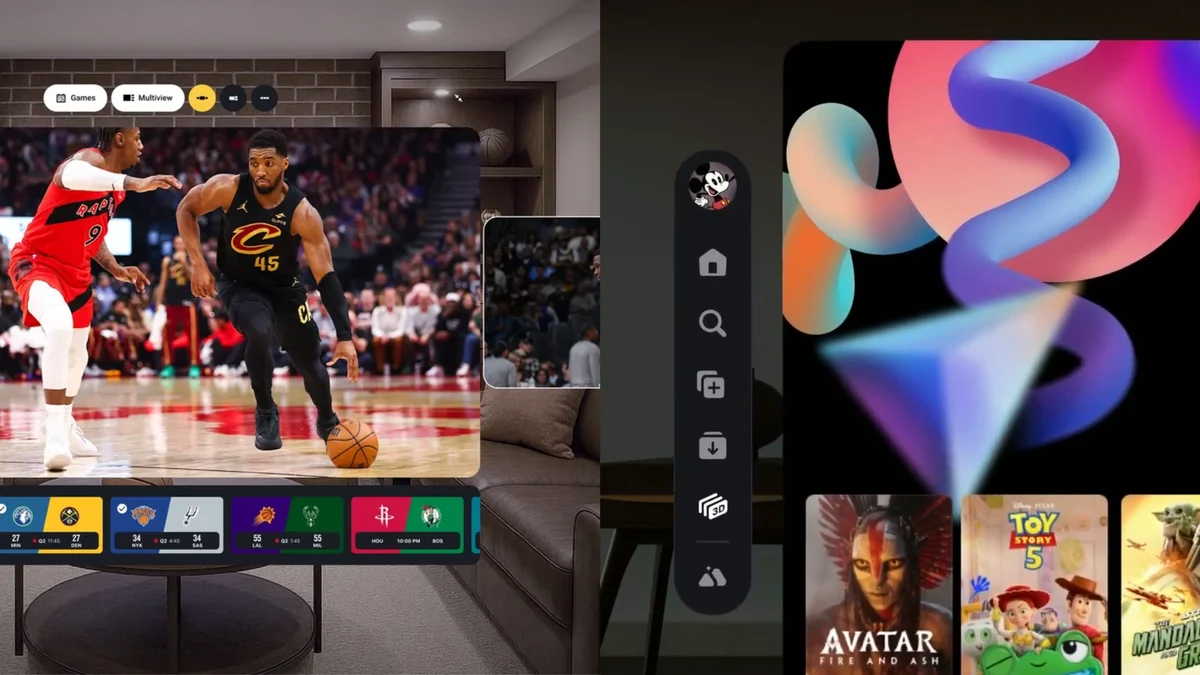
Meta has spent the better part of three years attempting to solve the technical riddle of persistent, system-managed 3D objects (originally dubbed Augments for the Quest 3). With Meta Spark Studio defunct, the company has pivoted its developer tooling toward robust spatial window management and advanced SDK expansions for apps like NBA and Disney+. Integrating OpenXR Spatial Containers could provide Meta with a pre-vetted, standardized engineering foundation to finally deliver on its original vision for persistent, multi-app spatial objects without having to engineer a proprietary protocol from scratch.
The Competitive Landscape: Pico OS 6 and visionOS
The pressure is particularly visible among competing ecosystems. Pico OS 6—powering the upcoming Pico Space Pro headset—features a custom unified rendering architecture called the Pico Spatial Engine, built precisely around the concept of running 2D and 3D applications side-by-side against passthrough or virtual backgrounds.

By formalizing these exact workflows into OpenXR, Khronos is effectively providing non-Apple hardware manufacturers with a standardized open counterpart to Apple’s visionOS Shared Space architecture.
Implications for Developers and the Future of XR
The ratification of OpenXR Spatial Containers marks a critical maturity phase for the spatial computing industry. For years, the lack of a unified standard meant developers targeting multiple headset brands had to code custom rendering loops, input handlers, and composition layers for each hardware vendor’s proprietary SDK.
1. Lowering the Barrier for Cross-Platform Development
With Spatial Containers standardized under OpenXR, a developer can write an application that manages volumetric data, places 3D UI elements in shared spaces, and responds to system-level positioning cues once—and deploy it across any compliant headset runtime. This dramatically reduces development overhead for enterprise software, collaborative tools, and mixed-reality productivity suites.
2. A Blueprint for True Spatial Multitasking
As consumer expectations shift away from siloed VR experiences toward continuous mixed reality—where digital artifacts coexist permanently with physical living spaces—operating systems must handle multiple resource-heavy 3D apps simultaneously. OpenXR Spatial Containers provide the exact technical scaffolding required to make this safe and efficient, preventing apps from fighting over depth buffers, rendering priority, and spatial tracking data.

3. Implementation Timeline
The official extension specifications, documentation, and sample code (including the reference implementation for hello_xr via the Khronos GitHub repository) are available now. According to the Khronos OpenXR Working Group, commercial runtime implementations are expected to roll out across the broader hardware ecosystem throughout the year.
As hardware makers adopt these extensions, the industry moves one step closer to a truly interoperable spatial web, where applications are no longer locked behind vendor-specific walls, and users enjoy a fluid, desktop-like freedom of movement across all their favorite volumetric tools.

