

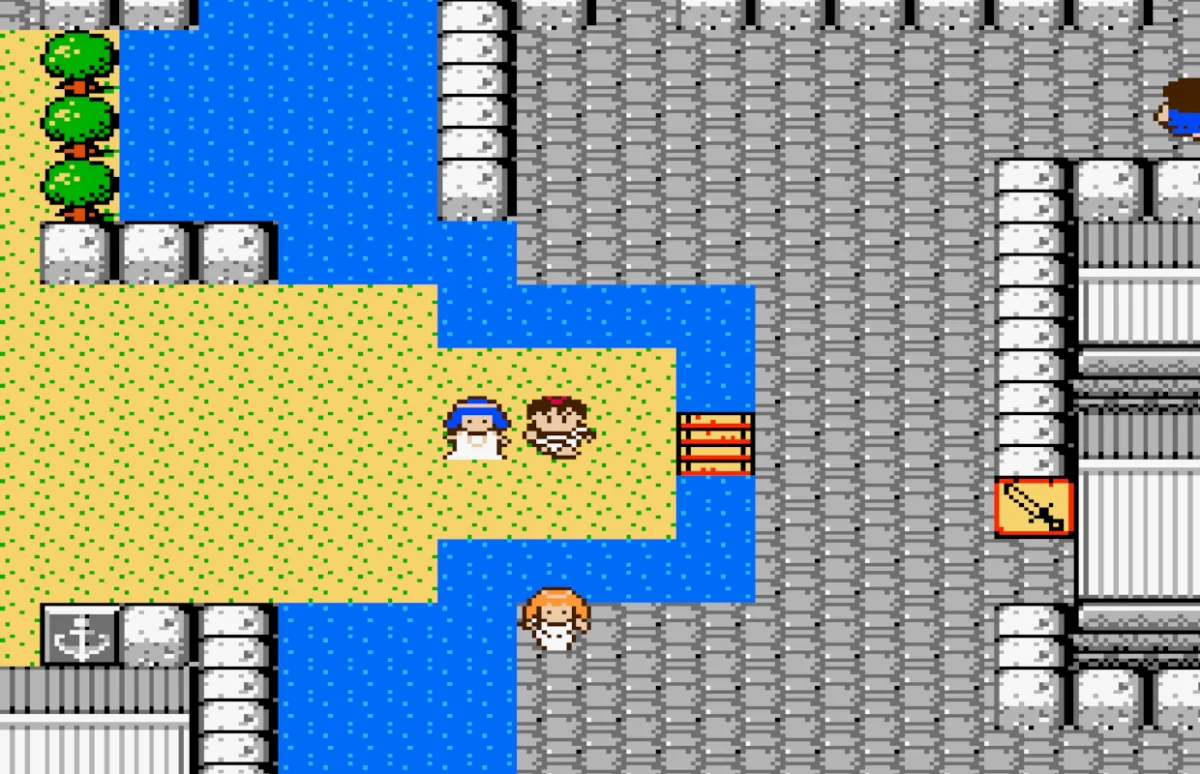
The landscape of retro gaming preservation continues to evolve, as Hamster Corporation—the industry leader in bringing arcade and console classics to modern platforms—has officially announced the release of Glory of Heracles II: Titan no Metsubou (The Fall of the Titans). Originally released in 1989 for the Famicom (the Japanese iteration of the Nintendo Entertainment System), this seminal role-playing game is making its way to the Nintendo Switch and PlayStation 5 via the publisher’s acclaimed "Console Archives" series.
Priced at a modest $7.99, this digital port offers modern gamers a chance to experience a title that helped define the early RPG genre in Japan. While the title is now accessible to a global audience, its journey from a 1989 Famicom cartridge to a modern digital storefront is a testament to the enduring appeal of 8-bit storytelling and the ongoing mission of historical preservation in the gaming industry.
The Main Facts: Bringing 1989 to the Modern Era
The Glory of Heracles (Hercules no Eikou) series occupies a unique space in gaming history. While it never achieved the global ubiquity of Final Fantasy or Dragon Quest, it remains a cult classic for its distinct take on Greek mythology.
Hamster Corporation’s latest offering is a faithful emulation of the 1989 title. For $7.99, players can access the game via the Nintendo eShop and the PlayStation Store. This is not a "remake" or a "remaster" in the traditional sense; rather, it is a high-fidelity port designed to run on modern architecture (Switch and PS5) while maintaining the original’s look, feel, and mechanical quirks.
The game follows the hero’s journey across a vast, mythological landscape. As the title suggests, the player is tasked with assembling a party of allies to thwart a rising tide of monsters intent on world domination. It is a quintessential JRPG experience of the late 80s: turn-based combat, exploration, and a narrative steeped in the legends of antiquity.
Chronology: A Series Reclaimed from Obscurity
To understand the significance of this release, one must look at the timeline of the Glory of Heracles franchise. The series began in 1987 with the original Glory of Heracles on the Famicom, a game that established the series’ identity as a mythological RPG. For decades, these titles remained largely locked within Japan, accessible only through original hardware or fan-made translation patches.
The recent push by Hamster Corporation to port these titles signals a turning point. The first entry in the series was ported to the Console Archives platform just last May, marking the first time many international fans could officially engage with the game. With the addition of Glory of Heracles II in the current release window, Hamster is essentially curating a digital library of Data East’s RPG history.
This chronology is vital: by releasing the games in order, Hamster allows modern players to witness the evolution of the series’ design philosophy. The leap from the 1987 original to the 1989 sequel demonstrates a rapid maturation in level design, party management, and narrative complexity that was characteristic of the Famicom’s "Golden Age."
Supporting Data: Understanding the Limitations and Features
When approaching a game from 1989, expectations must be managed. Hamster Corporation has been transparent about the limitations of this port. While the store pages indicate language support for English, French, Italian, German, and Spanish, the developer has clarified that this localization does not extend to the in-game text.
The language support is limited to the digital manual and the option menus. The core gameplay, dialogue, and narrative remain in their original Japanese format. For the uninitiated, this poses a barrier to entry, but it is a standard approach for "pure" preservation ports. The target audience for this release is twofold: the retro-gaming purist who appreciates the original experience, and the collector who values the inclusion of the game in an official digital library.
The game itself is a classic 8-bit RPG, featuring:
- Party Dynamics: The ability to recruit companions with unique abilities.
- Exploration: A world map that draws heavily from Greek mythology.
- Combat: A traditional turn-based system that requires strategic management of resources and character health.
- Narrative: A direct sequel that expands upon the lore established in the 1987 debut, focusing on the "Fall of the Titans."
Official Responses and Historical Context
Data East, the original developer, was known for its eclectic library and willingness to experiment with different genres. Glory of Heracles II was one of their most successful RPG ventures. In official materials provided by Hamster, the premise is described with a sense of nostalgic gravitas: "To my dearest, and to the brave… This is an RPG where you play as a hero traveling a vast world to defeat monsters who plot to dominate it. Join forces with companions you meet along the way and restore peace and tranquility to the world."
The inclusion of the game on the PlayStation 5 and Nintendo Switch is a nod to the cross-generational appeal of these titles. Sony and Nintendo platforms have become the primary homes for retro enthusiasts, thanks to the accessibility of digital storefronts. By bridging the gap between an 8-bit Famicom chip and a PS5’s custom SSD, Hamster is effectively performing "digital archaeology," ensuring that these games do not disappear into the void of hardware obsolescence.
Implications: The Future of Retro Preservation
The release of Glory of Heracles II carries significant implications for the industry. First, it validates the market for "niche" retro titles. Many publishers are hesitant to release games that have not been localized, fearing a lack of interest. However, Hamster Corporation’s success proves that there is a dedicated global community willing to support original, non-localized releases as long as they are provided on modern, convenient platforms.
Second, this release highlights the role of third-party publishers in maintaining history. While major companies like Nintendo and Capcom focus on their blockbuster back catalogs, smaller firms are stepping in to ensure that "B-tier" but culturally significant games are not lost.
Finally, there is the question of accessibility. By offering the game at $7.99, the barrier to entry is extremely low. This pricing strategy encourages "impulse buys" from gamers who might have never heard of the series but are curious about the origins of the JRPG genre. It turns the gaming industry into a living museum, where the history of interactive entertainment is not just a footnote in a textbook, but an active, playable experience.
The Legacy of Glory of Heracles
As players boot up the game for the first time, they are transported back to 1989. The sound chips of the era, the limited color palettes, and the demanding difficulty curve are all present. Yet, beneath the technical limitations lies a story that has resonated for over three decades. The Glory of Heracles series is a reminder that the fundamentals of good RPG design—a hero, a party, and a world worth saving—are timeless.
Hamster Corporation’s commitment to this series is a vital contribution to the gaming landscape. As we look toward the future of the Nintendo Switch 2 and the continued lifecycle of the PlayStation 5, it is comforting to know that we are not leaving our past behind. Whether you are a veteran of the Famicom era or a newcomer curious about the roots of your favorite RPGs, Glory of Heracles II offers a window into a bygone era of game development—a time of pixelated wonder and pure, unadulterated heroism.
In conclusion, the release is more than just a port; it is an act of cultural preservation. By making Glory of Heracles II available, Hamster Corporation ensures that the ingenuity of Data East’s designers, programmers, and writers continues to be appreciated by new generations. As the digital storefronts expand, one can only hope that this is just the beginning of a larger initiative to catalog and release the forgotten gems of the 8-bit and 16-bit eras, ensuring that the history of gaming remains as vibrant and accessible as the latest AAA release.

