

The landscape of video game publishing is undergoing a seismic shift. For decades, the industry operated on a rigid, top-down model where major legacy publishers held the keys to funding, distribution, and marketing. Today, however, that foundation is cracking. At the forefront of this disruption is Pocketpair, the Japanese studio that stunned the world with the overnight success of Palworld.
Fresh from the success of Palworld—which has eclipsed 32 million players—Pocketpair is leveraging its newfound capital to launch a publishing arm that aims to dismantle the traditional "recoup" model. As the industry gathers at events like BitSummit 2026, it has become clear that the era of the monolithic publisher is being challenged by a new wave of creator-led initiatives.
The Death of the Legacy Model
John Buckley, Head of Publishing and Communications at Pocketpair, is blunt about the state of the industry. Speaking at BitSummit 2026, he argues that the terms offered by traditional industry giants have become relics of a bygone era.
.jpg?width=1200&height=630&fit=crop&enable=upscale)
"The terms they offer and the way they structure their deals have increasingly become irrelevant to what the industry is today," Buckley says. The primary grievance? The "100% recoup revenue clause." Under this outdated standard, publishers demand to keep all earnings from a game until they have fully recouped their initial investment. This often leaves developers with nothing, even when their titles find moderate success.
Buckley notes that this is "gaming ten years ago." He argues that legacy publishers rely on their brand recognition to dictate terms, essentially betting that developers are so desperate for a distribution partner that they will accept predatory contracts. Pocketpair’s mission, by contrast, is to prove that a more equitable, sustainable model is not only possible but necessary.
A Chronology of Disruption: From Surprise Hit to Publisher
Pocketpair’s journey from a niche developer to a publishing titan was anything but calculated.
.jpg)
- January 2024: Palworld launches, shattering records with over 2 million concurrent players on Steam.
- Early 2025: Pocketpair officially launches its publishing division, fueled by the staggering revenue from its flagship title.
- Mid-2025: The studio signs its first wave of titles, including Dead Take from Surgent Studios, effectively saving the developer from a forced hiatus.
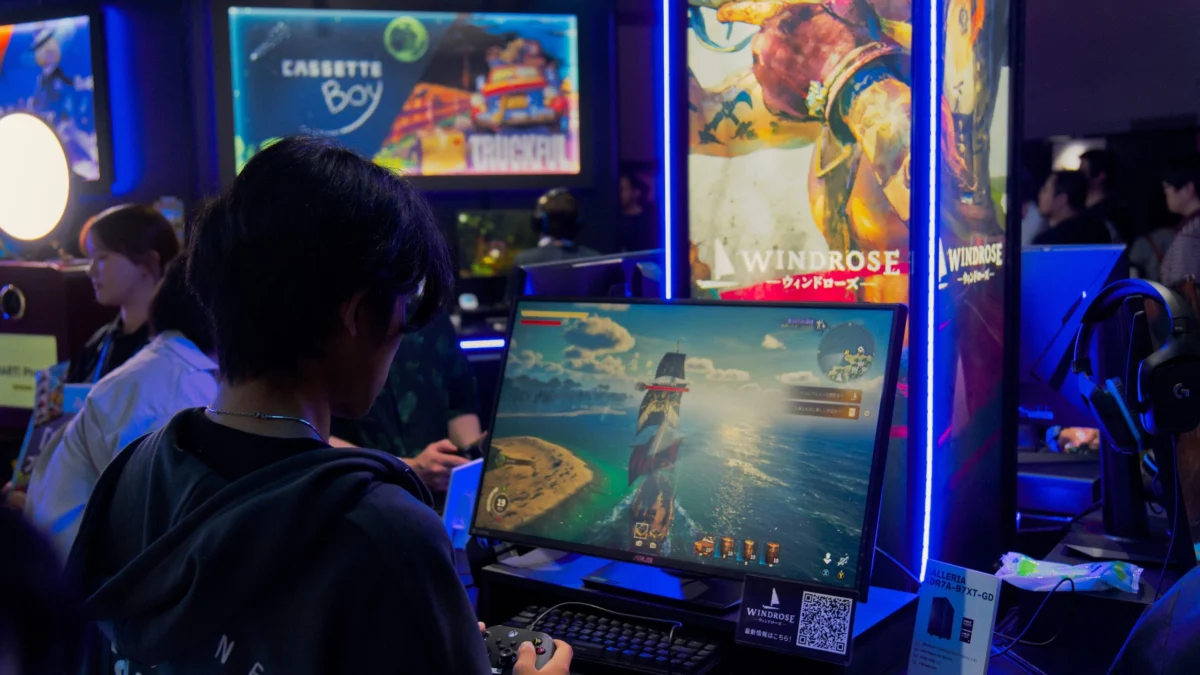
- Late 2025 to 2026: The catalog grows to seven titles, with the pirate survival hit Windrose selling over one million units in its first week.
- July 2026: Palworld prepares for its official 1.0 release, transitioning from a "surprise hit" to a long-term multimedia franchise.
The decision to enter publishing wasn’t a master plan; it was a response to the market. "We were confused at first," Buckley recalls. As a Japanese company operating in an insular industry, Pocketpair was initially unaware of the dire state of indie funding. When developers began approaching them for support, the team realized they were uniquely positioned to offer a lifeline.
Supporting Data: The Rise of the "Pick and Mix" Publisher
Pocketpair is far from alone in this movement. They are part of a burgeoning ecosystem of developer-led labels that include:
- Outersloth: Turning the success of Among Us into a funding engine for fellow indies.
- Evil Landfall: A label born from developers to support creative risk-taking.
- Ghost Ship Publishing: Utilizing the success of Deep Rock Galactic to foster growth.
- Kinetic Publishing: Championing creative freedom in the indie space.
The data suggests this model works. Windrose, the first major success under the Pocketpair banner, peaked at over 222,000 concurrent players—a testament to the fact that when developers are supported rather than exploited, they produce massive results.

Unlike legacy publishers, Pocketpair operates on a "pick and mix" basis. They provide support where it is needed—whether that be global marketing, localization, or QA—without demanding ownership of the developer’s intellectual property. With a 30–40% recoup rate and "amicable exit" clauses, the firm is setting a new standard for transparency and developer autonomy.
The Future of the Modern Publisher
Buckley predicts that the traditional publisher will soon be relegated to the role of a marketing agency. "I think we’re going to see more hit games coming from publishers you’ve never heard of," he posits.
The future, he believes, lies in incubators and public funds rather than large corporate entities. As development barriers vanish, the geographic location of a studio becomes increasingly irrelevant. Pocketpair’s roster currently includes teams from Uzbekistan and Poland, proving that innovation is borderless. The challenge for the publisher is no longer to provide the technology to make a game, but to navigate the nuanced landscape of international marketing, tax law, and platform support.

Official Responses and the Shadow of Litigation
Despite the success of the publishing arm, Pocketpair operates under the heavy cloud of legal conflict. The ongoing patent dispute with Nintendo, which began in September 2024, has been a significant drain on the studio’s morale and resources.
Nintendo’s legal challenges—which have targeted specific mechanics like character-summoning and capture systems—have forced Pocketpair to alter its core game. As of 2025, the studio has removed the ability to throw Pal Spheres in a "Pokéball-style" manner and has abandoned Pal-gliding mechanics.
Buckley remains measured when discussing the litigation. "There’s the actual litigation, and then there’s the court of public opinion," he says, noting that the case has dragged on for over a year and a half. "It obviously has an impact on development."

However, there is no sense of surrender at the Pocketpair headquarters. The studio has expanded from a team of 35 to over 120 employees, with internal incubation teams currently working on new, smaller, and more experimental projects.
Implications: A New Era for Developers
The implications of Pocketpair’s publishing philosophy extend far beyond the immediate success of Palworld. By choosing to reinvest their earnings into other independent creators, they are effectively building a new infrastructure for the gaming industry.
The company is now moving into a multi-pronged expansion strategy. With the 1.0 release of Palworld imminent, the firm is also exploring spin-offs like Palworld: Palfarm and a physical card game produced with Bushiroad. Furthermore, a high-profile partnership with Aniplex and Sony Music hints at a long-term ambition to transform Palworld into a multimedia empire.

As the industry looks toward the next generation, the "Pocketpair model" offers a compelling blueprint. It is a model that prioritizes the health of the developer over the leverage of the publisher. It acknowledges that the industry is no longer controlled by a few gatekeepers, but by a global, interconnected community of creators.
For developers currently struggling to find funding or visibility, the message from the Palworld team is clear: you don’t need a legacy publisher to reach millions of players. You just need a partner who understands that the "old way" of doing business is dead—and that the future belongs to those who empower the creators.
As Buckley puts it: "We’re making the game we like to make, and our players love that. Survival crafting is our genre, and we’re going to keep making the game we love." In an industry often accused of losing its soul to corporate mandates, that defiance might be the most valuable asset of all.

