

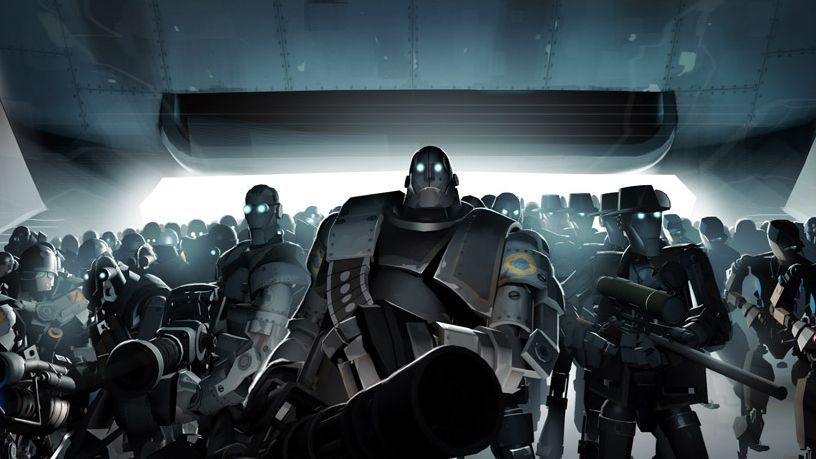
For millions of players, Team Fortress 2 (TF2) is more than just a game; it is a decade-spanning cultural phenomenon that has defied the traditional lifecycle of online shooters. Yet, the community currently finds itself trapped in a cycle of anticipation and radio silence regarding a major, long-promised update for the game’s iconic cooperative mode, Mann vs. Machine (MvM). While Valve has officially confirmed that work is ongoing, the silence—broken only by brief, wry status reports—has left many wondering if the “robot invasion” will ever receive the reinforcements it was promised.
The State of Play: A Timeline of Stalled Progress
The saga began in June 2023, when Valve issued an official call to arms on the Team Fortress 2 blog. The developer invited the vibrant, highly active community to submit maps and mission designs for an upcoming MvM update. At the time, the announcement was met with overwhelming enthusiasm. The deadline for these submissions was set for August 27, 2023—a date described by Valve as a “fictional deadline,” but one that nonetheless galvanized the modding community to produce a deluge of content.
However, as the summer of 2023 faded into autumn, the "fictional" nature of that deadline became a point of irony. By September, Valve issued a brief progress report, acknowledging that the volume of submissions had far exceeded their initial projections. They expressed gratitude for the community’s creative output but notably failed to provide a release window.
Following that update, the project entered a period of relative dormancy. For ten months, the official communication channels remained silent, leading to speculation that the project might have been shelved in favor of other internal priorities. This week, that silence was finally broken with a characteristically dry update: "We wanted to give everyone an update on the update we already gave on the update we’re working on, and here it is: We’re still working on the MvM update."
Decoding the Developer’s Silence
To those unfamiliar with the inner workings of Valve, the lack of progress might seem inexplicable. Valve is the architect of the Steam platform, an engine of digital commerce that has generated an estimated $11.1 billion in gross revenue in the first half of this year alone. With resources that dwarf most of the gaming industry, one might assume that a single update for an aging title would be a trivial matter to resource.
However, Valve’s operational philosophy is famously unique. Eschewing the traditional, hierarchical corporate structure found at companies like Activision or EA, Valve utilizes a "flat" structure. In this environment, employees are encouraged to gravitate toward projects that interest them or where they feel they can provide the most value.
In practice, this means that while Team Fortress 2 remains a profitable and beloved title, it must compete for developer attention against the company’s higher-priority initiatives. Currently, the company’s focus is heavily weighted toward the sustained success of Counter-Strike 2, the ongoing maintenance of Dota 2, the development of the mysterious new title Deadlock, and the hardware-side innovations represented by the Steam Machine and the upcoming Steam Frame. In this internal "marketplace of ideas," an MvM update for a 17-year-old game, while cherished by its player base, often finds itself fighting for oxygen.
Community Resilience and the "Plump Seal" Phenomenon
Despite the lack of major, game-altering patches, Team Fortress 2 remains a statistical anomaly. In 2023, the game shattered its all-time peak concurrent player record, proving that its core gameplay loop—a blend of class-based strategy and chaotic, slapstick humor—remains peerless.
Part of this longevity is due to the symbiotic relationship between Valve and its modders. Even in the absence of the MvM update, the game continues to receive seasonal content drops. Earlier this month, for instance, a minor patch arrived, introducing a collection of community-crafted maps, cosmetic items, and taunts. These updates, while small in scope, keep the game’s economy and player base churning.
The community has historically been the lifeblood of the game. Fans have even turned quirks, like the addition of a "plump seal" character model, into community memes that celebrate the game’s inherent absurdity. This ability to find joy in the smallest additions underscores why the community is so invested in the MvM update: they aren’t just looking for bug fixes; they are looking for a sign that Valve still acknowledges the commitment of its most dedicated players.
The Implications of the "Valve Time" Model
The situation serves as a classic case study of what the community jokingly refers to as "Valve Time"—a phenomenon where project timelines are stretched indefinitely, often leading to results that are polished but perpetually delayed.
The implication here is twofold. Firstly, it highlights the sustainability of the "Live Service" model when it is handled with community involvement. By delegating the creation of maps and missions to the players, Valve has managed to keep Team Fortress 2 alive with minimal direct labor. However, the bottleneck occurs when Valve needs to review, balance, and integrate that massive influx of community-submitted data. As the developer noted, they are simply overwhelmed by the volume of high-quality content they received.
Secondly, it raises questions about the future of legacy titles. As Valve pivots toward new hardware and competitive multiplayer giants, Team Fortress 2 acts as a fascinating anchor. It is a game that is effectively "too big to fail" but "too old to prioritize."
What to Expect Next
Moving forward, players should adjust their expectations. The MvM update is clearly not a "main event" for the company. It is a community-driven project being curated by a skeleton crew of developers who are juggling other, more resource-intensive projects.
Valve’s promise that they are "sorting through the content" should be taken at face value. They are not ignoring the community; they are grappling with the sheer scale of the love the community has poured into the game. The "fictional" nature of the deadline has become a reality of the development process: the project will arrive when it is ready, and not a moment sooner.
For the Team Fortress 2 faithful, the strategy remains simple: keep playing. The game continues to receive minor stability patches, its servers are full, and the community economy is as robust as ever. While the MvM update feels like a carrot on a stick, the game itself—the maps, the classes, and the community—is still functioning as well as it ever has.
In a gaming landscape defined by rapid releases and annual sequels, there is something almost admirable about the slow, deliberate, and occasionally frustrating pace of Team Fortress 2. It is a game that refuses to die, waiting patiently in the wings for its next major update, bolstered by a community that simply refuses to walk away. Whether the MvM update arrives in a month or a year, the robots will still be there, and the Mercenaries will be waiting to stop them.

