

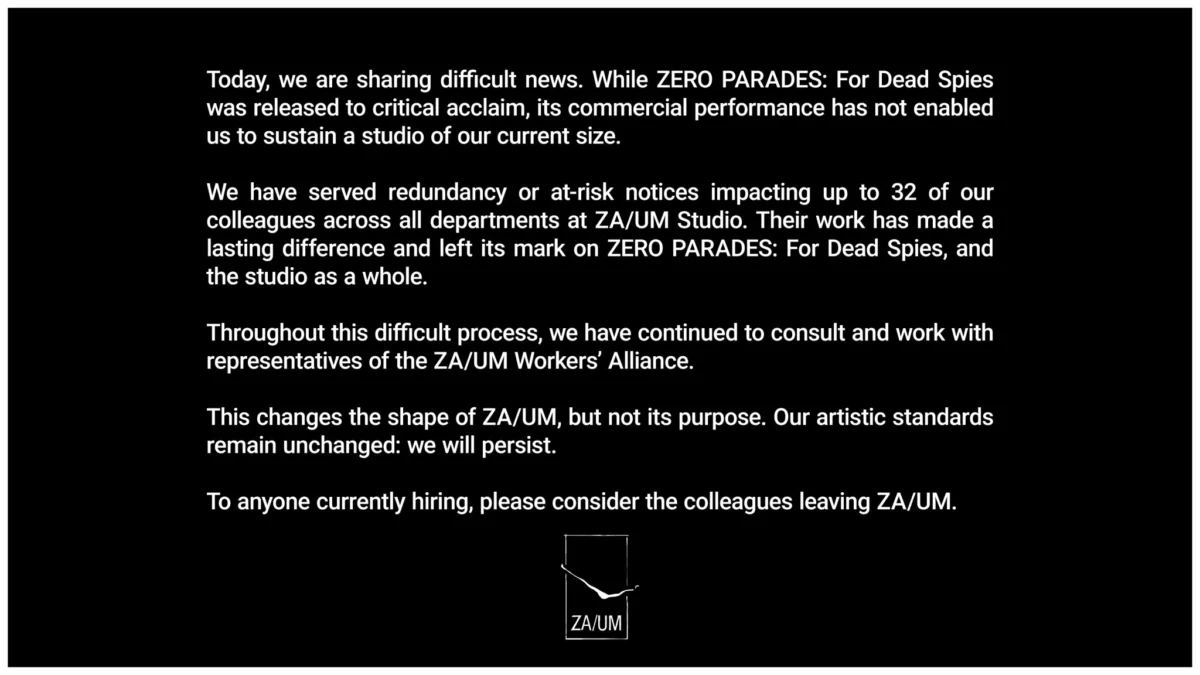
Two months after the high-profile launch of Zero Parades: For Dead Spies, Studio ZA/UM—once the celebrated titan of the indie RPG scene—finds itself in a state of institutional collapse. The studio has confirmed that the commercial performance of its latest title has failed to meet the financial thresholds required to sustain its current workforce, leading to the layoff of up to 32 employees. This announcement marks yet another dark chapter in the history of a company that, in less than half a decade, has transformed from the vanguard of narrative gaming into a cautionary tale of corporate mismanagement and internal strife.
The Reality of the "Redundancy" Notice
The news was disseminated via a brief, clinical statement on social media, detailing that the studio has served redundancy or "at-risk" notices across all departments. The statement, while acknowledging the "critical acclaim" garnered by Zero Parades, was stark in its admission of failure: the game’s reach and revenue were simply insufficient to maintain the studio’s existing headcount.
For the 32 employees facing the loss of their livelihoods, the news is a bitter pill. Many of these developers joined or remained at the studio in the hopes of carrying forward the creative spirit that birthed Disco Elysium. Instead, they find themselves caught in the wake of a project that, despite its polish and ambition, could not overcome the massive, shifting shadows of its predecessor.
A Chronology of a Studio’s Unraveling
To understand the current crisis at ZA/UM, one must look back at the chaotic timeline that led to the departure of the studio’s original creative core.
- 2019: Disco Elysium launches to near-universal acclaim. It is hailed as a masterpiece of writing, philosophy, and isometric RPG design, cementing ZA/UM as a powerhouse in the independent sector.
- 2021-2022: The relationship between the studio’s leadership and its founding creative members—including writer Robert Kurvitz and art director Aleksander Rostov—begins to fracture. Public reports emerge regarding the involuntary departure of these key figures.
- Late 2022: The studio faces a flurry of controversy as allegations surface concerning the "false premises" used to fire key creators. The community, deeply attached to the intellectual and emotional core of Disco Elysium, begins to turn against the studio’s management.
- 2024: As development on Zero Parades continues, the studio is marred by further layoffs, effectively purging the remaining talent associated with the original team.
- May 2026: Zero Parades: For Dead Spies is released. Critics are divided, and the audience—primed by years of corporate drama—approaches the title with a mixture of skepticism and outright hostility.
- July 2026: ZA/UM confirms the mass layoff of 32 staff members, citing poor commercial performance.
The Creative Divide: Zero Parades vs. Disco Elysium
The failure of Zero Parades to find a mass audience is not merely a matter of marketing; it is a question of design philosophy and identity. While Zero Parades attempted to iterate on the successful structural foundation of Disco Elysium, critics have pointed out that the execution felt hollow.
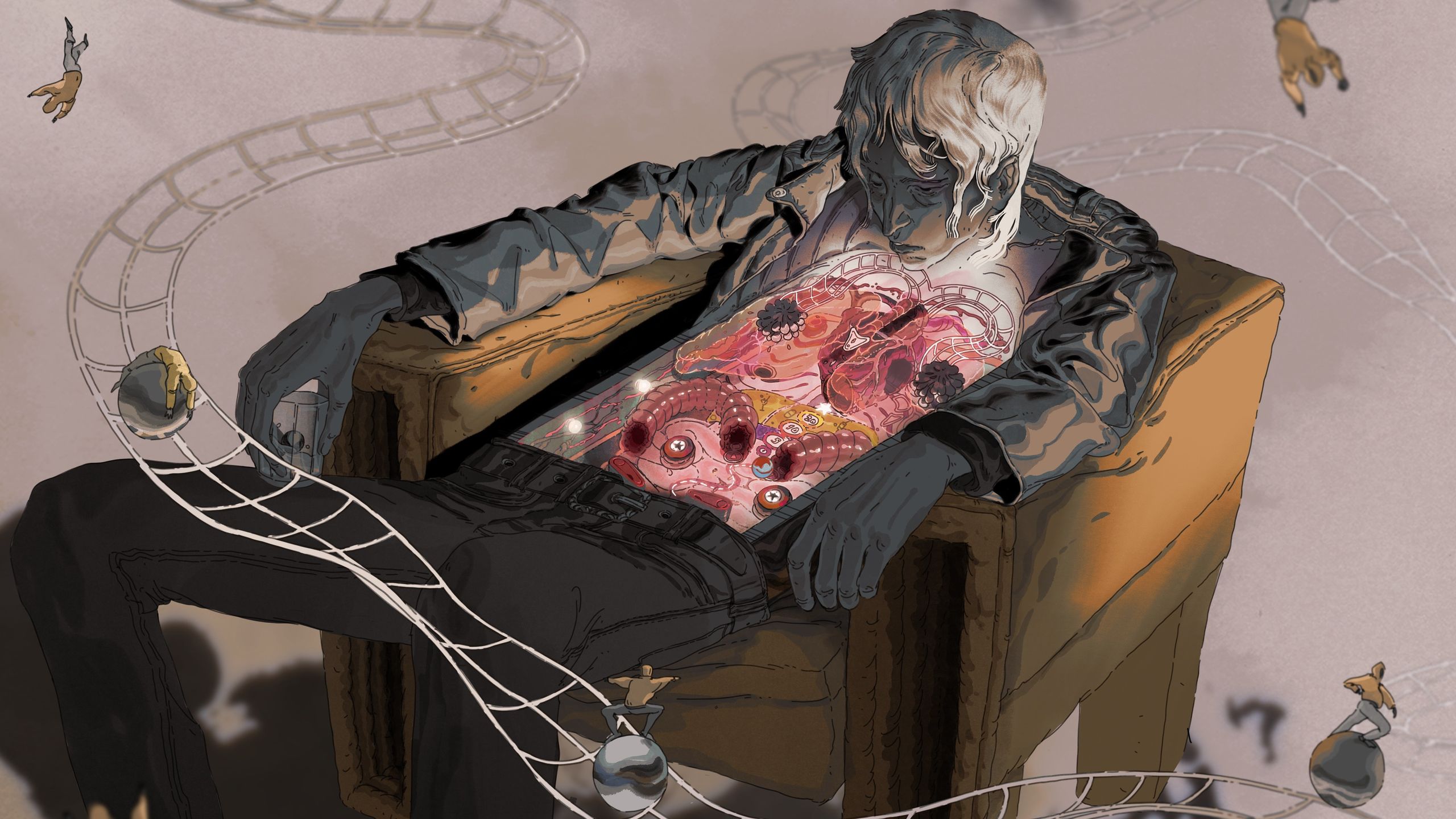
In a review that characterized the game’s reception, Maddi Chilton noted that the game suffered from a fundamental disconnect: "No matter how fun or well-designed individual aspects of the game are, they all swirl around Hershel’s fundamentally nonsensical approach to international espionage." The critique highlighted that transplanting the specific, melancholic structure of a police procedural onto a spy narrative resulted in a jarring experience. Fans of the original game felt the absence of the original creators’ "soul," describing the new title as a mimicry of the Disco style without the depth of character or thematic resonance that made the original so transformative.
The "Hostile Fanbase" and Market Perception
Perhaps the most significant factor in the game’s commercial failure is the "hostile fanbase" phenomenon. The gaming public, particularly the niche of RPG enthusiasts who elevated Disco Elysium to cult status, viewed ZA/UM not just as a developer, but as a site of historical injustice.
When Zero Parades was announced, industry observers noted that it would need to be truly "spectacular" to win back the trust of a community that felt betrayed by the studio’s treatment of its founders. As it turns out, the game was not enough to overcome the ideological barrier. For many players, purchasing Zero Parades was seen as a validation of the current management—a move that many, on principle, refused to make.
The Human Cost: A Developer’s Perspective
The reaction on social media from industry insiders and fans alike has been largely sympathetic to the employees, while simultaneously being scathing toward the studio’s leadership. The prevailing sentiment is that the employees were set up for failure by a management team that failed to protect the studio’s most valuable asset: its integrity.
One user on Bluesky encapsulated the tragedy: "Imagine deciding to stick with ZA/UM because you genuinely believe in the team and its artistic vision only to be among 32 people rewarded with layoffs after managing to make a game that stands on its own feet despite the looming shadow of Disco Elysium."
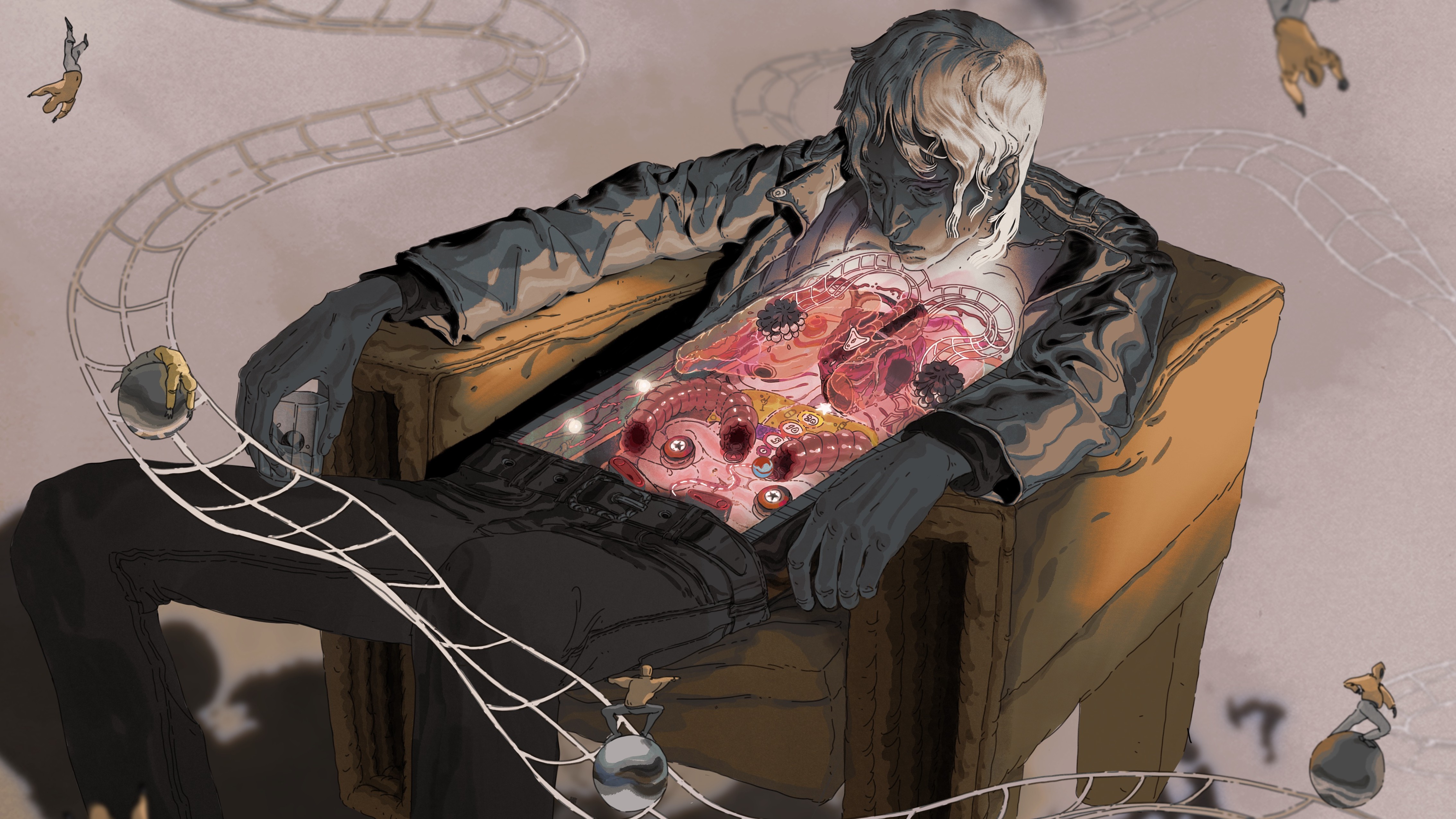
This perspective highlights the cruel irony of the situation. The very developers who stayed behind to keep the studio’s lights on and produce the best work they could are the ones now bearing the brunt of the fiscal failure.
Implications for the Future of ZA/UM
The implications for Studio ZA/UM are severe. With the loss of 32 staff members, the studio is significantly diminished in both size and capacity. The current "redundancy" announcement may not be the end of the cuts, as the studio struggles to redefine its purpose in an industry that has largely lost faith in its management.
Furthermore, the cultural status of Zero Parades is now cemented not as a work of art, but as a "signifier of industry drama." It exists as a case study for why transparency, ethical treatment of talent, and corporate governance are vital in the modern gaming landscape. As cultural critic Errant Signal noted, the fact that the game is engaged with exclusively through the lens of industry scandal is "incredibly disheartening."
Conclusion: The Long Shadow
The fall of Studio ZA/UM serves as a potent reminder of the fragility of independent creative collectives. When a studio loses the trust of its audience, the resulting damage is not easily repaired by a new release, no matter the budget or the technical proficiency of the team.
As the industry looks forward, the story of Zero Parades and the 32 lost jobs at ZA/UM will likely be remembered as a cautionary tale. It is a story of how a groundbreaking success was squandered by internal division and a fundamental misunderstanding of what made the studio special in the first place. For the developers who are now searching for new roles, the tragedy is that they were tasked with building a future for a studio that had already burned its past. Whether ZA/UM can survive this latest contraction remains to be seen, but the days of it being a singular, industry-defining voice are, for all intents and purposes, over.

