

As the hardware landscape faces a period of relative stagnation in the GPU sector, coupled with the persistent inflationary pressures on memory and semiconductor components, the enthusiast community has turned its gaze toward the next frontier of processing power. Intel’s upcoming "Nova Lake" generation has emerged as the focal point of this anticipation, promising a significant architectural shift. Recent leaks regarding the Core Ultra 400 series suggest that Intel is finally ready to challenge AMD’s dominance in the gaming CPU market by introducing a dedicated, on-die cache solution designed to compete directly with AMD’s highly successful 3D V-Cache technology.
Main Facts: The Rise of "BFC" Technology
The latest intelligence, emerging from industry leaker Laurent’s Choice on X, indicates that Intel is preparing a comprehensive lineup of Core Ultra 400-series processors. Perhaps the most significant detail is the introduction of "BFC" chips. While the acronym is currently a source of playful speculation—often jokingly referred to as "Big Friendly Cache"—the technical reality is far more serious.
These BFC chips will feature "bLLC" (big last-level cache). Unlike AMD’s implementation of 3D V-Cache, which involves stacking cache dies vertically atop the processor complex (3D chiplet stacking), Intel’s approach reportedly integrates the cache directly into the main silicon die. This design choice is intended to reduce latency and improve thermal management by keeping the expanded cache closer to the execution cores. By embedding this memory directly into the die, Intel aims to solve the "gaming bottleneck," where CPUs often starve for data during intense rendering or physics calculations.
A Chronological Perspective: From Rumor to Reality
The journey toward Nova Lake has been marked by a series of incremental leaks that have slowly painted a picture of Intel’s future roadmap.
- Early 2024: Initial whispers began to surface regarding a "monolithic" or "mega-core" architecture from Intel, with early rumors suggesting extreme power draw figures reaching up to 700W for high-end server or workstation-grade chips. These reports initially caused alarm among enthusiasts, leading to concerns about power efficiency and thermal cooling requirements.
- Mid-2024: Subsequent leaks clarified that the 700W figures were theoretical limits for multi-tiled, 44-to-52-core processors, likely intended for HEDT (High-End Desktop) environments, rather than consumer-grade gaming chips.
- Late 2024: Focus shifted toward the consumer-facing Core Ultra 400 series. Analysts began to note that Intel’s power limits for the consumer segment would likely remain consistent with current generations, specifically maintaining a 125W PL1 (Processor Base Power) for the "K" series, with a likely PL2 (Turbo Power) ceiling around 250W.
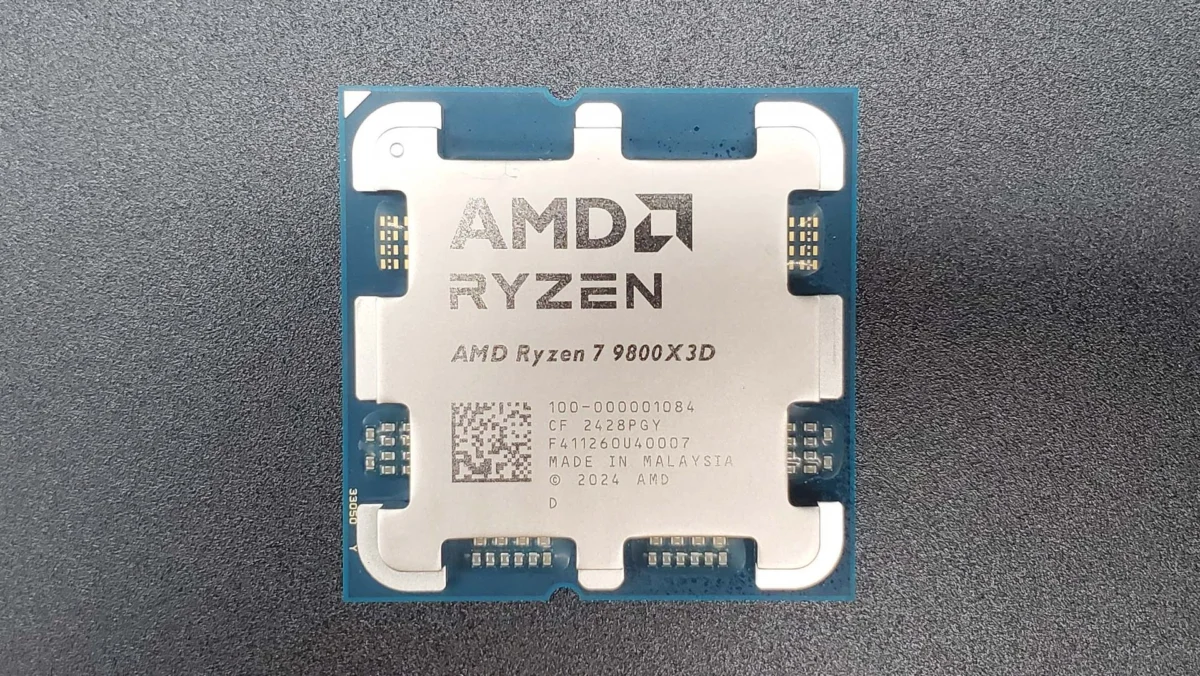
- Present Day: The emergence of the BFC lineup confirms that Intel is pivoting its strategy to address the "cache gap" that has allowed AMD’s Ryzen 7 9800X3D to maintain the title of the undisputed gaming champion for several years.
Supporting Data: Analyzing the Core Ultra 400 Lineup
The rumored specifications for the Nova Lake family reveal a tiered approach, providing options for both performance-heavy power users and more moderate, efficient setups.
| Model | Core Configuration (P/E/LP-E) | GPU EUs | TDP (PL1) | bLLC Cache |
|---|---|---|---|---|
| Core Ultra 9 4970K BFC | 8/16/4 | 32 | 125W | Yes |
| Core Ultra 9 4950K | 8/16 | 23 | 125W | No |
| Core Ultra 9 4900 BFC | 6/12/4 | 32 | 65W | Yes |
| Core Ultra 7 4870K BFC | 8/12/4 | 32 | 125W | Yes |
| Core Ultra 7 4850K | 8/12 | 32 | 125W | No |
| Core Ultra 5 4650K | 6/12 | 32 | 125W | No |
| Core Ultra 5 4650KF | 6/12 | – | 125W | No |
The inclusion of the Core Ultra 9 4900 BFC is particularly notable. With a 65W TDP and a smaller P-core count compared to the 4970K, it represents a unique "efficiency-first" high-performance chip. This configuration suggests that Intel is targeting the Small Form Factor (SFF) market, where thermal headroom is limited but users still demand the massive cache benefits typically reserved for the top-tier 125W parts.
Official Responses and Industry Context
Intel has remained characteristically tight-lipped regarding the specific details of Nova Lake, focusing its current communications on the Arrow Lake rollout. However, the company has publicly acknowledged that "Cache-heavy architectures" are a top priority for their next-generation roadmap. During recent investor calls, Intel leadership hinted at a "multi-layered approach" to memory hierarchy, which aligns with the rumored bLLC design.
Industry experts note that Intel is under significant pressure to deliver a "halo" product that can reclaim the gaming crown. With AMD having perfected the 3D V-Cache formula since 2022, Intel’s market share in the gaming sector has faced stiff competition. If the bLLC architecture proves to be as efficient as the on-die rumors suggest, Intel could potentially circumvent the thermal limitations often associated with stacked cache, offering a superior balance of raw clock speed and cache-driven performance.
Implications for the Future of PC Gaming
The transition to a cache-centric design has profound implications for the gaming community. Games are increasingly data-sensitive, and modern game engines—such as Unreal Engine 5—benefit significantly from low-latency access to assets. By narrowing the gap between the CPU and the memory, Intel’s move is essentially an optimization for the next generation of high-fidelity gaming.
1. Thermal and Power Management
While the rumors of 700W chips are likely isolated to workstation hardware, the move to 125W for the consumer BFC lineup suggests that Intel has learned from the stability issues of previous generations. The focus appears to be on "performance-per-watt" rather than sheer power consumption, a necessary pivot given the current global focus on energy efficiency.
2. The SFF Renaissance
The potential existence of the 65W Core Ultra 9 4900 BFC is a massive win for the SFF community. Historically, high-cache processors were restricted to high-wattage, high-heat designs. If Intel delivers a "cool-running" chip with large cache, it will enable a new class of high-performance, compact gaming PCs that do not require massive liquid cooling loops.
3. Market Competition
The rivalry between Intel and AMD has historically pushed the industry forward, and the arrival of Nova Lake marks the most significant architectural conflict since the introduction of the Zen architecture. If Intel succeeds with its integrated bLLC, it will force AMD to innovate beyond 3D V-Cache, potentially leading to a new era of processor design where cache capacity is as important as core counts.

Looking Ahead: The 2027 Roadmap
Current projections point to a mass production window in Q4, with a consumer launch expected in early 2027. This timeline suggests that Intel is taking the necessary time to refine the fabrication process for these complex dies. As we await further verification of these specifications, one thing is clear: the era of simply increasing clock speeds is over. The next battlefield for CPU dominance will be fought in the cache, and Intel’s "Big Friendly Cache" strategy is the company’s boldest step yet into that new territory.
For the enthusiast, this means the wait for a true "next-gen" experience continues, but the target is finally in sight. Whether or not the Core Ultra 400 series can unseat the Ryzen 9800X3D remains to be seen, but the competition is heating up, and the beneficiaries will undoubtedly be the gamers who have been waiting for a significant leap in processing efficiency.

