

By Francesco Cacciatore
Published June 14, 2026
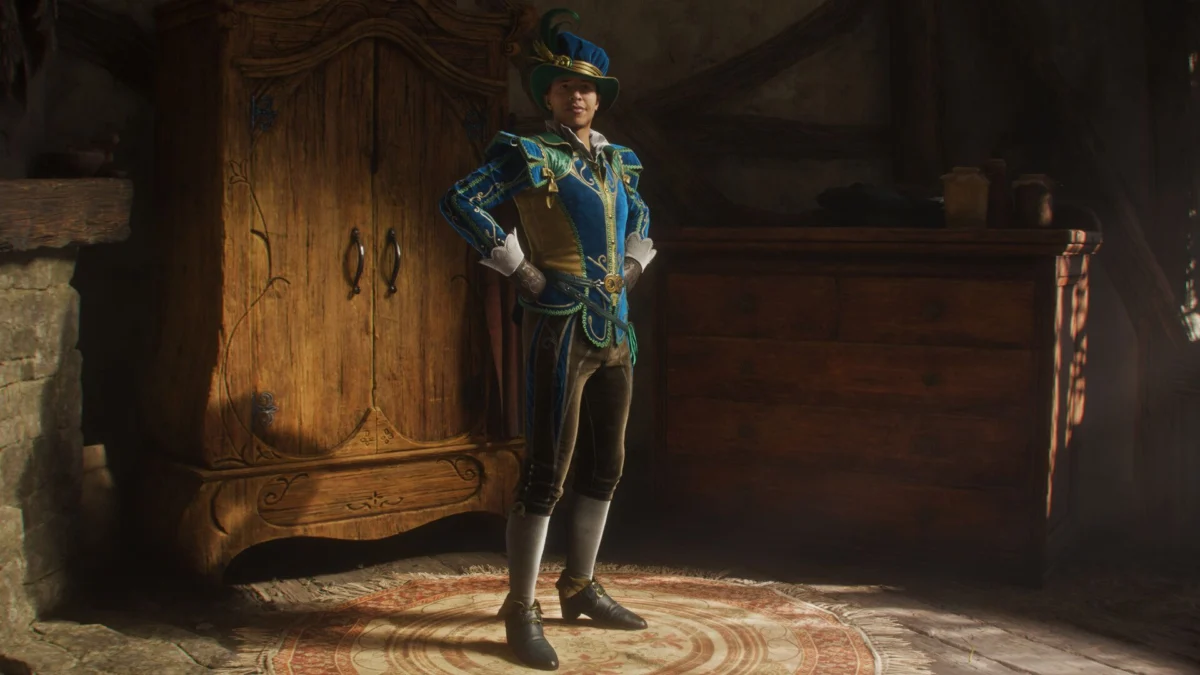
As the February 2027 release window for the highly anticipated Fable reboot approaches, the gaming community is buzzing with excitement. However, for those of us who have spent decades navigating the whimsical yet morally complex lands of Albion, there is a specific, cynical thrill in the air. Beyond the promise of high-fantasy combat and iconic British humor, Playground Games’ latest title offers something even more enticing: the chance to return to the series’ most infamous gameplay loop—the ruthless, systemic exploitation of the local real estate market.
The Evolution of the Fable Economic Engine
The Fable franchise has always operated under the banner of "your choices matter." In the original 2004 title, this was a relatively binary affair, reflected in the character’s physical appearance—horns for the wicked, halos for the righteous. It was a charming, simplistic representation of morality that set the stage for a much more sophisticated evolution in Fable 2.
Fable 2 fundamentally shifted the genre’s paradigm by introducing a persistent, player-driven economy. For the first time, the "Hero of Bowerstone" wasn’t just a combatant; they were an entrepreneur. By allowing players to purchase almost every residential and commercial property in the game, the developers effectively turned the world of Albion into a sandbox of fiscal policy. You could be a benevolent provider, keeping rents at a sustainable level, or you could lean into the role of the neighborhood slumlord, squeezing every last copper from the impoverished peasantry to fund your heroic (or villainous) exploits.
Chronology of Capitalist Ambition in Albion
The transformation of the Fable series from a hero’s journey into a management simulator reached its zenith in Fable 3. To understand why fans are eager to dive back into this economic madness, one must look at how the series handled the concept of the "greater good."
The Fable 3 Paradigm Shift
In Fable 3, the economic system was no longer a side-hustle; it was the core of the endgame. After overthrowing the tyrant King Logan, the player ascends the throne, only to discover that their true enemy is not a political rival, but an existential threat known as "The Crawler."
The game presents the player with a brutal, quantifiable moral dilemma: to build an army capable of saving the kingdom, you must raise 6.5 million gold. The game masterfully places the player in the seat of power, forcing them to choose between keeping campaign promises—such as funding education or maintaining orphanages—or liquidating public assets to fill the royal treasury. In my own playthrough, I found myself turning a sanctuary for children into a profitable brothel, justifying the atrocity as a necessary fiscal sacrifice to stop an interdimensional apocalypse.
The Landlord’s Gambit
The only way to avoid these abhorrent moral compromises—or to supplement them—is to engage in aggressive market speculation. By purchasing property early in the game and maxing out rent, the player effectively becomes the wealthiest entity in the nation. It is a brilliant, if unintended, satire of real-world late-stage capitalism: the only way to be a truly "good" hero is to act as the most efficient, ruthless landlord the kingdom has ever seen.

Supporting Data: Why "Your Choices Matter" Remains the Gold Standard
The Fable series succeeded where other open-world titles often fail because it favored vertical depth over horizontal breadth. While titles like The Elder Scrolls offer massive, sprawling maps filled with procedural generation, the Fable titles focused on the weight of individual decision-making.
- The Weight of Consequence: In Fable, obtaining the legendary Sword of Aeons required the ultimate betrayal: the death of the hero’s sister.
- The Cost of Mercy: In Fable 2, the "See the Future" choices forced players to decide between their own digital family and the lives of thousands of NPCs who died building the Spire.
- The Inflationary Endgame: In Fable 3, the choice is purely mathematical. Players are faced with an 8.5-million-gold threshold to save the realm without harming the populace. The only logical path is to manipulate the housing market, creating a controlled crisis of inflation to bankroll national security.
Official Responses and Developer Intent
On June 10, Playground Games released a comprehensive 30-minute gameplay deep dive that has set expectations for the new Fable at an all-time high. The developers emphasized that the upcoming game will feature a deeply interconnected NPC system where social bonds and family units are more dynamic than ever before.
While the studio has been careful not to confirm the exact mechanics of the property management system, the trailer strongly suggests that the world of Albion will react to the player’s economic influence in real-time. Lead developers have noted that the goal is to make the world feel "alive" and "reactive," implying that if a player decides to engage in aggressive land-grabbing, the townsfolk will not simply exist as static props, but as entities whose livelihoods are directly tied to the player’s personal bank account.
The Implications for the 2027 Reboot
As we look toward the 2027 release, the question remains: will the new Fable capture the same dark, satirical heart that defined the Peter Molyneux era?

A New Era of Moral Quandaries
The modern gaming landscape is saturated with "good vs. evil" morality meters. However, Fable stands out because it blurs those lines. The implication of the new title is that the "ends justify the means" trope will be explored with modern graphical fidelity and, hopefully, more nuanced writing. If I am to once again play the role of a heartless landlord, I want the game to force me to look at the faces of the tenants I am evicting. I want the consequences to be personal, not just a number on a ledger.
Maintaining Emotional Depth
The absence of the series’ original creator, Peter Molyneux, looms large. However, the footage provided by Playground Games suggests they are leaning into the "Britishness" and the specific brand of dark humor that made the original trilogy iconic. The challenge for the new developers is to ensure that the increased scope of the game—the sheer size and technical complexity of this new Albion—does not dilute the intimacy of the player’s choices.
Final Reflections
The prospect of returning to Albion is not just about nostalgia; it is about the unique intersection of role-playing and systemic simulation. Whether you are an aspiring saint or a budding tycoon, Fable has always invited you to project your own internal moral compass onto a canvas that actually pushes back.
If the 2027 reboot can successfully replicate that feeling—where every gold piece earned through rent feels like a stain on your character’s soul, or a necessary sacrifice for the greater good—then it will truly be a worthy successor. Until then, I will be sharpening my sword, polishing my monocle, and preparing to once again become the most hated, most efficient landlord in the history of fantasy gaming. After all, someone has to pay for the royal guard, and it certainly shouldn’t be the King.

