

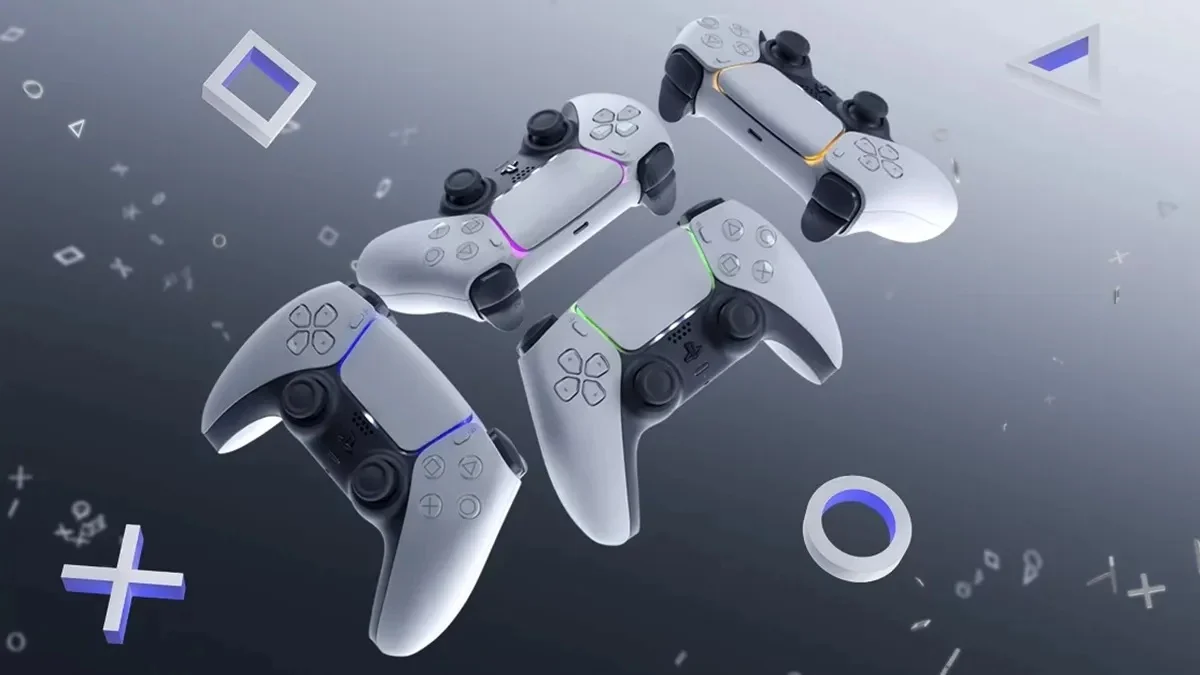
For years, the Achilles’ heel of modern console gaming has not been the lack of processing power, the resolution of textures, or the speed of load times. Instead, it has been a persistent, frustrating, and mechanical nuisance: joystick drift. As PlayStation gamers grapple with the limitations of the current DualSense hardware, recent filings from Sony Interactive Entertainment suggest that the company is finally ready to put this long-standing issue to rest. A newly surfaced patent application indicates that the next generation of Sony hardware—potentially the PlayStation 6—could move toward magnetic, non-contact sensor technology to ensure precision and longevity.
The Main Facts: A Shift Toward Magnetic Innovation
The core of the issue lies in the design of traditional potentiometers—the small, wearable parts inside current controller joysticks. Over time, these components wear down, creating friction and degradation that results in "drift," where the character or camera in a game moves without user input.
A patent recently published in 2026, discovered by observant members of the gaming community and reported by CheatHappens, outlines a radical departure from this status quo. The filing describes a controller assembly that utilizes magnetic sticks to improve both sensitivity and operational lifespan. By employing a non-contact sensor to detect the tilting of the operating stick, the device eliminates the physical friction that currently plagues the DualSense and its predecessors.
According to the patent documentation, the mechanism includes a spring-based system designed to return the sticks to a neutral position with high fidelity. The filing explicitly states: "Since a tilting operation sensor that senses tilting of the operating stick in a noncontact manner is utilized, movement of the operating stick can be detected with high precision even under prolonged use." This is a direct acknowledgment of the degradation issues that have frustrated millions of PlayStation users since the launch of the PlayStation 5.
Chronology: The Evolution of a Hardware Crisis
To understand why this patent is so significant, one must look at the timeline of the "stick drift" phenomenon.
2013–2016: The Early Warning Signs
While joystick drift has existed since the days of the N64, it became a mainstream point of contention during the PlayStation 4 era. While the DualShock 4 was generally well-received, reports of rubber wear and occasional drift began to surface as the console matured into its third and fourth years.
2020: The Launch of the DualSense
The arrival of the PlayStation 5 brought with it the revolutionary DualSense controller. With haptic feedback and adaptive triggers, it was hailed as a generational leap in immersion. However, within months, early adopters began reporting drift issues. The complexity of the internal components, combined with the high-intensity nature of modern gaming, made the controller susceptible to sensor degradation faster than previous iterations.
2021–2024: Class Action and Public Scrutiny
As drift reports spiked, Sony faced significant public backlash. In several regions, the company was hit with class-action lawsuits alleging that the DualSense controllers were sold with a "defect" that rendered them unusable after a relatively short period. These legal battles forced Sony to expand its repair programs and offer better support for affected customers.
2025–2026: The Research and Development Pivot
Recognizing that consumer trust is their most valuable asset, Sony’s R&D department began filing a series of patents aimed at internal hardware redesigns. The 2026 filings represent the culmination of this internal pivot, signaling a shift from traditional mechanical potentiometers toward Hall Effect-inspired magnetic sensing technology.
Supporting Data: Why Mechanical Wear is No Longer Tenable
The engineering problem is fundamentally one of physics. Standard joysticks rely on carbon-film potentiometers. As a player pushes the stick, a wiper moves across a resistive track. Every time a player moves the stick, they are essentially scraping a tiny amount of material away. After thousands of hours of gameplay—or even fewer in high-intensity titles—the track becomes uneven, sending false data to the console.
Magnetic sensors, such as those proposed in the new patent, operate on the Hall Effect. By measuring the changes in a magnetic field rather than relying on physical contact, the sensor can detect movement without the internal components ever touching one another.
Comparative Performance Metrics
- Mechanical Potentiometers: Typically rated for 1–2 million cycles before degradation occurs.
- Magnetic/Hall Effect Sensors: Theoretically infinite, as there is no physical wear. The limiting factor becomes the spring mechanism, which is much easier to reinforce or replace than the sensor itself.
- Precision: Magnetic sensors provide a more consistent "deadzone," allowing for more granular control in competitive shooters and racing simulations.
The patent further addresses the issue of "mechanical slack." The filing notes: "Rotation of the operating stick is constrained by the engaging portion and the engaged portion, when a user applies a force to the operating stick… that force is prevented from being consumed by the rotation of the operating stick." This suggests Sony is also working on improving the internal structural rigidity of the stick box, ensuring that the input is as snappy as possible.
Official Responses and Corporate Strategy
Sony Interactive Entertainment has been notably reserved regarding the specific technical failures of the DualSense. While they have provided free repairs in some jurisdictions and streamlined the warranty process in others, they have rarely acknowledged "stick drift" as a systemic design flaw in official press releases.
However, the filing of these patents serves as a "silent" response. By securing intellectual property for magnetic joysticks, Sony is signaling to shareholders and the public that they are actively investing in a solution. In the world of corporate hardware development, patents are the clearest indicator of a company’s future product roadmap. This isn’t just an experimental idea; it is a clear path toward standardizing more durable hardware in future iterations, such as the rumored PS6.
Industry analysts believe that Sony is positioning itself to regain the lead in hardware reliability, a metric where competitors like Microsoft and third-party manufacturers (such as 8BitDo and Gulikit) have already begun implementing Hall Effect sensors.
Implications: What This Means for the Future of PlayStation
The shift to magnetic sticks is not merely a quality-of-life improvement; it represents a fundamental change in the economics of console gaming.
1. Consumer Trust and Longevity
If the next generation of controllers lasts for the entire lifespan of the console (e.g., 6–8 years) without drift, the consumer perception of "planned obsolescence" will diminish. This fosters brand loyalty and reduces the environmental impact of electronic waste, a growing concern for global tech giants.
2. Competitive Parity
In the world of esports and competitive gaming, hardware consistency is everything. Pro players often carry custom controllers because they fear their stock controllers will drift during a tournament. If standard-issue controllers are built with non-contact sensors, the barrier to entry for high-level competitive play is lowered, as players can trust their gear out of the box.
3. The PlayStation 6 Ecosystem
While Sony has yet to officially unveil the PlayStation 6, this patent provides a window into their design philosophy. We can expect the PS6 to move away from "disposable" hardware. If the controller is the primary interface for the console, and it is built with high-precision magnetic components, it suggests the console itself will focus on long-term stability and performance.
4. Third-Party Market Disruption
The patent also complicates the third-party controller market. Manufacturers who currently profit from selling "upgraded" controllers with Hall Effect sensors will face stiffer competition if Sony incorporates this technology into their base-model controllers.
Conclusion: A Welcome Change on the Horizon
For the millions of gamers who have spent hours cleaning their analog sticks with isopropyl alcohol or sending controllers back for warranty repairs, this news provides a flicker of hope. The transition from mechanical potentiometers to magnetic, non-contact sensing is the logical evolution of the game controller.
As we look toward the next generation, it is clear that Sony is listening to the feedback—even if they haven’t explicitly articulated it in a boardroom meeting. By filing these patents, they are laying the groundwork for a more robust, precise, and reliable gaming experience. While we wait for the official announcement of the next-generation hardware, the existence of these filings is a promising sign that the days of "drifting" away from our favorite games may finally be coming to an end. The PlayStation 6 might just be the console that finally fixes the most annoying problem in gaming history.

