

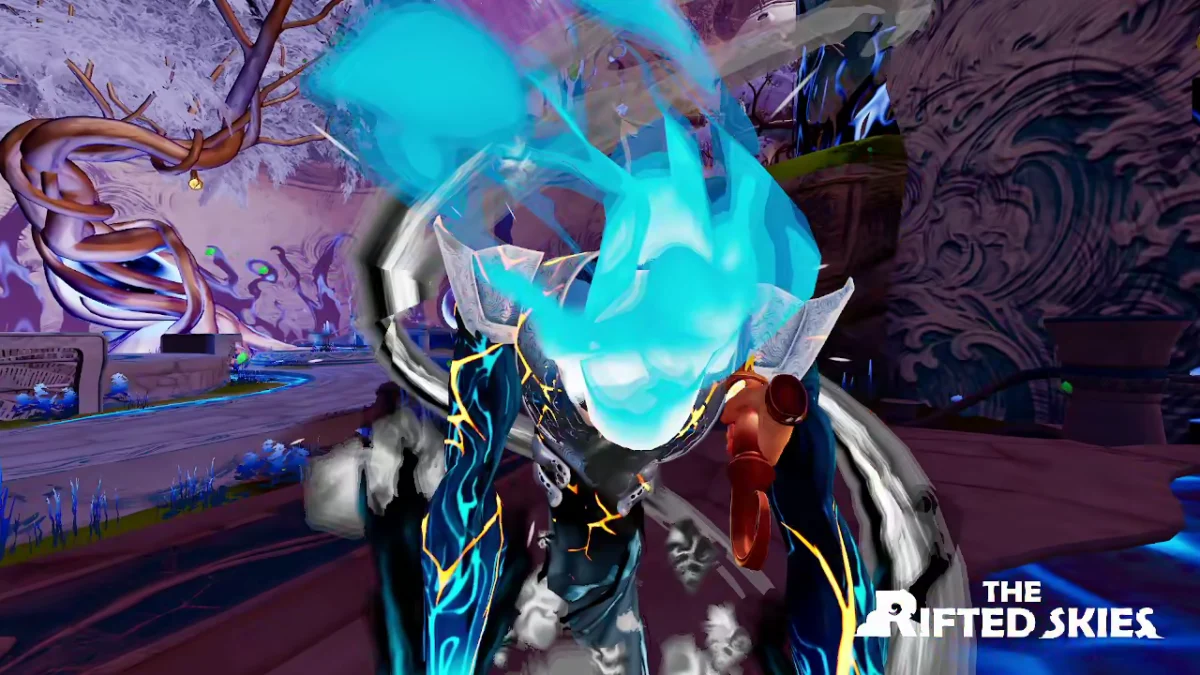
In an era of virtual reality gaming increasingly dominated by stationary, controller-driven experiences and seated puzzle adventures, developer DreamVR is looking to shake things up. Known previously for their location-based entertainment (LBE) VR projects, the studio is making its consumer market debut with The Rifted Skies, an ambitious action-roguelite that demands physical exertion.
Currently making waves during the Steam Next Fest with a free playable demo, the game forces players to pump their arms to run, thrust their hands upward to leap, and squat to slide beneath obstacles. While the demo successfully delivers a high-adrenaline rush that hits all the right mechanical notes, it also leaves lingering questions about long-term content variety and narrative depth that only the full release can answer.
Main Facts
- Game The Rifted Skies
- Genre: Action-Roguelite / Physical VR Parkour
- Developer: DreamVR
- Platforms: Steam (Demo available now); Full game launching on Steam (PCVR) and Meta Quest.
- Release Date: Demo available during Steam Next Fest; full release date to be announced (TBA).
- Pricing: Demo is free-to-play; full game pricing remains TBA.
- Key Mechanics: Arm-swinging locomotion, gesture-based jumping and sliding (with full controller-mapping accessibility options), hack-and-slash melee combat, and projectile deflection.
Chronology and Hands-On Experience: Hitting the Ground Running
The journey into The Rifted Skies begins with a blistering introduction designed to thrust players into the action with minimal friction. The demo introduces players to Derwish, a young protagonist greeted by a mysterious yellow wisp. This spectral guide delivers a rapid-fire bit of world-building, explaining Derwish’s nebulous lineage and the immediate, terrifying threat of a reality-consuming "rift" swallowing their world whole. Before you have time to fully digest the lore, you are already off and running.
Once the gameplay loop kicks in, the responsiveness of the arm-swinging locomotion immediately commands attention. While titles like Joyway’s Stride have experimented with arm-based running and jumping mechanics, DreamVR has engineered a system that feels remarkably fluid by comparison. Sprinting through the vibrant, stylized environments relies on a wide margin of gesture recognition.
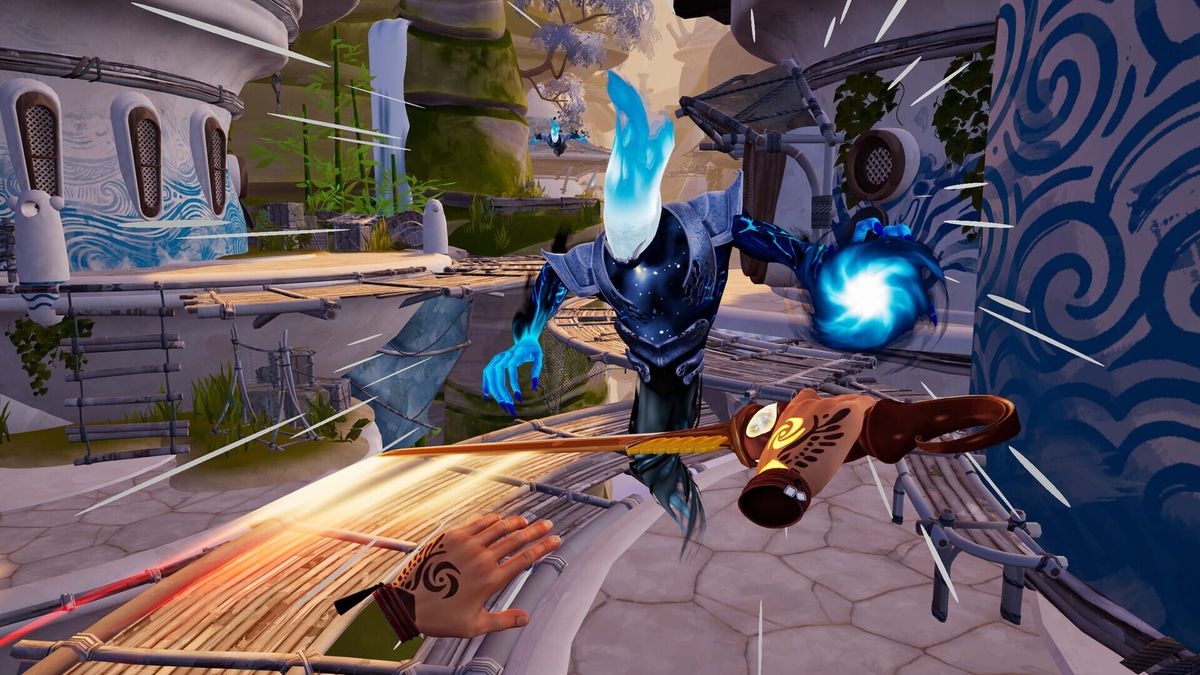
However, this generous sensitivity is a double-edged sword. During testing in a modest five-meter-by-five-meter play space, simply lifting an arm to adjust a headset or reach for a glass of water occasionally tricked the game into registering a sprint input. Players are quickly advised to hit the pause button whenever they step out of active gameplay.
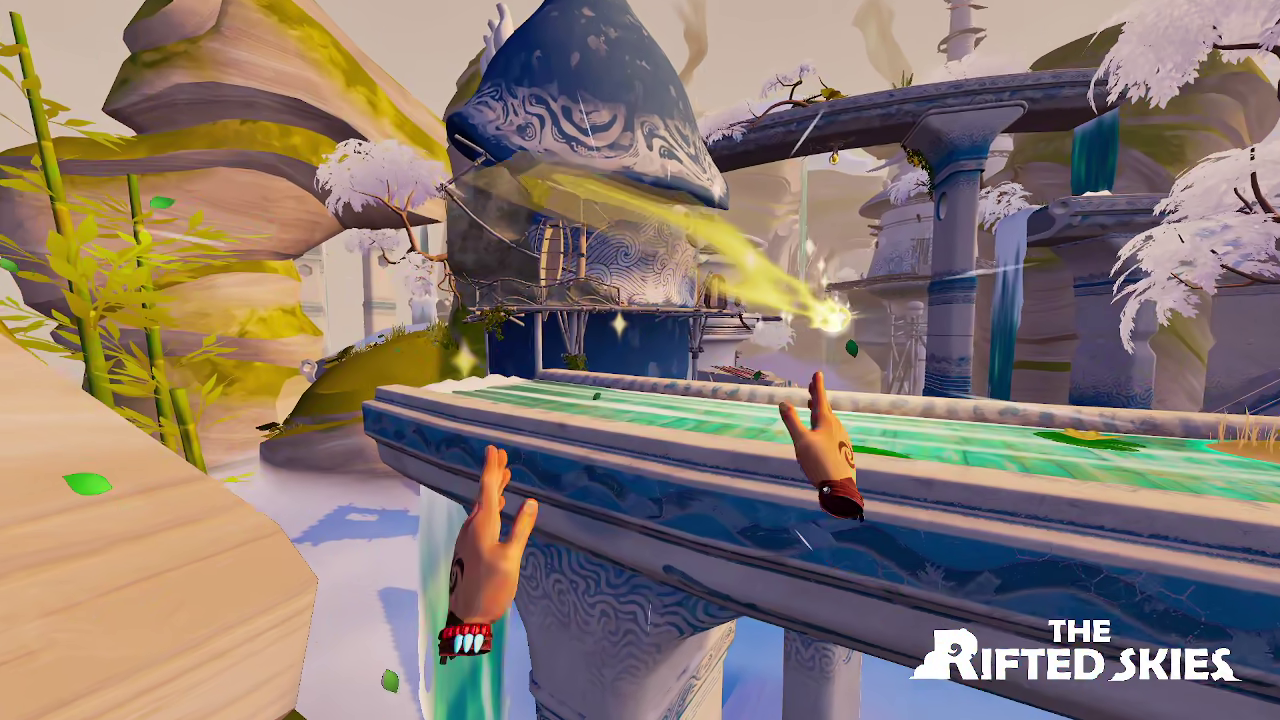
Complementing the running mechanic are physical gestures for traversal: squatting down physically (or via optional controller inputs) allows players to slide under low-hanging obstacles, while thrusting both arms into the air triggers high-flying jumps. For players with bad knees or physical limitations, the inclusion of controller-mapped equivalents—such as pressing ‘A’ to jump or pulling back on the right analog stick to squat—is a welcome accessibility feature. Interestingly, even with these options available, the gesture recognition proved so satisfying and seamless that many players will likely opt for the physical movements anyway.
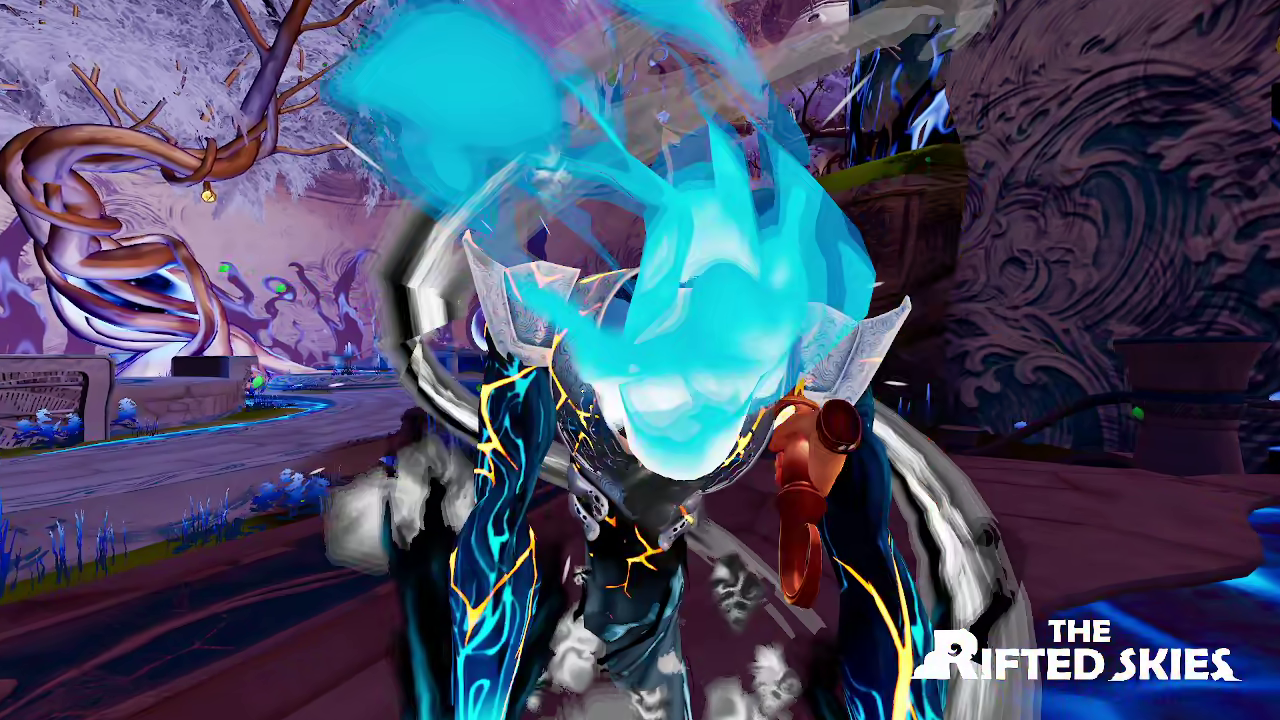
Combat in The Rifted Skies is intentionally straightforward, designed not to bog down the breakneck pacing of fleeing from an encroaching apocalypse. Players wield a sword capable of standard hack-and-slash melee, deflecting incoming enemy projectiles back at attackers, or being charged up and hurled directly at ghostly entities that periodically portal onto the battlefield. This established a reliable, tactical combat loop during demo runs: hurl the blade to stun enemies charging up ranged attacks, sprint across the arena to close the distance, and finish them off with swift melee slashes.
Supporting Data and Technical Performance
For enthusiasts tracking hardware performance and the technical thresholds required to push physical VR to its limits, the demo was evaluated under the following setup:
- PC Processor: AMD Ryzen 7 9850X3D
- System Memory: 32 GB DDR5 RAM
- Graphics Processing Unit (GPU): NVIDIA GeForce RTX 5070 Ti
- VR Headset & Setup: Meta Quest 3 connected via the Virtual Desktop app running on the "Godlike" graphics preset.
Visual Fidelity and Environment Design
Visually, The Rifted Skies adopts a bright, colorful aesthetic that clearly prioritizes performance and optimization for standalone VR hardware like the Meta Quest. While the graphical fidelity will not push high-end PC rigs to their absolute limits, the fast-paced nature of the gameplay means players rarely have the luxury of standing still to admire background textures.
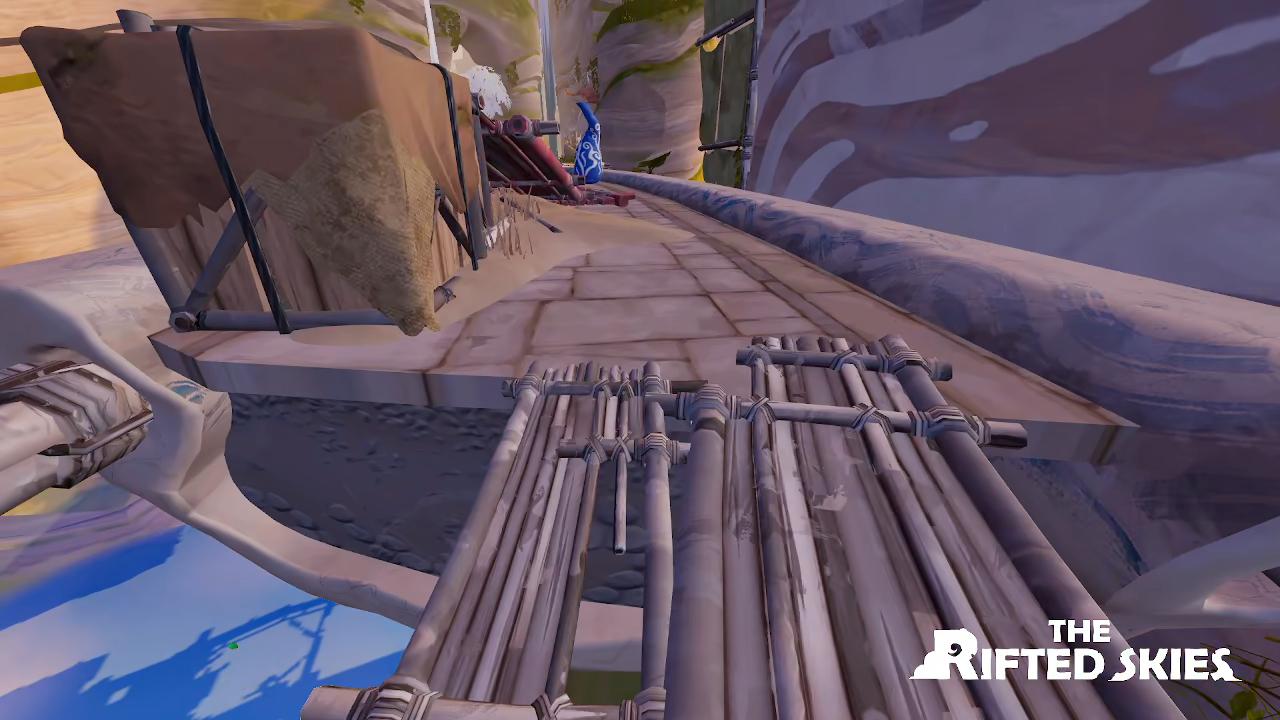
However, a noticeable critique arising from early demo runs is environmental repetition. Specific chunks of landscape recur frequently throughout initial playthroughs. Whether the full game will introduce diverse new biomes, distinct architectural themes, and varied enemy types to keep subsequent runs feeling fresh remains a primary question for the retail release.
Comfort and Intensity
The Rifted Skies relies primarily on stick-based movement augmented by intense arm-swinging and gesture-based tracking. Comfort options include standard toggles for snap and smooth turning, alongside the aforementioned accessibility switches for controller-based jumps and slides.
Despite these accommodations, the game issues a standard comfort warning upon boot. The intense, continuous real-world motion required to keep pace with the game can induce motion sickness or physical fatigue for unseasoned VR users.
Official Insights and Developer Background
DreamVR’s pivot from location-based entertainment (LBE) venues to the consumer VR market is a fascinating trajectory. LBE installations—often housed in dedicated arenas with specialized tracking—frequently emphasize physical freedom, wide spaces, and full-body engagement. By bringing this philosophy to consumer headsets, DreamVR is intentionally targeting a niche that has felt increasingly underserved.
In recent years, the VR ecosystem has seen a massive influx of seated, controller-focused puzzle games and slower narrative adventures. While these titles have their place, titles that demand physical output stand out sharply. The rhythmic, physical combat of Batman: Arkham Shadow became one of its universally praised attributes, while arm-based locomotion popularized by Gorilla Tag and adapted into narrative-driven gems like No More Rainbows and Outta Hand proved that players crave active, whole-body immersion.
DreamVR’s mission statement with The Rifted Skies was straightforward: get people moving their arms again. Based on the Steam Next Fest demo, the studio has successfully accomplished this goal. Once a player achieves a true "flow state"—sprinting, leaping, gliding on air currents, and cutting down enemies in a single, uninterrupted motion—it becomes genuinely difficult to stop playing, even as arm fatigue sets in. Generous checkpoint systems ensure that deaths rarely kill momentum, keeping frustration low and engagement high.
Implications for the VR Landscape
While the immediate verdict on The Rifted Skies demo is overwhelmingly positive, it arrives alongside critical questions about the broader ecosystem of VR roguelites.
The Longevity Dilemma
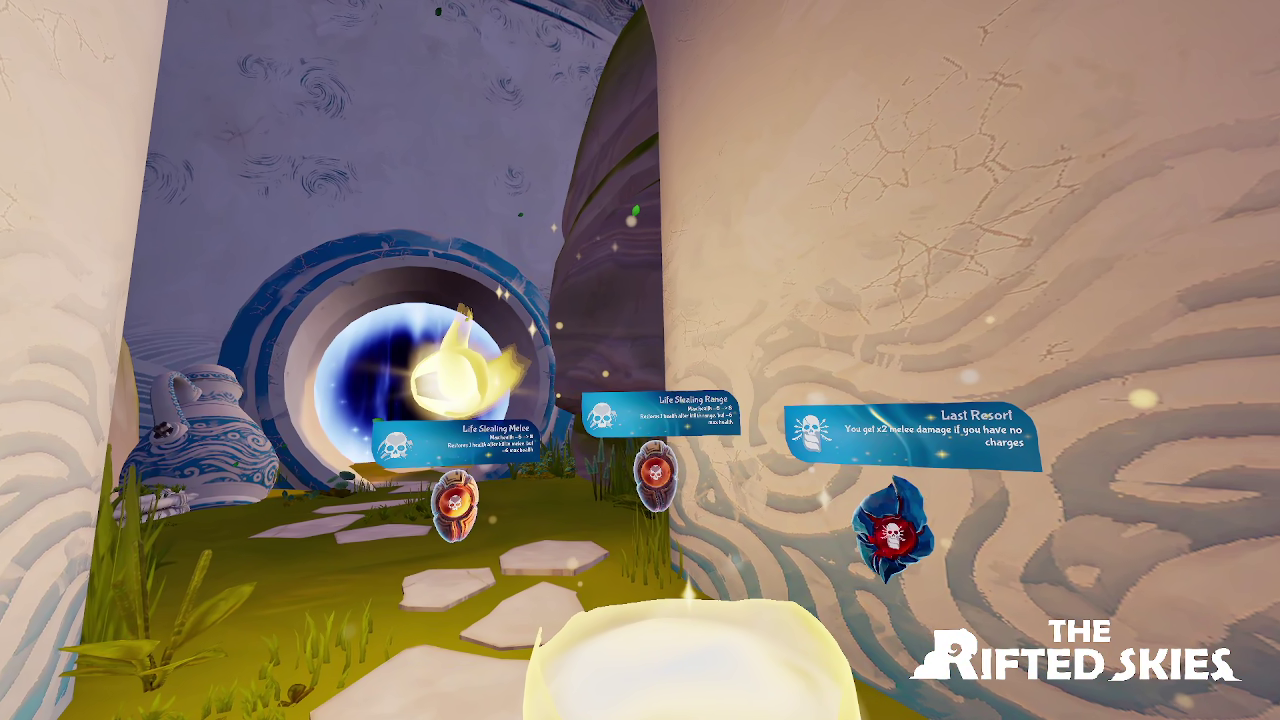
The central challenge facing The Rifted Skies is its long-term replayability and narrative framework. In the roguelite genre, titles generally fall into two distinct camps:
- The Hollow Loop: Games that tease deep lore at the onset, only to abandon narrative context entirely once players settle into the gameplay grind. Without robust metagame features like leaderboards, collectible variations, or meaningful persistent unlocks, these titles risk burning out players quickly.
- The Narrative Powerhouse: Games like Underdogs, which successfully weave a compelling, persistent story alongside deeply engaging mechanical loops that encourage players to run it back repeatedly.
The gameplay loop of The Rifted Skies is undeniably rock-solid, and the mechanics leave virtually no room for complaint. But whether the full game will offer enough content variety, deep progression systems, and narrative payoff to sustain player interest past the initial honeymoon phase is a question a short-form demo simply cannot answer.
Reigniting Room-Scale and Physical VR
Beyond the game itself, The Rifted Skies highlights an ongoing hardware and design debate within the VR community. Playing the demo within a five-by-five-meter space immediately evokes a desire for larger play areas or dedicated VR treadmills—a nostalgic nod to the early days of room-scale PC VR. As standalone headsets like the Meta Quest series lean into convenience and couch-based play, games that boldly demand a physical toll from their users serve as an important reminder of VR’s unique capacity for active, full-body immersion.
Outlook
The Rifted Skies successfully proves that physical, arm-swinging VR mechanics can feel fluid, responsive, and deeply entertaining when designed with care. DreamVR has crafted a compelling action-roguelite demo that rewards movement, challenges stamina, and leaves players eager for more.
While questions regarding environmental variety, long-term progression, and narrative depth remain open until the full game launches on Steam and Meta Quest, The Rifted Skies has firmly established itself as a title worth adding to your wishlist and monitoring closely as development continues.

