

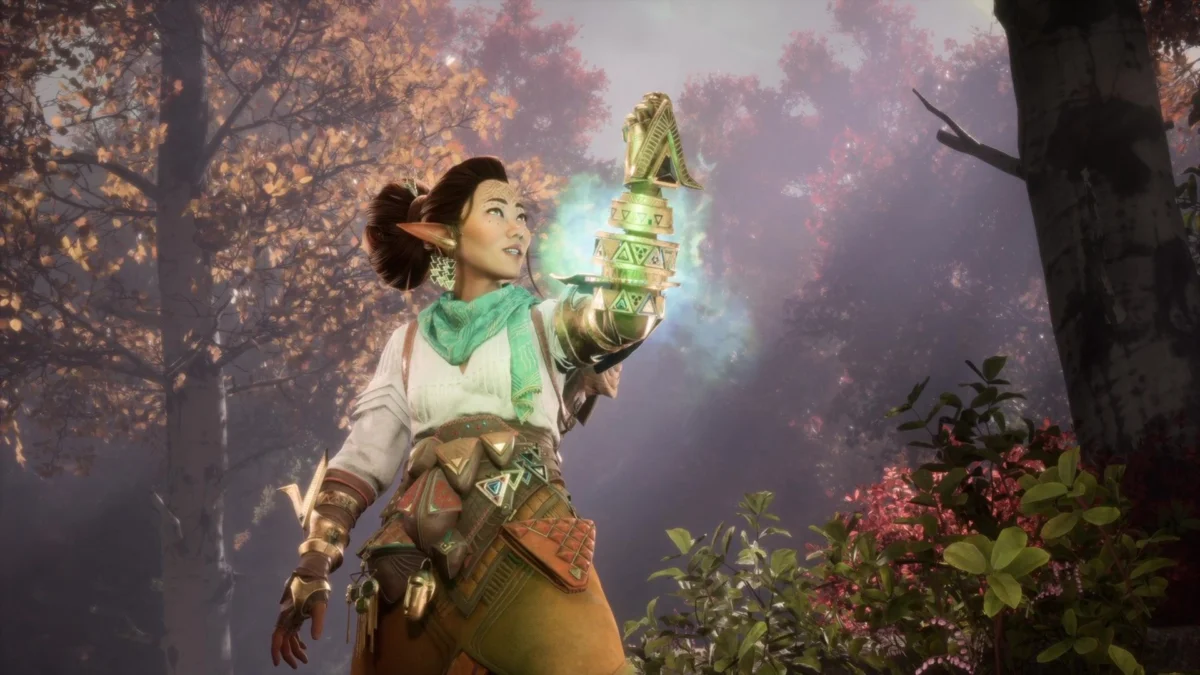
The landscape of the gaming industry has been permanently altered following the announcement that Electronic Arts (EA) has officially closed BioWare, the legendary studio responsible for some of the most influential role-playing games (RPGs) in history. The closure, which follows the studio’s acquisition and subsequent restructuring, has resulted in massive layoffs, leaving hundreds of industry veterans without employment.
While the sudden termination of a studio that birthed Baldur’s Gate, Mass Effect, and Dragon Age is a devastating blow to the creative community, the aftermath has been further complicated by a volatile discourse on social media. As the industry grapples with the loss of one of its most storied institutions, the focus has shifted from the professional tragedy of the layoffs to a heated, often toxic debate regarding the studio’s final creative output, Dragon Age: The Veilguard.
A Chronology of Decline: From Industry Titan to Closure
BioWare’s trajectory is a case study in the rapid evolution of the AAA gaming industry. Founded in 1995 in Edmonton, Alberta, by Ray Muzyka and Greg Zeschuk, the studio quickly rose to prominence by revitalizing the computer RPG genre. Their early work, particularly the Baldur’s Gate series, set a gold standard for narrative-driven gameplay and player choice.
Throughout the 2000s and early 2010s, BioWare became synonymous with prestige. Following their acquisition by Electronic Arts in 2007, the studio reached new heights with the Mass Effect trilogy and the Dragon Age franchise. These titles were not merely games; they were cultural touchstones that defined the modern "bioware-style" RPG—games defined by deep character relationships, complex moral dilemmas, and expansive world-building.
However, the latter half of the 2010s saw a shift. Titles like Mass Effect: Andromeda and Anthem were met with mixed receptions, leading to concerns about the studio’s internal culture and the sustainability of its development pipelines. The recent acquisition of EA by external interests served as the final catalyst, resulting in the decision to shutter the studio entirely rather than continue operations under the existing framework.
The Human Cost: A Call for Professional Solidarity
In the wake of the closure, industry veterans have been quick to offer support to the displaced staff. James Ohlen, a cornerstone of BioWare’s creative legacy and the former creative director of Baldur’s Gate 1 and 2, emerged as a leading voice of support. Recognizing the immediate need for the talent pool to find new homes, Ohlen issued a public call to action.
"If you’re hiring writers, designers, artists, or engineers, start with them," Ohlen posted on social media. "Former BioWare folks: if an intro from me would help, reach out."
Ohlen’s attempt to leverage his professional network for the benefit of his former colleagues highlights the deep communal ties within the game development industry. These developers—many of whom spent years refining their craft on beloved franchises—are now competing for spots in an increasingly unstable job market. However, rather than being met with a unified front of industry support, Ohlen’s attempt to assist was hijacked by a segment of the audience focused on grievances regarding the studio’s final project.
The Toxic Discourse: Culture Wars in the Comments Section
The reaction to the studio’s closure has underscored the growing divide between a portion of the gaming audience and the developers who build these digital worlds. Instead of expressing condolences for the hundreds of families affected by the layoffs, the comments section of Ohlen’s posts—and across various social media platforms—became a battleground for "culture war" rhetoric.
Many commenters targeted the developers of Dragon Age: The Veilguard, blaming the studio’s closure on what they perceived as "woke" design choices. This specific subset of the fanbase has focused on the inclusion of non-binary characters and diverse representation as evidence that the studio had lost its way.
This rhetoric has effectively weaponized the studio’s closure against the very people who were laid off, ignoring the systemic economic and corporate factors that led to the studio’s shutdown. It represents a worrying trend where creative decisions in games are treated not as artistic choices, but as political provocations that justify the loss of livelihoods.
Rebuttal and Reflection: The Complexity of Development
Recognizing the hostility directed at his former colleagues, James Ohlen returned to social media to provide a nuanced defense of the development process. His follow-up statement serves as a vital reminder of how AAA game development actually functions.
"The majority of people on a team the size of Veilguard’s had little or no say in the things you disliked about it," Ohlen wrote. "Right up to the end, BioWare still had many people who worked on the games you loved."
Ohlen’s perspective is particularly authoritative given his own history. By noting that he himself has reservations about how "political messaging" can sometimes obstruct storytelling, he bridged the gap between the critics and the developers. He pointed out that he was the architect behind some of the most "controversial" elements of early BioWare titles, such as the Dragon Age: Origins Broodmothers and the introduction of same-sex romance options for the character Zevran.
His message was clear: creativity is not a monolith, and the people behind these games are individuals with diverse backgrounds and beliefs. "It’s possible to hold views that don’t fit neatly into anyone’s political camp, and to love and respect people you disagree with," Ohlen stated. "People are complicated. That includes the people who make the games you love or hate."
Implications for the Future of BioWare Franchises
The closure of BioWare leaves the future of its most iconic intellectual properties in a state of deep uncertainty. Mass Effect and Dragon Age are among the most valuable assets in gaming, yet their ownership now resides entirely within the coffers of Electronic Arts.
Former leads and industry analysts have suggested several paths forward. Some believe EA may look to sell the rights to these franchises to other studios capable of maintaining their legacy. Others fear a "vaulting" scenario—where EA keeps the IPs in permanent storage, protecting them from further "brand damage" but denying fans any future content.
The implication for the industry is profound. If a studio as foundational as BioWare can be dismantled so abruptly, it signals that no legacy brand is immune to the bottom-line pressures of modern corporate ownership. The "BioWare magic," once thought to be a permanent feature of the gaming landscape, has proven to be as transient as any other corporate asset.
Conclusion: A Need for Industry Maturity
The tragedy of BioWare’s closure is twofold: the professional devastation of a talented workforce and the degradation of public discourse regarding the medium itself. As fans, the expectation of "artistic control" has mutated into a sense of entitlement that frequently overlooks the humanity of the creators.
As the industry moves forward, the lessons from this closure must be examined. The gaming community faces a crossroads: it can continue to foster environments where developers are targeted and harassed for their creative contributions, or it can mature into a space where criticism is separated from the survival of the professionals who dedicate their lives to the medium.
The developers who worked on Dragon Age: The Veilguard and the earlier masterpieces of the studio deserve better than to be blamed for their own professional displacement. They deserve recognition for their technical skill, their narrative ambition, and their contribution to a history of gaming that, regardless of one’s political stance, has left an indelible mark on the world of interactive entertainment.
As we look toward the future, the legacy of BioWare will live on through its games—but the industry must ask itself if it is capable of supporting the people who will build the next generation of digital legends.

