

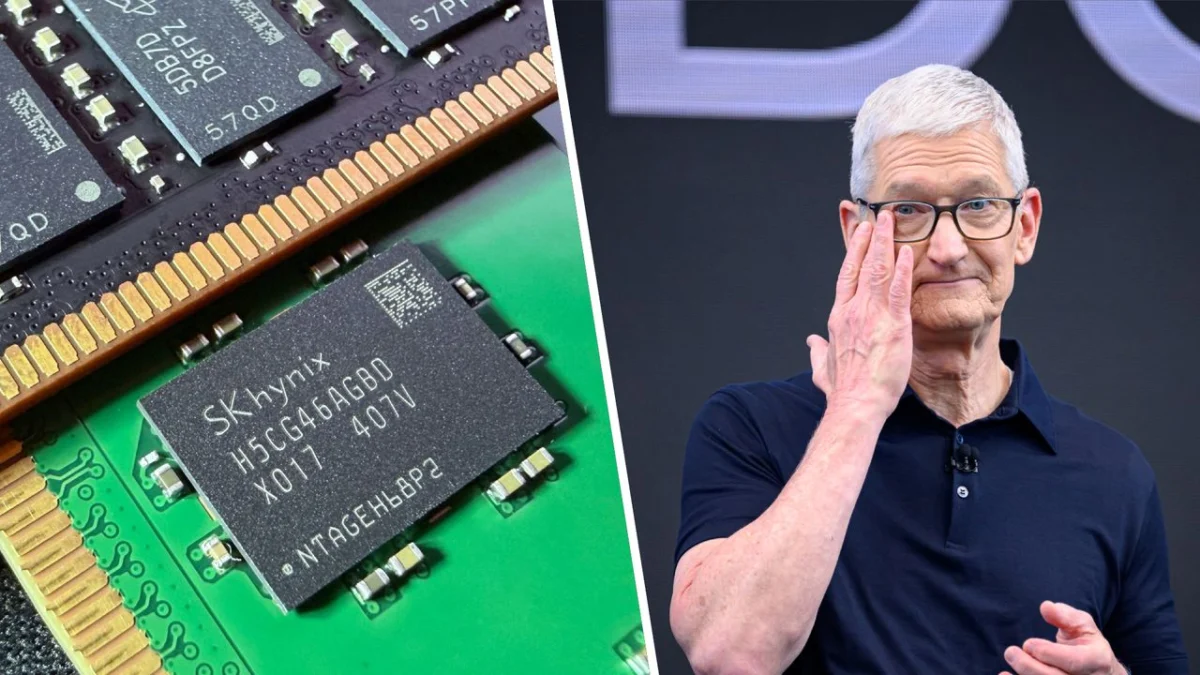
For years, Apple has acted as a bulwark against the volatile pricing cycles of the semiconductor industry. While the broader PC market frequently grappled with the "boom and bust" cycles of DRAM and NAND flash supply, Apple’s massive purchasing power, long-term contracts, and high profit margins allowed it to effectively insulate its customers from the worst of the market’s turbulence.
That era, it appears, has officially come to an end. In a candid interview with The Wall Street Journal, Apple CEO Tim Cook confirmed that the company can no longer shield consumers from the soaring costs of memory and storage components. Driven by a global supply crunch—often referred to in industry circles as the "RAMpocalypse"—the tech giant is now facing the harsh reality of passing these unsustainable costs down to the end user.
The Anatomy of a "Hundred-Year Flood"
The current situation in the memory market is not merely a seasonal fluctuation or a routine supply chain hiccup. According to Tim Cook, it is an unprecedented structural failure. "This is a hundred-year flood," Cook remarked during the interview. "I’ve never seen anything like it in any area in over 40 years."
The "RAMpocalypse" is primarily driven by the insatiable appetite for artificial intelligence. As data centers and enterprise-level AI training facilities scramble to hoard high-bandwidth memory (HBM) and high-capacity DDR5 modules, the supply available for consumer electronics has dwindled. This "AI gold rush" has diverted the production priorities of industry giants like Micron, SK Hynix, and Samsung, leaving the consumer device market to fight over the scraps of a diminished supply chain.
For Apple, a company that relies on precision-engineered, high-performance memory for its unified memory architecture, this scarcity is particularly acute. Unlike modular PCs where consumers can theoretically upgrade their RAM, Apple’s soldered-on components mean the company must forecast its needs years in advance—a task that has become nearly impossible under current market volatility.
Chronology of the Crisis: How We Got Here
To understand how the world’s most valuable company reached this tipping point, we must look at the timeline of the last two years:
- Early 2025: The First Signs of Strain: While other manufacturers began raising prices, Apple maintained its MSRPs. However, behind the scenes, procurement costs began to climb by double-digit percentages.
- Late 2025: The Strategic Pivot: Apple began adjusting its product lineup to minimize exposure. This included the quiet discontinuation of the entry-level Mac Mini, effectively forcing consumers into higher-tier models with larger memory configurations, thereby masking the cost of the components within a "premium" product package.
- Mid-2026: The "MacBook Neo" Experiment: The launch of the MacBook Neo was intended as a value-oriented alternative to combat the rising costs of traditional flagship laptops. While it successfully offered a lower entry price, the pressure on its margins became a focal point for internal financial scrutiny.
- June 2026: The Breaking Point: During the final Apple Worldwide Developers Conference (WWDC) of the cycle, Tim Cook acknowledged that the company’s internal mitigation strategies—using its massive balance sheet to absorb losses—could no longer sustain current retail prices.
The Economics of Memory Scarcity
The core of the problem lies in the bottleneck of semiconductor fabrication facilities (fabs). While the three primary players in the memory space—Samsung, SK Hynix, and Micron—have announced massive capital expenditures to build new factories, these facilities are notoriously slow to bring online.
Industry analysts estimate that it takes between 18 to 36 months for a new fabrication facility to move from "groundbreaking" to "high-yield production." As of mid-2026, many of these projects are still in the early stages of construction. Consequently, market experts do not anticipate a meaningful correction in DRAM pricing until at least 2028.
The Myth of Vertical Integration
When asked if Apple would consider vertically integrating by building its own memory and storage fabrication facilities, Cook was definitive. "We can’t do everything. We know what we’re good at," he stated.
This response highlights a key constraint in Apple’s business model. While Apple successfully designed its own custom silicon (the M-series chips), memory fabrication is a different beast entirely. It requires specialized, highly radioactive lithography equipment and chemical processes that fall outside of Apple’s core competency of chip architecture and software optimization. By remaining a "fabless" company in the memory sector, Apple remains at the mercy of the "Big Three" memory producers.
Implications for the Consumer
For the average consumer, the shift in Apple’s strategy will manifest in three distinct ways:
1. Increased Entry-Level Pricing
The era of the "budget" Mac may be drawing to a close. As Apple phases out lower-spec models to preserve margins, the cost of entry into the Apple ecosystem will inevitably rise. Consumers should expect the "base" configurations of future MacBooks and desktop units to see price hikes that reflect the reality of current DRAM and NAND spot prices.
2. Reduced Configuration Flexibility
To optimize supply chain efficiency, Apple may simplify its product SKUs. By offering fewer, higher-memory configurations, the company can consolidate its orders for specific, more readily available memory modules, reducing the complexity—and therefore the cost—of their manufacturing process.
3. A Shift Toward Efficiency Over Raw Power
Apple has long relied on its software to maximize memory efficiency, often achieving performance that rivals competitors with double the RAM. We can expect Apple to double down on this strategy, utilizing more aggressive memory compression and optimized macOS background processes to stretch every gigabyte of memory as far as possible, mitigating the need for massive, high-cost RAM upgrades.
The Road Ahead: "Grin and Bear It"
The outlook for the next 18 to 24 months is, by most accounts, grim. With no "silver bullet" to increase memory supply overnight, the tech industry is entering a period of forced austerity.

"We’re willing to use our balance sheet to help be a part of the solution," Cook noted, suggesting that Apple may invest in supplier capacity expansion or enter into long-term volume purchase agreements to stabilize pricing for the long term. However, these are strategic, multi-year investments that will provide no immediate relief to the buyer currently browsing the Apple Store.
For the consumer, the guidance from the industry remains clear: if you need a machine for professional or personal use, the price is unlikely to dip in the near future. The market has shifted from a period of relative abundance to one of scarcity, and as the industry waits for the 2028 capacity targets to be met, the only option for both the manufacturer and the consumer is to "grin and bear it."
Apple’s admission that it can no longer hold the line is a significant signal to the entire technology sector. If the company with the world’s most robust supply chain management cannot keep prices stable, it is a clear indicator that the "RAMpocalypse" is not just a passing storm, but a new, challenging climate for the global hardware market.

