

In the world of display technology, the dichotomy between vibrant OLED panels and energy-sipping E-Ink screens has long been defined by a simple trade-off: stunning color and fluid motion versus high-contrast readability and battery longevity. For decades, E-Ink (electrophoretic) displays have been relegated to the static world of e-readers, hampered by slow refresh rates and ghosting artifacts that make traditional gaming a visual nightmare.
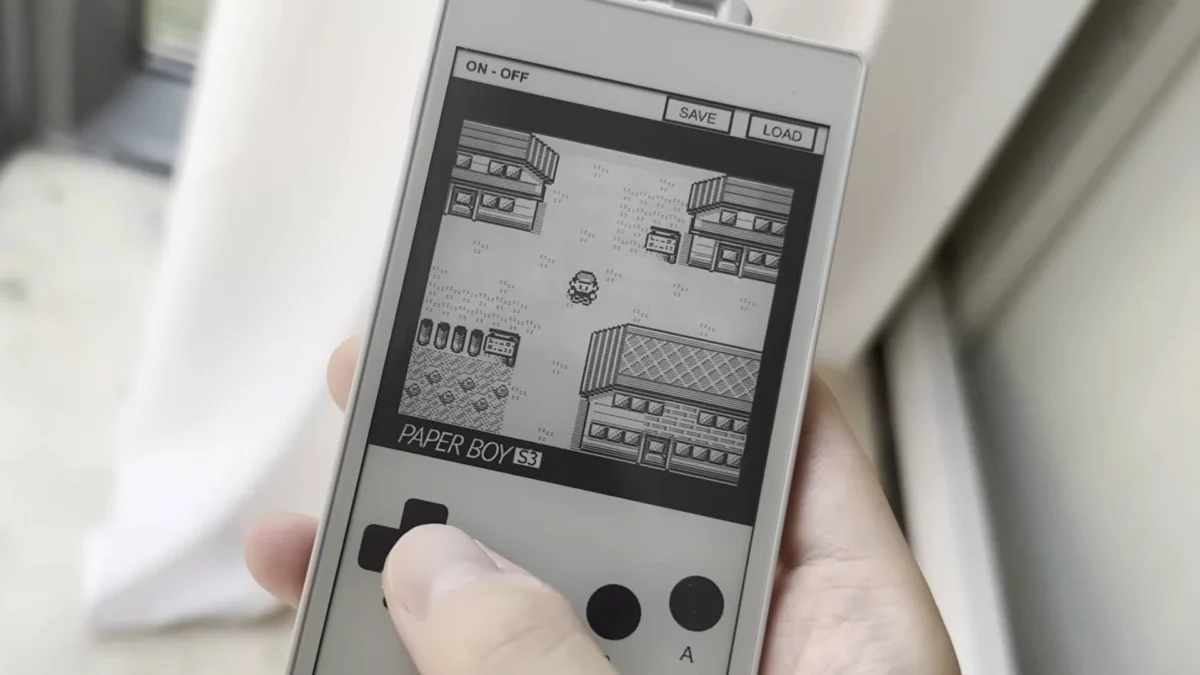
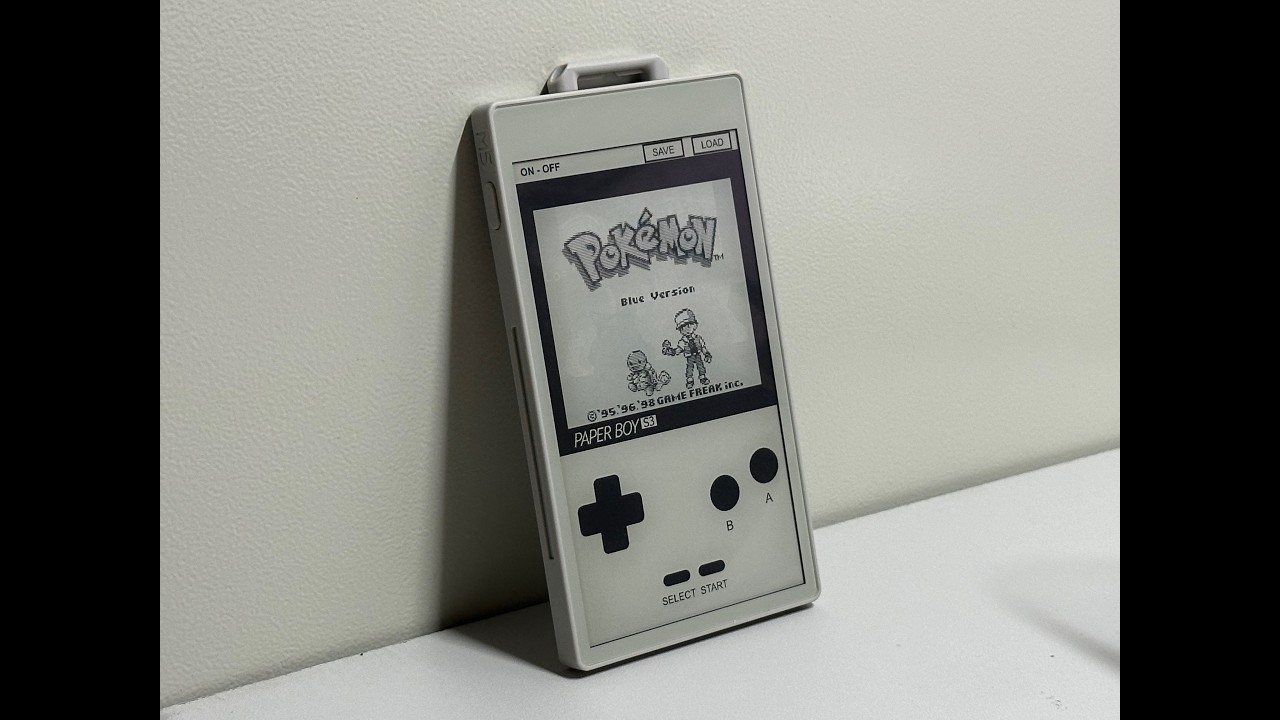
However, a breakthrough project by hardware enthusiast Wenting Zhang has shattered these expectations. By marrying an ESP32 System-on-a-Chip (SoC) with the M5Stack PaperS3—a compact, E-Ink enabled development board—Zhang has developed a fully functional, "actually playable" Game Boy emulator. This project represents more than just a novelty; it is a masterclass in low-level engineering, memory optimization, and creative signal processing, proving that even the most "sluggish" display technology can be pushed to perform at modern standards.
The Core Innovation: Redefining Refresh Rates
The Limitations of E-Ink
To understand the significance of Zhang’s work, one must first appreciate why E-Ink is typically unsuitable for gaming. E-Ink displays work by moving microscopic, charged pigment particles within a fluid medium. Unlike LCD or OLED panels that manipulate light at the pixel level thousands of times per second, moving these particles takes physical time. Traditionally, this results in a refresh rate measured in seconds rather than milliseconds, leading to the infamous "ghosting" where previous frames linger on the screen long after the image has changed.
Zhang’s Breakthrough
Wenting Zhang’s approach to this hurdle did not begin with the Game Boy project. Years of experimentation culminated in the creation of a 60FPS E-Ink monitor, the "Modos Flow." By leveraging advanced greyscaling and sophisticated dithering algorithms, Zhang managed to trick the E-Ink substrate into updating at speeds previously thought impossible for the technology.
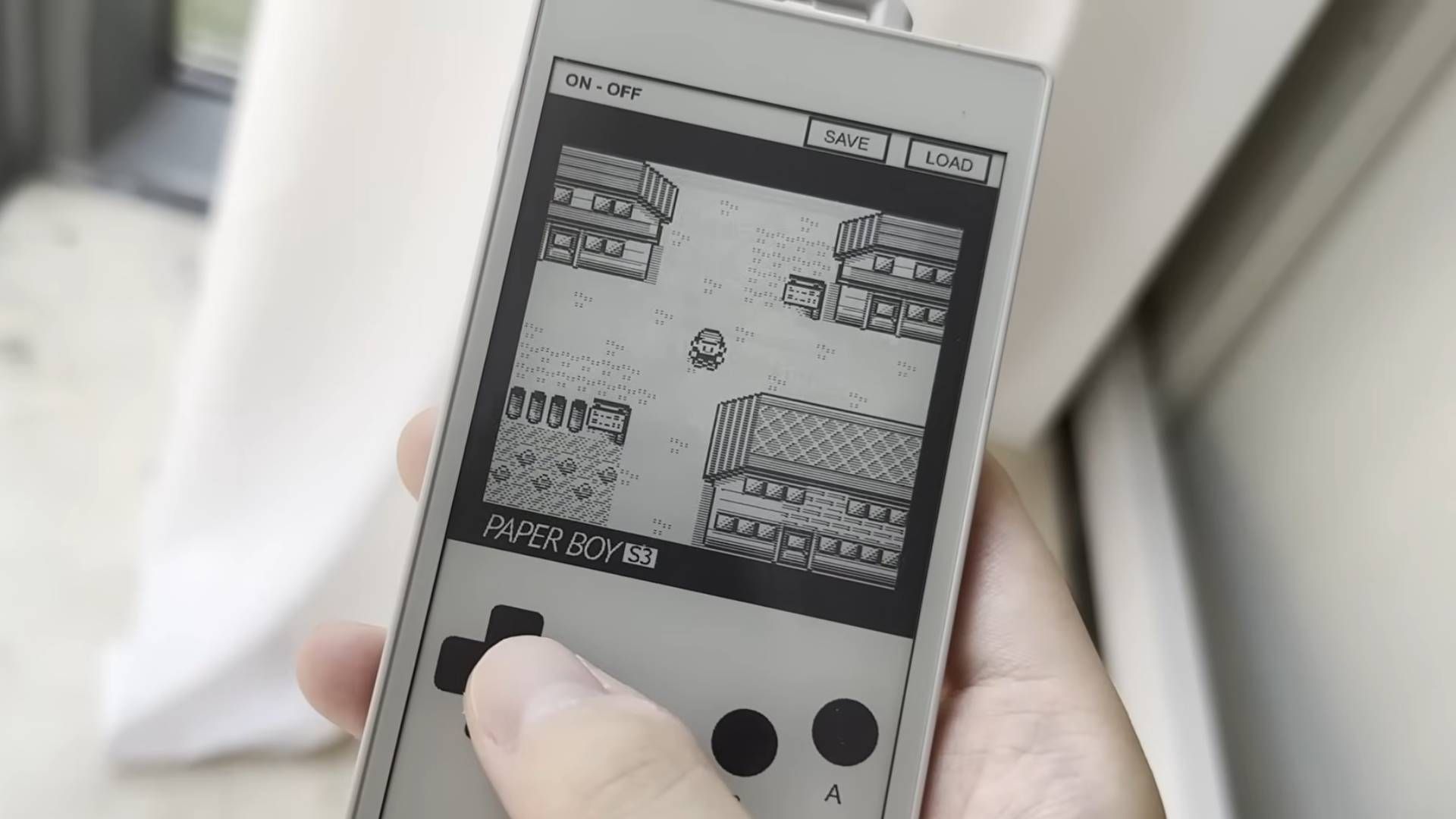
By applying these same memory-management techniques and custom display drivers to the M5Stack PaperS3, Zhang achieved a high-refresh-rate interface that allows for the fluid, side-scrolling gameplay characteristic of classic titles like Pokémon Blue or The Legend of Zelda: Link’s Awakening.
A Chronology of the Project
The journey from a slow, static display to a functional handheld console was not an overnight success. It was the result of a multi-year iterative process.
- 2020-2022 (The Foundation): Zhang began experimenting with E-Ink waveforms and memory buffers, aiming to create a monitor capable of 60FPS. This research was critical in establishing the software-side "tricks" required to bypass standard E-Ink refresh limitations.
- Early 2023 (The Hardware Selection): The choice of the M5Stack PaperS3 was strategic. Featuring an ESP32-S3 microcontroller, the board provides sufficient processing power to handle the overhead of both the Game Boy emulation and the heavy display driver requirements.
- Late 2023 (Emulator Development): Zhang began porting Game Boy emulation code to the ESP32 platform, optimizing the CPU cycles to ensure the emulator could output frames at the exact cadence required by the custom E-Ink driver.
- 2024 (Optimization and Public Release): The final stage involved addressing the "audio problem." Since the M5Stack lacks a high-fidelity output, Zhang implemented a clever filtering process to turn the device’s native buzzer into a crude, but effective, speaker capable of outputting iconic 8-bit chiptunes.
Supporting Data and Technical Architecture
The architecture of the "Paperboy" (as the project has been dubbed) is a marvel of resource management. The ESP32-S3 is a dual-core processor, and Zhang carefully balances the workload across these cores.
Hardware Specifications
- Microcontroller: ESP32-S3 (Dual-core, up to 240MHz).
- Display: M5Stack PaperS3 (EPD – Electronic Paper Display).
- Storage/Memory: The project utilizes the internal PSRAM to store frame buffers, allowing for the rapid dithering required to simulate a standard screen refresh.
- Audio: Onboard Piezoelectric Buzzer (utilizing Pulse Width Modulation to mimic waveforms).
The Math of Motion
The primary challenge was the "waveform." In E-Ink tech, a waveform defines how voltage is applied to the electrodes to move the particles. Zhang had to write a custom driver that ignored the standard, slow "full-refresh" cycles of the E-Ink panel in favor of "partial-refresh" bursts. By sacrificing some image clarity—which results in a slight "crunchy" aesthetic—the device achieves a frame time that fits within the strict 60Hz target.
Audio Engineering: Turning Buzzers into Orchestras
One of the most impressive aspects of this project is the audio. The M5Stack PaperS3 was never designed to be a gaming console, and its speaker hardware is essentially a basic alert buzzer.
To achieve the "crunchy" but recognizable sound of the original Game Boy, Zhang performed extensive audio engineering. Instead of attempting to reproduce high-fidelity sound, the software filters the Game Boy’s native square-wave audio output into a format that the buzzer can translate. The result is a lo-fi, bit-crushed experience that, while not high-fidelity, captures the "soul" of the original hardware perfectly. It serves as a reminder that in retro-emulation, the aesthetic of the sound is often as important as the accuracy of the pitch.
Implications for the Future of Display Tech
The success of Zhang’s Game Boy emulator has broader implications for both the maker community and the commercial display industry.
The "Paper-like" Future
The primary implication is that "E-Ink" does not have to be synonymous with "slow." As researchers and hobbyists continue to unlock the high-speed potential of electrophoretic displays, we could see a new class of devices: tablets and monitors that offer the eye-comfort of paper but the utility of a high-speed interface. This is especially relevant for users with light sensitivity or those who work in high-glare environments where traditional LCDs struggle.
The Open Source Impact
By making the project open source, Zhang has invited the community to refine the technology. The repository on GitLab serves as a blueprint for anyone looking to push the boundaries of low-power computing. Whether it is for gaming, reading, or creating dedicated "distraction-free" devices for writers, the framework provided by the Paperboy project is a significant contribution to the open-source hardware ecosystem.
Commercial Interest
Companies like Modos Tech are already exploring similar technologies, with crowdfunding campaigns gaining traction among enthusiasts. The desire for "calm technology"—devices that don’t overwhelm the user with blue light and high-speed motion—is clearly growing. Zhang’s project acts as a proof-of-concept that this technology is not just possible, but potentially viable for mainstream niche markets.
Conclusion: More Than a Novelty
While the current iteration of the E-Ink Game Boy is a hobbyist project, it serves as a powerful reminder of what is possible when engineering creativity meets hardware constraints. It is not necessarily the "best" way to play Pokémon Blue—the ghosting, while minimized, is still present, and the audio is undeniably rough—but it is perhaps the most interesting way.
For those who wish to explore the code, the project is hosted on GitLab. Whether you are an aspiring hardware engineer looking to learn about display drivers, or a retro-gaming enthusiast looking for your next DIY challenge, Zhang’s work is a testament to the fact that with enough code, even the slowest display can be taught to dance.
As we move toward a future where our digital lives are increasingly dominated by high-speed, high-resolution screens, projects like this offer a necessary, character-filled alternative—a glimpse at a world where we can play, create, and interact without the constant strain of a traditional monitor. It is, quite literally, a page-turner in the history of display technology.

