


Main Facts: The Evolution of Capcom’s Flagship Horror Franchise
For nearly three decades, Capcom’s Resident Evil series has stood as a towering pillar of the survival horror genre. From its 1996 PlayStation origins to the technological leaps of the modern era, the franchise’s numbering system was a comforting constant. Players knew exactly where they stood within the overarching narrative by checking the Roman numerals appended to each mainline entry.
However, a quiet structural shift has taken place over the last decade. Capcom has systematically dismantled its traditional numbering convention, replacing explicit digits with clever typographical wordplay and thematic subtitles.
The trend officially began with 2017’s Resident Evil 7: Biohazard, where the Roman numeral VII was cleverly integrated into the word "Evil" (Biohazard 7: Resident Evil in Japan). It continued with 2021’s Resident Evil Village, which stylized the letters "VILL" into the number VIII.
As anticipation mounted for the next logical installment, fans waited breathlessly for Capcom to reveal how they would creatively twist the letters "IX" for Resident Evil 9. Theorists floated ingenious ideas ranging from "Helix"—tying into viral DNA strands—to "Appendix," invoking a body part synonymous with the end of a book or story.
Instead, Capcom bypassed numerals entirely, officially announcing the upcoming title as Resident Evil Requiem. This surprising break from tradition has sparked widespread debate among the fan community and industry analysts alike, raising fundamental questions about how long-running franchises brand themselves in an era of narrative reboots and soft continuations.
Chronology: A History of Resident Evil Titles and Naming Conventions
To understand the shock surrounding Resident Evil Requiem, it is necessary to examine how Capcom has historically handled the titles of its crown jewel:
- 1996–2007 (The Classic Era): Resident Evil, Resident Evil 2, Resident Evil 3: Nemesis, Resident Evil Code: Veronica (spin-off), Resident Evil 4, and Resident Evil 5. During this period, direct numerical progression was strictly adhered to for mainline entries, ensuring clear consumer comprehension.
- 2009–2012 (The Action Era): Resident Evil 6 launched to mixed critical reception, pushing the franchise toward a creative crossroads. The heavy focus on action over survival horror signaled that the traditional formula had stretched as far as it could go.
- 2017 (The Paradigm Shift): Resident Evil 7: Biohazard reinvented the series via a first-person perspective. Capcom made its first major break from standard numbering by embedding the Roman numeral VII into the letters "EVIL."
- 2021 (The Continuation of Style): Resident Evil Village adopted the same philosophy. While marketed globally as Village, the official logo prominently featured VIII within the word, maintaining a subtle nod to the sequence.
- The Present Day: Capcom officially unveils Resident Evil Requiem. For the first time since the franchise’s inception, a mainline numbered entry completely discards the numerical sequence in favor of a thematic subtitle without an embedded digit.
Supporting Data and Fan Reception: Decoding "Requiem"
The abrupt abandonment of the Roman numeral IX has left a noticeable imprint on the Resident Evil community. Fan forums, subreddits, and gaming press outlets immediately dissected the title Resident Evil Requiem upon its announcement.
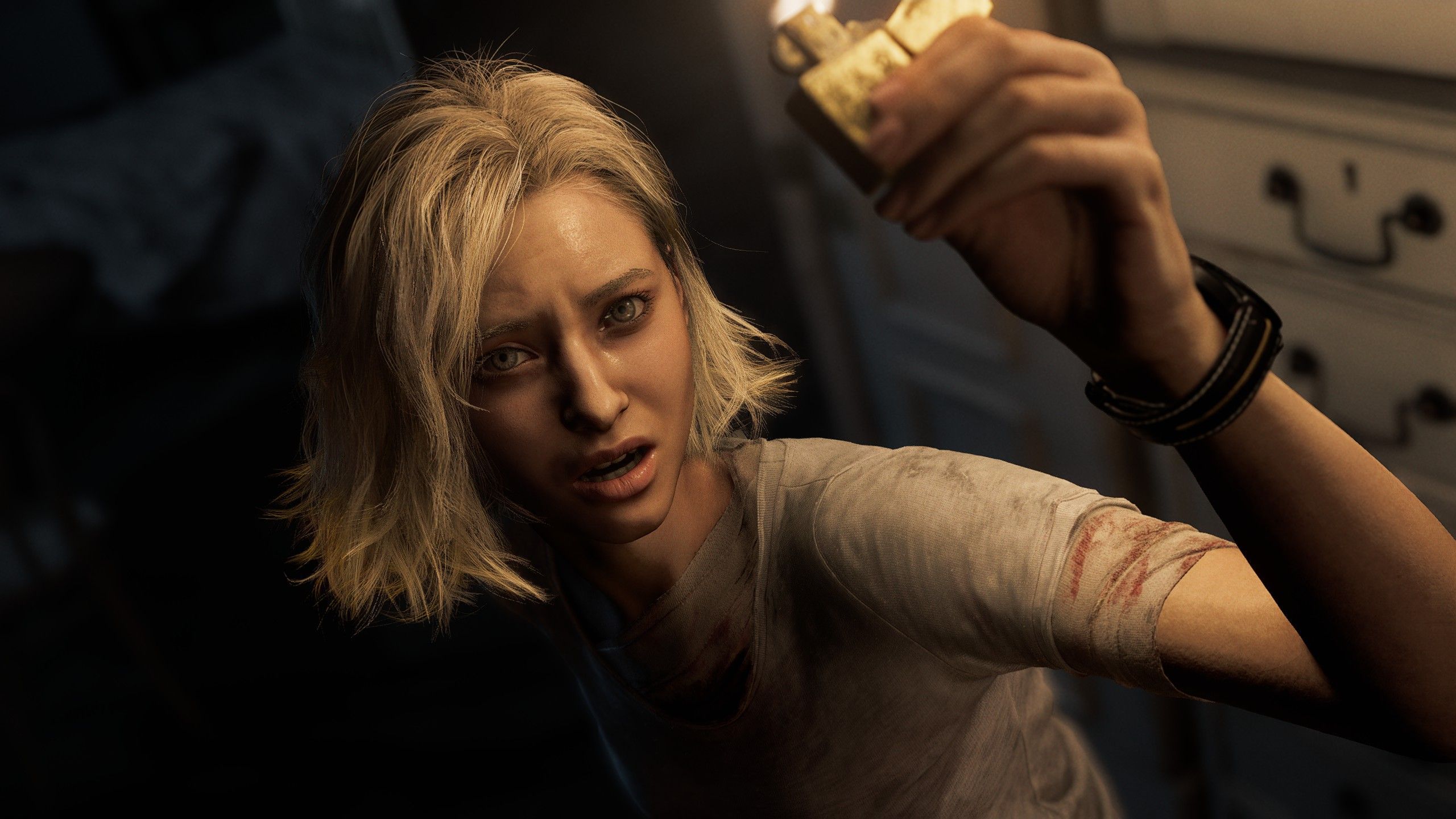
Initially, players interpreted "Requiem" through its traditional definition: a musical composition or solemn prayer honoring the dead. In the context of a survival horror game, this carried obvious weight, suggesting a mournful conclusion to long-standing character arcs, institutional downfalls (such as the eradication of Umbrella’s lingering legacies), or a tribute to characters lost across thirty years of lore.
Further analysis revealed subtle visual Easter eggs. Some promotional marketing materials cleverly stylized the lowercase letter "q" in "Requiem" to vaguely resemble the number nine, offering a faint olive branch to purists who missed their sequential digits.
Yet, the true depth of the title’s construction was only revealed recently through statements from key creative leadership, transforming a simple marketing subtitle into a layered cryptographic puzzle.
Official Responses: Jun Takeuchi on the Hidden Meaning of "Requiem"
Speaking with Japanese gaming press as part of the franchise’s monumental 30th-anniversary celebrations, Resident Evil executive producer Jun Takeuchi provided profound insight into the thought process behind the game’s title. According to Takeuchi, "Requiem" was chosen not merely for its atmospheric or melancholic connotations, but for a structural linguistic design built directly into its spelling.
"Let me give you a hint: ‘Requiem’ isn’t just a title chosen for its meaning of ‘requiem.’ The spelling of Requiem (REQUIEM) contains not only the ‘RE (response)’ mentioned earlier, but also a ‘Q (question).’ In other words, this ‘Requiem’ presents both an ‘answer’ and a ‘question.’ I will explain the meaning of that at some point in the future."
This official commentary elevates the title from a standard genre subtitle to an interactive thematic thesis statement. By breaking down "RE-QUI-EM," Takeuchi points toward a linguistic duality:
- "RE" acts as both the franchise’s ubiquitous shorthand (Resident Evil) and a linguistic root denoting a response or reaction.
- "Q" introduces an interrogation, mystery, or lingering uncertainty that the narrative presumably aims to unravel.
While some critics and fans have playfully compared this deep linguistic breakdown to overly analytical literary critiques (akin to finding profound meaning in the color of a classroom’s blue curtains), the acknowledgment has successfully supercharged fan engagement. Theories are now circulating across the web attempting to decode the remaining syllables—speculating on what letters like ‘U’, ‘I’, or ‘M’ might represent in Capcom’s grand design for the franchise’s milestone release.

Implications: What Requiem Signals for the Future of Survival Horror
The decision to name the next major installment Resident Evil Requiem rather than Resident Evil 9 carries significant strategic and creative implications for Capcom and the gaming industry at large.
1. Lowering Barriers to Entry
Sequential numbering can often act as an invisible barrier for newcomers. When a franchise reaches its ninth mainline entry, prospective players frequently hesitate, falsely believing they need to consume decades of complex lore across multiple hardware generations to understand the current game. By dropping the "9," Capcom frames Requiem as a self-contained theatrical experience—similar to how modern horror films operate—encouraging newcomers to dive in without feeling burdened by numerical homework.
2. Narrative Closure and Crossovers
With executive producer Jun Takeuchi and other studio leads hinting that recent remakes and new entries are building toward a massive institutional crossover, Requiem suggests a thematic reckoning. A requiem is, fundamentally, a mass for the dead. This could imply that Capcom is preparing to lay certain legacy plot threads, character rosters, or corporate conspiracies to final rest, clearing the slate for a bold new era of biological terror.
3. A Shift in Franchise Identity
Capcom has proven that the Resident Evil brand transcends mere digits. Whether shifting from fixed camera angles to over-the-shoulder action, or pivoting to immersive first-person psychological horror, the company consistently reinvents its mechanical framework. Abandoning traditional numbering is the logical extension of this philosophy: the franchise is no longer just a serialized sequence of sequels, but an evolving anthology of fear where each chapter stands as its own distinct nightmare.
As fans await further announcements from Capcom regarding the exact release window and gameplay mechanics of Resident Evil Requiem, one thing is certain: the debate over Roman numerals may be over, but the questions posed by the title have only just begun.

