

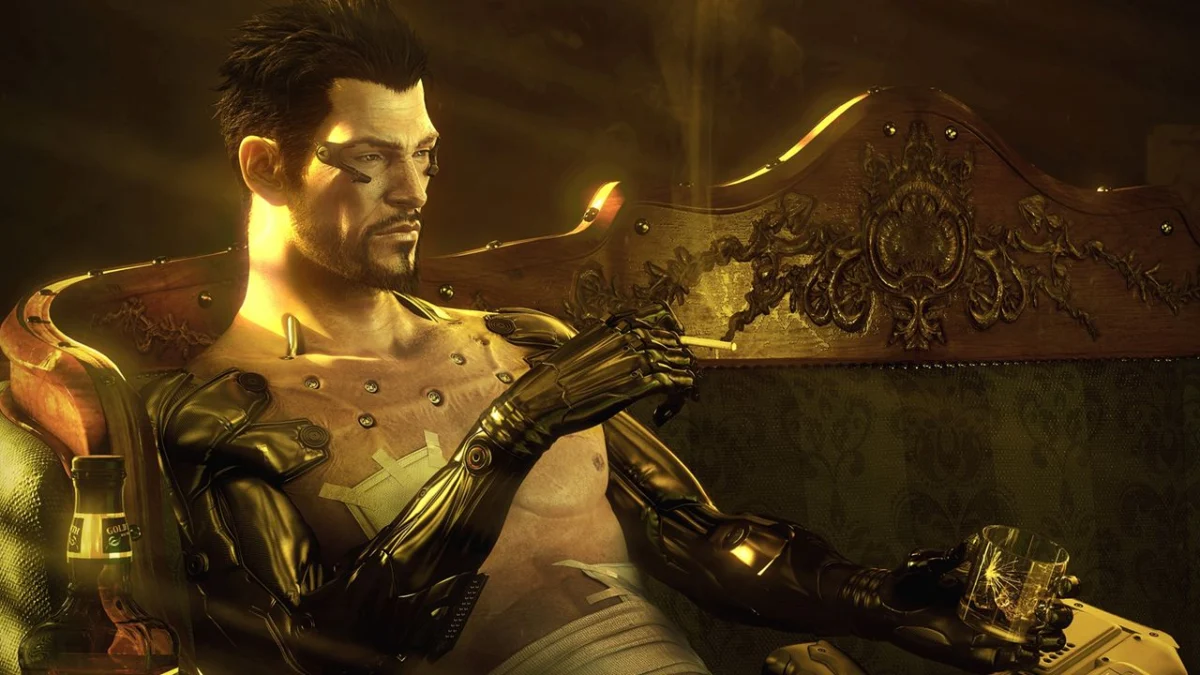
The landscape of interactive entertainment has undergone a seismic shift over the last decade and a half. Where once the industry was defined by creative visionaries and a burgeoning "garage-studio" culture, it is now dominated by massive conglomerates, sovereign wealth funds, and private equity firms. Stephane D’Astous, the founder and former general manager of Eidos Montreal, recently offered a scathing assessment of this transformation, suggesting that the industry has traded its soul for a spreadsheet-driven approach to development.
In an exclusive interview with Thunderpick, D’Astous—who oversaw the development of acclaimed titles like Deus Ex: Human Revolution—argued that the fundamental DNA of the people holding the purse strings has fundamentally altered. As the industry faces a period of historic instability, defined by mass layoffs and project cancellations, D’Astous’s perspective provides a sobering look at how "passion-driven" development is being systematically replaced by cold, fiscal calculus.
The Changing of the Guard: From Creatives to Capitalists
To understand the current state of gaming, one must look at who controls the capital. Fifteen years ago, the hierarchy of the gaming world was vastly different. While giants like Electronic Arts and Activision Blizzard were established, they operated in an environment where creative risk was still a marketable asset.
"The big players 15 years ago are not necessarily big players today," D’Astous noted. He points to the meteoric rise of Tencent, which has transformed from a niche international entity into an omnipresent titan, and the intervention of sovereign wealth funds, such as Saudi Arabia’s Public Investment Fund (PIF). These entities possess "unlimited resources," changing the nature of acquisition. "15 years ago, who would have said that EA was on the chopping block to be bought?" he asked.
The influx of this capital has centralized power into the hands of a few. These decision-makers, according to D’Astous, lack the historical context of the medium. They are not former developers or designers who rose through the ranks; they are institutional investors. Their metrics are defined by quarterly earnings reports and long-term asset appreciation, not the intricacies of ludonarrative harmony or player engagement. "It’s much more Excel than passion-driven," D’Astous asserted.
Chronology of Consolidation: A Timeline of Industrial Shift
The erosion of the "passion-driven" era did not happen overnight. It was a gradual transition fueled by several distinct phases of market behavior:
- 2010–2015: The Rise of the Live Service Model: As digital storefronts matured, companies realized that a one-time purchase was less profitable than a recurring revenue stream. This shifted development focus toward titles that prioritized monetization over single-player narrative depth.
- 2016–2019: The "Golden Age" of Venture Capital: As gaming became recognized as a premier cultural juggernaut, massive amounts of speculative capital flooded the market. Studios were bought at record valuations, often regardless of their long-term viability.
- 2020–2022: The Pandemic Bubble: During the global lockdowns, gaming revenue saw a temporary, artificial spike. This led to an explosion in funding for projects that, in retrospect, were poorly conceived. D’Astous notes that "thousands of projects were given money during Covid," many of which were fundamentally flawed from their inception.
- 2023–2025: The Correction Phase: As the pandemic-era growth stalled, the industry entered a period of brutal "market correction." This has resulted in the current cycle of mass layoffs, studio closures, and the shelving of promising projects to satisfy shareholders.
The "Covid Spigot" and the Legacy of Poor Decisions
One of the most damning aspects of D’Astous’s critique is his analysis of the post-2020 investment boom. During the pandemic, money was flowing into the industry with little regard for standard production feasibility.
"When I saw some of those projects that were funded… I said, ‘That idea was funded? Oh my god, this is bad news,’" D’Astous recounted. He suggests that we are currently living through the consequences of those bad decisions. The development cycle for a AAA game is typically five to seven years. Consequently, the industry is currently attempting to launch or sustain projects that were greenlit during a period of irrational exuberance, leading to a glut of underperforming software that is now triggering further layoffs.
Unrealistic Expectations: The "Witcher 3" Trap
Perhaps the most frustrating element for developers on the ground is the disconnect between executive expectations and physical reality. D’Astous revealed that he has frequently been approached by investors or executives asking for "a Witcher 3-like game" on a limited budget, with a truncated four-year development window, and with a new, unproven team.
This "magic wand" approach to game development ignores the realities of technical debt, team chemistry, and the sheer labor required to build a massive open-world RPG. These unrealistic mandates set teams up for failure before the first line of code is written. When these projects inevitably fail to reach the impossible benchmarks set by management, the developers—not the executives—are the ones who face the brunt of the consequences.
Supporting Data: The Cost of Corporate Governance
The atmosphere described by D’Astous is not mere sentimentality; it is supported by the grim statistics of the last two years. The industry has seen a sustained trend of "swingeing layoffs," with tens of thousands of roles eliminated across major publishers.
| Year | Industry Context | Reported Layoffs (Est.) |
|---|---|---|
| 2022 | Post-pandemic correction begins | ~8,000 |
| 2023 | Consolidation and restructuring | ~10,500 |
| 2024 | Record-breaking volatility | ~15,000+ |
These numbers represent more than just lost jobs; they represent the loss of institutional knowledge and the dismantling of long-standing creative teams. The closures of legendary studios—or the radical pivots of others toward live-service models—have left a vacuum where innovation once thrived.
Implications: Can the Industry Rebound?
The overarching implication of D’Astous’s analysis is that the current model is inherently hostile to risk-taking. In an environment where the goal is to minimize risk for the sake of quarterly dividends, "passion-driven" projects are the first to be cut.
This creates a self-reinforcing cycle of mediocrity. If publishers only fund games that look and feel like previous, safe successes, the industry will eventually suffer from creative stagnation. Players are already beginning to notice; the increasing reliance on remakes, sequels, and live-service "engagement traps" is a direct result of the lack of appetite for original, high-risk ideas.
The Path Forward
While the landscape looks bleak, there is a glimmer of hope in the independent sector. As the "AAA" space becomes increasingly synonymous with corporate risk-aversion, smaller studios are finding success by focusing on niche audiences and high-quality, focused experiences. However, these developers rarely have the "unlimited resources" mentioned by D’Astous, leaving them vulnerable to the same predatory acquisition tactics that have plagued their larger counterparts.
D’Astous’s warning is a call to action for the industry to reconsider how it defines success. If the decision-makers do not pivot back toward a balance of fiscal responsibility and creative integrity, they risk alienating the very audience that made gaming a multi-billion dollar industry in the first place. For now, the "Excel-driven" era continues, leaving developers and players alike to wonder if the golden age of gaming has truly passed, or if it is merely waiting for a new generation of leaders to rediscover what made the medium special in the first place.

