

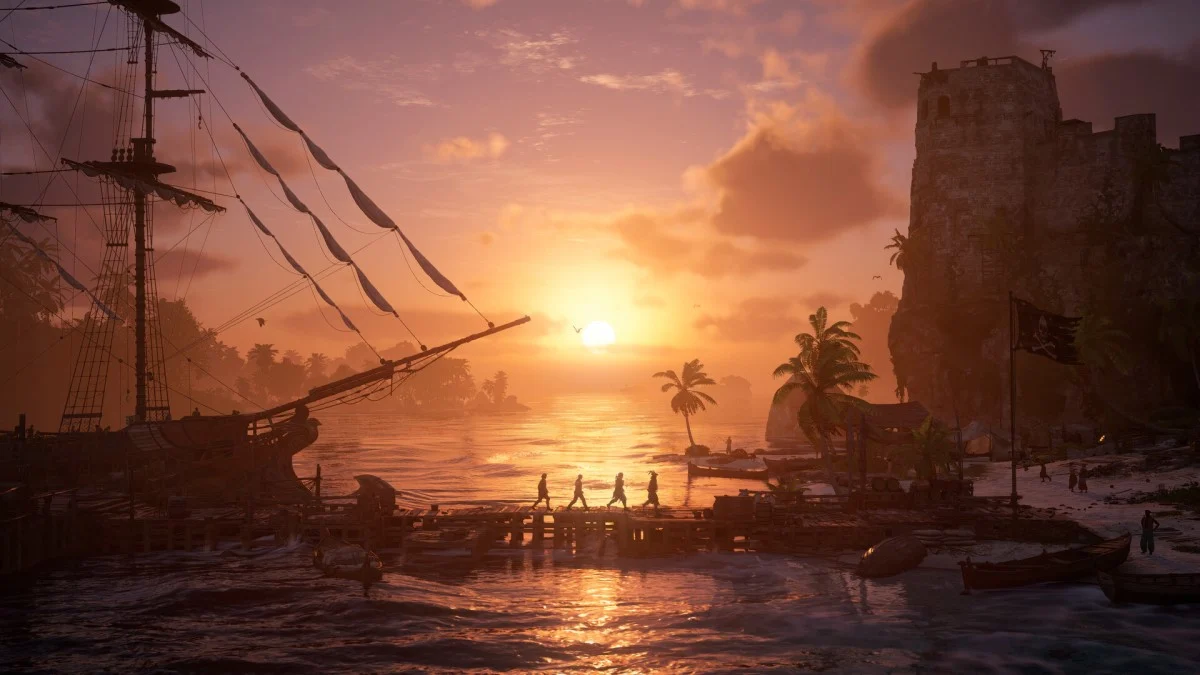
In an industry currently defined by the cyclical nature of remakes and remasters, it is becoming increasingly difficult for titles to distinguish themselves from the crowd. However, occasionally, a project arrives that manages to capture the zeitgeist, proving that some classics are truly timeless. Today, Ubisoft has officially launched Assassin’s Creed Black Flag Resynced for the PlayStation 5, marking a significant technical evolution for what is widely considered the pinnacle of the franchise’s nautical exploration era.
Available now on the PlayStation Store, Resynced is not merely a graphical touch-up; it is a comprehensive overhaul of the 2013 open-world masterpiece that redefined the Assassin’s Creed formula. With a critical reception hovering at an impressive 84 on Metacritic, the game is poised to bridge the gap between long-time veterans of the series and a new generation of console players.
The Evolution of an Epic: A Chronological Retrospective
To understand the significance of Black Flag Resynced, one must look back at the original release in October 2013. At the time, Ubisoft was grappling with how to evolve the franchise following the conclusion of Desmond Miles’ story in Assassin’s Creed III. The result was Black Flag, a bold departure that traded the claustrophobic, vertical cities of Europe for the sprawling, dangerous, and liberating expanse of the Caribbean.
The 2013 Phenomenon
Upon its release, Black Flag was hailed as a revolutionary title. It successfully married the core tenets of the Assassin-Templar conflict with a deeply immersive pirate simulator. Players controlled Edward Kenway, a charismatic privateer-turned-pirate, whose journey was as much about personal redemption as it was about ideological war. The inclusion of naval warfare—a mechanic teased in its predecessor—became the heart of the experience. The Jackdaw, Kenway’s ship, became a character in its own right, forcing players to manage their crew, upgrade their hull, and engage in tactical sea battles.
The Decade of Anticipation
For over ten years, the community clamored for a return to the high seas. While subsequent entries like Odyssey and Valhalla experimented with naval mechanics, none quite captured the specific "golden age of piracy" atmosphere that Black Flag perfected. Rumors of a remake began circulating as early as 2021, and today’s launch represents the culmination of years of internal development and community feedback. Resynced arrives not just as a nostalgia trip, but as a technical showcase of what the PS5’s hardware can achieve when applied to a decade-old engine.
Decoding ‘Resynced’: What’s New Under the Hood?
Assassin’s Creed Black Flag Resynced serves as a bridge between the classic gameplay loop and modern expectations. Ubisoft has been transparent about the "Resynced" moniker, which implies a tighter integration between the player’s inputs and the game’s complex physics systems.
Technical Enhancements and Visual Fidelity
The most immediate difference for returning players is the fidelity. Utilizing the power of the PS5, Resynced features dynamic 4K resolution, drastically improved lighting engines, and overhauled weather effects. The Caribbean storms, which were atmospheric in 2013, now feel genuinely life-threatening, with volumetric clouds and realistic water displacement physics that make every naval battle feel visceral.
Combat and Quality-of-Life (QoL)
Combat has been refined to be more fluid. While the core "counter-heavy" combat of the Kenway era remains, the input latency has been significantly reduced. The "Resynced" element also refers to the AI, which has been tuned to be more reactive. Enemies no longer wait in a circle for their turn to strike; they exhibit more aggressive, coordinated patterns that force the player to utilize the full arsenal of pistols, swords, and the iconic Hidden Blade.
The Deluxe Offering
For those looking to fully immerse themselves, the Deluxe Edition (priced at $69.99) adds exclusive content, including:
- The "Captain’s Legacy" Pack: Unique ship cosmetics and Edward Kenway outfit variants.
- Digital Artbook and Soundtrack: A curated look at the game’s development and its critically acclaimed score.
- Time-Savers: Utility packs to expedite resource gathering, allowing players to focus on the narrative and naval exploration.
Supporting Data: Why the 84 Metacritic Score Matters
The critical reception of Assassin’s Creed Black Flag Resynced has been overwhelmingly positive, with an average score of 84 based on 83 critic reviews. This data is telling: it indicates that while the game is fundamentally the same story many know and love, the technical polish has removed the "friction" that usually accompanies older titles.
Reviewers have consistently highlighted that the core loop—sailing between islands, raiding warehouses, and engaging in naval warfare—has aged remarkably well. The score reflects a consensus: Black Flag was ahead of its time in 2013, and in 2024, it feels right at home alongside modern open-world titles. The "Resynced" title carries weight because it implies a successful modernization of the game’s "DNA," ensuring that the parkour and stealth mechanics feel snappy rather than sluggish.
Official Perspectives and Industry Implications
Ubisoft’s decision to revisit Black Flag is not just a creative choice; it is a strategic one. As the industry faces longer development cycles for massive AAA titles, re-releasing and enhancing "legacy" titles has become a pillar of growth.
The Developer’s Stance
In a press statement accompanying the launch, the development team at Ubisoft emphasized that Resynced was built on the foundation of player feedback. "We wanted to ensure that when players stepped onto the deck of the Jackdaw today, it felt exactly how they remembered it in their best memories—enhanced by the power of modern technology," a spokesperson noted. This philosophy of "respectful modernization" seems to have paid off, avoiding the pitfalls of over-remastering that often strip a game of its original identity.
Market Implications
The success of Black Flag Resynced signals a shift in how publishers view their back catalogs. Instead of full-scale ground-up remakes that require years of development, "Resyncing" titles—or providing significant, high-fidelity updates—offers a lower-risk, high-reward path to engagement. If this model proves financially successful for Ubisoft, we may see a trend of other classic Assassin’s Creed titles receiving similar treatments.
Conclusion: A Pirate’s Life, Reimagined
Assassin’s Creed Black Flag Resynced is a testament to the fact that great game design is evergreen. Whether you are a fan of the franchise who played the original on a PS3 or a newcomer looking for an engaging, seafaring action-adventure, this release provides a polished, high-fidelity experience that justifies its place in the modern PS5 library.
By balancing the nostalgic charm of the 2013 original with the technical capabilities of the current generation, Ubisoft has managed to breathe new life into a fan-favorite experience. As the digital seas of the Caribbean beckon once more, players have every reason to take up the mantle of Edward Kenway. With a solid foundation, improved mechanics, and a world that feels more alive than ever, Black Flag Resynced is, without a doubt, one of the most exciting releases of the year.
For those eager to dive in, the game is available now on the PlayStation Store. Whether you opt for the Standard Edition or the content-heavy Deluxe Edition, the journey of the Jackdaw is waiting to be written again. As the industry continues to look forward, it is refreshing to see a developer take the time to look back and ensure that our favorite stories are preserved for the next generation of gamers.

