

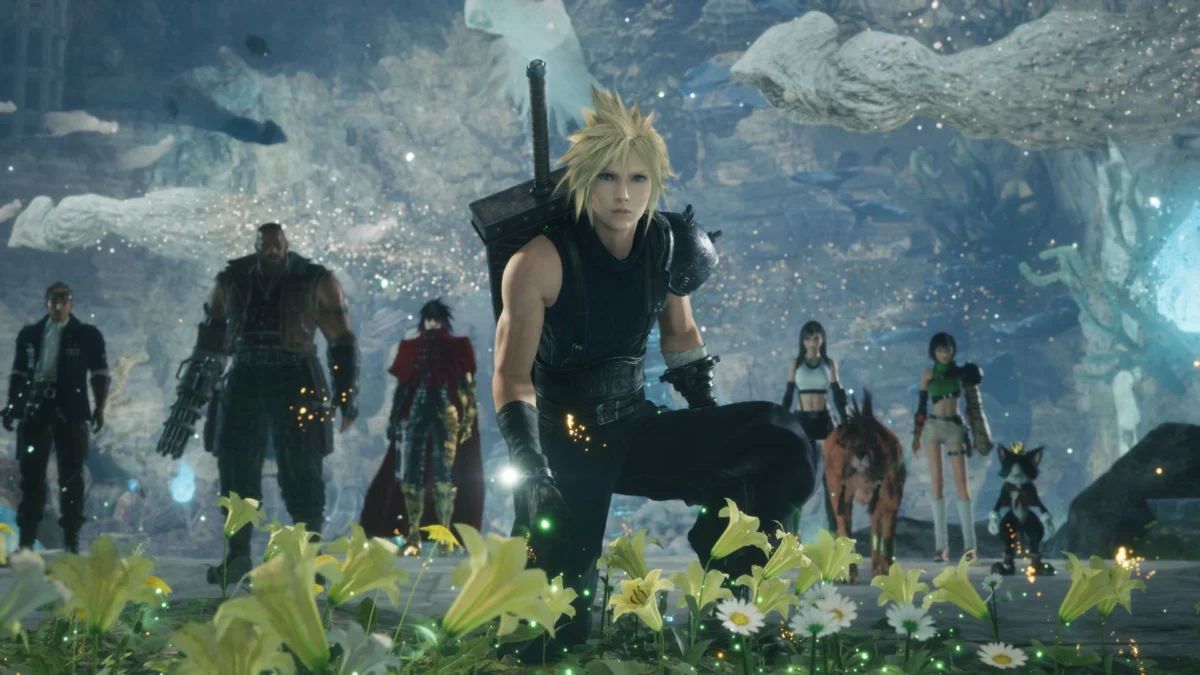
Final Fantasy 7 occupies a unique space in the cultural zeitgeist. It is simultaneously a time capsule of the late 1990s—a moment when the transition to 3D gaming felt like a genuine technological revolution—and a profoundly relevant narrative about corporate hegemony, ecological collapse, and the human condition. As Square Enix approaches the final chapter of its ambitious remake trilogy, Final Fantasy 7 Revelation, the weight of expectation is palpable. Scheduled for release on April 8, 2027, this concluding entry aims to tie the knot on a decade-long project that has sought to reimagine one of the most beloved role-playing games of all time for a modern audience.
In a recent, expansive interview with Edge Magazine (Issue 429), series director Naoki Hamaguchi provided a rare, introspective look into the creative turmoil and philosophical rigors involved in adapting a classic. For Hamaguchi, the task was never simply about updating graphics or smoothing out mechanics; it was about honoring a sacred text while navigating the treacherous waters of contemporary creative expectation.
The Weight of the Legacy: Navigating the Remake Trilogy
The Final Fantasy 7 project is an anomaly in modern AAA game development. Rather than condensing a 40-hour 1997 title into a single modern release, Square Enix chose to expand the narrative across a three-part trilogy. This decision allowed the team to flesh out characters, locations, and lore that were previously confined to the limitations of PlayStation 1-era hardware. However, it also invited intense scrutiny.
"We haven’t altered the core of the story based on reactions at any given time," Hamaguchi explained to Edge. "It feels as though we’ve built up each title one by one without wavering from the central theme we established at the very start of the Remake series."
This commitment to a unified vision is a testament to the team’s discipline. In an era where player feedback via social media can often force developers to pivot mid-cycle, Hamaguchi and his team remained steadfast. The primary hurdle, he admits, was avoiding the trap of auteur-driven vanity. "It wasn’t easy," he noted. "I felt it was absolutely essential to avoid turning a masterpiece like FF7 into something that felt like my own personal fan project."
Chronology: From Midgar to Revelation
To understand the magnitude of Revelation, one must consider the trajectory of the project. The journey began in 2020 with Final Fantasy 7 Remake, which focused entirely on the industrial sprawl of Midgar. It was here that the developers introduced the "Whispers"—enigmatic, fate-weaving entities that served as a meta-narrative device.
The Whispers were a stroke of genius—and controversy. They allowed the developers to acknowledge the original game’s canon while simultaneously creating the possibility for deviation. They effectively signaled to the player that while the iconic beats would be present, the outcome was no longer set in stone.
This was followed by 2024’s Final Fantasy 7 Rebirth, which expanded the scope to the world map and explored the deeper mysteries of the Cetra and the villainous Sephiroth. Rebirth shifted the tone from a contained urban rebellion to a sprawling, high-stakes adventure. Now, as the industry looks toward April 8, 2027, Revelation stands as the final act. It is the culmination of years of technical iteration and narrative expansion, tasked with providing a satisfying conclusion that bridges the gap between the 1997 original and the modern vision.
The Identity Crisis: What Defines "FF7R"?
The most challenging aspect of the project, according to Hamaguchi, was not the individual narrative changes, but the struggle to define the project’s identity within the broader Final Fantasy pantheon.
"The real challenge wasn’t simply incorporating elements that differed from the original or introducing new interpretations," Hamaguchi stated. "It was constantly asking ourselves whether what we were creating could truly be called FF7R."
This existential questioning speaks to the difficulty of modernizing a classic. If a remake is too faithful, it is criticized for lacking innovation; if it is too different, it is accused of betrayal. The development team had to balance the nostalgia of the original fanbase with the expectations of new players who have never touched a controller in the 90s.
Hamaguchi has maintained that the original 1997 game is "enshrined" within the narrative of the remakes. It exists as a "thing in the world," a narrative foundation upon which the current trilogy builds. This allows veterans to find joy in spotting the deviations, while newcomers are presented with a self-contained, modern, and accessible RPG experience.
Supporting Data: The Evolution of Combat and Systems
One of the most praised aspects of the Remake series has been its combat system. It successfully hybridizes real-time action with the strategic, menu-driven "ATB" (Active Time Battle) system that defined the original game.
Recent reports from the development team highlight that this balance remains a point of intense focus for Revelation. The battle leads have openly discussed the ongoing struggle of finding the "correct" way to balance speed and strategy. Rather than viewing this as a failure, the team treats it as a primary motivator. Hamaguchi and his leads have expressed that they are not "tired" of the trilogy, precisely because the complexity of these systems prevents the work from becoming stagnant.
This commitment to mechanical depth is what separates the FF7 project from simpler remasters. The team is not just polishing the past; they are building a bridge to the future of the action-RPG genre.
Official Responses and Creative Philosophy
The transparency offered by Hamaguchi in Edge Magazine underscores a shift in how Square Enix communicates with its player base. By acknowledging the difficulty of the project, the team humanizes the massive, multi-year production cycle.
The emphasis on not creating a "personal fan project" is perhaps the most significant takeaway from the director’s recent comments. It highlights a humility that is often absent in high-budget game development. By positioning themselves as stewards of a legacy rather than authors rewriting history, the team has managed to maintain a level of reverence that has kept the community largely supportive, even when the narrative takes unexpected turns.
Implications for the Future of the Industry
The success—or failure—of the Final Fantasy 7 trilogy will undoubtedly have long-term implications for the gaming industry. It has proven that there is a viable, high-demand market for "prestige remakes" that go beyond mere visual updates.
However, it also serves as a cautionary tale. The resources, time, and creative talent required to execute a project of this scale are immense. Not every studio has the legacy, the budget, or the team size to attempt a ten-year, multi-part overhaul of a classic title.
As we look toward the 2027 launch of Revelation, the industry will be watching closely. Will the finale stick the landing? Will the meta-narrative devices of the Whispers resolve into a coherent, emotional payoff that satisfies both the nostalgic purist and the modern player?
Regardless of the outcome, the Final Fantasy 7 remake trilogy has already achieved something remarkable: it has kept a conversation about a 30-year-old game alive and vital. It has proven that classic stories, when handled with enough care, intelligence, and a healthy dose of creative bravery, can remain as relevant today as they were at the dawn of the 3D era.
For now, fans have the luxury of time. Whether one chooses to revisit the original 1997 masterpiece to prepare for the nuances of the finale, or prefers to dive into the Remake and Rebirth experience as a standalone odyssey, the path to Revelation is set. The final piece of the puzzle is approaching, and if the team’s track record is any indication, the conclusion will be nothing short of a landmark moment in video game history.

