

When Dishonored arrived in October 2012, the landscape of PC gaming was undergoing a subtle, high-stakes shift. The "immersive sim"—a genre defined by player agency, emergent physics, and deep systemic interaction—had spent years in the shadows. With the release of Arkane Studios’ Victorian-steampunk assassination sim, that drought ended. Today, we look back at the original PC Gamer assessment of a title that redefined the boundaries of player freedom and atmospheric storytelling.
Main Facts: A New Standard for the Immersive Sim
Dishonored is, at its core, a playground for the creative assassin. Set in the decaying, rat-infested city of Dunwall, players step into the boots of Corvo Attano, a bodyguard framed for the assassination of the Empress he was sworn to protect. What follows is a narrative-driven infiltration experience that eschews the linear hand-holding of its contemporaries in favor of sprawling, "wide-linear" mission design.
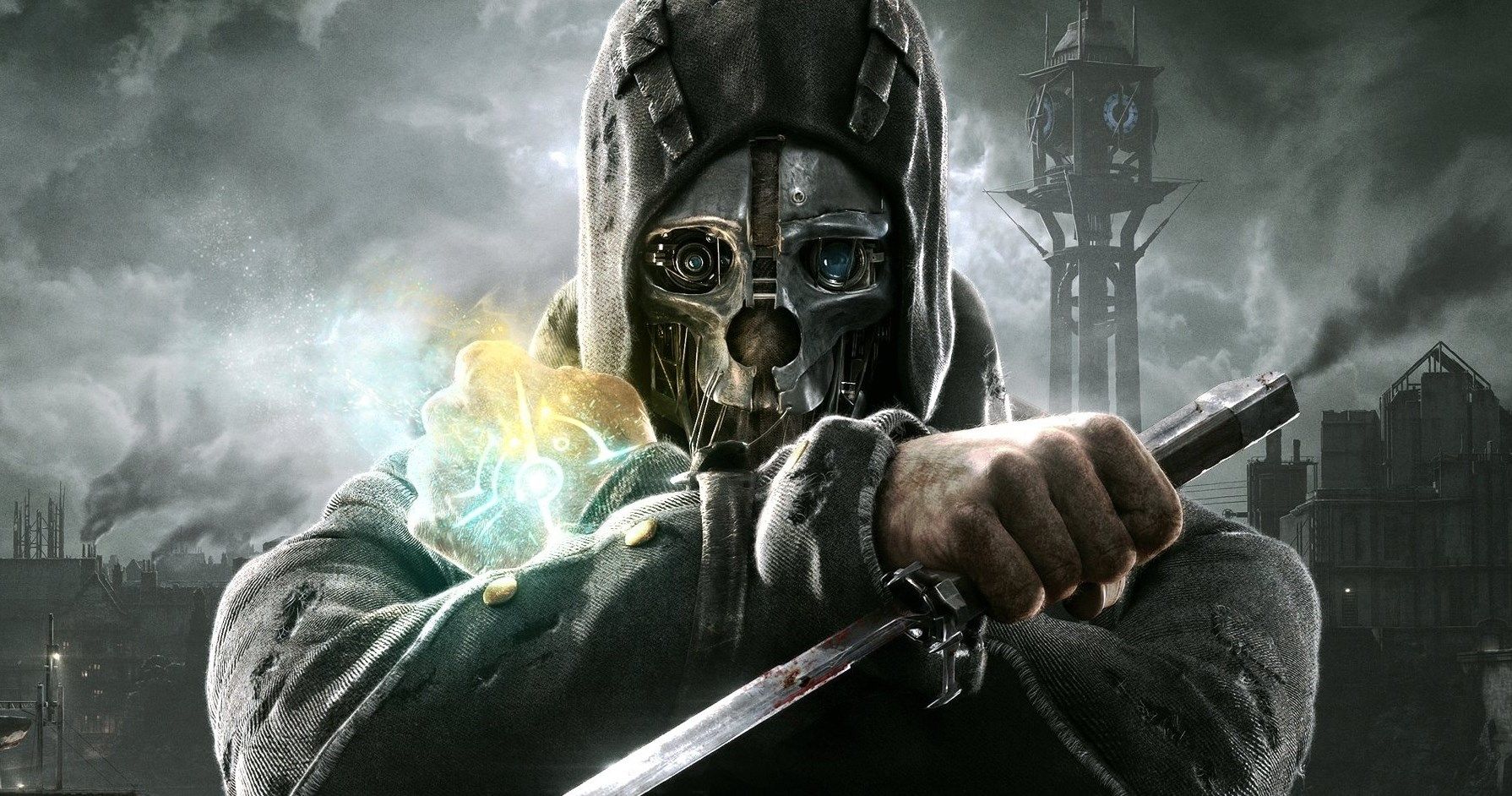
The game is built upon a foundation of interconnected systems. Whether you are manipulating the environment to avoid detection or utilizing supernatural abilities like "Blink"—a short-range, near-instantaneous teleport—to traverse the verticality of Dunwall, the game treats your playstyle as the primary narrative driver. The central premise is simple: you are an assassin with a target, but how you reach that target, and whether they survive the encounter, is entirely up to you.
Chronology of Infiltration: A Living Sandbox
The brilliance of Dishonored lies in its refusal to force a specific playstyle. The game’s missions unfold across distinct, self-contained, and dense regions of Dunwall.

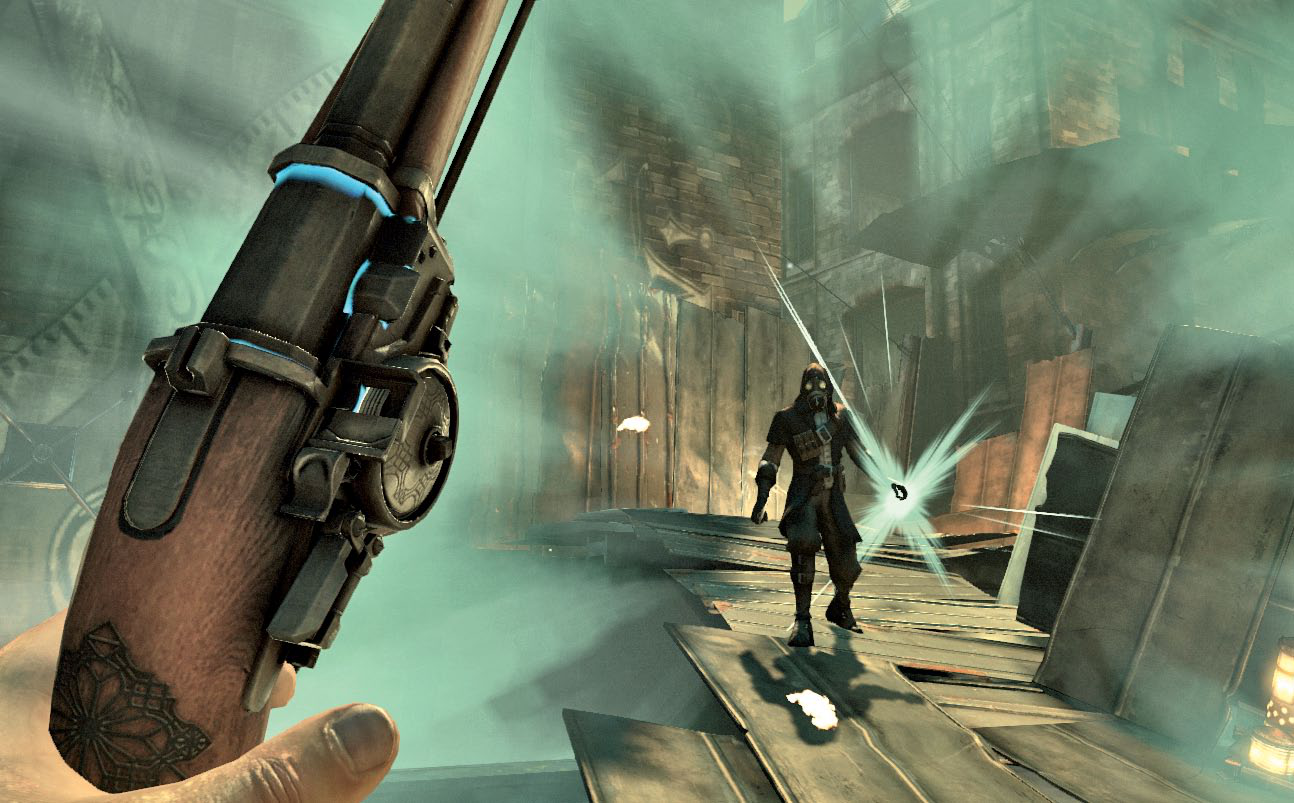
In the early stages, the player is introduced to the core mechanics through low-stakes, high-freedom infiltration. As the game progresses, the complexity of these spaces increases. You might spend an hour meticulously analyzing the patrol patterns of city guards, or you might choose to engage in the game’s surprisingly robust first-person swordplay.
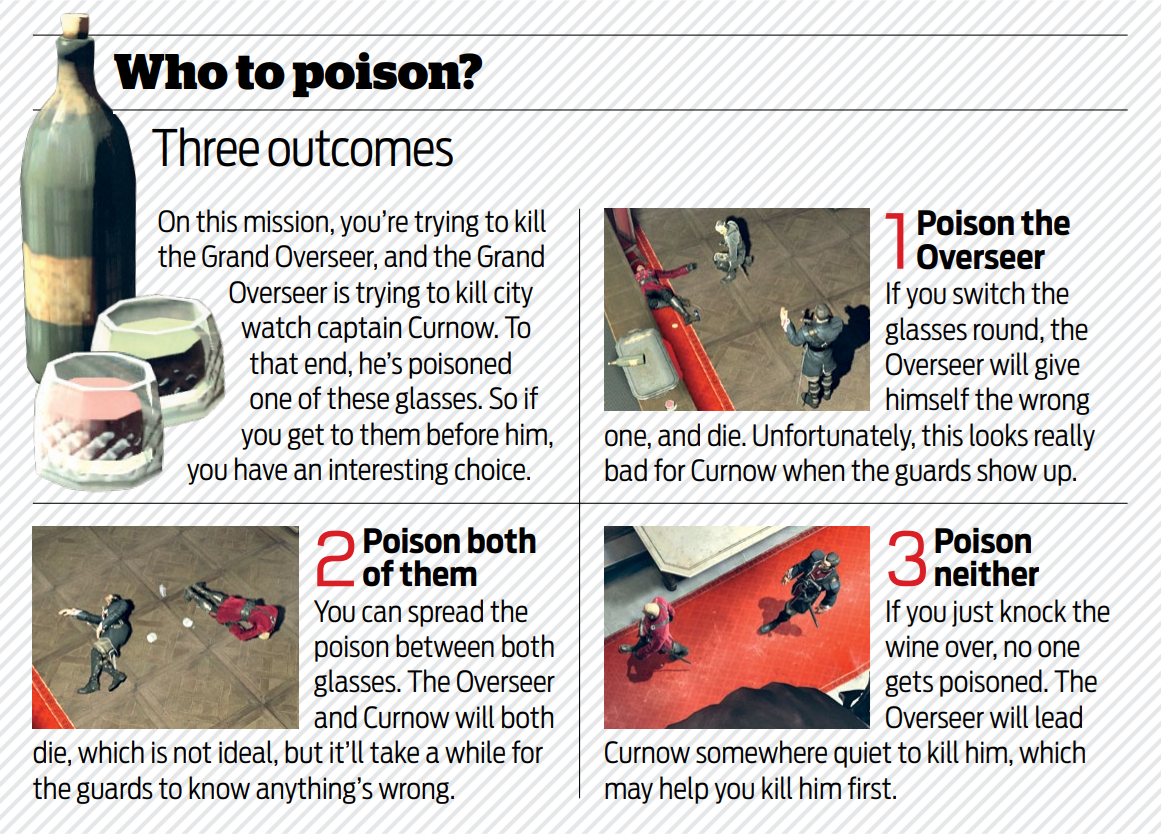
A quintessential example of this design philosophy is the "Grand Overseer" mission. Tasked with neutralizing the head of the city’s religious order, the player is presented with a binary objective that blossoms into a web of potential outcomes. One could simply storm the front gates, blades drawn. Alternatively, one could eavesdrop on local conversations to discover a secret entrance, or manipulate the environment to ensure the target is removed non-lethally.
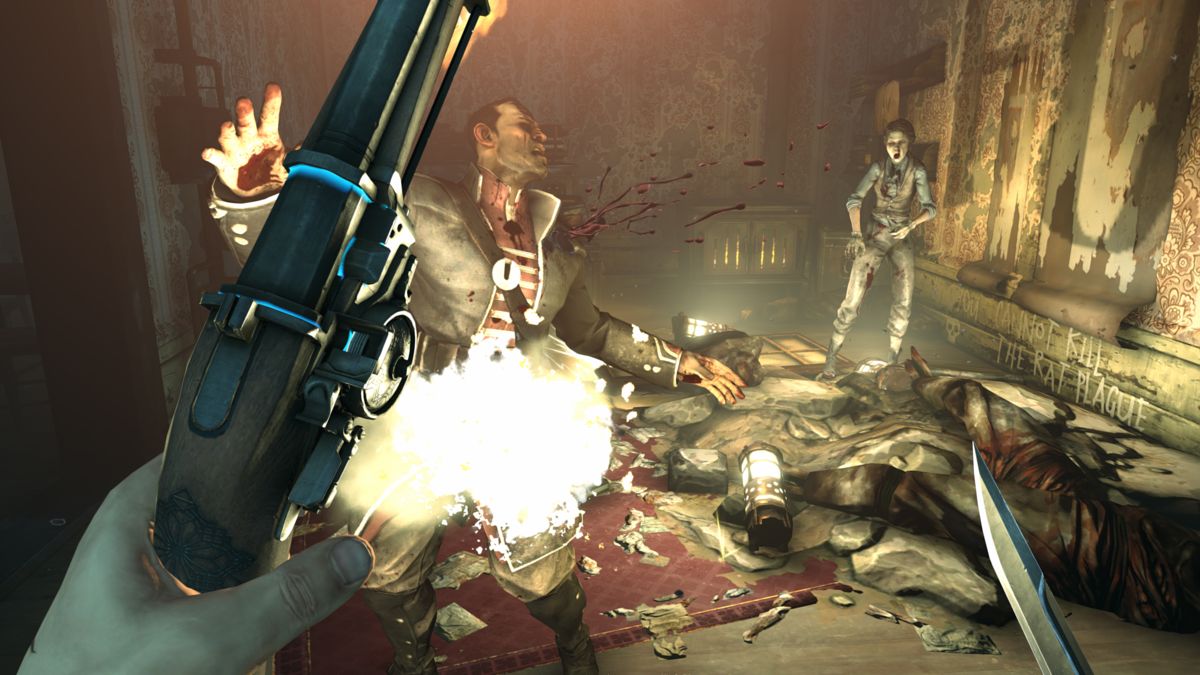
The "Blink" mechanic remains the gold standard for movement in first-person games. It is silent, versatile, and precise. It allows players to bridge the gap between architectural features, turning the city’s rooftops into a highway of shadows. This mobility is essential, as the game’s "Chaos System" monitors your lethality. Every kill adds to the city’s infestation levels, leading to more rats, more disease, and a significantly darker, more oppressive atmosphere as the game nears its conclusion.
Supporting Data: Systems and Synergies
Arkane’s commitment to "play-your-way" is supported by a robust engine of interactive parts. The world is reactive:
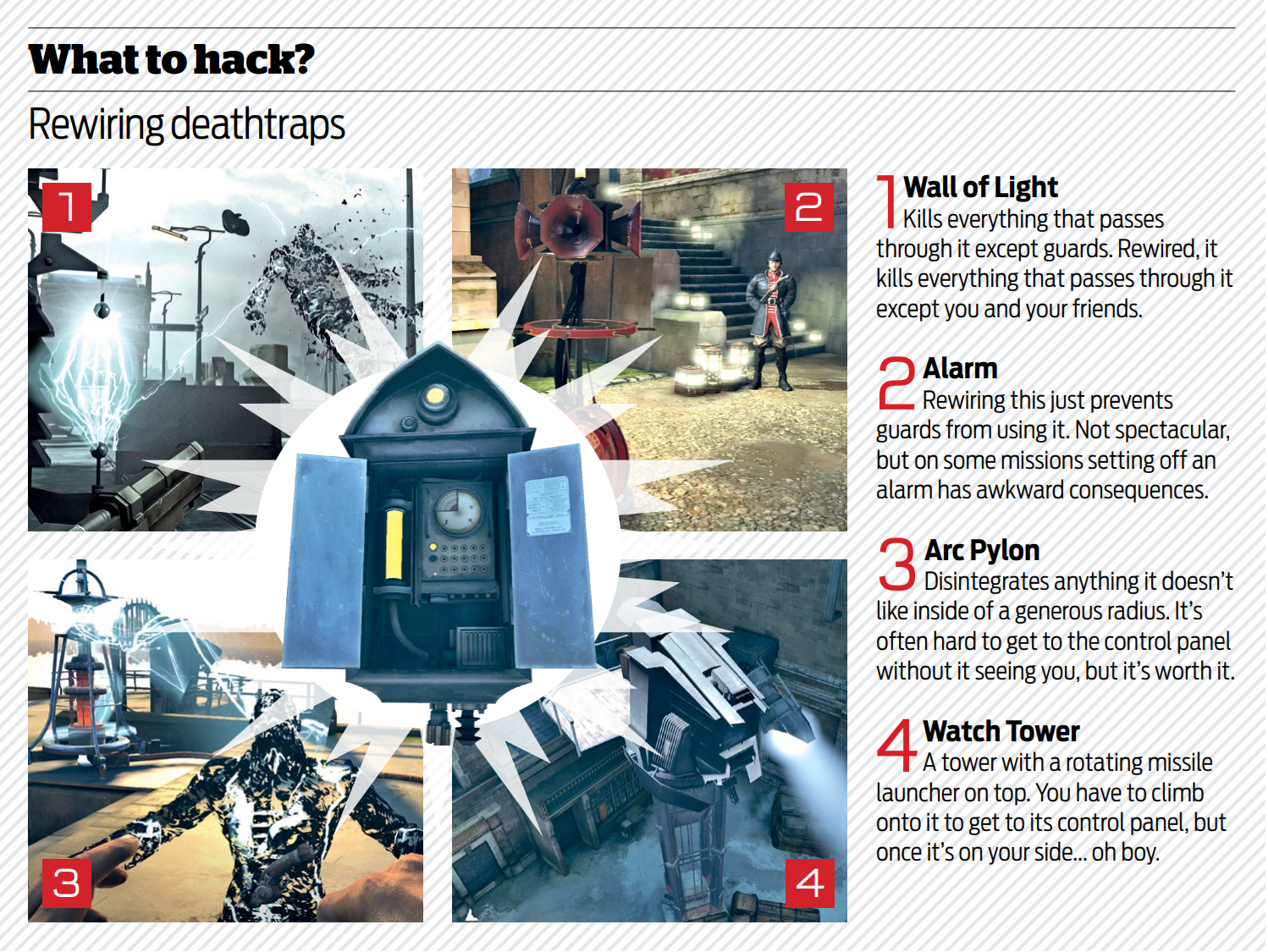
- The Whale Oil Economy: Security devices, such as the deadly "Arc Pylons," are powered by volatile whale-oil batteries. Players can choose to remove these batteries to disable the security, or, more creatively, shoot the battery to trigger an explosion, creating a diversion that clears a path.
- The Rat Swarm: The plague is not just background flavor; it is a gameplay mechanic. Corpses left in the open attract swarms of rats. Clever players can lure guards into these swarms, effectively using the game’s environmental hazards as a weapon.
- Possession: This supernatural ability allows Corvo to inhabit the minds of humans, rats, or fish. It serves as the ultimate "get out of jail free" card, enabling players to bypass security gates or infiltrate locked rooms by scurrying through pipes as a rodent.
The game also features a high level of technical polish for the PC platform. In an era where many ports felt like an afterthought, Arkane provided extensive options, including field-of-view sliders, fully remappable keys, and the ability to strip away the HUD for a more "hardcore" immersive experience.
Official Responses and Developer Intent
At the time of its release, Arkane Studios made no secret of their influences. The team drew heavily from the DNA of Thief and Deus Ex. The intent was to move away from the "scripted spectacle" that dominated the early 2010s. By giving players a toolkit rather than a list of commands, Arkane ensured that every player’s experience in Dunwall was uniquely their own.
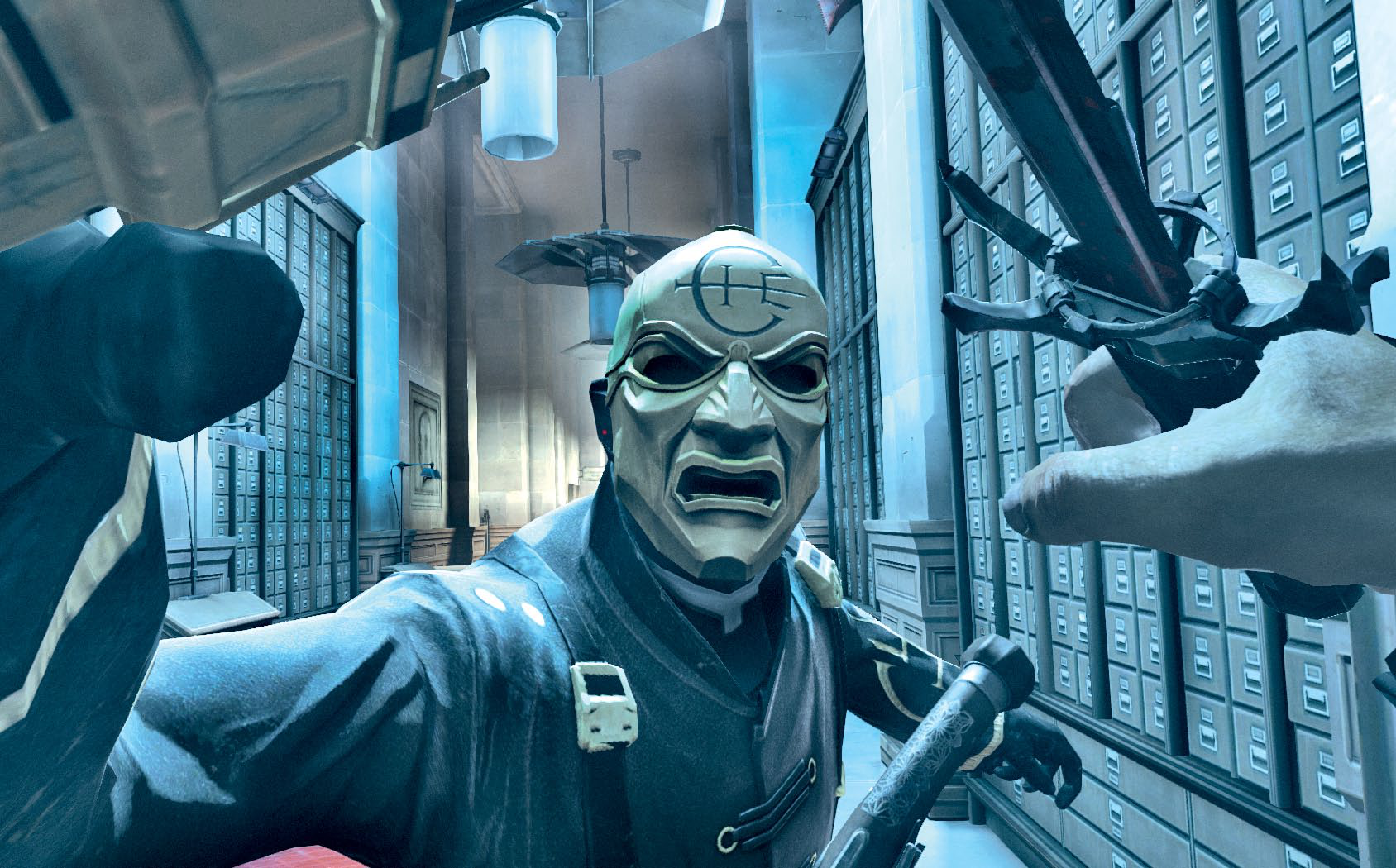
Bethesda Softworks, as the publisher, granted the team the time and resources necessary to build a world that felt "lived in." The art direction, featuring a painterly, slightly grotesque aesthetic, was designed to emphasize the social disparity of Dunwall. The contrast between the pristine, marble-floored mansions of the elite and the grime-coated, plague-ridden streets creates a tangible sense of place that remains visually striking over a decade later.
Implications for the Industry
The success of Dishonored served as a proof-of-concept for the viability of the modern immersive sim. While the genre has since moved into a more niche, indie-centric space, the impact of Dishonored is still felt in every title that prioritizes player choice and environmental storytelling.
However, the game is not without its minor flaws. As noted in original critiques, the experience arguably peaks in its first half. Some of the later levels, while visually stunning, suffer from a tighter focus on plot progression, occasionally stripping away the freedom that made the initial hours so captivating. Furthermore, the non-lethal path, while morally rewarding, is mechanically limited by a lack of variety in non-lethal tools compared to the vast, destructive arsenal available to a "high chaos" player.
Despite these minor quibbles, Dishonored remains a landmark achievement. It is a title that treats the player as an intelligent participant, rewarding curiosity and experimentation. It represents a rare alignment of vision, technical execution, and creative ambition.
Conclusion: Why We Still Play
Why does Dishonored continue to matter? Because it treats the player’s personality as the most important element of the game. It doesn’t tell you how to play; it asks you who you want to be. Are you a ghost who leaves no trace, a tactical genius who rewires the enemy’s own security against them, or a whirlwind of blades and blood?
In an industry often obsessed with sequels and iterative updates, Dishonored stands as a reminder of what happens when a developer is given the freedom to build a world where the laws of physics and the rules of the environment are yours to manipulate. It is a masterpiece of design, a love letter to the PC platform, and a definitive entry in the history of immersive simulations. Whether you are revisiting the streets of Dunwall or stepping into them for the first time, the city—and the systems that govern it—awaits your mark.

