

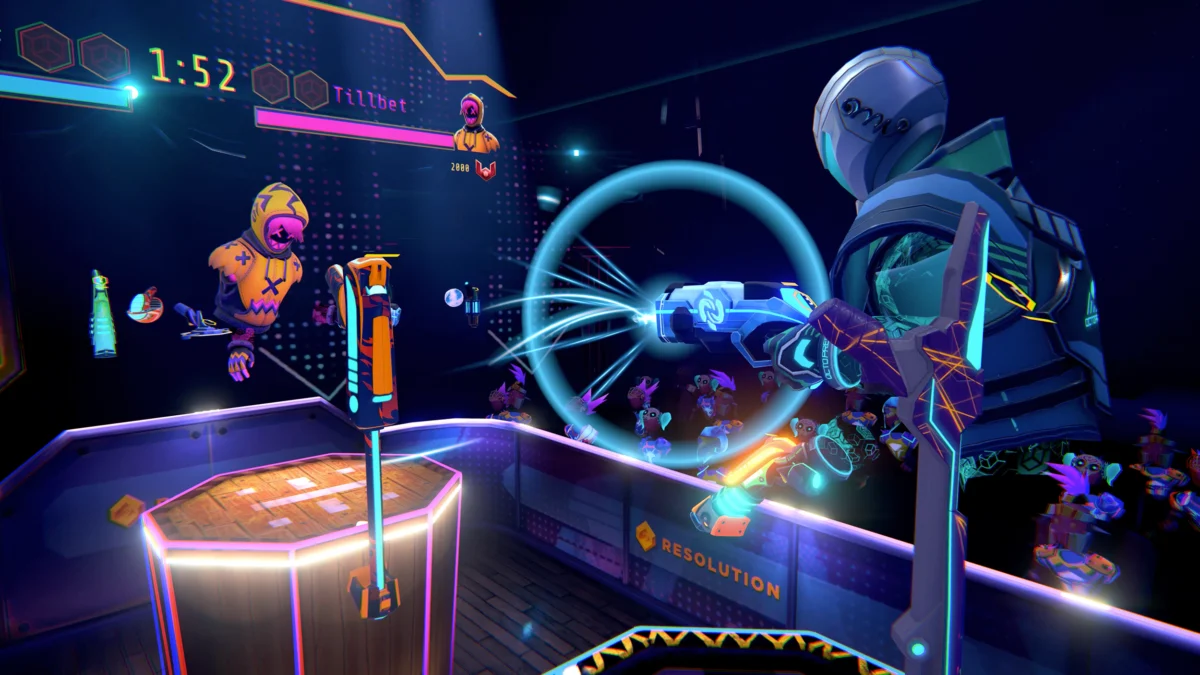
In the landscape of modern gaming, few platforms offer the same level of immersion as Virtual Reality. Yet, as the novelty of VR often wears off, many headsets end up gathering dust on shelves. For many, the search for a "killer app"—a title that justifies the hardware investment and demands daily engagement—is a persistent struggle. Recent trends suggest that the answer isn’t always found in sprawling RPGs or high-budget narrative epics, but rather in the adrenaline-soaked, high-intensity world of Blaston.
Since its emergence, Blaston has quietly ascended to become a staple of the VR ecosystem. What began as a spontaneous purchase for many has transformed into a nightly ritual, bridging the gap between competitive esports and intense physical exercise.
Main Facts: The Mechanics of Blaston
Blaston is, at its core, a 1-versus-1 dueling game designed specifically for the constraints and opportunities of Virtual Reality. Developed by Resolution Games, the title strips away the complexity of traditional shooters, focusing instead on spatial awareness, tactical loadout management, and raw physical agility.
The Core Loop
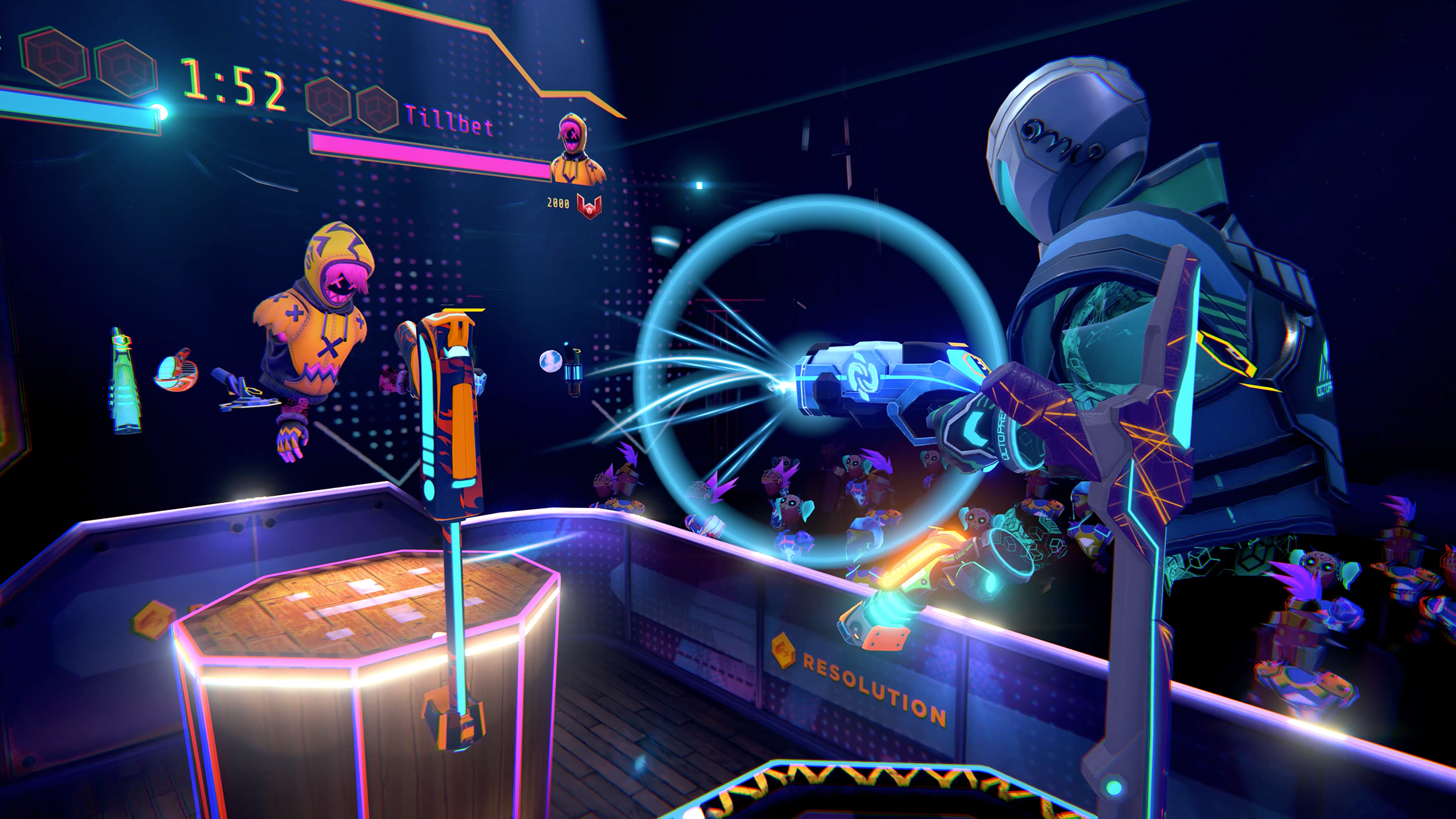
The gameplay loop is deceptively simple: two players stand on elevated platforms, separated by a compact arena. The objective is to deplete the opponent’s health bar using an array of projectiles and environmental hazards. However, unlike traditional shooters where weapons are carried in an inventory, Blaston forces players to interact with their environment. Weapons spawn in six distinct nodes surrounding the player. Players must physically reach, grab, and deploy these weapons in real-time.
Tactical Depth
Success in Blaston is not determined by who has the "best" weapon, but by who best controls the arena. The game features a wide variety of armaments, each with unique travel speeds, patterns, and secondary effects. Some weapons function as "area denial" tools—such as electrical beams that linger in space—while others are high-velocity projectiles designed to catch opponents off-guard. Mastery of the game requires an intimate understanding of how these weapons interact, how to manage cooldowns, and how to predict an opponent’s movement.
Chronology: From Spontaneous Purchase to Daily Ritual
The journey of a Blaston player often follows a distinct trajectory, mirroring the broader adoption of VR hardware in the post-2020 landscape.
- The Hardware Catalyst: Many players enter the Blaston ecosystem after purchasing standalone headsets like the Meta Quest 2. Driven by a desire for "visceral escapism" following the exhaustion of the global pandemic, these users seek titles that offer a clean break from reality.
- Discovery: For many, the game is discovered through digital storefront sales or "best-of" lists. Its low barrier to entry—being an inexpensive, highly rated title—makes it a common "impulse buy."
- The "Honeymoon" Phase: Initial sessions are often characterized by novelty. Players are introduced to the intensity of the duels and the physical demands of dodging incoming fire.
- The Commitment: Unlike many VR experiences that are completed in a few hours, Blaston exhibits extreme longevity. Users frequently report moving from casual play to a nightly routine, with many logging multiple hours every single evening. The game ceases to be a "game" and becomes a part of the player’s lifestyle.
Supporting Data: Why Physicality Matters
The success of Blaston provides a compelling case study for the "Fitness-Gaming" genre. In an era where sedentary gaming is the norm, Blaston demands movement.
The Physiological Impact
Because the game requires constant dodging—literally leaning out of the way of slow-moving projectiles—it functions as a high-intensity interval training (HIIT) session. While the primary goal is winning the duel, the secondary effect is a significant caloric burn. Data from third-party fitness trackers used by the Blaston community indicates that a 30-minute session can result in heart rates comparable to aerobic exercise.
Player Retention Metrics
Retention is the "holy grail" of game development. While many VR titles suffer from a "one-and-done" completion cycle, Blaston benefits from its competitive PvP (Player vs. Player) nature. Because human opponents are unpredictable, the game remains fresh indefinitely. The skill ceiling is incredibly high; as players improve their physical reflexes and tactical loadout configurations, the game becomes more rewarding, creating a positive feedback loop that keeps the player base highly active.
Official Responses and Developer Philosophy
Resolution Games, the team behind Blaston, has consistently positioned the game as a living service. Unlike titles that are released and abandoned, the developers have focused on frequent updates, weapon balancing, and community-driven events.
In official communications, the developers have emphasized that they wanted to create a "fair" environment. By ensuring that no single weapon is inherently "overpowered," they force players to become better strategists. The developers have frequently noted that they view Blaston not just as a game, but as a digital sport. This mindset has influenced their approach to matchmaking and ranking systems, ensuring that players are consistently paired with opponents of similar skill levels, which is crucial for long-term engagement.
Implications: The Future of VR Esports
The rise of Blaston carries several significant implications for the future of the gaming industry.
1. The Death of the "Tech Demo"
For years, VR was criticized for being a repository of "tech demos"—short, shallow experiences that lasted no more than 30 minutes. Blaston proves that VR can sustain long-term engagement if the mechanics are tight, competitive, and physically rewarding. It suggests that the future of VR lies in "sport-like" titles rather than long-form, seated cinematic experiences.
2. The Integration of Lifestyle and Gaming
Blaston is a prime example of the "gamification of wellness." As consumers become more health-conscious, the crossover between gaming and fitness will likely grow. Titles that provide a genuine workout without feeling like a "chore" (like traditional exercise apps) will command a larger share of the market.
3. The Accessibility of Competitive VR
Blaston excels because it eliminates the need for expensive motion-capture suits or large dedicated spaces. Because it is a stationary, room-scale experience, it is accessible to anyone with a modest amount of living room space. This accessibility is vital for the growth of VR as a competitive esports platform.
Conclusion
Ultimately, Blaston represents a paradigm shift in how we engage with virtual spaces. It is no longer enough for a game to look good; it must feel visceral. By forcing the player to move, to think, and to react in real-time, Blaston has carved out a unique space in the VR library. Whether you are looking for a competitive edge or simply a way to make your daily movement feel like an epic duel, the game serves as a testament to the power of well-executed, high-intensity design. It is, quite simply, a mandatory addition to any VR enthusiast’s collection.

