

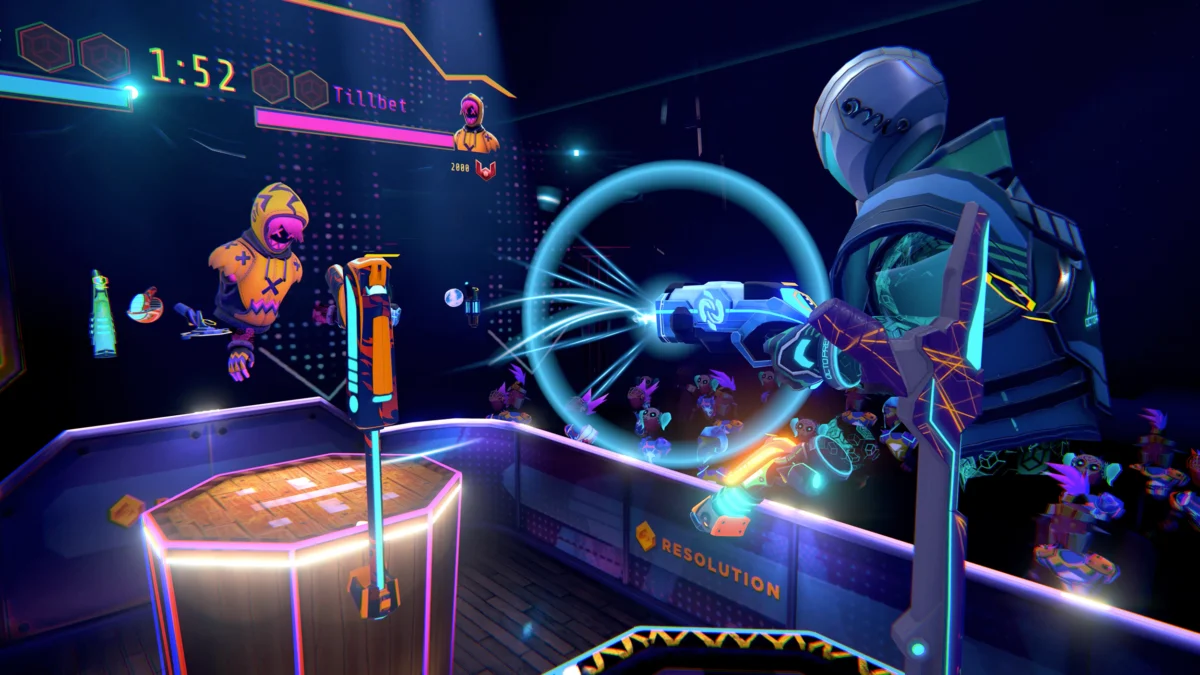
In an era where virtual reality (VR) hardware has become increasingly accessible, the true challenge for developers is no longer just "immersion"—it is retention. How do you keep a player returning to a digital space night after night? For many, the answer has arrived in the form of Blaston, a competitive, high-octane dueling game that has quietly become a standout title in the VR ecosystem.
Whether prompted by a need for escapism or a desire for a visceral physical challenge, Blaston offers a unique intersection of strategic depth and intense physical exertion. As players find themselves increasingly looking for titles that go beyond passive experiences, Blaston’s blend of bullet-hell mechanics and tactical spatial control has carved out a dedicated niche.
The Genesis of the Duel: Understanding Blaston
At its core, Blaston is a 1v1 dueling simulator that strips away the complexity of traditional shooters in favor of pure, kinetic engagement. Players stand in a confined arena, facing an opponent, with the singular goal of depleting the other’s health bar. Unlike traditional First-Person Shooters (FPS) that rely on precision aiming and twitch-reflex headshots, Blaston is a game of movement and resource management.
The Gameplay Loop
The game operates on a dynamic spawn system. Players select a loadout of weapons before the match, which then manifest at specific nodes scattered around their immediate physical perimeter. Because the weapons cycle randomly, no two encounters feel identical. Players must adapt to the tools available at any given second, creating a high-stakes environment where foresight is just as important as agility.
Chronology: A Rising Star in the VR Library
Since its release, Blaston has undergone significant evolution. Initially launched to introduce players to the concept of "slow-motion bullet hell," the game has steadily built a community-driven competitive scene.
- Initial Launch Phase: Blaston arrived on the scene as a unique proposition—a game that required no locomotion (movement via controller), but immense physical movement (dodging, ducking, and leaning).
- The "Discovery" Period: For many, including new adopters of the Meta Quest 2, the game was a "blind purchase" that quickly evolved into a nightly ritual. Its presence on storefront sales often serves as a gateway for users who are initially skeptical of the competitive VR scene.
- Ongoing Updates: The developers, Resolution Games, have consistently refined the game’s balance. By introducing new weapon types and seasonal adjustments, they have ensured that the meta-game remains fluid, preventing the "stagnation" that often plagues competitive multiplayer titles.
Supporting Data: Why Spatial Control Matters
Blaston succeeds because it gamifies physical exercise without feeling like a "workout app."
The Physics of the Arena
In Blaston, the arena is a character in itself. The game forces players to manipulate space. For instance, players often utilize weapons that fire continuous electrical beams. These beams serve a dual purpose: they act as a direct offensive threat and as a defensive "gate." By firing these beams into specific zones, a player can effectively shrink the arena, forcing their opponent into a corner or into the path of a secondary, more lethal projectile.
Data-Driven Engagement
Industry metrics regarding VR retention show that titles involving physical movement—often referred to as "exergaming"—boast higher long-term player engagement. Because Blaston requires constant torso movement, squats, and lateral shifts, it bypasses the "sedentary" fatigue common in marathon gaming sessions. Players are not just playing a game; they are participating in a physical performance.
Official Perspectives and Developer Intent
Resolution Games, the team behind the title, has emphasized that Blaston was designed to solve the "standing still" problem in VR. In many shooters, players stand static and aim, which can break the illusion of being "inside" the game.
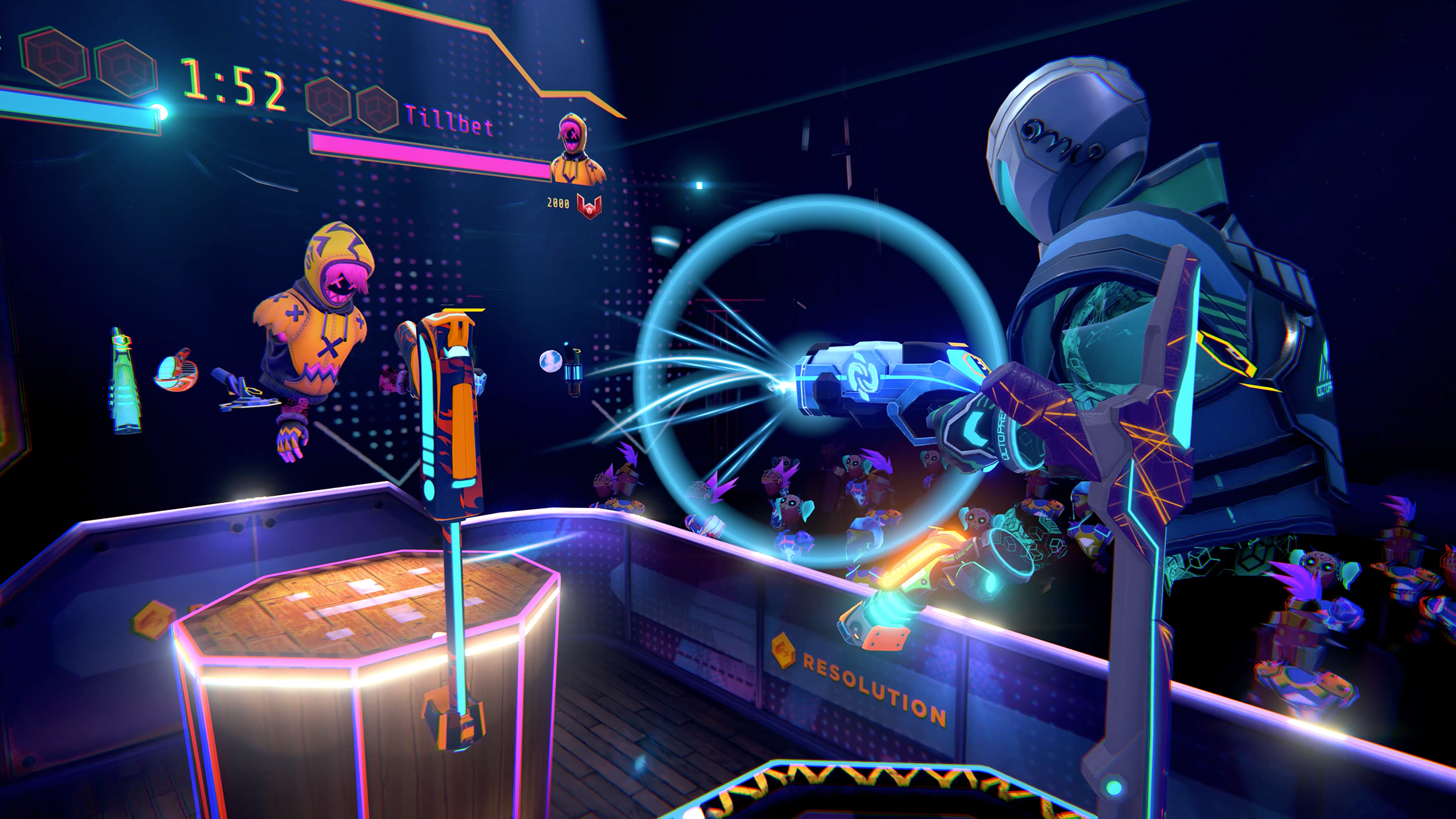
By designing weapons that move at speeds the human eye can track—the "bullet hell" aesthetic—they have turned the act of dodging into a rhythmic, dance-like experience. The developers have noted in various community forums and interviews that the goal was to make the player feel like a futuristic gladiator, where the body is the primary controller.
The Implications of Blaston’s Design Philosophy
The success of Blaston has several profound implications for the future of VR gaming:
1. The Death of Artificial Locomotion
For years, developers struggled with the "motion sickness" problem, leading to complex artificial locomotion systems (teleporting, smooth turning, etc.). Blaston suggests that the industry might be better served by games that embrace the real-world space the user occupies. By keeping the player in a fixed position, the game eliminates motion sickness entirely while simultaneously increasing the intensity of the gameplay.
2. Accessibility Meets High Skill Ceiling
Blaston is deceptively easy to pick up—anyone can fire a gun—but incredibly difficult to master. The skill ceiling is determined by a player’s ability to memorize weapon flight paths and anticipate the opponent’s movement patterns. This accessibility allows for a healthy player base, while the high skill ceiling keeps the competitive community engaged.
3. The Future of VR E-sports
With its clear visual feedback and spectator-friendly design, Blaston is a prime candidate for the burgeoning VR e-sports market. Watching a Blaston match is intuitive: you don’t need to understand complex tactical maps or team compositions to see who is winning. You see two people moving, dodging, and reacting to one another in real-time. This visual clarity is the foundation upon which successful spectator sports are built.
Final Reflections: Is it Worth Your Time?
If you are a VR owner—whether you are rocking the latest hardware or still enjoying an older headset—Blaston represents the best of what the platform has to offer. It is a title that respects the player’s intelligence and their physical presence.
In a gaming landscape cluttered with titles that demand hours of narrative commitment or complex control schemes, Blaston is a refreshing, focused, and deeply visceral experience. It asks little of your time to learn, but it rewards your dedication with an exhilarating sense of mastery.
As we look toward the future of virtual reality, games like Blaston provide the blueprint for what works: low barrier to entry, high physical engagement, and a focus on the core thrill of competition. If you have been looking for a reason to put your headset back on, or if you simply need a way to blow off steam after a long day, the arena is waiting. Just be prepared to break a sweat—the competition in Blaston is as relentless as it is rewarding.
Key Takeaways for New Players:
- Prioritize Movement: Don’t just rely on your controller. Your physical movement—ducking under beams and side-stepping projectiles—is the most effective defense.
- Master the Loadout: Spend time in the training modes to understand the unique "physics" of each weapon. Knowing how a projectile arcs can turn a losing match into a comeback victory.
- Control the Arena: Treat your weapons as tools to restrict your opponent’s movement. A well-placed shot that zones the enemy is often more valuable than a shot that barely misses.
Blaston isn’t just a game; it is an evolution of how we perceive physical play in digital spaces. It remains one of the most compelling reasons to step into the virtual ring.

