

By Global Gaming Desk
Published: October 2023 / Updated for Industry Analysis
Main Facts
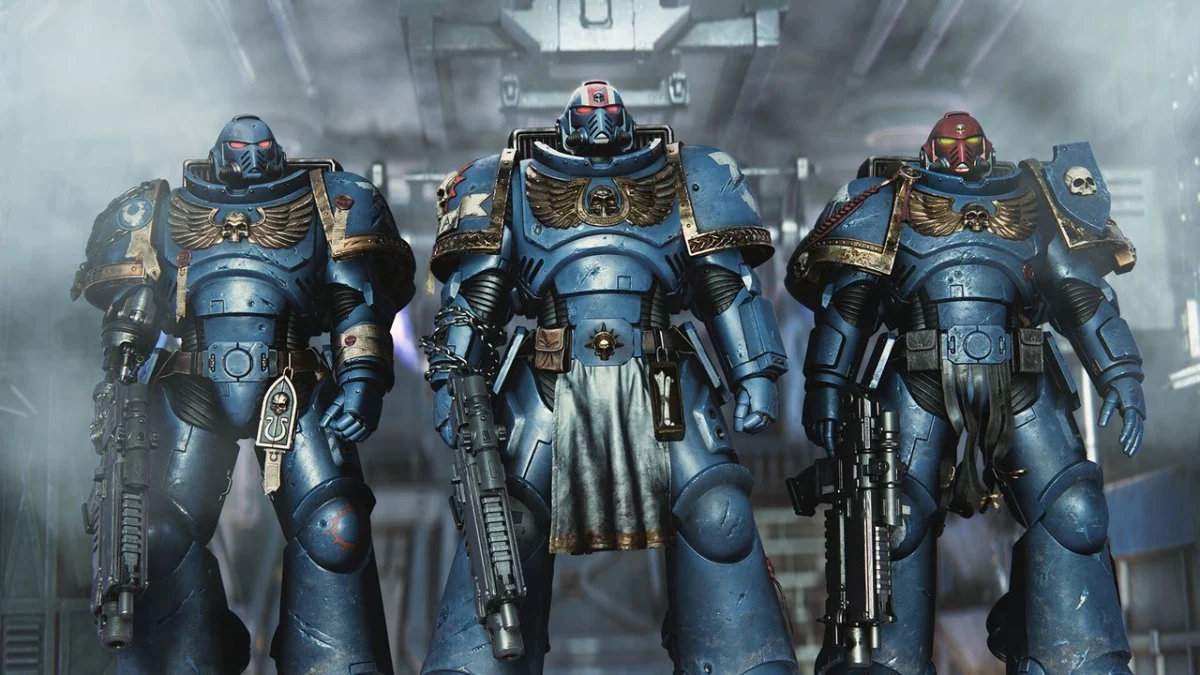
Saber Interactive, the powerhouse developer and publisher behind recent massive commercial successes such as Warhammer 40,000: Space Marine 2 and the simulation hit SnowRunner, has fundamentally restructured its global development apparatus. According to Chief Creative Officer Tim Willits, the company has completely wound down its traditional development operations within North America.
Despite maintaining its corporate headquarters in Florida alongside a minimal footprint of localized subsidiaries, Saber has shifted its production pipelines almost exclusively to European studios. The primary catalyst for this massive geographical pivot is simple, uncompromising economics: the ballooning costs of North American game development—driven largely by soaring salary expectations in major tech hubs like San Francisco and Los Angeles—have made traditional AAA development unsustainable for mid-sized or independent publishers.
While Saber’s strategy has allowed them to produce critically acclaimed, high-performing blockbusters on a fraction of industry-standard budgets, the company simultaneously finds itself at the center of modern industry controversies, specifically regarding the controversial implementation of artificial intelligence tools in its workflows and public executive remarks regarding the future of automated writing.
Chronology of a Corporate Shift
The evolution of Saber Interactive into an international development powerhouse did not happen overnight. Understanding how the company reached its current operational model requires looking back at its trajectory over the last decade:
- Pre-2020 (The Co-Development Era): Saber built its reputation largely as a reliable co-development and porting partner, assisting on major industry projects while slowly building out its own proprietary intellectual properties and internal studios across Eastern and Western Europe.
- April 2020 (The Launch of SnowRunner): Developed primarily by Saber’s overseas studios, SnowRunner launched to immense financial success. Costing a modest $6 million to produce, the game went on to generate hundreds of millions of dollars in revenue, providing the financial bedrock for Saber’s future independence.
- The Embracer Group Acquisition and Demerger: Saber was acquired by Embracer Group in 2020 for a staggering $525 million. However, amid widespread industry contractions and financial instability at Embracer in early 2024, Saber underwent a massive buyout led by co-founder Matthew Karch, separating from Embracer and retaining numerous studios and intellectual properties as a privately held entity.
- Late 2024 (The Launch of Space Marine 2): Warhammer 40,000: Space Marine 2 launched to critical and commercial acclaim, selling millions of copies and proving that a focused, third-person action game could dominate the global market without requiring a nine-figure development budget.
- Late 2024 to Present (The North American Wind-Down): In interviews with trade publications like GamesIndustry.biz, executives like Tim Willits confirmed that Saber had systematically phased out its North American development wings, consolidating its workforce entirely in lower-cost European regions while simultaneously facing public scrutiny over AI integration in smaller titles like Rideshare Simulator.
Supporting Data: The Economics of Modern Game Development
To understand why Saber Interactive abandoned North American development hubs, one must examine the raw, staggering mathematics of modern AAA video game production. During his interview with GamesIndustry.biz, Tim Willits laid bare the financial reality of running development studios in high-cost regions like California.
The Burn Rate Crisis
According to Willits, large-scale North American development studios routinely face a monthly "burn rate" exceeding $2 million. This figure encompasses studio overhead, facility leases, technology licensing, and competitive developer salaries.
- The Timeline Trap: If a major studio takes five years (or 60 months) to develop a flagship AAA title, the pure salary and operational overhead alone totals roughly $120 million.
- The SnowRunner Contrast: In stark contrast, Saber’s smash-hit simulation game SnowRunner—which has yielded hundreds of millions of dollars in lifetime revenue—cost a mere $6 million to develop. In California terms, that total budget represents a mere three months of operational burn time for a major North American AAA studio.
- The Space Marine 2 Efficiency: Willits noted that the development budget for Warhammer 40,000: Space Marine 2 was approximately one-third of the budget spent by a major North American studio on a competing AAA title released around the same window. Despite costing a fraction to make, Space Marine 2 outperformed its competitor by millions of units.
"You don’t need to spend $150 million to make a billion," Willits emphasized, pointing out the dangerous margins that contemporary publishers operate under when budgets spiral out of control.
Official Responses and Executive Perspectives
The leadership team at Saber Interactive has been remarkably outspoken regarding the financial health of the video game industry, contrasting their lean, risk-tolerant methodologies against the bloated corporate strategies of traditional Western publishers.
Tim Willits on Over-Scoping
Backing up his stance on budget efficiency, Willits addressed industry complaints about "games dying." He argues that the medium itself is healthier than ever, but that corporate publishers are simply "over-scoping them to death."
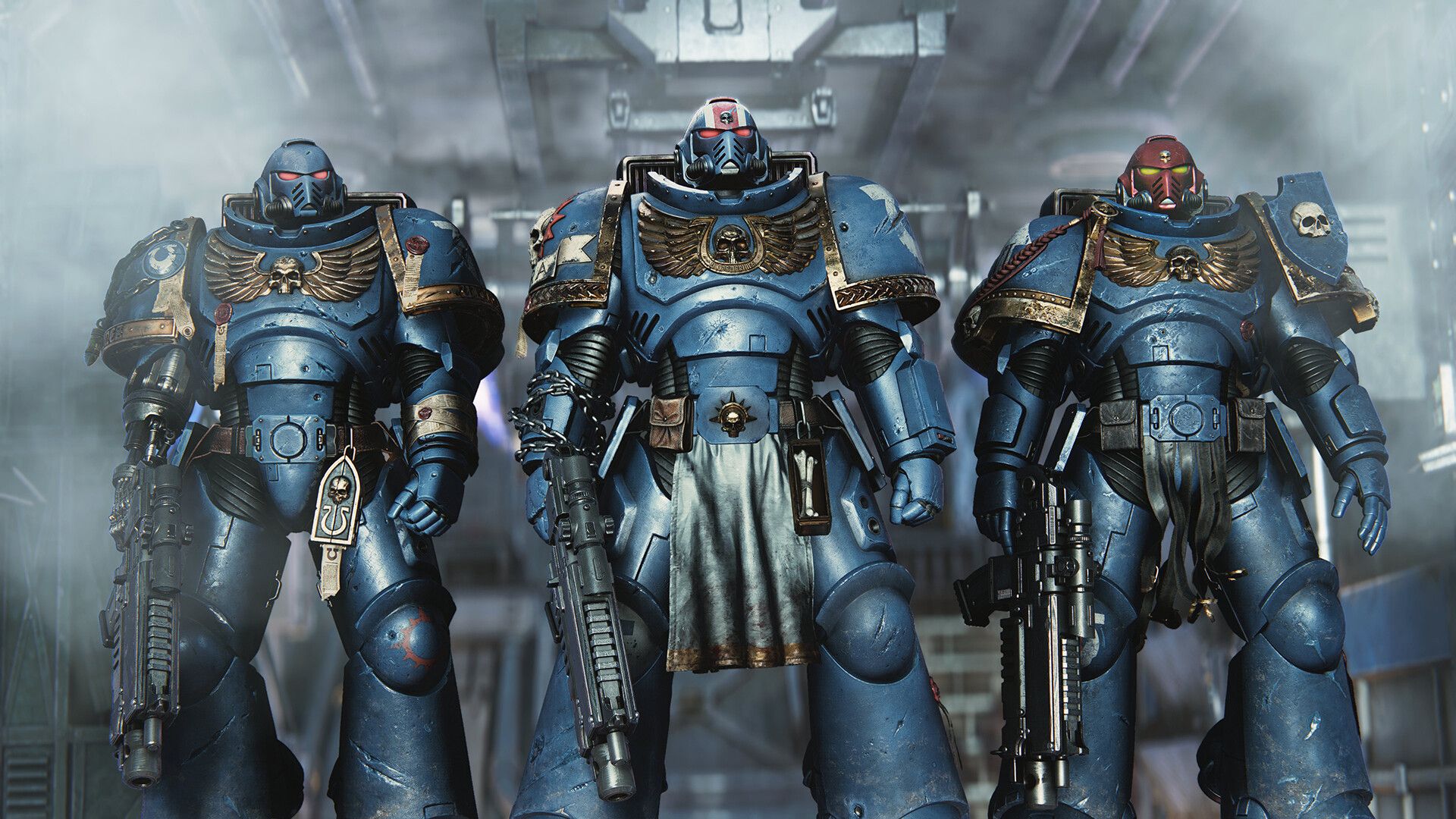
"Sometimes I play these games—I won’t mention the game—and I can just see the wasted money," Willits stated. "I can see dollars falling out of the monitor. But I can tell you that the development cost for Space Marine 2 was a third of a major game that just released not too many months ago from a big North American studio."
Willits has previously criticized an industry standard where a game is deemed a catastrophic commercial failure if it fails to clear an arbitrary threshold of 5 million sales, arguing that sensible budgets allow companies to target specialized or passionate niches without risking corporate bankruptcy.
Matthew Karch and the AI Controversy
While Saber’s geographical shift has won praise for preserving middle-tier game development, the company’s executive stance on emerging technologies has sparked intense debate. CEO Matthew Karch has been openly vocal about integrating artificial intelligence into game development pipelines.
This philosophy boiled over when Saber added an explicit AI disclosure to Rideshare Simulator. The update arrived amidst a very public feud between Karch and a former writer who claimed she was unceremoniously replaced by ChatGPT. Karch has doubled down on these trajectories, with other Saber executives going so far as to predict that a "Half-Life 2 of AI" will eventually arrive to fundamentally shift public perception and acceptance of generative tools within creative industries.
Industry Implications
Saber Interactive’s pivot away from North American soil and toward lean, international development carries profound implications for the broader video game landscape:
1. The Rebirth of the "AAA-Minus" or AA Sector
For years, the industry was trapped in a binary paradigm: hyper-expensive blockbuster AAA games costing $200M+ or micro-budget indie titles. Saber’s success with Space Marine 2 proves that there is a massive, highly lucrative middle ground. By utilizing lower cost-of-living regions in Europe, publishers can deliver cinematic fidelity, robust multiplayer infrastructure, and polished gameplay without risking corporate extinction if a title falls short of historic sales milestones.
2. Geopolitical Labor Shifts in Tech
As North American studios continue to face massive waves of layoffs, studio closures, and unsustainable cost pressures in cities like San Francisco, Seattle, and Los Angeles, Saber’s model signals a broader flight of capital. Publishers may increasingly look to establish operations in Eastern Europe, parts of Asia, and Latin America, where engineering and artistic talent can be secured without the crushing overhead of coastal American real estate and salary inflation.
3. The Looming Shadow of Automation
Saber’s embrace of AI—championed heavily by CEO Matthew Karch—highlights a brewing ideological war within the games industry. While competitors like CD Projekt Red (The Witcher 4) have publicly doubled down on prioritizing human creative labor over generative tools, companies like Saber view AI as an inevitable frontier for cost-cutting and efficiency. How consumers and labor unions respond to these tools in upcoming Saber releases will likely set a precedent for the rest of the interactive entertainment sector.
Ultimately, Saber Interactive stands as a fascinating case study in modern survival: a developer that traded the high-priced glamour of North American tech hubs for pragmatic, international efficiency—delivering the massive gaming hits fans crave, while igniting crucial debates about the future cost of human creativity.

