

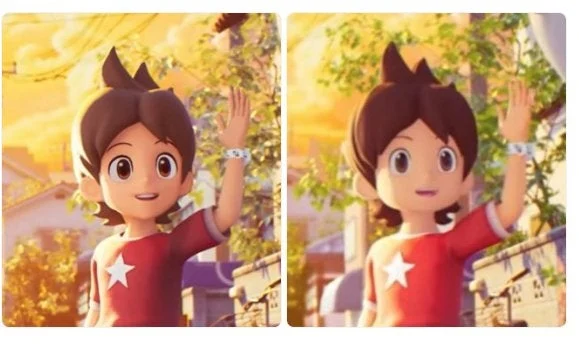
In the rapidly evolving landscape of video game development, the line between innovation and artistic integrity has become increasingly blurred. Level-5, the celebrated Japanese studio behind beloved franchises such as Professor Layton and Yo-Kai Watch, recently found itself at the center of a heated debate regarding the implementation of generative artificial intelligence (AI).
Following the studio’s latest digital showcase, sharp-eyed fans took to social media to highlight irregularities in the promotional footage, leading to a public admission from Level-5 President and CEO Akihiro Hino. While the studio maintains that its creative soul remains firmly in human hands, the incident has reignited industry-wide anxieties regarding the ethics of AI in marketing, the pressure to accelerate production cycles, and the potential erosion of authentic artistic expression.
The Chronology of a Digital Misstep
The controversy began shortly after Level-5 aired its highly anticipated digital showcase, intended to drum up excitement for upcoming titles in the Professor Layton and Yo-Kai Watch series. Almost immediately, viewers began analyzing the visuals presented during the reveals. On platforms like X (formerly Twitter), eagle-eyed fans identified telltale artifacts, inconsistent textures, and the characteristic "uncanny" rendering patterns often associated with generative AI tools.
The skepticism moved from niche gaming forums to mainstream discourse within hours. Faced with growing scrutiny and a wave of fan discomfort, Akihiro Hino addressed the situation directly. In a series of posts on X, Hino acknowledged that the studio had indeed utilized generative AI in the production of the showcase’s promotional assets.
Hino’s statement was candid but defensive. He explained that the decision to incorporate AI was an experimental attempt to make the presentation "more spectacular" and visually arresting. However, he quickly pivoted to an apology, noting that the studio had underestimated the negative reception such a move would elicit from their core audience. He expressed regret for making fans feel "uncomfortable," signaling a clear recognition of the breach of trust that occurs when a beloved studio opts for algorithmic efficiency over traditional craftsmanship.
The "Human Hands" Defense
At the heart of Hino’s response was a desperate attempt to decouple the studio’s promotional tactics from its actual development philosophy. He was emphatic in his assertion that Level-5’s core identity—the "charm and individuality" of its characters and narratives—is, and will continue to be, the product of human labor.
Hino clarified that the studio’s internal policy regarding AI is strictly utilitarian rather than creative. He outlined that AI is currently being explored as a tool for "efficiency," specifically in technical areas such as converting 2D artwork into 3D polygons. This, he argued, is a necessary evolution for a studio attempting to navigate a modern industry that demands shorter development cycles. Level-5 has openly stated its goal of reducing the development time for major releases from a grueling five-year window to a more manageable two-year span.
By framing AI as a "productivity assistant" rather than a "creative engine," Hino is attempting to draw a firewall between the studio’s marketing materials and the games themselves. The message to the fanbase is clear: the technology is being used to streamline the pipeline, not to replace the artists, writers, or designers who have defined the studio’s legacy.
Supporting Data: The Industry’s AI Anxiety
The reaction to Level-5’s experiment is not an isolated incident; it is a symptom of a broader, deeper anxiety within the gaming industry. According to recent surveys and market research, the sentiment among game developers regarding AI is polarized, leaning toward apprehension.
A recent report indicated that 61% of European game developers are primarily concerned that the proliferation of generative AI will exert immense pressure on them to work faster and produce higher volumes of content, rather than fearing an immediate job loss. This "speed-at-all-costs" culture is the exact pressure cooker that likely pushed Level-5 to experiment with AI in its showcase.
Conversely, about 35% of developers cite a more existential fear: the total displacement of their roles or a significant reduction in the demand for human expertise in specialized fields like environment art, concept design, and scriptwriting. The juxtaposition of these two statistics reveals a dangerous duality. Developers feel caught between the threat of being "replaced" and the threat of being "automated into burnout," where they are forced to oversee AI-generated outputs rather than engaging in the creative work they entered the industry to perform.
Official Responses and Public Sentiment
The backlash against Level-5 highlights a significant disconnect between corporate strategy and fan expectations. For many players, the "hand-crafted" nature of a game—the specific quirks in character animation or the distinct brushstrokes of an environment—is not merely an aesthetic choice; it is a testament to the time and love poured into the project. When that perceived authenticity is replaced by AI, even in a promotional capacity, it is viewed as a form of cultural gaslighting.
The community reaction has been a mixture of disappointment and skepticism. Many long-time fans of the Professor Layton series argue that the series’ very identity is built on high-quality, hand-drawn art styles. Using AI to promote a game that celebrates human artistry is, in the eyes of many, an ironic and insulting contradiction.
Level-5’s apology has managed to quiet some of the immediate noise, but the long-term impact on their brand image remains to be seen. The studio is currently walking a tightrope: trying to modernize its infrastructure to compete with larger, faster-moving entities while maintaining the "boutique" reputation that made it successful in the first place.
Implications for the Future of Game Development
The Level-5 situation serves as a bellwether for the entire gaming industry. As major studios move to adopt generative AI, they must contend with several critical implications:
1. The Transparency Gap
The most immediate takeaway is that fans are no longer passive consumers. They are highly observant and deeply invested in the ethics of production. Studios that attempt to "sneak in" AI-generated assets without disclosure are likely to face public backlash. The industry may soon reach a point where a "Human-Made" label becomes a premium selling point, similar to the "organic" or "fair trade" labels in the food industry.
2. The Efficiency Trap
Level-5’s goal of cutting development time from five years to two is a monumental task. The temptation to use AI to achieve this is understandable from a business perspective, but it risks creating a "race to the bottom." If every studio uses the same generative tools to speed up production, the risk of artistic homogeneity—where all games begin to look and feel the same—becomes a reality.
3. Ethical Governance
There is a clear lack of industry-wide standards regarding the use of AI. Should AI be used for technical tasks (like polygon conversion) but forbidden for creative ones (like character design)? Does using AI for marketing material count as an "admission of guilt" regarding the games themselves? These questions remain unanswered, and until studios establish clear, ethical guidelines, they will continue to face public relations crises.
4. The Human Element as a Competitive Advantage
As AI becomes more ubiquitous, the value of the "human touch" will likely increase. Studios that resist the urge to automate their creative processes may find themselves in a unique position to command loyalty from a fanbase that values authenticity. Level-5’s pivot back to emphasizing "human hands" is a recognition of this reality, but actions will speak louder than words in the coming years.
Conclusion
The Level-5 AI controversy is a sobering reminder that innovation for its own sake is rarely a winning strategy in the creative arts. While the pressure to produce more content in less time is a real and pressing issue for developers, the solution cannot be the surreptitious replacement of human effort with algorithmic generation.
Akihiro Hino and his team are now tasked with the difficult job of rebuilding trust. They must prove that their commitment to "human hands" is a genuine design philosophy and not just a convenient soundbite intended to appease an angry audience. For the rest of the gaming industry, the message is clear: the audience is watching, they are aware of the tools you use, and they are not afraid to hold you accountable for the integrity of your work. As we move further into this new era of game development, the studios that succeed will be those that use technology to empower their artists, not those that use it to replace them.

