

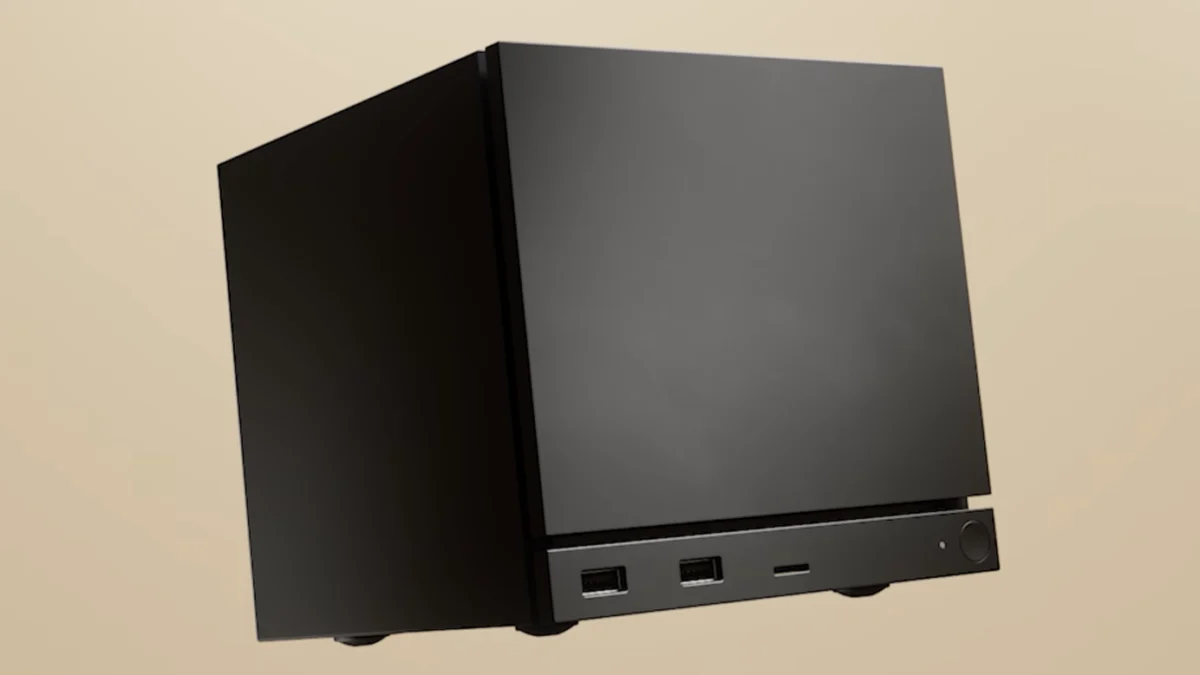
The gaming industry is currently grappling with a transformative period. Valve’s long-awaited Steam Machine has officially hit the market, but its debut has been defined less by its technical prowess and more by its price tag. With an entry-level cost of $1,049 and premium models soaring to $1,428, the device has shattered the long-held psychological barrier of what a home console should cost. As component shortages—driven largely by the voracious appetite of the AI industry—continue to strain supply chains, this price reveal serves as a bellwether for the future of the entire gaming hardware ecosystem.
The Chronology of a Price Surge
The path to the Steam Machine’s launch has been anything but smooth. Valve’s journey toward this console/PC hybrid has been plagued by the same volatility affecting the broader technology sector.
.png?width=1200&height=630&fit=crop&enable=upscale)
- February 2024: Valve officially announced a delay for the Steam Machine launch, citing critical memory and storage shortages. At this stage, the industry was already beginning to feel the tremors of the generative AI boom, which saw data centers consuming vast quantities of DRAM and NAND flash, effectively starving the consumer electronics market.
- Mid-2024: As the year progressed, reports indicated that Valve’s initial pricing projections—originally targeting a more modest $700 to $800 bracket—were becoming increasingly untenable.
- Present Day: Valve confirmed the final pricing structure. The base model, featuring a 512GB SSD, retails at $1,049, while the 2TB model pushes to $1,428. These figures reflect a harsh reality: Valve is not in a position to subsidize hardware costs in the same way traditional console giants have historically done.
Understanding the Market Dynamics
To make sense of these figures, GamesIndustry.biz consulted four of the industry’s most respected analysts: Mat Piscatella (Circana), Piers Harding-Rolls (Ampere Analysis), Emmanuel "Manu" Rosier (Newzoo), and Joost van Dreunen (CEO of Aldora).
Was the Price a Surprise?
The consensus among experts is that the $1,000 threshold was not a failure of marketing, but a direct reflection of current market volatility. Joost van Dreunen had predicted this trajectory as early as March, noting that the speed of the escalation caught even his most pessimistic projections off guard. "It’s disappointing, certainly," van Dreunen notes, "but unless Valve is willing to heavily subsidize its device, it has to price in the runaway cost of memory and storage like everyone else."

Emmanuel Rosier echoes this sentiment, emphasizing that Valve’s pricing is purely reactive. "Valve set the 512GB model at $1,049, just above a clean $999," he explains. "That points to minimal-margin pricing, not a marketing number." Unlike Sony or Microsoft, which often treat hardware as a "loss leader" to be recouped through long-term software sales, Valve’s business model has always leaned toward thin hardware margins and an ecosystem built on the Steam platform itself.
The Sales Outlook: Niche or Mass Market?
While the Steam Machine is unlikely to reach the ubiquity of a PlayStation or Xbox, analysts agree it will likely find a dedicated audience. Mat Piscatella predicts an immediate sell-out, though he cautions that this is due to limited supply rather than overwhelming demand. "The question is the available quantity," Piscatella says. "I expect it will remain tough to find a Steam Machine for some time."

Piers Harding-Rolls, however, believes the device faces an uphill battle. "I’ve always held the view that Steam Machines are a niche proposition," he states. "The Steam Deck has a clearly defined mobile use case. The Steam Machine’s proposition is much less established." Harding-Rolls suggests that if Valve sells more than a million units this year, it would be a significant achievement given the lack of a "must-have" factor that typically drives console adoption.
Implications for the Industry: The "Next-Gen" Question
The elephant in the room remains the impact on upcoming hardware from industry titans. With Microsoft’s "Project Helix" on the horizon and speculation swirling around the PlayStation 6, the industry is bracing for a shift in consumer expectations.

A New Era of Pricing
Van Dreunen predicts that when next-generation consoles eventually arrive—likely in 2028 or 2029—the $1,000 mark will be the "floor" rather than the ceiling. This shift is compounded by the fact that memory manufacturers like Samsung, SK Hynix, and Micron are increasingly prioritizing the high-margin, high-volume needs of AI hyperscalers over the consumer market.
However, not all analysts are convinced that console pricing will mirror the Steam Machine’s trajectory. Manu Rosier notes that Sony and Microsoft possess "subsidy capacity"—the ability to swallow losses on hardware that Valve simply does not have. "Base next-generation models are likely to hold under $999 for psychological and marketing reasons," Rosier argues. "Premium tiers are a separate question."

The Potential for Business Model Innovation
If the cost of hardware continues to climb, the industry may be forced to pivot. Analysts suggest several paths forward:
- Hardware-as-a-Service: Moving toward subscription models that spread the upfront cost over 24 to 36 months, lowering the barrier to entry for the average consumer.
- Streaming-First Hardware: Increased reliance on local streaming boxes that offload heavy processing to the cloud, allowing for cheaper hardware devices that focus on display and input latency rather than raw onboard compute.
- Spec Sobriety: Developers may be forced to scale back their technical requirements. As Rosier points out, "Every notch up the spec ladder shrinks the addressable audience to the wealthier minority. Spec sobriety is now a commercial decision as much as an engineering one."
The Cultural Shift: Gaming Beyond Silicon
Ultimately, the high price of the Steam Machine serves as a stark reminder that the gaming industry is at a crossroads. As van Dreunen poignantly observes, "Gaming was never really a technology business. It’s a cultural one that happens to run on technology."

The firms that succeed in the coming years will be those that recognize this distinction. While high-end enthusiast hardware will continue to push the boundaries of what is possible, the broader market is at risk of fracturing. If the entry point for "high-definition gaming" becomes a four-figure investment, a significant portion of the player base may be pushed toward mobile platforms or low-barrier ecosystems like Roblox, which operate on hardware users already own.
The Steam Machine is a premium product in a time of supply-side austerity. Whether it becomes a collector’s curiosity or a harbinger of a more expensive future for all console gamers remains to be seen. What is clear, however, is that the era of the "affordable console" is facing its greatest challenge yet. As component costs remain high and the AI boom shows no sign of cooling, the industry must decide if it wants to chase the bleeding edge of performance or preserve the accessibility that turned gaming into a global, multi-billion-dollar culture.

