

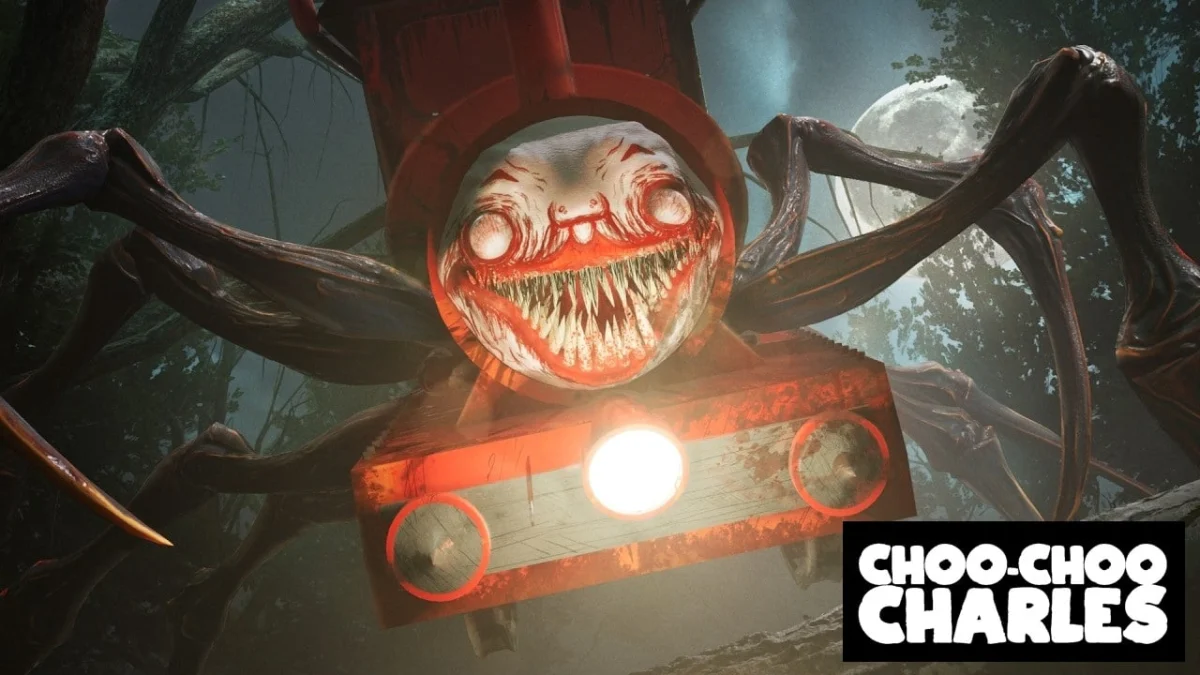
The horror genre has long been a staple of the gaming industry, often relying on familiar tropes: abandoned hospitals, supernatural entities, or encroaching darkness. However, few concepts have captured the internet’s collective imagination quite like the surreal, mechanical monstrosity known as Charles. Following its viral success on PC, the indie horror sensation Choo-Choo Charles has officially made the jump to mobile devices, bringing its unique brand of arachnid-fueled terror to Android users everywhere. Developed by the ambitious studio Two Star Games, this open-world nightmare tasks players with a singular, harrowing goal: survive an island stalked by a sentient, bloodthirsty train with spider-like legs.
The Core Concept: A Symphony of Steel and Terror
At its heart, Choo-Choo Charles is an action-adventure survival horror game that subverts the standard "run and hide" mechanics common to the genre. Instead of cowering in a closet, the player is equipped with their own aging, customizable locomotive. This train is more than a vehicle; it is the player’s primary weapon, their mobile fortress, and their only hope of navigating an expansive, interconnected island.
The premise is straightforward but deeply unsettling. You have arrived on a remote island where a horrific entity—a demonic train hybrid named Charles—reigns supreme. To escape, you must scavenge for resources, upgrade your engine, and eventually lure the beast into a final, climactic showdown. The mobile port faithfully recreates the tension of the original PC version, forcing players to manage their fuel, track direction, and weaponry while the looming threat of an ambush persists around every bend.
Chronology of a Viral Phenomenon
The journey of Choo-Choo Charles from a niche concept to a mobile title is a masterclass in modern indie game development.
The Development Phase
The game began as a creative passion project by Gavin Eisenbeisz of Two Star Games. In early 2021, teaser footage showing a train with spider legs chasing a player across a landscape went viral on social media platforms like Twitter and TikTok. The sheer absurdity of the visual—a blend of Victorian-era industrialism and Eldritch horror—resonated with audiences instantly.
The PC Launch
Following months of high anticipation, Choo-Choo Charles launched on Steam in December 2022. It quickly became a staple for streamers and content creators, who found the game’s blend of exploration and jump-scare mechanics perfect for high-engagement broadcasts. The game’s ability to generate "emergent gameplay"—moments where the player’s plans go horribly wrong due to the unpredictable AI of the antagonist—solidified its status as a cult classic.
The Mobile Transition
Following the success on PC, fans clamored for a mobile version that would allow them to experience the island’s terrors on the go. Two Star Games spent the subsequent year optimizing the game’s engine for the diverse hardware specifications of the Android ecosystem. The mobile launch, which arrived in 2024, represents a significant milestone for the developer, proving that high-fidelity, open-world horror can be successfully ported to handheld devices without sacrificing the atmosphere that made the original so compelling.
Mechanics of Survival: Scavenge, Upgrade, and Fight
Survival in Choo-Choo Charles is not merely about shooting; it is about strategic resource management. The gameplay loop is structured around a central hub—the train—and a series of excursions into the wilderness.
Navigating the Iron Web
The island is crisscrossed by an intricate railway network. Players must physically manipulate track switches to reach new areas, a mechanic that introduces intense psychological pressure. Whenever you exit your train to flip a switch or loot a cabin, you are vulnerable. The silence of the forest is often broken by the distant, rhythmic clatter of Charles’s wheels, signaling that the hunter is nearby.
The Evolution of a Death Machine
Scrap metal is the most valuable currency on the island. By completing missions for the eccentric local inhabitants or scavenging abandoned outposts, players accumulate scraps that can be invested in the train’s performance. Upgrades include:
- Speed: Allowing the player to outrun Charles during high-stakes chases.
- Armor: Increasing the amount of damage the train can sustain before collapsing.
- Firepower: Equipping the train with more effective weaponry, moving from basic machine guns to high-caliber cannons capable of piercing Charles’s metallic hide.
The NPC Ecosystem
The island is populated by settlers who, for reasons unclear, remain trapped in this nightmare. These NPCs provide the game’s narrative structure. By completing their requests—which range from retrieving lost items to sabotaging cultist supplies—the player earns the equipment needed to progress. This system serves as a guide, pushing the player toward the final, unavoidable confrontation with the beast.
Official Responses and Developer Insight
In interviews, Gavin Eisenbeisz has frequently commented on the unexpected nature of the game’s success. "I wanted to create something that felt inherently ‘wrong’—a train shouldn’t have legs, and it definitely shouldn’t be hunting you," Eisenbeisz noted during the game’s initial release cycle.
The move to mobile was driven by feedback from the community. Two Star Games recognized that the game’s bite-sized, mission-based structure was ideally suited for mobile play. By maintaining the PC version’s graphical fidelity and sound design, the developers aimed to ensure that the mobile experience remained just as visceral. The official release on the Google Play Store is a direct response to this demand, offering a streamlined interface tailored for touch controls while maintaining the high-stakes intensity that defines the Choo-Choo Charles brand.
The Implications of Indie Horror on Mobile
The arrival of Choo-Choo Charles on Android is indicative of a broader trend in the gaming industry: the democratization of high-quality horror. As mobile hardware continues to rival desktop components, developers are increasingly looking to bridge the gap between platforms.
Impact on the Genre
The success of games like Choo-Choo Charles proves that indie developers can leverage viral marketing to sustain long-term interest in their titles. Furthermore, it highlights the viability of the "niche horror" subgenre. Rather than trying to be a massive, AAA blockbuster, Choo-Choo Charles focuses on a singular, terrifying hook and executes it perfectly. This approach has proven to be a blueprint for other indie developers looking to break into the mobile space.
Technical Considerations
The mobile version requires players to have a relatively modern device to handle the open-world rendering and the complex AI pathfinding of the enemy train. However, the technical achievement of putting a sprawling, interactive island on a smartphone screen cannot be understated. It suggests a future where "console-quality" horror experiences are the standard for mobile gaming, rather than the exception.
Final Thoughts: Should You Board the Train?
Choo-Choo Charles is not for the faint of heart. It is a game that thrives on tension, sudden shifts in pace, and the persistent, nagging fear that the ground beneath you might start shaking at any moment. Whether you are navigating the stealth-heavy missions involving the train-worshipping cultists, or desperately trying to outrun the monster through a dense, foggy forest, the game consistently delivers high-octane thrills.
For mobile gamers who have been looking for an experience that offers more than the typical "endless runner" or "match-three" puzzle game, Choo-Choo Charles provides a substantial, deep, and genuinely terrifying adventure. It is a reminder that the best horror stories aren’t always found in grand, sprawling RPGs, but sometimes in the simple, terrifying image of a train—a machine designed to stay on its tracks—suddenly deciding to walk on legs of steel.
If you believe you have the nerves to face the beast, the game is now available for download on the Google Play Store. Just remember: keep your eyes on the tracks, keep your scrap metal close, and never, under any circumstances, stop the engine for too long. Charles is always watching, and he is always hungry.
For those interested in exploring more indie titles, we recently covered "Pigeon: A Love Story," a fascinating upcoming title that shifts the focus from survival horror to narrative-driven social simulation. Whether you prefer the adrenaline of a chase or the emotional depth of finding a soulmate, the indie landscape is currently offering some of its most diverse and compelling experiences to date.

