

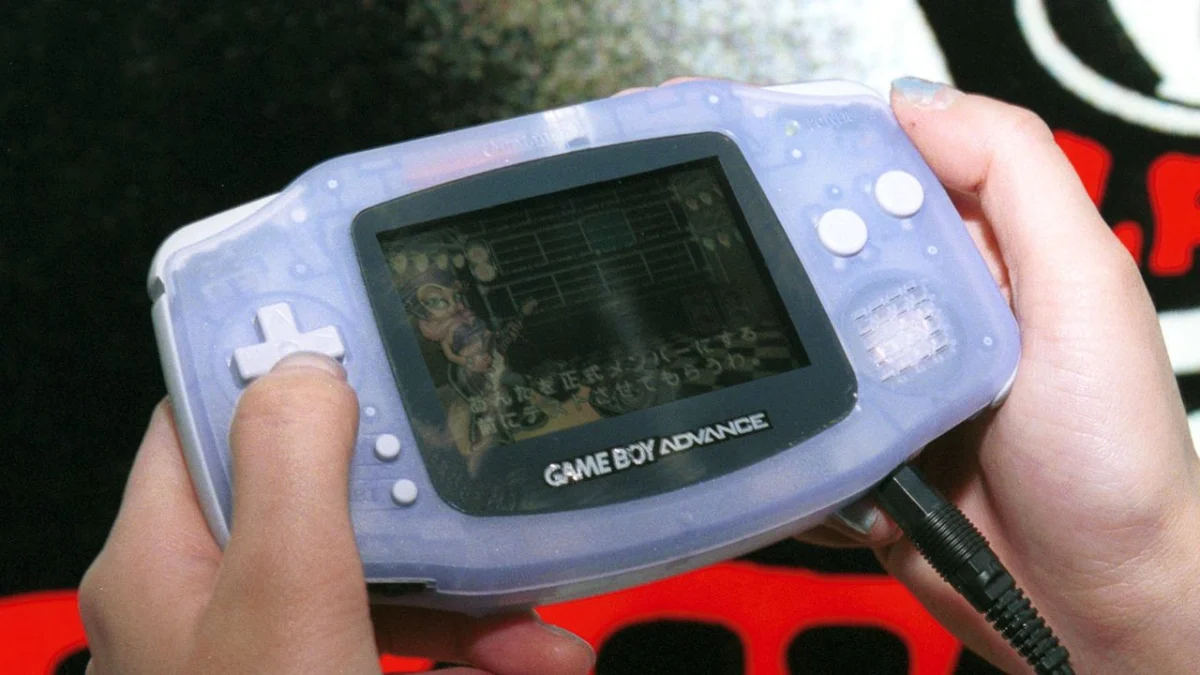
In an unexpected fusion of nostalgic hardware and cutting-edge cybersecurity challenges, a security engineer has successfully ported the ubiquitous password cracking utility, Hashcat, to Nintendo’s venerable Game Boy Advance (GBA). While the project is openly acknowledged by its creator as perhaps their "dumbest app of all time," it offers a fascinating glimpse into the evolution of computing power, the relentless pursuit of digital security, and the enduring spirit of retro-computing ingenuity.
In an era dominated by high-powered GPUs and distributed computing clusters designed to brute-force complex hashing algorithms, the notion of turning to a handheld console from 2001 seems, at best, a whimsical experiment. Yet, security engineer solstICE, known simply as Ice, has done precisely that, demonstrating a proof-of-concept that marries the iconic 32-bit Game Boy Advance with the serious business of cracking SHA256 hashes. The project, dubbed gba-hashcat, highlights not only the stark contrast in computational capability between generations of hardware but also the creative lengths to which enthusiasts will go to push the boundaries of vintage technology.
Main Facts: A Quixotic Quest in Miniature
The core revelation is both amusing and technically impressive: a Game Boy Advance, powered by its humble 16.78 MHz ARM7TDMI chip, can perform a staggering (or perhaps, glacially slow) 727 SHA256 hashes per second. This figure, while a testament to the meticulous coding required to wring such performance from decades-old hardware, pales dramatically when juxtaposed with modern password cracking rigs. According to Ice’s own calculations, a single year of continuous operation for gba-hashcat would equate to merely one second of work for a contemporary GPU-accelerated system. This monumental disparity underscores the computational arms race inherent in modern cybersecurity, where every nanosecond saved in a brute-force attack can mean the difference between security and compromise.
The project, which quickly garnered attention within both the cybersecurity and retro-gaming communities, is more than just a novelty. It serves as a tangible benchmark, illustrating just how far processing power has advanced in the two decades since the GBA first graced the hands of eager gamers. The choice of SHA256, a widely used cryptographic hash function, further grounds the project in real-world relevance, even if its practical application on a GBA remains firmly in the realm of academic curiosity or sheer technical bravado.
Chronology: From Concept to Code
The genesis of gba-hashcat appears to stem from a simple yet profound question: "why not?" This ethos often drives projects in the retro-computing scene, where the challenge of overcoming inherent hardware limitations is a reward in itself. SolstICE, a security engineer, combined their professional expertise with a passion for retro hardware, embarking on what they humorously described as their "dumbest project yet."
The public announcement of gba-hashcat came via social media, specifically a post on X (formerly Twitter), where Ice showcased a short video of the GBA diligently churning through password attempts. The tweet, dated July 17, 2026, playfully suggested a futuristic announcement, adding another layer of meta-humor to the project, implying perhaps a long development cycle or simply a developer’s witty touch. The accompanying visuals displayed the GBA’s sparse, functional user interface, showing the current password attempt and progress statistics—a far cry from the vibrant, animated worlds the console typically rendered.
The development process itself leveraged the Butano engine, a C++ library specifically designed to simplify game development for the GBA. This choice enabled Ice to efficiently write the application’s logic, optimizing for the GBA’s constrained environment. Butano’s capability to streamline GBA development, typically a complex endeavor requiring deep understanding of the hardware, was instrumental in bringing gba-hashcat to fruition, allowing the developer to focus on the hashing algorithms rather than low-level hardware intricacies. The compact nature of the software, a necessary evil given the GBA’s limited resources, meant that only essential functionalities and a single wordlist could be included.
Supporting Data: A Deep Dive into GBA’s Limitations and Hashcat’s Demands
To truly appreciate the undertaking of gba-hashcat, one must understand the hardware it runs on and the software it emulates.
The Game Boy Advance: A Pocket-Sized Powerhouse (for its time)
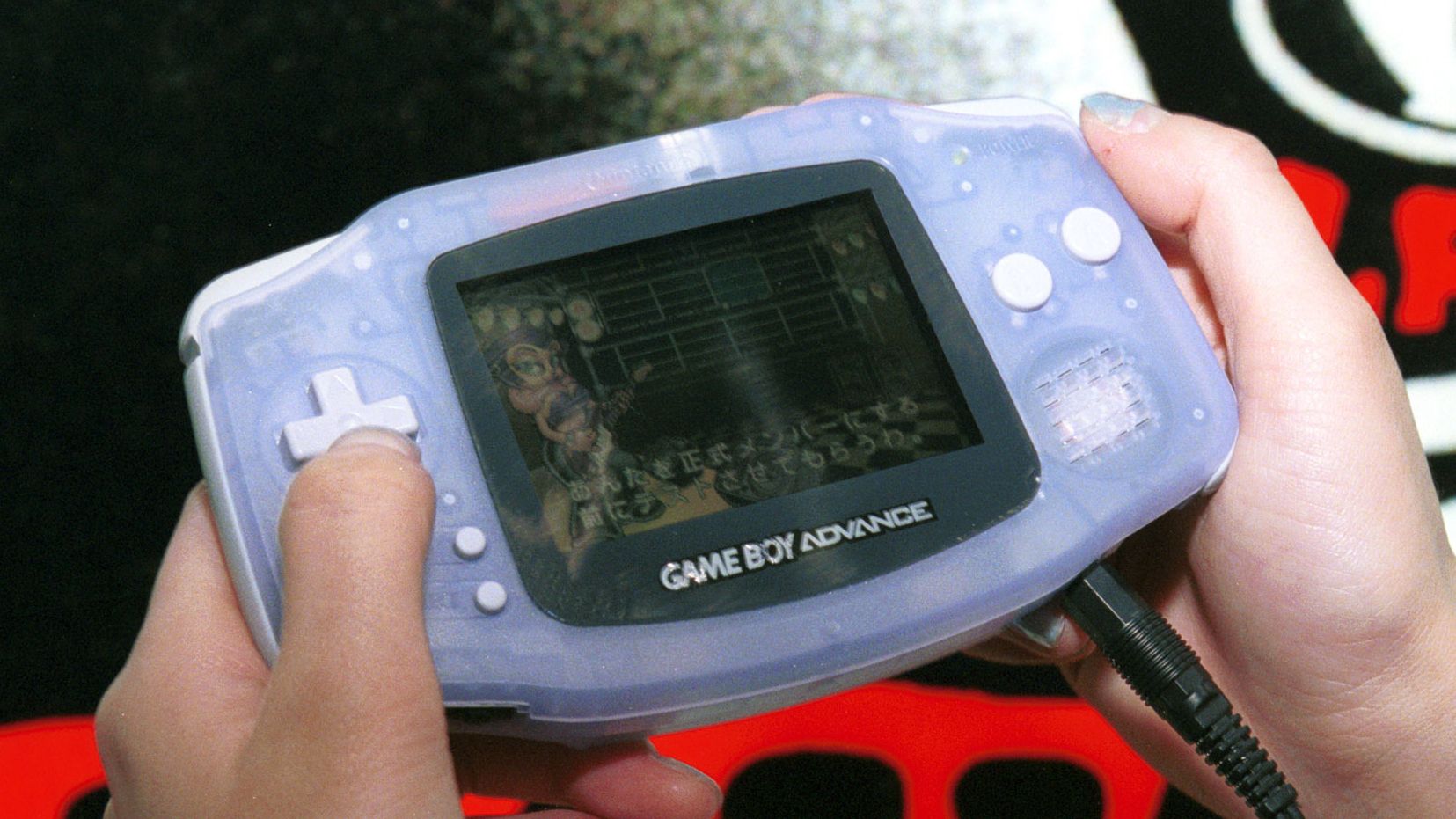
Released by Nintendo in 2001, the Game Boy Advance was a marvel of portable gaming technology. Its specifications, however, are quaint by today’s standards:
- Processor: An ARM7TDMI, a 32-bit RISC (Reduced Instruction Set Computer) processor, clocked at 16.78 MHz. This processor was an evolution of the ARM7 core, designed for embedded systems, and was quite powerful for its era, capable of handling complex 2D graphics and some rudimentary 3D effects. However, for cryptographic computations, where every cycle counts, 16.78 MHz is a significant bottleneck.
- Memory: The GBA featured a mere 288 KB of general-purpose RAM and an additional 98 KB of VRAM (Video RAM). To put this in perspective, a single high-resolution image on a modern smartphone can easily exceed the GBA’s entire memory footprint. This extreme limitation forces developers to employ highly optimized code and extremely efficient data structures.
- Bus Architecture: While the ARM7TDMI is a 32-bit processor, it often interfaced with its data buses and memory via a 16-bit bus. This means that data transfers between the CPU and memory were often narrower than the CPU’s internal processing width, further impacting performance.
- Storage: GBA cartridges typically ranged from 4 MB to 32 MB. For
gba-hashcat, this limitation dictated the size and scope of the included wordlist. Modern password cracking often relies on gigabytes, if not terabytes, of precomputed tables or extensive wordlists. Theignis-1Mwordlist, weighing in at 8 MB, represents a minuscule fraction of what professional crackers utilize, underscoring the hardware’s inherent restrictions.
Hashcat: The Modern Cracking Standard
Hashcat is an open-source password recovery tool that boasts a highly optimized code base, making it the world’s fastest CPU-based password cracker. More importantly for modern applications, it is renowned for its GPU acceleration capabilities, leveraging the parallel processing power of graphics cards to achieve astronomical hashing rates.
- Hashing Algorithms: Hashcat supports a vast array of hashing algorithms, from older, less secure ones like MD5 and SHA1 to more robust options like SHA256, bcrypt, and scrypt. SHA256, chosen for the
gba-hashcatproject, is a cryptographic hash function widely used in various security protocols, including blockchain technologies and SSL certificates. Its design makes it computationally intensive to reverse engineer, making it suitable for testing the limits of processing power. - Attack Modes: Hashcat supports various attack modes, including:
- Brute-Force Attack: Systematically trying every possible combination of characters. This is the most computationally expensive method.
- Dictionary Attack: Using a precompiled list of common passwords, words, and phrases. This is what
gba-hashcatprimarily employs due to its limited resources. - Hybrid Attacks: Combining elements of dictionary and brute-force attacks.
- Rainbow Tables: Precomputed tables of hashes that can significantly speed up the cracking process for certain algorithms. However, these tables are enormous and would be impossible to store on a GBA cartridge for any practical purpose.
- Performance Discrepancy: The comparison between the GBA’s 727 h/s for SHA256 and a modern GPU rig’s capabilities is stark. A high-end NVIDIA GPU (e.g., an RTX 4090) can achieve billions of SHA256 hashes per second. The "thirty million times slower" figure isn’t an exaggeration; it’s a conservative estimate, highlighting the exponential growth in computing power driven by advancements in silicon design and parallel processing architectures. To illustrate, cracking an 8-character alphanumeric password on a GBA would take an unfathomable amount of time, potentially exceeding the age of the universe, whereas a modern GPU could accomplish it in minutes or hours, depending on complexity.
The Butano Engine: Enabling Retro Development
The use of the Butano engine was a critical factor in the project’s feasibility. Butano is an open-source C++ library that abstracts away many of the low-level complexities of GBA hardware, allowing developers to focus on application logic rather than intricate register manipulation. For a project like gba-hashcat, which is more about algorithmic execution than sophisticated graphics, Butano provided a robust framework, accelerating development and ensuring stability within the GBA’s tight constraints. This choice exemplifies how modern development tools can breathe new life into vintage hardware, enabling projects that might otherwise be prohibitively complex.
Official Responses: Echoes in the Digital Ether
While there have been no official statements from entities like Nintendo or major cybersecurity firms regarding gba-hashcat (which is understandable given its niche nature), the project has generated considerable buzz within relevant communities.
- The Retro-Computing Community: Enthusiasts have lauded Ice’s technical prowess, seeing it as another example of pushing the boundaries of classic hardware. Forums and social media groups dedicated to GBA modding and homebrew development have expressed admiration for the ingenuity involved. For many, it’s a testament to the enduring appeal of these systems and the joy of reverse engineering or repurposing them for unconventional tasks. One prominent retro-hardware modder, who preferred to remain anonymous, commented, "It’s precisely these kinds of projects that keep the spirit of retro-computing alive. It’s not about practicality; it’s about what can be done with a bit of clever coding and a lot of passion."
- Cybersecurity Experts: While acknowledging the project’s lack of practical utility in real-world password cracking, cybersecurity analysts have found educational value in the demonstration. "It’s a fantastic teaching tool," remarked Dr. Anya Sharma, a cybersecurity lecturer at a leading technical university. "It visually and tangibly demonstrates the computational intensity required for modern cryptographic hashes. When I tell my students that brute-forcing SHA256 takes immense power, they might not fully grasp it. Showing them a GBA struggling at 700 hashes per second against a modern GPU’s billions makes the point crystal clear about why strong passwords and multi-factor authentication are non-negotiable." Some experts also noted the inherent humor, suggesting it as a lighthearted reminder that while technology advances, the fundamental principles of security (and insecurity) remain.
- The Developer’s Own Stance: Ice’s self-deprecating description of
gba-hashcatas their "dumbest app of all time" is itself an "official response" of sorts. It frames the project within a context of playful experimentation rather than serious security tool development. This honesty resonates with many in the open-source community, where challenging oneself and sharing the results, regardless of immediate practical value, is highly valued.
Implications: Beyond the Hash Rate
The gba-hashcat project, while seemingly a trivial pursuit, carries several broader implications for technology, cybersecurity, and the culture of innovation.
Educational Value and Awareness
Perhaps the most significant implication is its role as an educational tool. In an age where digital security threats are ever-present, understanding the mechanisms behind password cracking is crucial. gba-hashcat provides a stark, tangible demonstration of:
- Computational Power: The vast gulf between a 20-year-old handheld and a modern GPU highlights the relentless pace of technological progress and the exponential increase in processing capabilities.
- Password Strength: By showing how excruciatingly slow a dictionary attack is on even a simple hash like SHA256 with limited resources, it implicitly educates users about the importance of strong, complex, and unique passwords. It reinforces the message that while "123" might have been acceptable for an Excel sheet in the past (as the original article’s author humorously noted), it’s utterly insufficient today.
- Algorithmic Complexity: It subtly underscores the computational complexity of modern hashing algorithms, designed specifically to resist brute-force attacks by requiring immense computational effort.
The Spirit of Retro-Computing and Homebrew
The project is a vibrant example of the thriving retro-computing and homebrew communities. These communities are driven by a desire to:
- Preserve and Understand: Delve into the inner workings of vintage hardware, preserving knowledge and fostering a deeper understanding of computing history.
- Push Boundaries: See what can be achieved with limited resources, often surpassing original design intentions. This fosters creativity and problem-solving skills.
- Nostalgia and Fun: Reconnect with beloved childhood devices, transforming them into tools for modern experimentation, often with a healthy dose of humor. The idea of forming a "cluster of password-cracking Game Boys," as suggested by X commenters, perfectly encapsulates this blend of absurdity and technical curiosity. While impractical, it sparks imagination about distributed computing in the most unlikely of forms.
Cybersecurity in Context
While gba-hashcat won’t be found in any penetration tester’s toolkit, it provides a valuable counterpoint to the narrative of ever-present, omnipotent cyber threats. It reminds us that while adversaries have powerful tools, the fundamental defenses (strong passwords, multi-factor authentication, regular updates) remain highly effective. The immense resources required for even a basic attack on a well-secured system are still significant, even with advanced hardware.
Moreover, it subtly contributes to the "security by obscurity" paradox. While security should never rely on obscurity, the sheer impracticality of attacking modern hashes with vintage hardware humorously illustrates the inverse: the security implications of using antiquated systems for critical tasks.
The "Dumbest Project" Paradox
Ice’s self-assessment as the "dumbest app of all time" is a common sentiment among developers who undertake seemingly impractical projects. Yet, these endeavors often reveal profound insights. They challenge assumptions, force creative problem-solving, and demonstrate technical mastery in unexpected ways. What appears "dumb" on the surface often hides a deep understanding of systems, algorithms, and optimization techniques. In this case, it’s a testament to the developer’s ability to compile and run complex cryptographic routines on a highly constrained embedded system.
In conclusion, gba-hashcat is far more than a mere curiosity. It’s a whimsical yet technically sophisticated project that bridges the gap between digital nostalgia and contemporary cybersecurity. It serves as a playful reminder of how far technology has come, a practical lesson in the importance of robust security practices, and a testament to the enduring ingenuity of those who dare to ask "why not?" when faced with the seemingly impossible. While the Game Boy Advance won’t be replacing supercomputers in the fight against cybercrime anytime soon, its brief, humorous foray into the world of password cracking ensures its legacy as a truly versatile and endlessly fascinating piece of hardware.

