

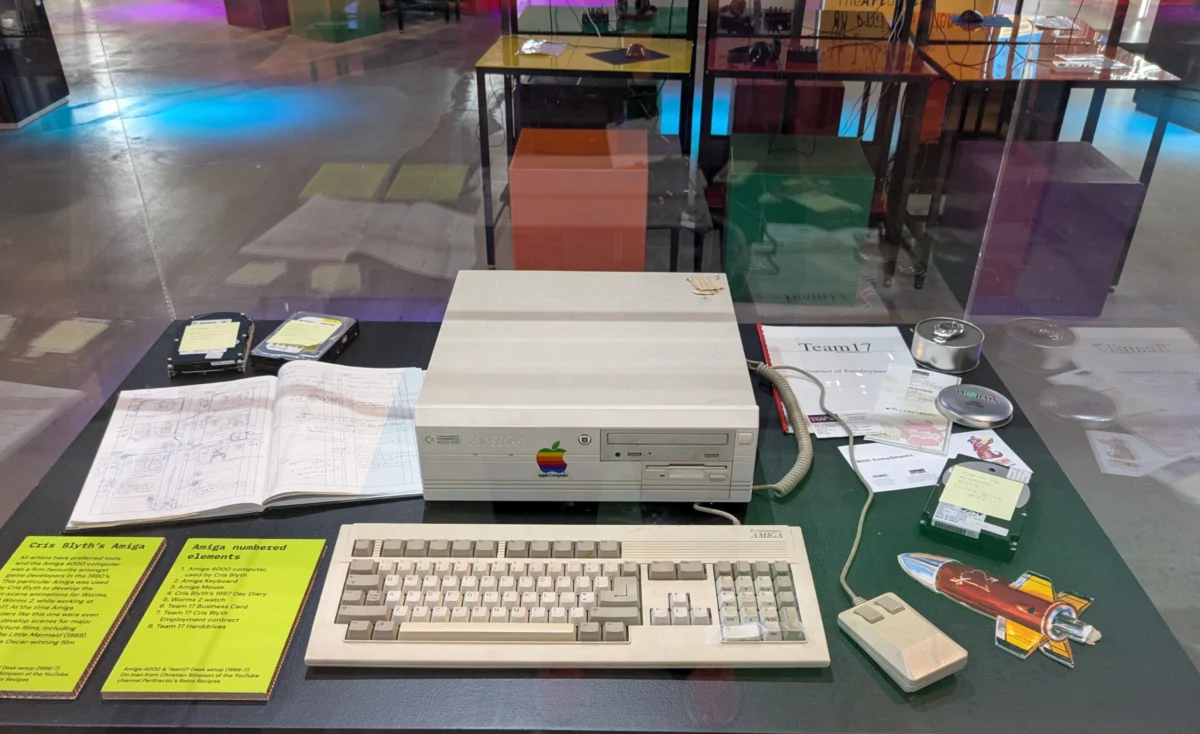
The United Kingdom has long been a global powerhouse in the interactive entertainment sector, fostering legendary studios, groundbreaking hardware, and iconic franchises that have defined generations of play. Yet, despite its massive cultural and economic impact, the physical and digital history of the British games industry remains surprisingly fragile.
In a significant effort to catalogue and secure this vanishing heritage, the National Videogame Museum (NVM) has officially launched "Behind the Screens," a comprehensive, UK-wide survey designed to map the state of game preservation. By identifying exactly what materials exist in private collections, studio vaults, and personal archives, the NVM hopes to build a foundational map of the nation’s gaming legacy.
The Mandate: Why Preservation Matters Now
The "Behind the Screens" initiative is not merely a data-gathering exercise; it is an urgent response to the ephemeral nature of digital media. Unlike film or literature, video games often rely on complex, proprietary hardware and software ecosystems that degrade over time. When a studio closes, a developer retires, or a marketing department clears out an office, the "ephemera"—the design documents, early prototypes, concept art, and source code—are often discarded, lost to time, or locked away in inaccessible personal collections.
The survey, which has received backing from the BFI’s Screen Heritage Fund and is being conducted in partnership with the trade body Ukie, casts a wide net. It is calling upon a diverse coalition of stakeholders: active developers, independent studios, publishers, retired industry veterans, and private collectors. The goal is to create a digital census of British gaming history, cataloguing everything from foundational development notes and marketing assets to rare hardware prototypes and company archives.
A Chronology of the UK’s Gaming Heritage
The UK’s contribution to the history of video games is profound, stretching back to the early 1980s microcomputer boom. The era of the ZX Spectrum, the Commodore 64, and the BBC Micro birthed a generation of "bedroom coders" who would go on to build global empires.
- The Early Days (1980s): Companies like Ultimate Play the Game (later Rare) and Ocean Software established the UK as a hub of creativity. During this period, documentation was largely physical—hand-drawn maps, graph-paper level designs, and cassette-based source code.
- The Golden Era (1990s–2000s): As the industry matured, the "digital footprint" expanded exponentially. The shift from 2D sprites to 3D polygons brought with it a massive influx of development documentation, motion capture data, and complex production pipelines.
- The Modern Landscape (2010s–Present): Today, with the dominance of digital distribution, the challenge has shifted from preserving physical disks to preserving cloud-based services, servers, and live-service architecture.
Despite this rich lineage, the UK has lacked a centralized, systematic approach to archiving these materials. The NVM, which opened its doors in Sheffield in 2018, has already established itself as the custodian of this history. Having welcomed over 350,000 visitors, the museum currently maintains a collection of approximately 5,000 objects. However, as the NVM leadership notes, this is likely only the tip of the iceberg.
The Scope of the "Behind the Screens" Survey
The survey is designed to be granular. It does not simply ask if someone owns "old games." It probes the depth of industry archives, asking participants to identify:
- Development Materials: Early design documents, pitch decks, and internal memos.
- Visual Assets: Original concept art, sketches, and promotional materials.
- Hardware: Prototypes, specialized development kits, and rare console iterations.
- Corporate History: Financial records, internal newsletters, and photographs that document the evolution of studio culture.
By collecting this data, the NVM intends to move beyond simple inventory management. The project seeks to identify "at-risk" material—assets currently held in conditions that may lead to their destruction or loss—and foster collaboration between private holders and public institutions.
Official Responses and Strategic Alignment
The industry has responded with broad support, recognizing that the "Behind the Screens" project is a vital step toward professionalizing the way the UK treats its digital culture.
John O’Shea, co-CEO and creative director of the National Videogame Museum, emphasized the urgency of the mission: "The UK games industry has created world-renowned games, studios, and talent, but much of that history risks being lost if it isn’t actively preserved. This survey is an important first step in understanding what already exists and how we can work together to protect the UK’s videogame legacy for future generations."
Nick Poole, CEO of Ukie, echoed these sentiments, noting the strategic importance of the survey for the industry’s long-term reputation: "This project is a vital step towards properly recognizing and preserving the legacy of our industry. It provides the evidence base we need to ensure that the work of our world-class developers is not only celebrated today but also studied and appreciated by the generations to come."
The project is also a key component of the British Film Institute’s broader "Screen Culture 2033" strategy. Marta Berto, manager of the BFI Screen Heritage Fund, explained that the initiative signals a maturation in how national cultural bodies view video games. "The BFI’s strategy recognizes that games are a fundamental part of the UK’s wider screen culture. By supporting the NVM, we are ensuring that the history of interactive media is treated with the same reverence and institutional care as cinema and television."
The Implications: Why This Matters for the Future
The implications of "Behind the Screens" are far-reaching. By creating a unified database, the NVM is not just creating a catalog; it is creating a blueprint for the future of digital preservation.
1. Cultural Legitimacy
For too long, video games have been viewed as ephemeral entertainment rather than cultural artifacts. By documenting the industry’s history with the same rigor used for traditional arts, the NVM is cementing the status of video games as a central pillar of British cultural identity.
2. Scholarly Access
Currently, students, historians, and researchers struggle to find primary source material regarding the development of influential British games. If the survey results in a centralized, searchable archive (or even a distributed network of linked collections), it will open the door to unprecedented scholarly research, allowing future generations to understand how the games of the 21st century were actually built.
3. Industry Resilience
For active studios, the survey is a prompt to consider their own "data hygiene." Many companies are unaware of the historical value of their old servers or hard drives. The project encourages firms to view their archives not as overhead, but as intellectual property that holds historical value.
4. Preventing "Digital Dark Ages"
The most significant threat to game preservation is technological obsolescence. Hardware fails, software becomes incompatible with modern operating systems, and file formats go extinct. The NVM’s project acts as a rallying cry to address these technical challenges, encouraging the industry to think about "archival-grade" preservation of digital source code and assets.
How to Participate
The National Videogame Museum has made the participation process as straightforward as possible, recognizing that many industry professionals are time-poor. The Behind the Screens survey is available online, and the museum is encouraging anyone with a link to the industry—whether they were involved in a legendary 90s studio or are a private collector of rare hardware—to contribute.
As the UK games industry continues to evolve, the "Behind the Screens" survey stands as a necessary bridge between the past and the future. By mapping the scattered remnants of our digital heritage, the National Videogame Museum is ensuring that the story of British gaming remains a permanent, accessible part of our collective cultural narrative.
The question remains: what hidden treasures are currently sitting in office basements, under desks, or in forgotten hard drives across the UK? With this initiative, we are finally going to find out.

