

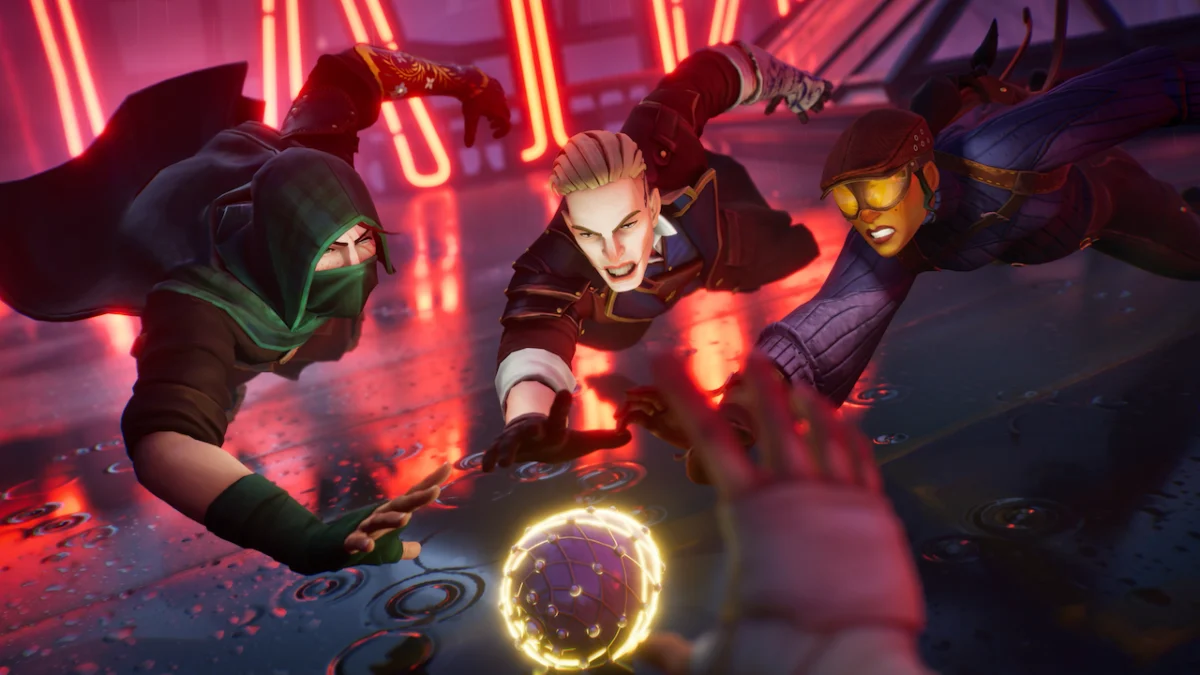
In a devastating blow to the independent development landscape, OtherSide Entertainment, the storied Boston-based studio founded by industry veteran Paul Neurath, has announced a significant restructuring that effectively brings the developer’s ambitious future to a halt. The studio, known for its deep roots in immersive simulation gaming, has confirmed the layoff of 18 employees tied to its latest project, Thick as Thieves.
This news marks the second major workforce reduction for the company in less than a month, leaving the studio with a skeleton crew of fewer than ten staff members. With leadership confirming there are "currently no plans" for future game development, the industry is left to grapple with the decline of a developer once heralded as a standard-bearer for classic PC gaming innovation.
The Reality of the Restructuring
The announcement, initially reported via Game Developer, signals a grim pivot for the studio. The 18 employees impacted by this latest round of layoffs were primarily focused on Thick as Thieves, a title that had only recently seen its introductory campaign launch in May.
Despite the studio’s claims of an "encouraging response" to that initial release, the economic reality proved insurmountable. In a formal statement, OtherSide Entertainment noted that "it has become clear that the continuation of the studio in its current shape is no longer a commercially viable path." This admission reflects a broader, systemic struggle within the mid-tier development sector, where rising costs and shifting market appetites have rendered many ambitious projects unsustainable.
The remaining staff, numbering fewer than ten, will shift their focus away from creative development. Their mandate is now limited to essential performance maintenance for Thick as Thieves, ensuring that existing players have a stable experience while the studio effectively enters a state of dormancy.
A Chronology of Decline: From Argos to Austerity
To understand the collapse of OtherSide’s current iteration, one must look at the rapid sequence of events that unfolded over the last few weeks.
The Cancellation of Project "Argos"
In late June, the studio faced its first major hurdle in this recent crisis: the cancellation of an in-development project codenamed "Argos." At that time, 17 employees were laid off. The studio described the industry environment as "brutally challenging," noting that the financial requirements to bring Argos to market had reached a point that made the project "unviable for now."
The Short-Lived Hope of Thick as Thieves
Following the cancellation of Argos, the company leaned heavily into Thick as Thieves. Published by Megabit—a subsidiary of the Aonic Group, which acquired OtherSide in 2023—the game was intended to be a fresh start. Its May launch was viewed by some as a test of the studio’s ability to pivot toward smaller, more focused experiences. While initial player feedback provided a glimmer of optimism, it was insufficient to offset the mounting overhead costs and the broader financial pressures imposed by the studio’s parent organization.
A Legacy of Institutional Turbulence
The current situation is unfortunately not the first time OtherSide has navigated turbulent waters. Founded in 2014 by Paul Neurath—the visionary behind Ultima Underworld and Thief—the studio was built on the promise of reviving the "Immersive Sim" genre. However, the studio’s history has been marred by a series of corporate shifts and project-related setbacks:
- 2020: The studio suffered a significant loss of talent following the sale of the System Shock 3 IP rights to Tencent. That period saw a mass exodus of veteran developers, fundamentally altering the studio’s DNA.
- 2023: The acquisition by the Aonic Group was initially framed as a strategic move to provide stability and capital. Instead, it has ultimately led to a period of aggressive cost-cutting as the parent company attempts to streamline its portfolio.
The Economics of Mid-Tier Development
The struggles at OtherSide Entertainment are emblematic of a wider malaise affecting the mid-tier game development sector. The "middle" of the market—studios that produce games with budgets larger than indie projects but smaller than AAA blockbusters—is currently facing an existential threat.
Rising Costs and Diminishing Returns
The cost of talent acquisition, marketing, and global distribution has risen exponentially, while the competition for player attention has never been fiercer. In the current "hit-driven" economy, games that achieve moderate success are often viewed as failures by investors who require exponential growth to justify the high cost of development.
The Role of Acquisitions
OtherSide’s path highlights the risks inherent in being acquired by a larger holding group like Aonic. While acquisitions offer a safety net, they also subject creative studios to rigorous fiscal scrutiny. When a studio fails to hit specific performance benchmarks, the parent company is often quick to implement structural changes to protect the bottom line, regardless of the creative merits of the team.
Official Responses and Internal Sentiment
In its communication to the public and stakeholders, OtherSide Entertainment has maintained a tone of regret and professional gratitude. A spokesperson for the studio stated: "We are deeply grateful to the team for their superb work and regret this outcome, having pursued every alternative to find a preferable solution."
This sentiment underscores the human cost of the decision. While the industry often focuses on the "viability" of a studio, the reality is that 35 skilled professionals have lost their livelihoods in less than a month. Former employees have taken to social media to express their disappointment, citing the "brutal" nature of the layoffs and the abruptness with which their projects were shuttered.
Implications for the Future of Immersive Sims
The decline of OtherSide Entertainment serves as a sobering reminder of the fragility of independent gaming studios. The studio was once seen as the torchbearer for the immersive simulation genre, a style of game that prioritizes player agency, environmental storytelling, and complex systemic design.
With OtherSide effectively winding down, the industry loses yet another institution capable of delivering the kind of high-concept, narrative-heavy gameplay that the studio pioneered. While the remaining skeleton crew will keep Thick as Thieves alive for a time, the absence of future projects suggests a permanent loss of the creative output the studio was once famous for.
The Broader Industry Outlook
If a studio with the pedigree of OtherSide—founded by industry legends and backed by a global conglomerate—cannot survive, it raises uncomfortable questions for smaller teams across the globe.
- Consolidation: The trend toward fewer, larger studios may continue as independent entities struggle to secure funding.
- Risk Aversion: Developers may become increasingly hesitant to experiment with new mechanics, favoring safe, formulaic designs that are easier to monetize.
- The "Live Service" Trap: The push toward games that require constant maintenance and updates, like Thick as Thieves, may be leading studios to spread their resources too thin, eventually resulting in the kind of collapse seen here.
Conclusion
The story of OtherSide Entertainment is a tragedy of the modern gaming industry. It is a narrative of high ambitions met with harsh economic realities, where the pursuit of creative excellence was ultimately outpaced by the demand for commercial sustainability.
As the studio shrinks to its final, maintenance-focused form, the industry must ask itself what it is losing. The loss of OtherSide is not just the loss of a company; it is the loss of a specific, nuanced approach to game design that has defined the last thirty years of PC gaming. Whether the remaining team members can find new homes in a saturated job market remains to be seen, but for now, the curtains are closing on one of the most interesting experiments in modern independent development.
The silence from the studio regarding future projects is the final word in a chapter that began with the promise of revolutionizing immersive gameplay and ends in the quiet, methodical dismantling of a once-vibrant creative hub.

