

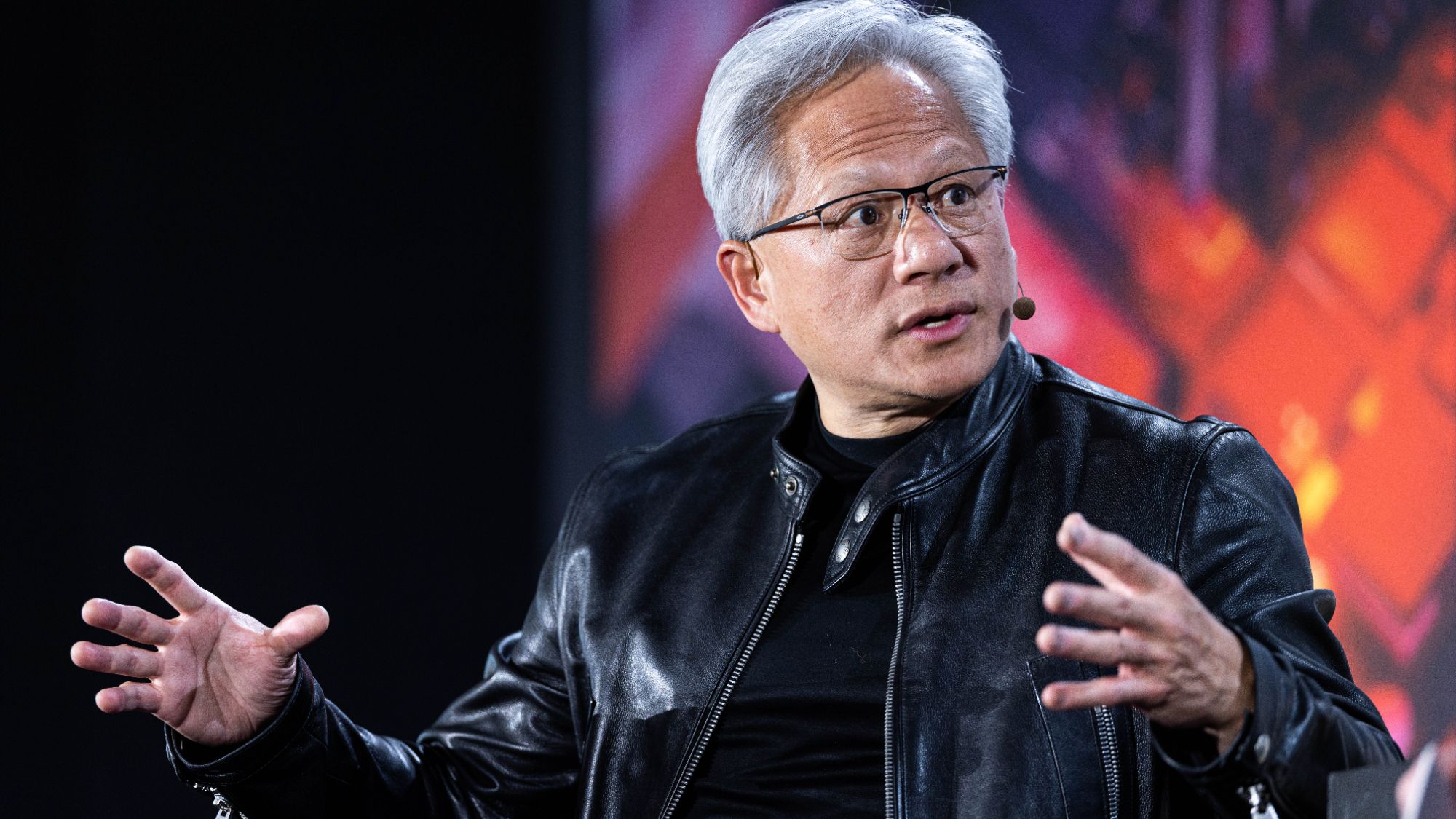
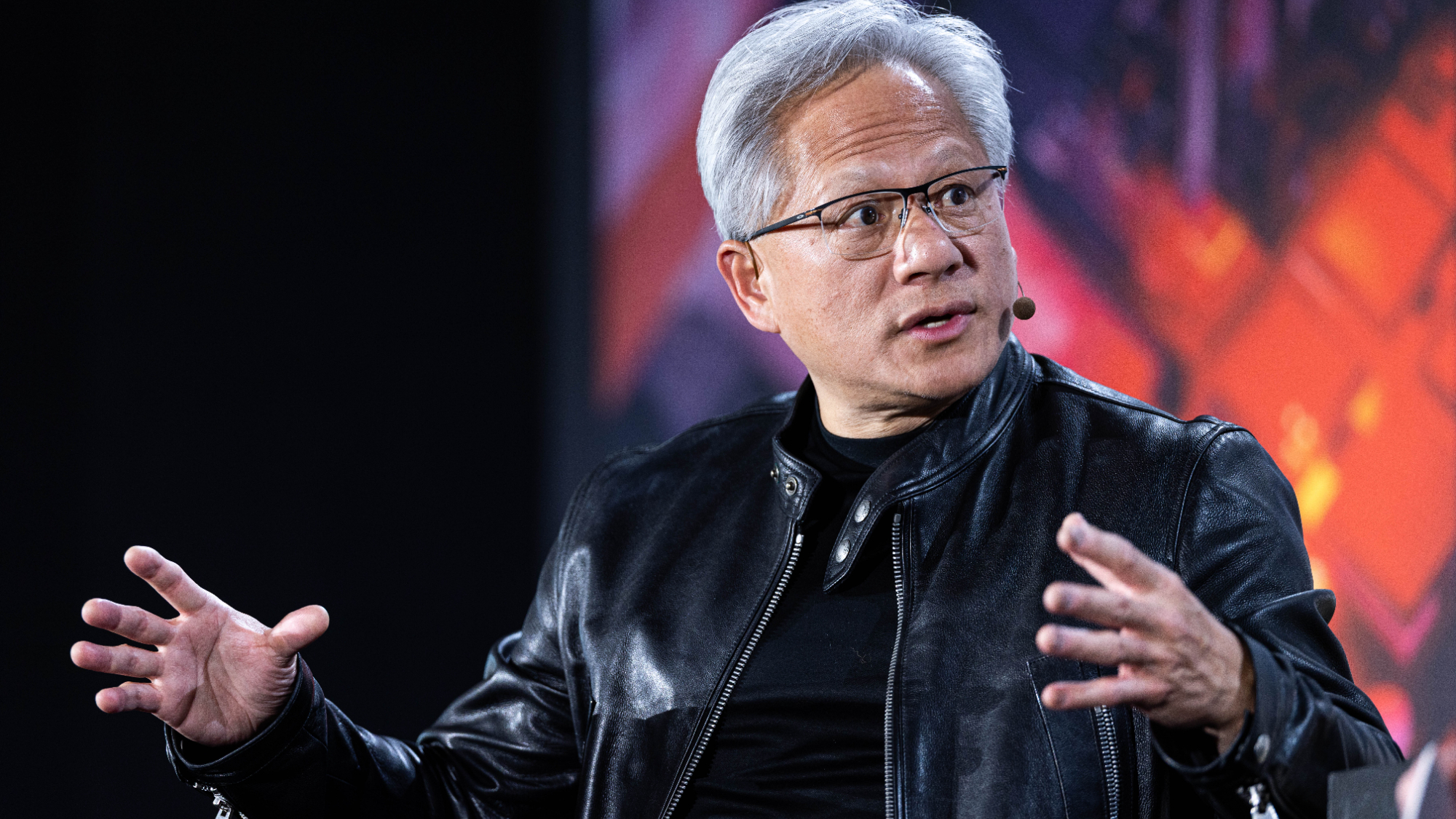
Dallas, Texas – In a move poised to intensify the ongoing technological and geopolitical rivalry between the United States and China, Jensen Huang, the influential CEO of Nvidia, has publicly asserted that American companies should be permitted to utilize Chinese artificial intelligence models. This declaration, made during an interview with Axios co-founder Mike Allen, directly contradicts current efforts by the Washington administration to implement bans on such foreign AI technologies, citing national security concerns. Huang’s unequivocal "absolutely" in response to the question underscores a fundamental philosophical divergence on the future of AI development and security.
The Nvidia chief’s stance arrives at a particularly sensitive moment, hot on the heels of significant advancements from Chinese AI firms. Most notably, Moonshot AI recently unveiled its Kimi K3, a 2.8T open-weight model that has sent ripples through the global AI industry. While Kimi K3 may not yet rival the absolute "frontier" capabilities of unreleased models like Fable 5, it presents a compelling alternative, offering performance comparable to established leaders like GPT 5.5 and Claude Opus 4.8 at a remarkably low cost – reportedly just one-third the price of its American counterparts. This cost-effectiveness and accessibility are central to Huang’s argument, suggesting that restricting access to such innovations could stifle progress rather than enhance security.
Navigating the AI Divide: Main Facts and Key Players
At the heart of the debate is the tension between innovation, economic competitiveness, and national security. Jensen Huang, leading the world’s most valuable chipmaker and a critical enabler of the AI revolution, advocates for an open, interconnected global AI ecosystem. His perspective is rooted in the belief that broader access to diverse AI models, regardless of origin, ultimately fosters greater security through transparency and collective scrutiny.
Conversely, the U.S. government, reflecting a growing bipartisan consensus, views certain foreign AI models, particularly those from China, through a lens of potential vulnerability. Officials worry about embedded backdoors, data exfiltration, and the risk of hostile state actors leveraging these technologies to undermine American interests. This apprehension has materialized in concrete policy actions, including export controls and warnings to leading U.S. AI developers.
Nvidia’s position is complex. As a primary supplier of the high-performance graphics processing units (GPUs) essential for training and deploying advanced AI models, the company benefits immensely from the widespread adoption and development of AI globally. Huang’s advocacy for open access can be seen as a strategic move to ensure continued market growth and prevent fragmentation that could ultimately harm Nvidia’s bottom line. He argues that cheaper, more accessible models will democratize AI, leading to an explosion in demand for computational power – demand that Nvidia is uniquely positioned to fulfill.
A Timeline of Escalating Tensions and Divergent Philosophies
The discussion around Chinese AI models and U.S. restrictions is not new, but it has gained significant momentum in recent months, marked by a series of key events:
Recent Developments:
- Jensen Huang’s "Absolutely" (Current): Nvidia CEO Jensen Huang publicly states that American companies should be allowed to use Chinese AI models, directly challenging Washington’s push for bans. This comes from an interview with Axios co-founder Mike Allen.
- Moonshot AI’s Kimi K3 Launch (Recent Past): Chinese firm Moonshot AI releases its Kimi K3, a 2.8T open-weight model. The model’s cost-effectiveness and performance, comparable to leading American closed-source models like GPT 5.5 and Claude Opus 4.8, ignite fresh debate about the competitiveness and security implications of Chinese AI.
- Trump Administration’s Renewed Push for Bans (Recent Past): Reports indicate that the Trump administration is reviving efforts to ban Chinese AI models, citing cybersecurity concerns. This follows the Kimi K3 launch and highlights ongoing anxieties within U.S. policy circles.
U.S. Government Actions on Domestic AI:
- Export Restrictions on Anthropic Models (Last Month): The U.S. government enforced an export restriction on Anthropic’s Mythos and Fable 5 models, citing security threats. This move demonstrated Washington’s proactive approach to regulating even domestically developed "frontier" AI models.
- Access Restored with Filters (Subsequently): Following the initial ban, access to Anthropic’s models was eventually restored after the developer implemented filters to prevent these tools from identifying software vulnerabilities, illustrating a potential path for compliance and controlled access.
- Warning to OpenAI Regarding ChatGPT-5.6 (Similar Period): OpenAI’s ChatGPT-5.6 received similar scrutiny, with Washington reportedly cautioning the firm against releasing its latest model without receiving prior governmental approval. These actions signal a clear intent from the U.S. government to exert oversight on the development and deployment of powerful AI.
Historical Context:
- DeepSeek’s Arrival and Market Reaction (Earlier): Jensen Huang notes that similar market "panic" and misunderstanding occurred with the arrival of other open-weight models like DeepSeek, suggesting a pattern of investor underestimation of open-source AI’s positive impact on overall demand.
- Broader US-China Tech Decoupling (Ongoing): These specific events are set against a backdrop of a wider technological decoupling between the U.S. and China, encompassing everything from semiconductor manufacturing to data governance and cybersecurity. The AI model debate is a new, critical front in this overarching strategic competition.
This chronology reveals a rapidly evolving landscape where technological breakthroughs, economic incentives, and national security imperatives are constantly colliding, forcing policymakers and industry leaders to grapple with unprecedented challenges.
Supporting Data: Unpacking the Arguments for and Against Open AI
Huang’s defense of Chinese AI models rests heavily on the concept of "open-weight" models and the inherent security benefits he attributes to them.
The Case for Open-Weight Models:
- Transparency and Scrutiny: Unlike "closed-source" or "black box" AI models, open-weight models make their underlying architecture, parameters, and even training data (to varying degrees) accessible to a broader community of developers, researchers, and security experts. Huang argues, "You download the models, you can fine-tune it, you can enhance it, you can guardrail it as you desire." This transparency, he believes, allows for rapid inspection, identification of vulnerabilities, and collective development of fixes, making them inherently more secure.
- Decentralization of Risk: Huang powerfully articulates this point: "If everything just becomes one single model, one single point of attack, one single source of failure, I think the world is much, much more vulnerable." By fostering a diverse ecosystem of models, including those from different nations, the global AI landscape becomes more resilient to single points of failure, whether technical or geopolitical.
- Cost-Effectiveness and Accessibility: The Kimi K3 model exemplifies this. Its ability to offer performance comparable to leading American models at a fraction of the cost significantly lowers the barrier to entry for businesses and researchers globally. This democratizes access to advanced AI capabilities, which Huang contends will spur innovation and adoption across various sectors.
- Stimulating Demand and Innovation: Huang’s core economic argument is that cheaper, more efficient models don’t reduce demand for computing power; they increase it. By making AI more accessible and affordable, more companies and individuals will find applications for it, thereby driving the need for more data centers and, critically for Nvidia, more AI GPUs. He dismisses market fears about cheaper models hurting the industry, calling it a "misunderstanding" akin to reactions seen with earlier models like DeepSeek.
The U.S. Government’s Cybersecurity Concerns:
- Potential for Backdoors and Malicious Code: The primary fear is that foreign-developed AI models, especially from strategic rivals like China, could contain hidden functionalities or vulnerabilities that allow for espionage, data exfiltration, or even sabotage. While Huang dismisses the "misconception that somehow there are backdoors that are somehow connected to China in some way," U.S. intelligence agencies remain vigilant about potential state-sponsored infiltration of critical technologies.
- Data Sovereignty and Privacy: When American companies use foreign AI models, there are concerns about where the data processed by these models resides, who has access to it, and whether it could be compelled by foreign governments. This touches upon broader issues of data governance and national security.
- Supply Chain Vulnerabilities: Relying on foreign AI models introduces a new layer of supply chain risk. If a critical AI model is suddenly restricted or compromised, it could severely impact U.S. industries that have integrated it into their operations.
- Dual-Use Technology Concerns: Many advanced AI models have "dual-use" potential, meaning they can be applied for both civilian and military purposes. The U.S. government is wary of technology that could enhance the military capabilities of adversaries.
- Difficulty of Enforcement: The "open-weight" nature of models like Kimi K3 presents a significant challenge for regulators. Once the weights (the learned parameters of the neural network) are released, they can be downloaded, modified, and deployed anywhere, making an outright ban incredibly difficult, if not impossible, to enforce effectively. This reality fuels the debate on whether restrictions are even practical.
Official Responses: A Clash of Ideologies
The contrasting views of Jensen Huang and the U.S. government highlight a fundamental ideological divide in approaching AI governance.
Jensen Huang’s Stance:
Huang’s advocacy is rooted in a vision of global technological collaboration and open innovation. He posits that fears of "backdoors" are largely unfounded, especially for open-weight models that can be thoroughly scrutinized. His argument pivots on the idea that security through transparency and distributed intelligence is superior to security through isolation and proprietary control. For him, restricting access to powerful AI tools, regardless of origin, creates a more fragile and less innovative global ecosystem. He explicitly calls for AI firms to make their models available to all, emphasizing that "rapid testing and fixes" are the most effective means to enhance security, rather than pre-emptive bans. This philosophy extends to American models as well, where he criticizes the initial restrictions on Anthropic’s and OpenAI’s frontier models.
U.S. Government’s Perspective:
While unnamed in the original article, "Washington" represents a consensus among policymakers, intelligence agencies, and defense officials who prioritize national security above all else in this domain. Their "official response," as evidenced by the reported push for bans and the export control orders, is driven by a profound distrust of technologies originating from geopolitical rivals. The government’s actions concerning Anthropic’s Mythos and Fable 5, and OpenAI’s ChatGPT-5.6, underscore a belief that even powerful domestic models require stringent oversight to prevent misuse or exploitation. The requirement for Anthropic to implement "filters" to block software vulnerability identification suggests a preference for controlled, "guardrailed" access rather than unbridled openness. The core concern is not just about direct malicious code, but also about the potential for data harvesting, algorithmic bias, or the inherent ability of these models to assist in cyberattacks, regardless of the developer’s intent.
This divergence sets up a complex policy challenge: how to balance the clear economic and innovative benefits of an open AI ecosystem with legitimate national security imperatives in an era of intense technological competition.
Implications: The Future Landscape of Global AI
Jensen Huang’s outspoken position and the U.S. government’s firm stance have profound implications for the future trajectory of artificial intelligence, impacting everything from technological development to geopolitical dynamics and economic structures.
1. Reshaping the Global AI Ecosystem:
Huang’s advocacy for open access to diverse models, including Chinese ones, suggests a push towards a more interconnected, albeit competitive, global AI landscape. If his vision gains traction, it could lead to faster innovation cycles as developers worldwide build upon and improve various foundational models. However, if Washington’s restrictive approach prevails, it risks fragmenting the global AI market into distinct, potentially incompatible, regional ecosystems, hindering universal standards and cross-border collaboration. This could create a "splinternet" for AI, with each bloc developing its own proprietary and regulated systems.
2. The Evolving Debate on AI Security:
The core of this debate reshapes how we think about AI security. Huang champions a "security through transparency" model, where open models are vetted and hardened by a global community. The U.S. government, on the other hand, leans towards a "security through control" model, emphasizing proprietary safeguards, export controls, and governmental oversight. The effectiveness of each approach, especially with the rapid evolution of AI, will be a critical test case. The difficulty in enforcing bans on open-weight models further complicates the regulatory environment, pushing policymakers to consider new forms of governance that may focus on usage and deployment rather than mere access.
3. Nvidia’s Strategic Position and Market Dynamics:
For Nvidia, Huang’s stance is a calculated strategic move. By promoting the widespread adoption of all AI models, including cheaper, open-weight ones, Nvidia reinforces its position as the indispensable infrastructure provider. More AI usage, regardless of the specific model or its origin, directly translates into higher demand for Nvidia’s high-performance GPUs and the data centers that house them. Huang explicitly states that "these cheaper, more efficient models are actually good for the industry in general because they will drive demand." This insight highlights that the "chip war" isn’t just about who makes the best chips, but also about creating the conditions for maximum chip consumption globally. Nvidia stands to benefit whether American companies use GPT, Claude, Kimi, or DeepSeek, as long as they are running on Nvidia hardware.
4. Intensification of US-China Tech Rivalry:
This debate adds another layer of complexity to the already fraught US-China tech rivalry. AI is widely recognized as a critical domain for future economic power and national security. The U.S. aims to maintain its lead and prevent China from gaining strategic advantages, while China seeks technological self-sufficiency and global leadership. Huang’s position, advocating for engagement rather than isolation, directly challenges the prevailing decoupling narrative, potentially creating internal friction within the U.S. tech industry and government. The outcome of this policy tug-of-war will heavily influence the global balance of power in AI.
5. Regulatory Challenges and the Pace of Innovation:
The rapid pace of AI development continues to outstrip the ability of regulators to formulate comprehensive policies. The incident with Anthropic’s models, where access was restored after filters were applied, demonstrates the reactive nature of current regulatory efforts. Huang’s call for less restriction and more rapid testing implies that a proactive, agile regulatory framework is needed, one that doesn’t stifle innovation while addressing legitimate security concerns. The challenge for governments will be to develop nuanced policies that can adapt to evolving AI capabilities without creating insurmountable barriers for researchers and businesses.
Ultimately, Jensen Huang’s forceful endorsement of open access to Chinese AI models ignites a critical conversation about the trade-offs between open innovation, global competitiveness, and national security in the age of artificial intelligence. The decisions made in Washington and by industry leaders will shape not only the future of AI but also the broader geopolitical and economic landscape for decades to come.

