

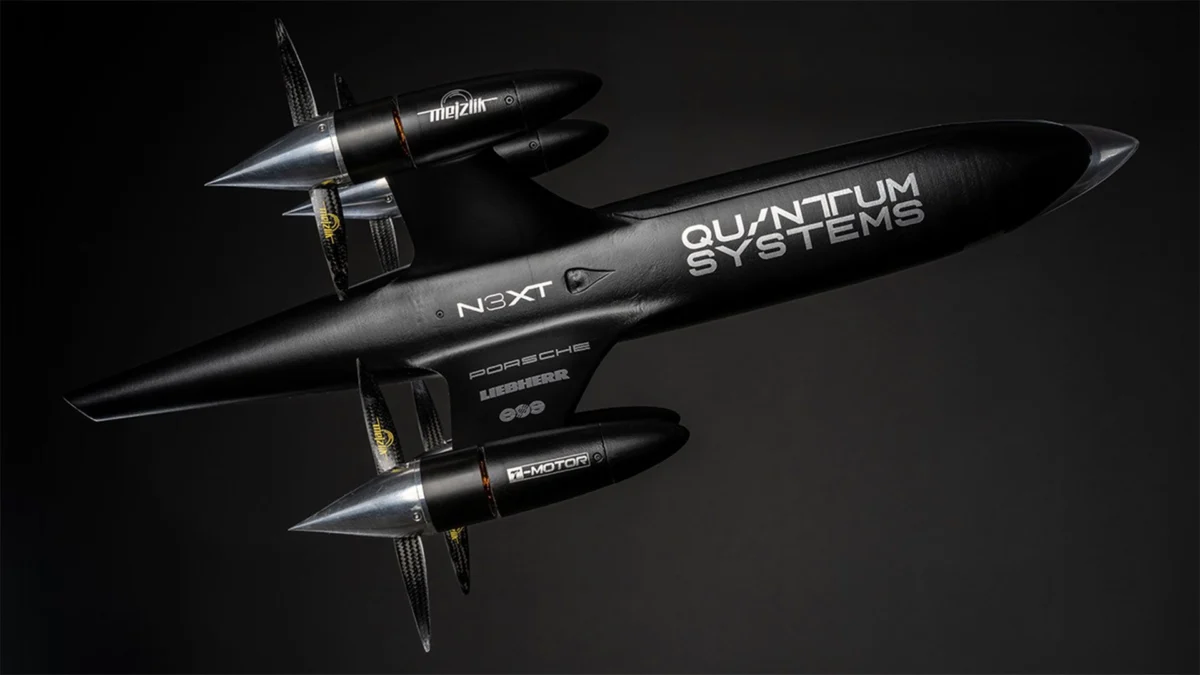
Munich, Germany – [Date] – A new era in aerial speed appears to be dawning as Quantum Systems Group, a prominent Munich-based aerospace innovator, has announced an astonishing achievement: its Apex Recordhunter electric drone reportedly shattered the unofficial world flight speed record during internal testing last month. The company claims its cutting-edge drone reached an eye-watering top speed of 699 km/h (434 mph) in straight and level flight, a figure that significantly eclipses the current official Guinness World Record holder.
This remarkable feat, while awaiting formal verification by Guinness World Records, positions Quantum Systems at the forefront of electric drone technology. The development takes on added significance given the concurrent involvement of Ukrainian engineers from WIY Drones, a Quantum Systems subsidiary, who are not only contributing to the record attempts but are also evaluating the Apex Recordhunter for critical future interceptor drone programs in Ukraine. The race for aerial supremacy is accelerating, driven by both the pursuit of technological excellence and urgent geopolitical realities.
Main Facts: A New Apex in Electric Drone Speed
Quantum Systems Group, recognized for its advanced vertical take-off and landing (VTOL) drones, revealed the breakthrough in an official press release, subsequently reported by German tech publication ComputerBase. The Apex Recordhunter, a drone specifically designed as a technology demonstrator for next-generation electrically powered aerial vehicles, achieved its record-breaking speed during rigorously conducted internal trials. The reported 699 km/h (434 mph) mark comfortably surpasses the current verified world record of 657.59 km/h (409 mph) for an electric drone, setting a new benchmark for what is achievable in sustainable, high-speed aerial platforms.
The unofficial status of this achievement is a common initial step in such endeavors. To transition from an internal test result to a globally recognized record, Quantum Systems will need to undergo a stringent verification process mandated by Guinness World Records. This typically involves independent observers, certified measurement equipment, comprehensive documentation, and a controlled two-way run to establish an average speed, ensuring accuracy and impartiality. A formal attempt to secure this official recognition is anticipated in the coming weeks, signaling the company’s confidence in its design and performance.
Beyond the sheer pursuit of speed, the Apex Recordhunter’s development carries profound implications, particularly through its collaboration with WIY Drones, a Ukrainian engineering branch of Quantum Systems. This partnership underscores the dual-use nature of advanced drone technology, where breakthroughs in performance for general aviation can be rapidly adapted to address pressing defense requirements. The strategic imperative for Ukraine to develop and deploy high-speed interceptor drones capable of neutralizing increasingly sophisticated aerial threats from Russia lends a crucial, real-world urgency to these record attempts.
Chronology of Innovation: The Race for Aerial Supremacy
The quest for faster flight has been a driving force in aviation since its inception. From the earliest biplanes to supersonic jets, engineers have continually pushed the boundaries of speed and efficiency. In the realm of unmanned aerial vehicles (UAVs) or drones, this pursuit has seen an exponential acceleration in recent decades, fueled by advancements in materials science, battery technology, motor efficiency, and aerodynamic design.
The Genesis of High-Speed Drones
The initial focus of drone development was largely on stability, endurance, and payload capacity for surveillance, reconnaissance, and later, precision strike missions. However, as drone technology matured, the emphasis shifted to enhancing various performance metrics, including speed. High-speed capabilities became critical for tasks requiring rapid deployment, evasion, or interception. Early record attempts often involved internal combustion engines, but the environmental benefits, reduced complexity, and increasing power density of electric propulsion systems have made electric drones the new frontier for speed records.
Quantum Systems’ Developmental Journey
The Apex Recordhunter project, as described by Quantum Systems, has been under intensive development for the past year. This period likely involved iterative design, rigorous simulations, and extensive wind tunnel testing to optimize aerodynamics and propulsion. Key challenges would have included managing the immense power output required for such speeds from an electric powertrain, ensuring structural integrity under extreme aerodynamic stress, and developing advanced control systems to maintain stability at near-transonic velocities. The "technology demonstrator" designation implies that every component, from the battery cells to the propeller tips, is at the bleeding edge of current engineering. The internal testing last month, which yielded the 699 km/h result, represents the culmination of this focused year-long effort, proving the viability of their innovative design principles.
The Kiwi Precedent: An Earlier Challenger
The competitive landscape for drone speed records is not exclusive to Europe. Just months prior, in May, news emerged of another unofficial world speed record attempt from New Zealand. Drone builders Aidan and Ben made headlines with their Blackbird drone, which reportedly achieved maximum speeds of up to 453 mph (730 km/h) during their tests. This achievement, though also unofficial and subject to the same stringent verification process as Quantum Systems’ claim, highlighted the global nature of this technological race. The Blackbird drone, notably, incorporated "exotic sawtooth carbon fiber propeller blades," an innovative design choice aimed at maximizing thrust and efficiency at high speeds, indicating diverse engineering approaches to the same challenge. While the Blackbird’s reported speed is higher, the specific category (e.g., straight and level flight, electric propulsion only) and the lack of official verification keep the field open.
The Latest Breakthrough and the Path Ahead
Quantum Systems’ announcement of the Apex Recordhunter’s 699 km/h internal test result marks the latest significant leap in this ongoing competition. It underscores the rapid pace of innovation in electric propulsion and drone design. The company’s immediate focus is now on preparing for the official Guinness World Record attempt, a meticulous process that will solidify their claim and formally etch their name into the annals of aviation history. The anticipation surrounding this formal attempt is palpable, not just for the record itself, but for what it signifies about the future capabilities of electric flight.
Supporting Data and Technological Prowess: Engineering the Future of Flight
Achieving speeds nearing 700 km/h with an electrically powered drone is not merely an incremental improvement; it represents a significant engineering triumph. It’s a testament to the convergence of multiple advanced technologies, each pushed to its limits.
Engineering Marvels Behind the Apex Recordhunter
The Apex Recordhunter, as a "technology demonstrator," embodies several state-of-the-art engineering principles:
- Advanced Electric Propulsion Systems: At the heart of the Apex Recordhunter’s speed are likely custom-designed electric motors boasting an exceptionally high power-to-weight ratio. These motors must be capable of delivering immense torque and rotational speeds without overheating or suffering from efficiency losses. This would involve optimized stator and rotor designs, high-temperature superconductors, and advanced cooling mechanisms.
- Cutting-Edge Battery Technology: High-speed electric flight demands batteries with extraordinary energy density and, crucially, very high discharge rates. Traditional lithium-ion batteries might struggle to deliver the burst power required for sustained high-speed flight without significant voltage sag or thermal runaway risks. Quantum Systems might be leveraging next-generation battery chemistries (e.g., solid-state batteries, silicon-anode batteries) or highly optimized lithium-polymer cells with advanced thermal management systems to ensure consistent power delivery.
- Lightweight Composite Materials: To achieve such velocities, the drone’s structural weight must be minimized without compromising integrity. The Apex Recordhunter likely features an airframe constructed from aerospace-grade composite materials such as advanced carbon fiber reinforced polymers (CFRPs). These materials offer superior strength-to-weight ratios compared to traditional aluminum alloys, enabling a robust yet feather-light structure capable of withstanding extreme aerodynamic forces.
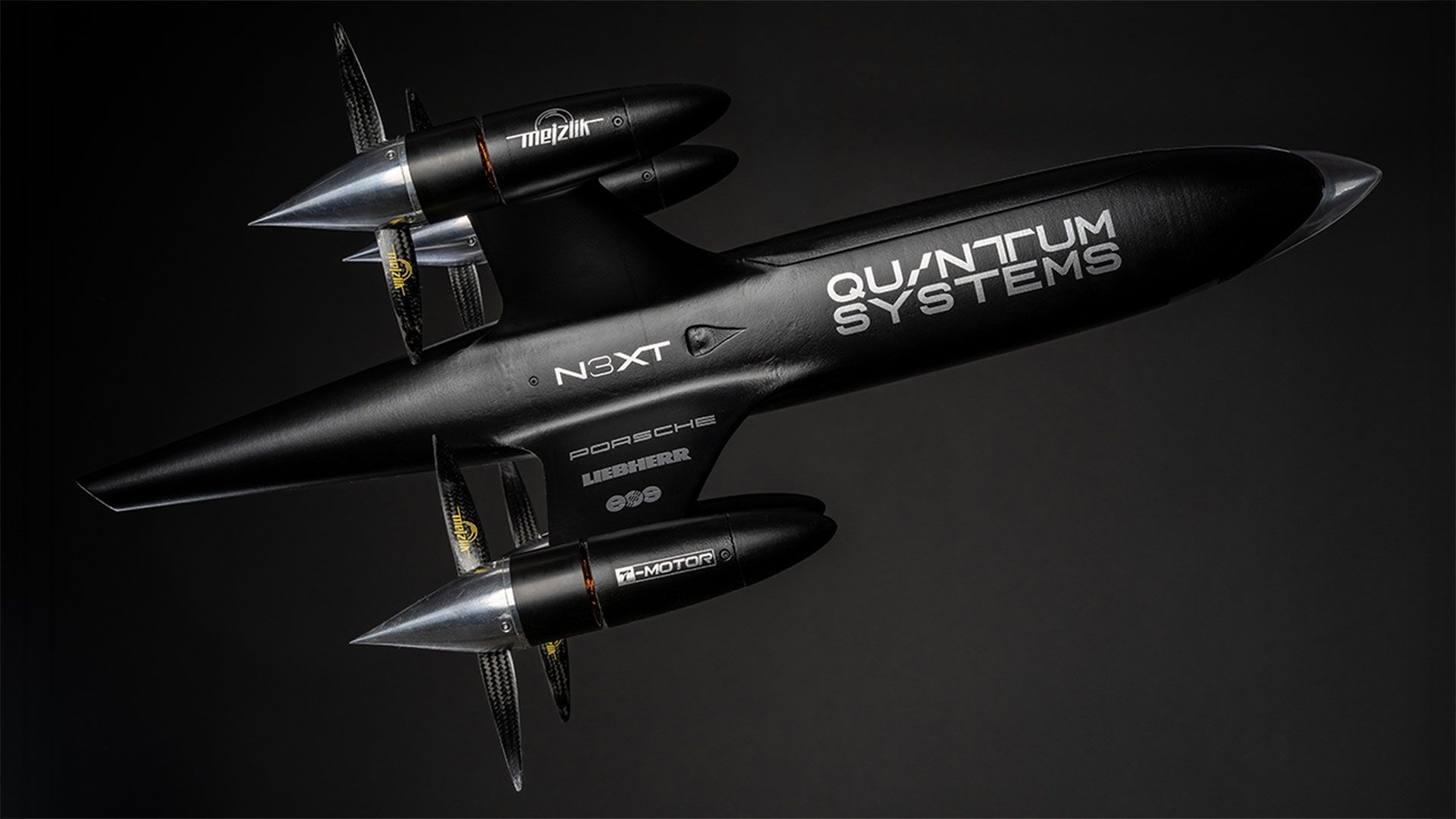
- Sophisticated Aerodynamic Design: Drag is the nemesis of speed. The Apex Recordhunter’s design would feature an ultra-sleek, highly optimized aerodynamic profile to minimize parasitic drag. This would include a low frontal area, smooth surfaces, blended wing-body concepts, and potentially active aerodynamic surfaces for stability control at high speeds. Computational Fluid Dynamics (CFD) simulations would have played a crucial role in refining its shape to slice through the air with minimal resistance.
- Propeller Efficiency at High Speeds: The propellers are critical. As a drone approaches high subsonic speeds, propeller tip speeds can approach the speed of sound, leading to significant efficiency drops, noise, and even structural issues (flutter). Quantum Systems would have developed highly specialized propeller designs, possibly multi-bladed or variable-pitch, optimized for efficiency across a wide speed range, particularly at its peak velocity.
The Blackbird’s Innovative Approach
The Blackbird drone from New Zealand offered a glimpse into alternative engineering solutions with its "exotic sawtooth carbon fiber propeller blades." This design is particularly intriguing:
- Sawtooth Edges: Inspired by biomimetics (e.g., owl feathers), sawtooth or serrated edges on propeller blades can help to reduce vortex shedding at the blade tips. This phenomenon typically creates drag and noise. By disrupting the airflow more effectively, these designs can potentially enhance propulsive efficiency and reduce acoustic signatures, which can be critical for both stealth and speed.
- Carbon Fiber Composition: The use of carbon fiber ensures the blades are incredibly light and stiff, capable of withstanding the immense centrifugal forces and aerodynamic loads experienced at very high rotational speeds. This material choice is essential for maintaining blade integrity and aerodynamic shape under extreme conditions.
The existence of these different approaches (Quantum Systems’ presumed holistic optimization vs. Blackbird’s specialized propeller design) highlights the diverse pathways engineers are exploring to unlock new levels of drone performance.
Contextualizing the Current Official Record
The current official record, standing at 657.59 km/h (409 mph), was set by a specially designed electric drone. While details of that specific drone aren’t provided in the original text, it serves as the benchmark against which the Apex Recordhunter’s achievement is measured. Surpassing this record by over 40 km/h (25 mph) in straight and level flight is a substantial leap, indicating a significant advancement in the underlying technologies. This isn’t just a marginal improvement but a definitive push into a new performance envelope for electric drones.
Official Responses and Verification Processes: The Path to Global Recognition
The journey from an internal test result to a globally recognized world record is a rigorous one, demanding transparency, precision, and independent verification.
Quantum Systems’ Official Stance
According to their press release, Quantum Systems has presented the Apex Recordhunter not just as a speed demon, but as a "technology demonstrator." This framing is crucial. It suggests that the record-breaking speed is a tangible proof point for a suite of advanced technologies that will inform their future product lines. The company’s confidence in publicizing an "unofficial" record and committing to a "formal attempt in the coming weeks" indicates a strong belief in the repeatability and robustness of their drone’s performance. Their decision to collaborate with WIY Drones also speaks to a broader strategic vision beyond mere record-breaking, linking technological prowess directly to real-world applications.
The Guinness World Records Protocol
Guinness World Records is the international authority for verifying world records, and its standards are exceptionally high to ensure fairness, accuracy, and prevent fraudulent claims. For an aerial speed record, the protocol typically involves:
- Independent Observers: A certified representative from Guinness World Records or an accredited aviation body must be present to witness the attempt. Their role is to ensure all rules are followed and to verify the conditions of the flight.
- Certified Measurement Equipment: All speed and altitude measurement devices (e.g., GPS, radar, pitot tubes) must be calibrated and certified by an independent authority to guarantee accuracy. Redundant systems are often required.
- Strict Flight Parameters: For a "straight and level flight" record, the drone must maintain a consistent altitude and course over a defined distance. Deviations can invalidate the attempt.
- Two-Way Run: To account for environmental factors like wind speed and direction, the drone typically performs two consecutive runs in opposite directions over the same course. The official record is then calculated as the average speed of these two runs, nullifying the effect of tailwinds or headwinds.
- Comprehensive Documentation: Detailed logs of flight data, environmental conditions, equipment calibration, and observer reports must be compiled and submitted to Guinness World Records for review.
- Aircraft Specifications: The drone must meet specific criteria for its category (e.g., electric propulsion, maximum take-off weight, autonomous or remote-controlled flight).
The fact that both Quantum Systems and the New Zealand Blackbird team are currently holding "unofficial" records highlights the demanding nature of this official verification process. It’s not enough to simply fly fast; one must prove it under controlled, verifiable conditions.
The Ukrainian Perspective: WIY Drones’ Specific Goals
The involvement of WIY Drones, a Ukrainian branch of Quantum Systems, adds a critical dimension to these record attempts. Their plans extend beyond a single outright speed record, focusing on categories with direct military relevance:
- FPV Interceptor Drone with 0.5 kg Payload: This specific category is designed to simulate a real-world interceptor drone carrying a small warhead or an explosive charge. Achieving speed records in this configuration demonstrates the drone’s capability to carry out its intended mission effectively, striking at fast-moving targets. FPV (First Person View) control allows for highly agile, precise maneuvering, crucial for intercepting dynamic aerial threats.
- Anti-Aircraft Class FPV Interceptor Drone: This category targets larger, potentially more robust aerial threats. Developing drones that can act as "anti-aircraft" assets implies they need to be not only fast but also durable, potentially capable of carrying a larger payload or with enhanced tracking and engagement systems.
These planned record attempts underscore the urgency of developing effective countermeasures against aerial threats that Ukraine faces daily. The ability to field drones that can match or exceed the speed of incoming enemy munitions, such as the Iranian-designed Shahed-136 kamikaze drones or various reconnaissance UAVs, is paramount for national defense.
Implications and Future Horizons: Beyond the Record Book
The advancements demonstrated by the Apex Recordhunter and its counterparts are more than just impressive statistics; they herald significant implications for both military and civilian applications, shaping the future of aerial mobility and defense.
Military Applications: The Interceptor Drone Race Heats Up
The explicit mention of the Apex Recordhunter being assessed for "future interceptor drone programs" in Ukraine highlights the immediate and critical military relevance of high-speed electric drones. The ongoing conflict has dramatically accelerated the development and deployment of UAVs, making aerial threats a constant and evolving challenge.
- Countering Fast Aerial Threats: Current interceptor methods often involve expensive and resource-intensive traditional anti-aircraft missiles or manned fighter jets. High-speed, relatively inexpensive interceptor drones offer a scalable, agile, and potentially more cost-effective alternative. They could be deployed rapidly to intercept incoming loitering munitions, reconnaissance drones, or even smaller, faster FPV attack drones that are increasingly prevalent on the battlefield.
- Strategic Importance for Ukraine: Ukraine’s need for such technology is urgent. Russian forces have extensively used various types of drones, including the slow but persistent Shahed-136 kamikaze drones and faster reconnaissance UAVs. An interceptor drone capable of 700 km/h would significantly enhance Ukraine’s ability to create defensive layers, tracking and neutralizing threats before they reach their targets. The "anti-aircraft class FPV interceptor drone" category is particularly telling, suggesting a focus on countering larger, more resilient targets.
- Technical Challenges for Interceptors: Developing an effective interceptor drone involves more than just speed. It requires:
- Payload Capacity: To carry a warhead or an engagement mechanism (e.g., net, kinetic projectile).
- Maneuverability: The ability to rapidly change direction and altitude to match the evasive maneuvers of a target.
- Autonomy and AI: Advanced algorithms for target detection, tracking, classification, and interception, reducing the cognitive load on human operators.
- Targeting Systems: Sophisticated sensors (optical, thermal, radar) to accurately identify and lock onto targets in various conditions.
- Swarm Capabilities: The potential for multiple interceptor drones to operate cooperatively, overwhelming enemy defenses or engaging multiple targets simultaneously.
The FPV aspect is critical here, allowing human pilots to leverage their intuition and rapid reaction times in complex interception scenarios, especially against agile targets. This "human-in-the-loop" approach can be highly effective in dynamic combat environments.
Civilian Applications: A New Frontier for Aerial Logistics
While military applications often drive the initial development of cutting-edge drone technology, the innovations inevitably trickle down to civilian uses, potentially revolutionizing various sectors:
- Rapid Delivery and Logistics: Imagine urgent medical supplies, critical spare parts, or high-value cargo delivered across vast distances in a fraction of the time currently possible. High-speed drones could transform last-mile and even middle-mile logistics, especially in remote or difficult-to-access areas.
- Emergency Response: First responders could deploy high-speed drones to quickly assess disaster zones, deliver emergency equipment, or transport vital medical samples from accident sites to hospitals, drastically cutting response times.
- Infrastructure Inspection: Inspecting long stretches of pipelines, power lines, or vast agricultural fields could be done with unprecedented speed and efficiency, reducing operational costs and improving maintenance schedules.
- Aerial Mapping and Surveying: Large-scale topographical surveys or environmental monitoring over extensive areas could be completed much faster, providing timely data for urban planning, resource management, and disaster preparedness.
- Future Air Taxis and eVTOL Development: The advancements in electric propulsion, battery efficiency, and aerodynamic stability at high speeds directly contribute to the feasibility of future electric vertical take-off and landing (eVTOL) aircraft and urban air mobility concepts. Record-breaking drones serve as crucial testbeds for these foundational technologies.
The Pace of Innovation and Future Records
The rapid succession of unofficial records and the clear intent for official attempts suggest that the 700 km/h (435 mph) milestone for electric drones is not just probable but imminent. The continuous push by companies like Quantum Systems and independent innovators like Aidan and Ben underscores a vibrant, competitive ecosystem driving drone technology forward at an exhilarating pace. We can expect a "flurry of new drone speed records," as the article predicts, as engineers refine designs, improve materials, and squeeze ever more performance from electric powertrains.
Ethical Considerations and the Dual-Use Dilemma
As drone technology advances at such a rapid clip, it’s imperative to consider the ethical implications of these powerful capabilities. High-speed drones, especially those with potential military applications, highlight the dual-use dilemma inherent in many technological breakthroughs. While they offer immense potential for defense and humanitarian aid, the same capabilities could be misused. This necessitates ongoing discussions about regulation, international arms control, and the responsible development and deployment of autonomous and semi-autonomous aerial systems.
In conclusion, Quantum Systems’ Apex Recordhunter stands as a testament to human ingenuity and the relentless pursuit of speed. While the official record awaits, the implications of this breakthrough – from revolutionizing defense strategies in critical geopolitical contexts to transforming civilian logistics and mobility – are already profound, charting a course for an exciting, albeit complex, future of flight.

