

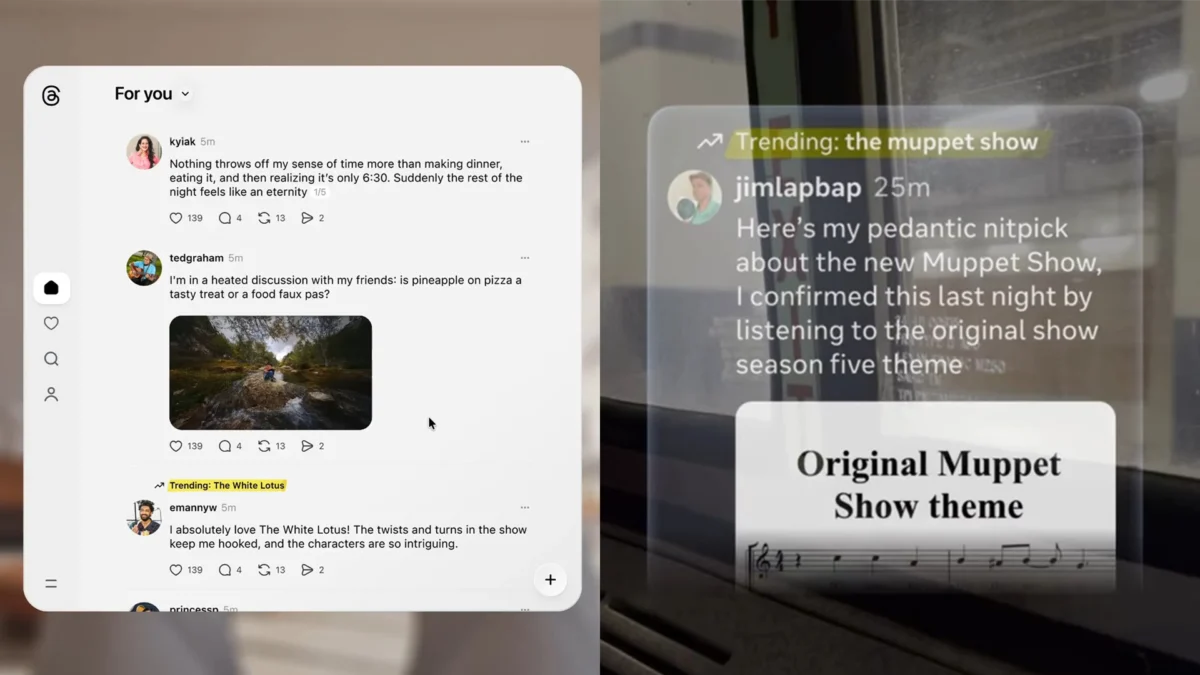
SAN FRANCISCO — Meta’s push to unify its burgeoning hardware and software ecosystem has reached a major milestone as its microblogging platform, Threads, officially arrives on Quest virtual reality headsets and Meta Ray-Ban Display smart glasses. The rollouts, which took place over the summer of 2026, represent a strategic effort by Meta to embed its flagship social networks directly into its expanding portfolio of spatial computing and wearable devices.
While the integration brings new levels of cross-platform accessibility, it has also sparked controversy among users, particularly regarding Meta’s aggressive distribution methods on its VR hardware. As the tech giant prepares for its upcoming Meta Connect 2026 conference later this month, these updates offer a clear window into how the company envisions the future of ambient computing, mixed reality, and social media connectivity.
Main Facts
The recent integration of Threads into Meta’s hardware ecosystem spans two distinct device categories, each offering a fundamentally different user experience:
- Meta Quest Headsets: In early August, Meta launched a native Threads client on the Meta Horizon Store for Quest. Rather than leaving the app as an optional download, Meta set it as a preinstalled application, force-downloading it to the vast majority of Quest headsets globally. While users could previously access Threads via the Quest’s web browser, the new native app provides a more refined, dedicated interface tailored to Horizon OS. However, the silent, automated background downloads drew heavy criticism from virtual reality gamers who experienced performance hiccups or unexpected interruptions mid-gameplay.
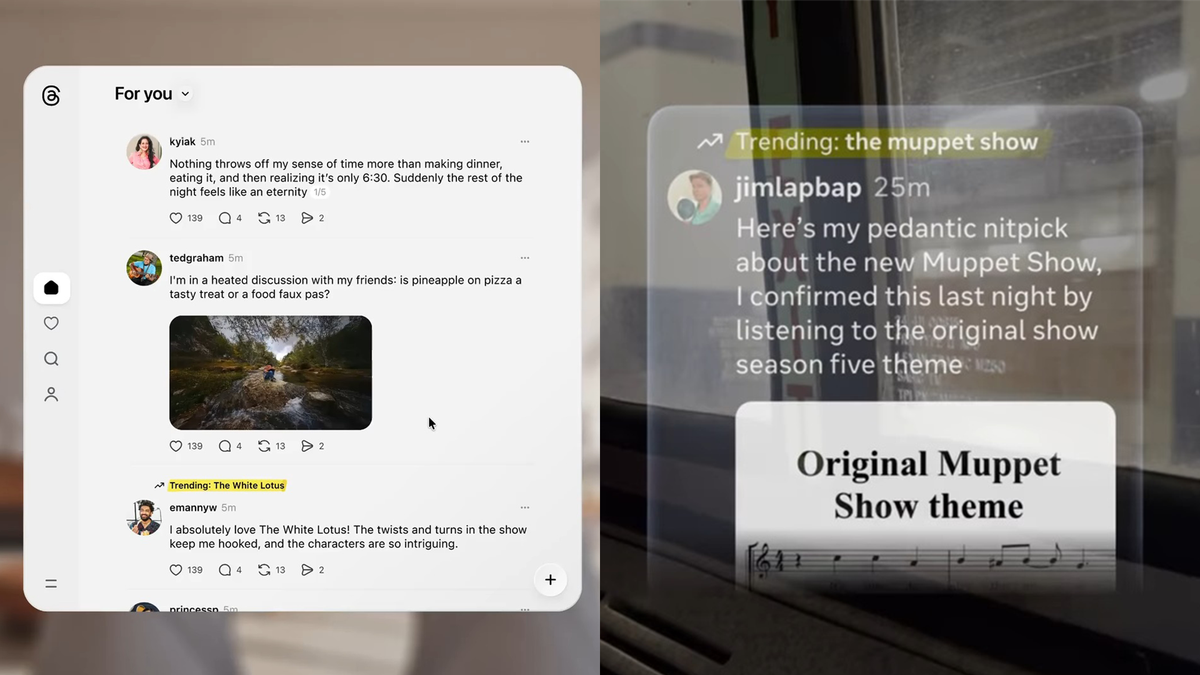
- Meta Ray-Ban Display Smart Glasses: Released in late July, the Threads application for Meta’s monocular HUD smart glasses offers a streamlined, hands-free social media experience. Building on the existing integration of Instagram, the Threads app allows wearers to scroll through their feeds using Meta’s signature Neural Band gesture—swiping a thumb against the side of an index finger. Users can view videos, like posts, and share content directly through the heads-up display interface, providing a glanceable, lightweight alternative to smartphone use.
- Broader Smart Glasses Updates: Alongside the Threads integration, Meta rolled out a series of software updates over the summer for its screenless Ray-Ban and Oakley smart glasses, setting the stage for major hardware and software announcements at Meta Connect 2026.
Chronology: The Evolution of Threads on Meta Hardware
To understand how Threads became a ubiquitous presence across Meta’s hardware lines, it is essential to trace its journey from a web-based Twitter competitor to a deeply integrated spatial computing application.
July 2023: The Birth of an X Competitor
Threads was launched by Meta nearly three years ago in the immediate aftermath of Elon Musk’s high-profile acquisition of Twitter (now X). Positioned as a text-focused conversation app tied directly to Instagram accounts, Threads experienced a historic surge in user acquisition during its initial weeks. Over the subsequent three years, the platform steadily closed the gap with its chief rival. While it now boasts an active user base that rivals X in sheer volume, industry analysts note that it still lacks the deep political and intellectual user base that historically populated Twitter/X.
Late July 2026: Entering the Wearable Space via Ray-Ban Display
Meta turned its attention to its wearable tech portfolio, introducing the Threads app to the Meta Ray-Ban Display monocular HUD glasses. Recognizing that smart glasses require a fundamentally different UX paradigm than smartphones, Meta engineered the application to rely heavily on minimal glanceable text, video playback, and intuitive gesture controls. This launch positioned Threads as one of the core productivity and social pillars for Meta’s augmented reality (AR) roadmap.
Early August 2026: The Quest Native App and Forced Rollout
Meta targeted its immersive hardware lineup by deploying the native Threads app to the Meta Horizon Store. In a move designed to maximize immediate adoption figures, Meta designated Threads as a preinstalled system app, pushing automated downloads to active Quest headsets worldwide. While efficient from a distribution standpoint, the execution drew swift backlash from the VR community.
September 2026: Summer Recap and Road to Meta Connect
As summer drew to a close, industry observers took stock of Meta’s rapid hardware-software convergence. With Meta Connect 2026 officially confirmed for later this month, the company is widely expected to unveil deeper spatial computing capabilities, new developer tools for Horizon OS, and potentially next-generation iterations of its smart glasses hardware.
Supporting Data and Platform Dynamics
The integration of Threads into Quest and Ray-Ban devices is underpinned by specific technological frameworks and user metrics that highlight Meta’s cross-platform strategy.
User Base and Demographic Realities
According to recent industry tracking, Threads has successfully captured hundreds of millions of monthly active users, largely driven by its frictionless onboarding process via Instagram. However, engagement metrics reveal a distinct behavioral split. While X remains a primary hub for real-time news, journalism, and geopolitical discourse, Threads has carved out a niche centered around lifestyle content, fandoms, creator economy updates, and casual social networking. This lighter, more visual content model makes Threads uniquely suited for consumption on wearable displays like the Ray-Ban HUD glasses, where long-form reading is impractical.
Technical Implementation on Horizon OS and HUD
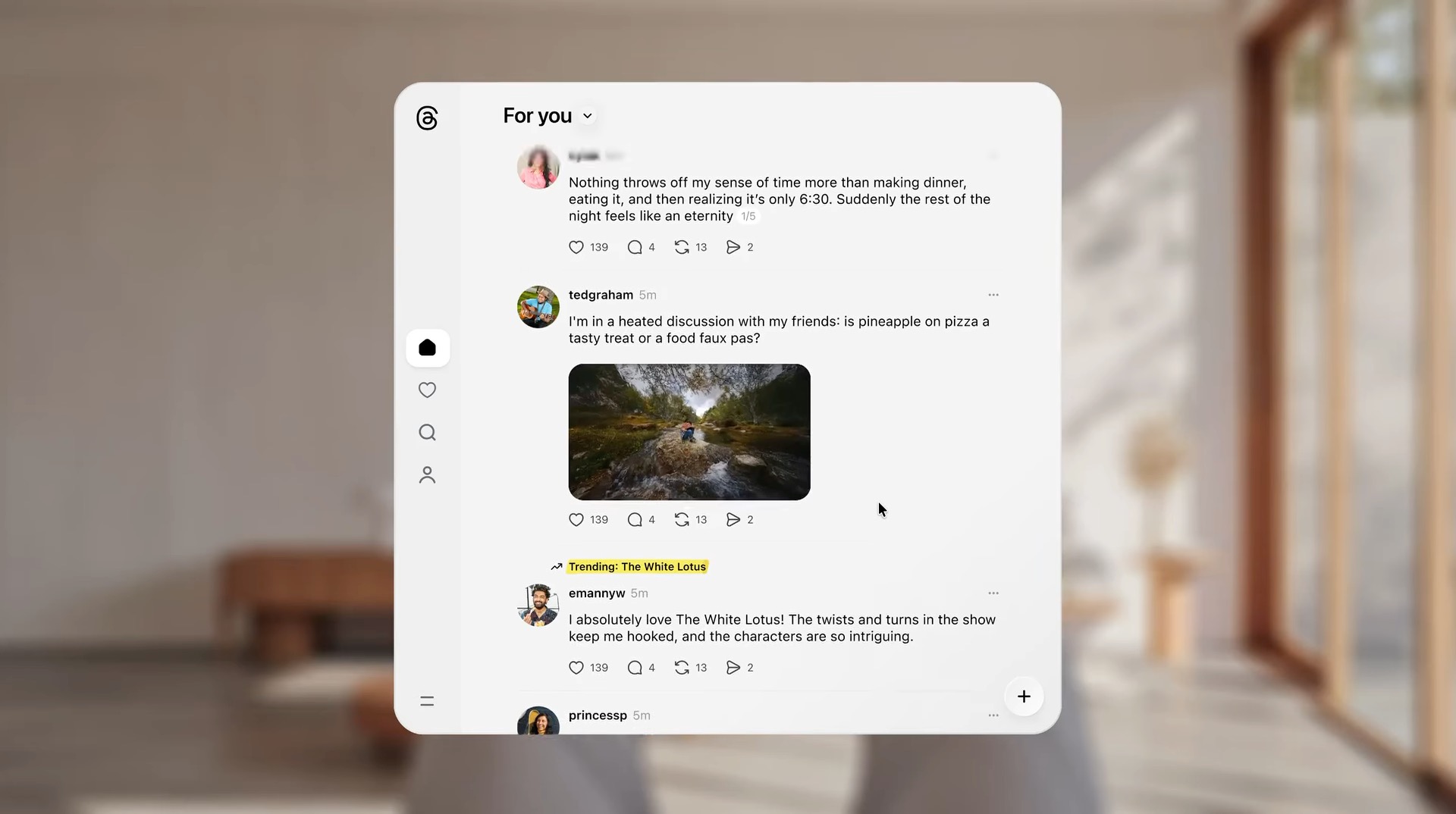
- Horizon OS (Quest): The native Quest app utilizes Meta’s spatial windows framework, allowing users to pin the Threads feed anywhere in their virtual living room or passthrough environment. It supports multi-tasking, enabling users to keep an eye on their social feed while browsing the web or interacting in social VR spaces.
- Ray-Ban Display HUD: Operating via a single-eye micro-LED display, the smart glasses version strips away complex UI elements. Navigation relies entirely on the Meta Neural Band, translating subtle electromyographic (EMG) signals from wrist and finger movements into seamless page-scrolling and post-liking commands. Video playback on the compact display utilizes localized hardware acceleration to preserve battery life—a critical constraint for lightweight smart glasses.
Official Responses and User Community Reaction
Meta’s aggressive rollout strategy has elicited two entirely different narratives: corporate enthusiasm for seamless ecosystem integration versus consumer frustration over intrusive software management.
Meta’s Vision: Ambient Connectivity
Meta executives have consistently framed these updates as part of a larger mission to make computing more ambient, natural, and accessible. By bringing social utilities like Instagram and Threads directly to smart glasses, Meta aims to reduce "phone checking" behavior, allowing users to stay connected to their digital circles without breaking eye contact with the physical world. On the Quest side, embedding social platforms into Horizon OS is viewed as a necessary step toward turning VR headsets from isolated gaming consoles into general-purpose computing platforms and virtual workspaces.
Consumer Backlash: The Quest Update Controversy
Despite the strategic benefits, the execution of the Quest rollout alienated a portion of the core virtual reality community. Numerous Quest owners took to social media, Reddit, and tech forums to voice their displeasure after discovering the Threads app had been forcibly downloaded onto their storage drives without their explicit consent.
Compounding the issue, several users reported that the automated background downloads and system notifications occurred while they were actively engaged in competitive or immersive VR titles, resulting in stuttering performance, dropped frames, or unexpected menu interruptions. Critics argued that Meta’s heavy-handed approach—treating standalone VR headsets like locked-down corporate smartphones—infringes upon user autonomy regarding local storage and device customization.
Strategic Implications for the XR and Wearables Industry
The arrival of Threads on Quest and Ray-Ban devices carries significant implications for the broader Extended Reality (XR) and wearable technology landscapes.
1. The Super-App Strategy in Spatial Computing
Meta is aggressively mirroring the playbook established by mobile tech giants: building an inescapable software ecosystem where hardware acts merely as a vessel for proprietary services. By ensuring that every user who purchases a Quest or a Meta-powered smart glass has immediate access to Facebook, Instagram, Messenger, and now Threads, Meta creates high switching costs for consumers. Competitors like Apple (with visionOS) and Google/Samsung (developing upcoming XR hardware) will need to evaluate how deeply to bake their own service ecosystems into their operating systems.
2. Redefining Social Interaction in AR
The success of Threads on the Meta Ray-Ban Display validates the concept of "micro-interactions" in augmented reality. Traditional social media apps, designed for vertical phone screens and continuous scrolling, must be aggressively re-architected for glanceable, context-aware wearable displays. As gesture control via Neural Bands improves, hands-free consumption of short-form text and video will likely become the baseline expectation for all smart eyewear.
3. Balancing Ecosystem Synergy with User Choice
The friction caused by the forced Quest download serves as a cautionary tale for tech companies operating at the intersection of software and hardware. As operating systems become more integrated, companies must navigate the delicate line between driving platform adoption and respecting user agency. If hardware manufacturers overstep by imposing unwanted applications onto local storage during active gaming sessions, they risk stoking consumer resentment that could hamper long-term platform goodwill.
Looking Ahead to Meta Connect 2026
With Meta Connect 2026 just weeks away, all eyes will be on CEO Mark Zuckerberg and his engineering teams to see how these software integrations evolve. Whether Meta will address the user complaints regarding forced app installations, or double down on unified ecosystem deployment with brand-new hardware announcements, remains one of the most anticipated storylines in the tech industry this fall.

