

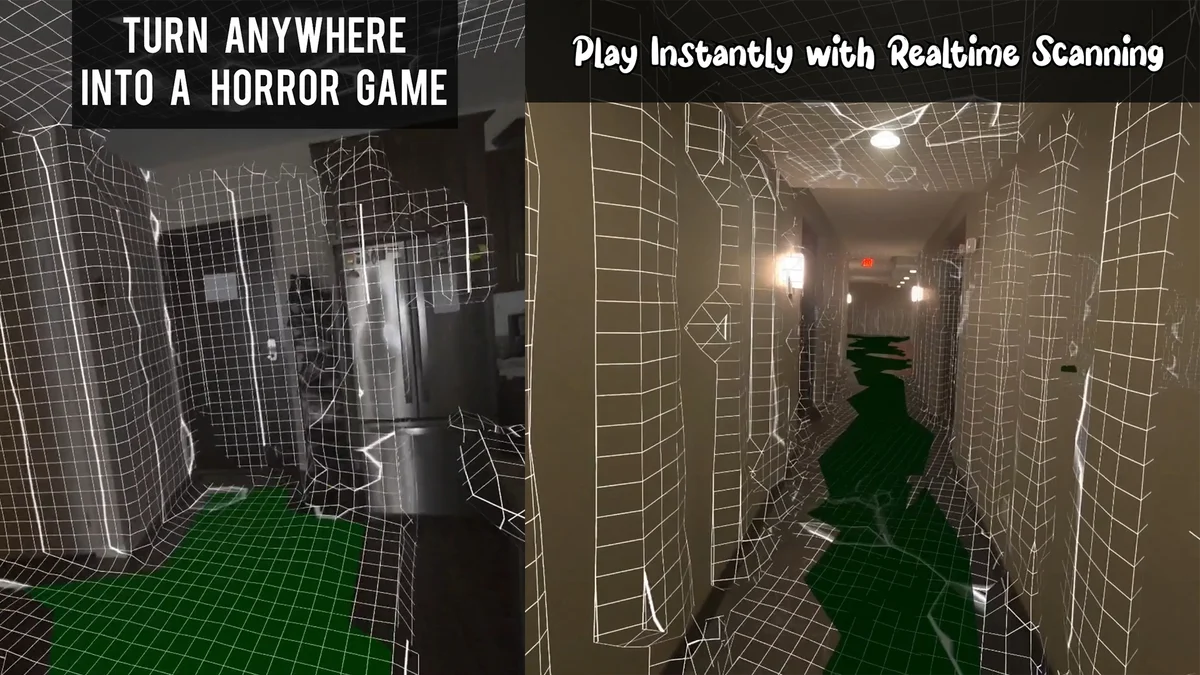
The landscape of Mixed Reality (MR) has long been defined by individual isolation. While users don headsets to see digital entities overlaying their living rooms, the experience has remained fundamentally solitary—or, at best, limited to the niche requirements of local co-location. That is set to change. David Montecalvo, CEO of VirtualGo, the developer behind the acclaimed horror title Hauntify, has unveiled a groundbreaking system designed to dissolve the barriers between remote players, allowing them to step into a shared, digital recreation of a host’s physical home.
This technological leap promises to transform how we perceive "shared space" in XR, moving away from simple asset-based party games toward a future where a friend in another country can walk through your physical living room as if they were sitting on your couch.
The Genesis of Shared MR: Bridging the Digital Divide
For years, Mixed Reality has struggled with a "fidelity vs. accessibility" problem. While titles like Espire: MR Missions, Drop Dead: The Cabin, and the upcoming Into the Dead: Crimson Heights have mastered the art of room-scale environmental manipulation, they have largely operated within a silo. If you wanted to play with a friend in these environments, you were generally restricted to co-location—requiring both players to be in the same physical room, both owning expensive headsets, and both being in the same geographical location.
VirtualGo’s new system, showcased at the UploadVR Summer Showcase and discussed at length at AWE (Augmented World Expo), fundamentally disrupts this paradigm. By utilizing advanced scene meshing technology—which leverages the continuous scene-meshing capabilities seen in the latest iterations of Hauntify—the software captures the host’s room geometry and transmits it to a remote client.
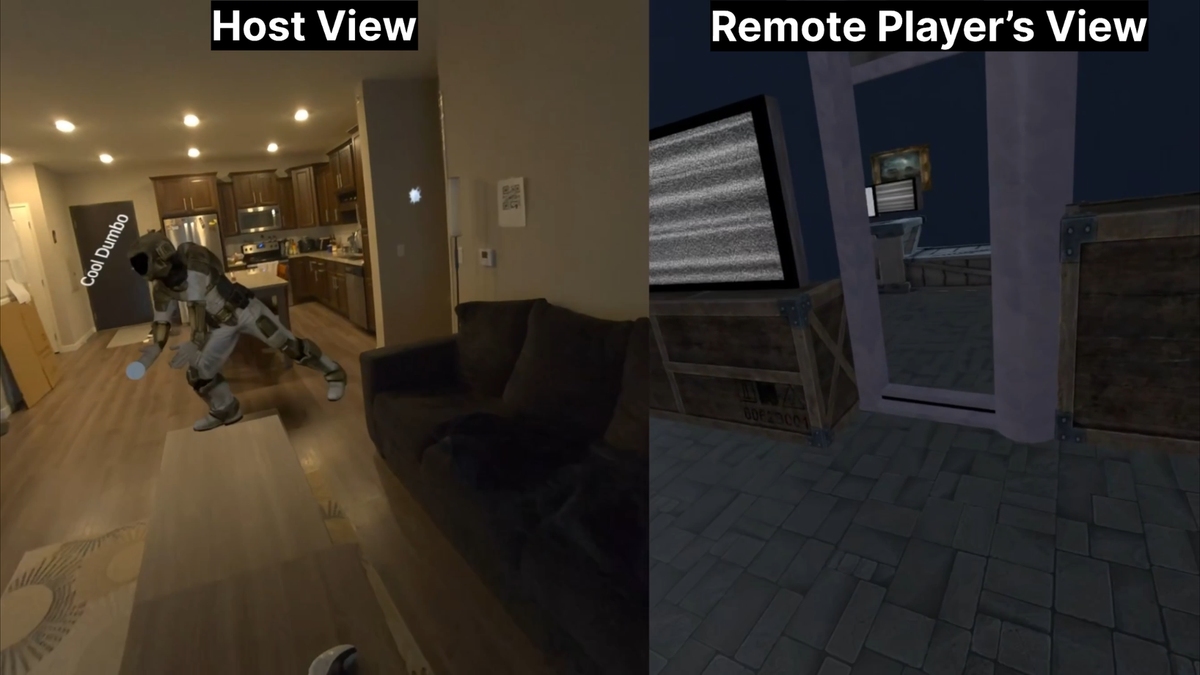
This is not merely a screen share; it is a live, spatial reconstruction. The remote player joins the host’s environment via a VR representation of that room, allowing for true, real-time cooperative gameplay that transcends the limitations of the physical world.
Chronology of Development: From Horror to Horizon
The journey to this point has been a steady progression of solving the "spatial puzzle."
- Initial Iteration: VirtualGo began with Hauntify, focusing on high-fidelity, room-aware horror that utilized the Quest’s sensors to turn everyday objects into threats.
- The Meshing Breakthrough: The team transitioned from standard Meta room scanning to continuous scene meshing. This addressed the fragmentation issues inherent in early Quest scanning, where minor changes in lighting or furniture placement would "break" the game world.
- The Multiplayer Pivot: Recognizing that the ultimate potential of MR lay in social connection, the team began developing the remote-sync protocol in early 2026.
- The AWE 2026 Reveal: During the Augmented World Expo, VirtualGo demonstrated the feasibility of the system. While testing the live, sub-millisecond latency in a crowded convention floor was logistically impossible, the technical proofs and pre-alpha demonstrations solidified the project’s viability.
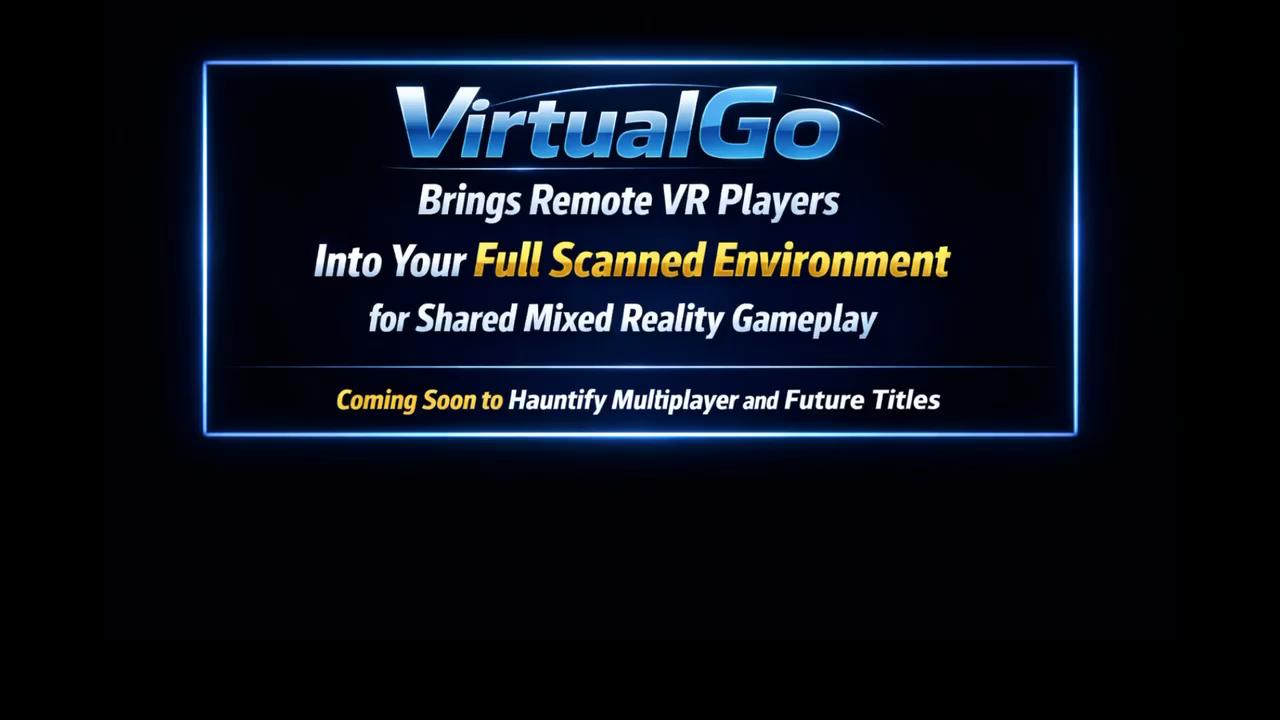
- Roadmap to 2027: With the technology now validated, VirtualGo has slated the multiplayer integration for its core trio of titles—Hauntify, Mission Rift, and FPS Enhanced Reality—for a 2027 rollout.
The Technical Edge: Why This Matters for XR Adoption
XR technology is currently experiencing its "Atari era." As noted by industry observers, we are at a crossroads where we must either evolve beyond gimmicky, individual experiences or risk seeing hardware collect dust in closets.
Overcoming the "Ubiquity" Barrier
One of the greatest hurdles to the mass adoption of XR is the requirement for local co-location. Expecting two or more people in the same household to own high-end headsets is a tall order. VirtualGo’s system effectively removes this friction. By allowing a remote user to "log in" to a host’s room, the system mimics the success of platforms like VRChat, which proved that people will flock to immersive spaces if the social component is strong enough.

Latency and Fidelity
One of the most pressing questions regarding remote MR is latency. If a remote player sees a digital ghost in your room, and that ghost lags by even a fraction of a second, the immersion breaks. According to Montecalvo, the latency in the current build is "negligible," achieved through proprietary compression of the scene mesh data. This ensures that the digital representation of the host’s room stays in sync with the host’s real-world movements and environment.
Official Perspectives: A Vision for 2027 and Beyond
In our conversation at AWE, CEO David Montecalvo emphasized that while his company is currently known for high-tension shooters and horror games, the architecture of this shared-space technology is genre-agnostic.
"We aren’t building a horror system; we are building a spatial connection system," Montecalvo explained. The potential for this technology extends far beyond adrenaline-fueled combat. Imagine a "cozy" game where you and a remote partner decorate a virtual version of your real-life kitchen, or an RPG where a Dungeon Master can manifest a digital dungeon across the walls of your living room, with players joining from across the globe.
The commitment to this roadmap is clear. By integrating these features into Mission Rift and FPS Enhanced Reality by 2027, VirtualGo is positioning itself not just as a game developer, but as a platform provider for the next generation of social XR.
Implications for the Future of Social XR
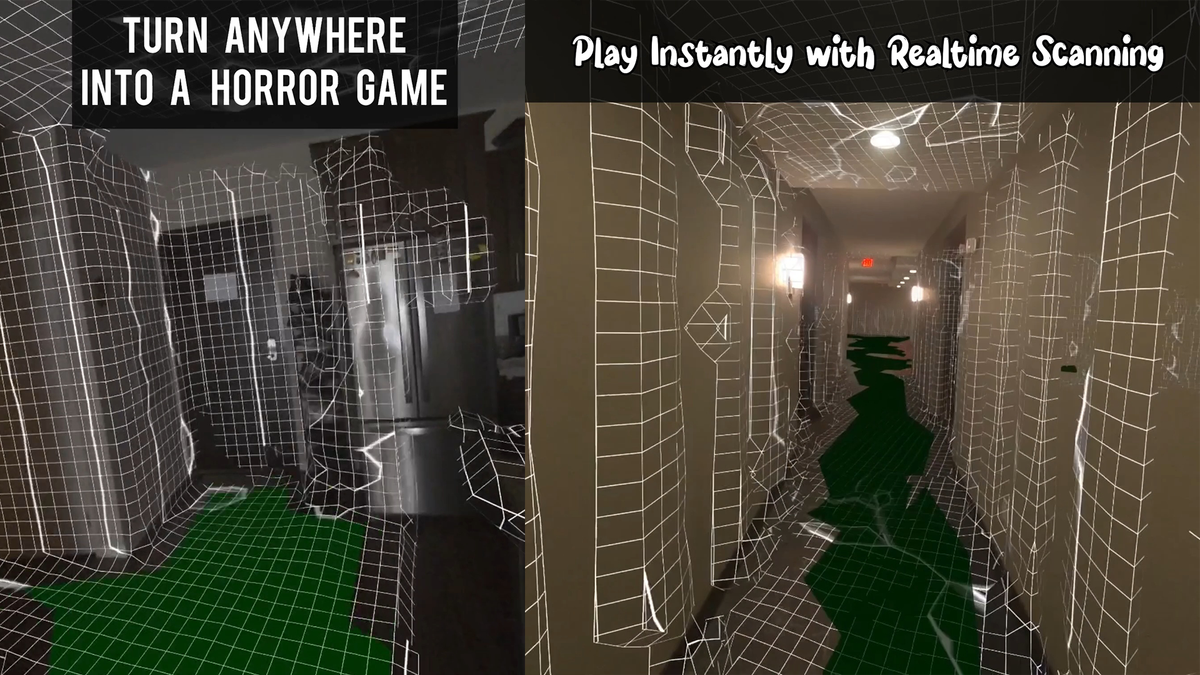
The implications of VirtualGo’s work are profound. By moving away from "portal-based" experiences—where each user remains in their own room, seeing their own distinct assets—and moving toward a "shared-mesh" experience, the industry is entering a new chapter.
The Death of Spatial Isolation
For years, MR was an isolating medium. You were in your room, your friend was in theirs, and the "game" was a series of digital overlays that didn’t truly recognize the other person’s presence. VirtualGo’s approach acknowledges that humans are social creatures. By allowing remote players to occupy the same spatial coordinates as the host, the "shared world" finally becomes a tangible reality.
The Rise of User-Generated Content (UGC)
The ability to map a room and share that map with others opens the door for a new wave of UGC. If a player creates a particularly clever horror layout in their apartment, they could theoretically share that "map" with friends, allowing them to experience the same terror in their own living rooms. This democratization of level design, rooted in real-world architecture, could spark a creative renaissance in XR.
A Challenge to Hardware Manufacturers
This system also puts pressure on hardware giants like Meta to improve their room-scanning APIs. If smaller, independent studios like VirtualGo can achieve this level of synchronization, it raises the bar for what users will expect from the next generation of headsets. The era of the "static" room is ending; the era of the "living" room—one that can be shared, scanned, and played within—has begun.
Final Thoughts
The path to widespread XR adoption has never been about better graphics or higher resolution screens alone. It has always been about the utility of the experience. We saw it with Demeo and Spatial Ops, which proved that physical proximity creates better social gaming. Now, VirtualGo is proving that proximity can be virtualized.
As we look toward 2027, the prospect of jumping into a friend’s home to clear a room of monsters or simply hang out in a shared digital recreation of their living space feels less like science fiction and more like an inevitability. For those interested in getting a head start on this ecosystem, VirtualGo’s current catalog remains the best place to witness the evolution of this technology. With the promo code AWE2026-878AEE, players can currently secure access to the foundations of this shared reality at a 25% discount, preparing for the day when the walls between our homes—and our headsets—finally vanish.

