

In the landscape of modern gaming, where "open-world" is a ubiquitous marketing term and military shooters are often distilled into fast-paced, arcade-style spectacles, it is easy to forget the seismic shift that occurred in June 2001. That was the month Operation Flashpoint: Cold War Crisis arrived on store shelves, forever changing the trajectory of tactical first-person shooters. It was, at the time, a bewildering, uncompromising, and technically revolutionary experience that defied the established conventions of the genre.
Twenty-five years later, the game—now known as ArmA: Cold War Assault—stands as a monumental pillar of PC gaming history. As developer Bohemia Interactive marks this silver anniversary, the company has unveiled plans that serve not just as a nostalgic celebration, but as a commitment to the future of the simulation genre. By releasing the engine’s source code and debuting a modernized remaster, Bohemia is inviting a new generation to experience the game that taught an entire community that combat is less about reflexes and more about patience, planning, and positioning.
The Dawn of Modern Simulation: A Chronology
To understand the significance of Operation Flashpoint, one must recall the state of the first-person shooter (FPS) in the late 1990s. The market was dominated by corridor shooters like Quake III Arena and Unreal Tournament. Players were conditioned to expect linear maps, constant movement, and predictable enemy spawns.
When Operation Flashpoint launched, it shattered these paradigms:
- 1999–2000: Bohemia Interactive, a small team in the Czech Republic, develops the "Poseidon" engine, focusing on the sheer scale of terrain rather than high-fidelity character models.
- June 2001: Operation Flashpoint is released. It introduces players to the islands of Everon, Malden, and Kolgujev—massive, persistent landscapes where combat didn’t happen in a script, but across kilometers of open space.
- 2006: Following a licensing dispute with publisher Codemasters, Bohemia Interactive launches ArmA: Armed Assault, effectively continuing the spiritual lineage of the game under a new brand.
- 2011: To commemorate the 10th anniversary, the original game is rebranded as ArmA: Cold War Assault.
- 2024–2025: Marking the 25-year milestone, Bohemia announces the open-sourcing of the engine code and the development of a fully modernized remaster.
Technical Innovation and the "Jank" Factor
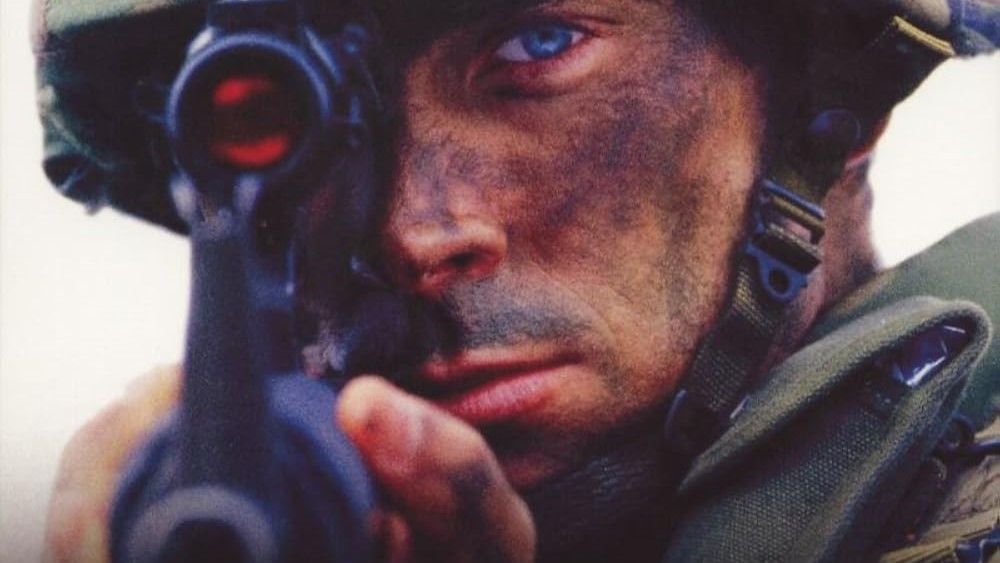
For those who played it in 2001, Operation Flashpoint was a paradox. It was, by modern standards, exceptionally "janky." The animations were stiff, the AI was prone to baffling lapses in judgment, and the difficulty curve was essentially a vertical cliff. If you were spotted by a sniper in the distance, you died before you even heard the gunshot. If you stood up in an open field, you were a target.
Yet, these "flaws" were actually features. By forcing the player to crawl through tall grass, utilize cover, and coordinate with AI squads, Bohemia created a sense of vulnerability that no other game could replicate. You could pilot a Mi-24 Hind helicopter, operate a T-72 tank, or command a platoon of infantry. It was a "combined arms" simulator that felt authentic, capturing the high-stakes tension of the Cold War era with a grim, grounded aesthetic that remains unmatched in the genre.
The Gift to the Community: Open Source and Modernization
Perhaps the most significant aspect of the 25th-anniversary celebration is Bohemia Interactive’s decision to release the original engine source code on GitHub. This is a rare move in an industry that often aggressively guards its intellectual property.
"The code has been modernized to C++20, built with CMake and Clang, with cross-platform support for Windows x64 and Linux x64," the developers noted in their announcement. While the move does not grant rights to the Operation Flashpoint or ArmA trademarks, it effectively grants the modding community the "keys to the kingdom." By allowing fans to study, modify, and build upon the original framework, Bohemia is ensuring that the game’s legacy will not be trapped in a digital amber of compatibility issues or obsolete operating systems.
The forthcoming Remastered Edition, currently available as a technical demo, serves as the centerpiece of this effort. It breathes new life into the Poseidon engine, finally introducing native widescreen support and ensuring the game runs seamlessly on modern hardware. For long-time fans, this is the ultimate preservation effort: a way to experience the original campaign without the headache of third-party wrappers or emulators.
Official Perspectives: Looking Back and Looking Forward
In discussions surrounding the anniversary, Bohemia Interactive has emphasized that while the technology has evolved, the core philosophy remains identical. The ArmA series, which evolved from the foundation of Flashpoint, has always been about the "sandbox."
"We wanted to build a world where the player is just another soldier," a spokesperson for the development team remarked during a recent livestream. "The player isn’t a superhero. In Cold War Assault, you are a gear in a machine. When you succeed, it’s because you utilized the tools at your disposal, not because you had the fastest trigger finger."
This philosophy has been the bedrock of the entire franchise, leading to the development of ArmA Reforger—a title designed specifically to bridge the gap between the classic experience and the highly anticipated ArmA 4. Reforger has acted as a proving ground for the new "Enfusion" engine, which promises to blend the technical complexity of the original Flashpoint with the graphical fidelity and stability required by today’s players.
Implications for the Future of Simulation
The impact of this anniversary release extends beyond mere nostalgia. By open-sourcing the engine, Bohemia is signaling a shift in how legacy titles should be treated. In an era where many games are rendered unplayable due to server closures or compatibility updates, Bohemia is choosing a path of community-driven preservation.
The implications for the industry are profound:
- Educational Value: Aspiring game developers can now analyze the source code of one of the most complex simulations ever built, providing a blueprint for how to handle large-scale AI and terrain streaming.
- Modding Renaissance: The release of the "sanctioned asset pack" will likely trigger a wave of new content, as modders who grew up playing the game now have the technical tools to modernize it further.
- The Road to ArmA 4: With ArmA 4 slated for a 2027 release, these anniversary celebrations keep the community engaged. By providing the "old" experience in a modern package, Bohemia maintains the brand’s identity while building anticipation for the next leap in simulation technology.
Conclusion: A Legacy That Refuses to Fade
Twenty-five years later, Operation Flashpoint remains a touchstone for the tactical shooter genre. It proved that players were hungry for more than just high-octane action—they were hungry for agency, scale, and the cold, calculated thrill of military operations.
As we look toward the release of ArmA 4 in 2027, the return of Cold War Assault serves as a vital reminder of where it all began. It was a game that dared to be difficult, that dared to be vast, and that ultimately redefined what a PC game could be. Whether you are a veteran who remembers the pixelated hills of Malden or a newcomer curious about the roots of the ArmA phenomenon, the 25th anniversary offers a perfect opportunity to drop into the combat zone once more. The war, it seems, is far from over—and for the fans of this genre, that is exactly how it should be.

