

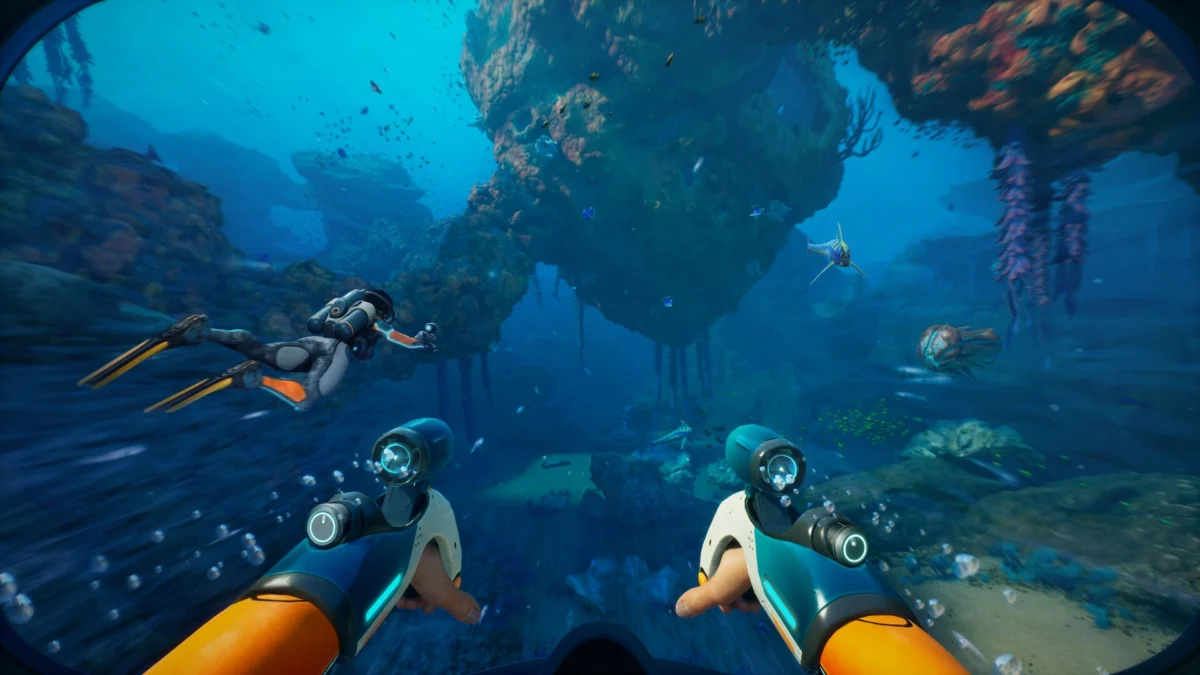
In a resolution that marks the end of one of the most high-profile corporate feuds in recent gaming history, Krafton, Inc.—the South Korean publishing giant behind PUBG: Battlegrounds—has reached a comprehensive settlement with the former leadership team of Subnautica 2 developer, Unknown Worlds Entertainment. The agreement, which involves the payment of a $250 million bonus pool, brings a close to a year of litigation that threatened to derail the development of one of the industry’s most anticipated sequels.
As part of the settlement, Ted Gill, who served as CEO of Unknown Worlds, has formally stepped down. This move concludes a chaotic period for the studio, which saw the executive ousted, legally reinstated by a court order, and now finally separated from the company in what both parties are describing as an amicable departure.
The Core Conflict: A Question of Incentives
The dispute centered on the acquisition of Unknown Worlds by Krafton in 2021. As is standard in such high-value acquisitions, the deal included "earn-out" provisions—performance-based financial incentives designed to reward the studio’s founders and shareholders if the studio met specific revenue and development milestones. Specifically, a $250 million bonus was tied to the successful 2025 Early Access release of Subnautica 2.
The legal friction began when the former shareholders, represented by Fortis Advisors LLC, alleged that Krafton had engaged in "pressure tactics" designed to intentionally delay the game’s development. The plaintiffs argued that by creating internal friction and slowing the project’s momentum, Krafton was attempting to avoid triggering the multi-million dollar payout.
Krafton’s defense, however, was aggressive and multifaceted. The publisher alleged that the studio’s leadership—founders Max McGuire, Charlie Cleveland, and CEO Ted Gill—had threatened to bypass Krafton’s authority entirely. Krafton claimed the team threatened to self-publish Subnautica 2, effectively cutting the parent company out of the marketing, distribution, and revenue streams it had paid to acquire.
Furthermore, Krafton leveled serious accusations against the founders, alleging they had downloaded tens of thousands of sensitive company files and emails shortly before their employment was terminated. The founders vehemently denied these claims, characterizing the accusations as a "smear campaign" and accusing Krafton of shifting its narrative mid-litigation to justify an unlawful seizure of control.
A Chronology of the Legal Battle
To understand the gravity of this settlement, one must look back at the rapid escalation of hostilities over the last twelve months:
- Early 2025: The first public reports of the legal complaint surface, revealing the tension between the developers and their parent company. The industry watches as the "earn-out" dispute moves from private negotiation to the courtroom.
- Mid-2025: Allegations of data theft and breach of fiduciary duty dominate the news cycle. Krafton terminates the employment of the founders, claiming their actions jeopardized the studio’s future.
- Late 2025: The "bombshell" judgment. In a rare move, a court orders Krafton to immediately reinstate Ted Gill as CEO, ruling that his removal was improper under the terms of the acquisition and employment contracts. The court’s decision briefly forces an uneasy peace.
- July 2026: The current resolution. Bloomberg reports that Krafton has agreed to pay the $250 million bonus, not only to the former shareholders but to the broader staff of Unknown Worlds, signaling a desire to stabilize the studio’s culture.
The Financial Settlement and Internal Impact
The most surprising aspect of the settlement is the scope of the payout. Rather than limiting the funds to the initial group of shareholders, the agreement dictates that bonuses will be distributed across the entire staff of Unknown Worlds. Recent recruits and long-term developers alike are set to benefit from a compensation package that insiders suggest is "significantly more" than what was originally negotiated in the 2021 contract.
This move is likely a strategic effort by Krafton to repair its reputation within the developer community. By ensuring that the rank-and-file developers receive a substantial financial windfall, Krafton is signaling that the studio’s value—and the success of Subnautica 2—rests on the talent of its employees, not just the vision of its founders.
The payments are expected to be dispersed in three installments, a structure likely designed to ensure long-term retention of the studio’s core talent during this period of leadership transition.
Official Responses and the Departure of Ted Gill
Ted Gill’s exit from the company he helped steer through this crisis is perhaps the most symbolic aspect of the settlement. Having fought his way back into the CEO chair via a court order, his decision to step down now suggests a realization that the studio’s culture had become untenable under the current ownership structure.
"New leadership is the best way for the studio to move forward," Gill stated in a press release. "We mutually agreed to part ways. We’re all super excited about Subnautica 2 and its tremendous success."
While the statement maintains a professional veneer of optimism, industry analysts note that Gill’s departure is the final piece of the puzzle for Krafton, allowing the publisher to install a new, perhaps more aligned, executive to oversee the final stages of Subnautica 2’s development. Krafton has reportedly begun the search for an external candidate to take the helm, signaling a shift toward a more centralized, corporate-governed management style for the studio.
Broader Implications for the Gaming Industry
This case serves as a cautionary tale for both publishers and independent studios engaged in M&A (mergers and acquisitions) activity. The tension between creative autonomy and corporate oversight is an age-old struggle in the gaming sector, but the Subnautica 2 dispute highlights how volatile these relationships can become when multi-million dollar performance bonuses are at stake.
1. The "Earn-Out" Trap
The primary takeaway for the industry is the danger of vaguely defined earn-out targets. When financial bonuses are tied to release dates, the publisher has a vested interest in control, while the developers have a vested interest in speed. Without clear, objective metrics that account for the unpredictable nature of game development, these contracts often lead to the very litigation they are intended to avoid.
2. Talent Retention in Acquisitions
Krafton’s decision to pay the bonuses to the entire staff—not just the executive team—is a modern approach to mitigating the "brain drain" that often follows a hostile takeover or executive firing. By aligning the interests of the development staff with the success of the game, Krafton is attempting to prevent a mass exodus of talent that would surely have crippled the Subnautica franchise.
3. The Shift to External Leadership
The move to appoint an external CEO for Unknown Worlds suggests that Krafton is moving away from the "founder-led" model of studio management. For independent developers, this shift is often viewed with skepticism, as it can lead to a more rigid, "corporate" culture that may clash with the creative, iterative processes required to make a hit title like Subnautica.
Looking Toward the Future
With the lawsuit settled and the legal shadow lifted, the focus for Unknown Worlds now shifts back to the product itself. Subnautica 2 remains one of the most anticipated titles in the survival-crafting genre. The underwater exploration franchise has built a massive, dedicated following, and the pressure on the team to deliver a sequel that matches the quality of its predecessors has never been higher.
The $250 million payout is, in many ways, an investment in the studio’s stability. By settling the dispute, Krafton has cleared the path for the developers to finish the game without the distraction of legal proceedings or the threat of termination hanging over their heads.
However, the "cultural debt" remains. The internal turmoil caused by the firing of the founders and the subsequent legal battle has undoubtedly left its mark on the studio’s culture. Whether the next CEO can foster a sense of creative freedom while meeting the rigorous expectations of a major publisher like Krafton remains the biggest question.
For now, the legal skirmish is over. The funds are being distributed, the former leadership is moving on, and the team at Unknown Worlds can return to the work they do best: building the alien oceans that have captivated millions of players worldwide. The industry will be watching closely to see if the final product of Subnautica 2 justifies the immense financial and personal costs that were paid to bring it to life.

