

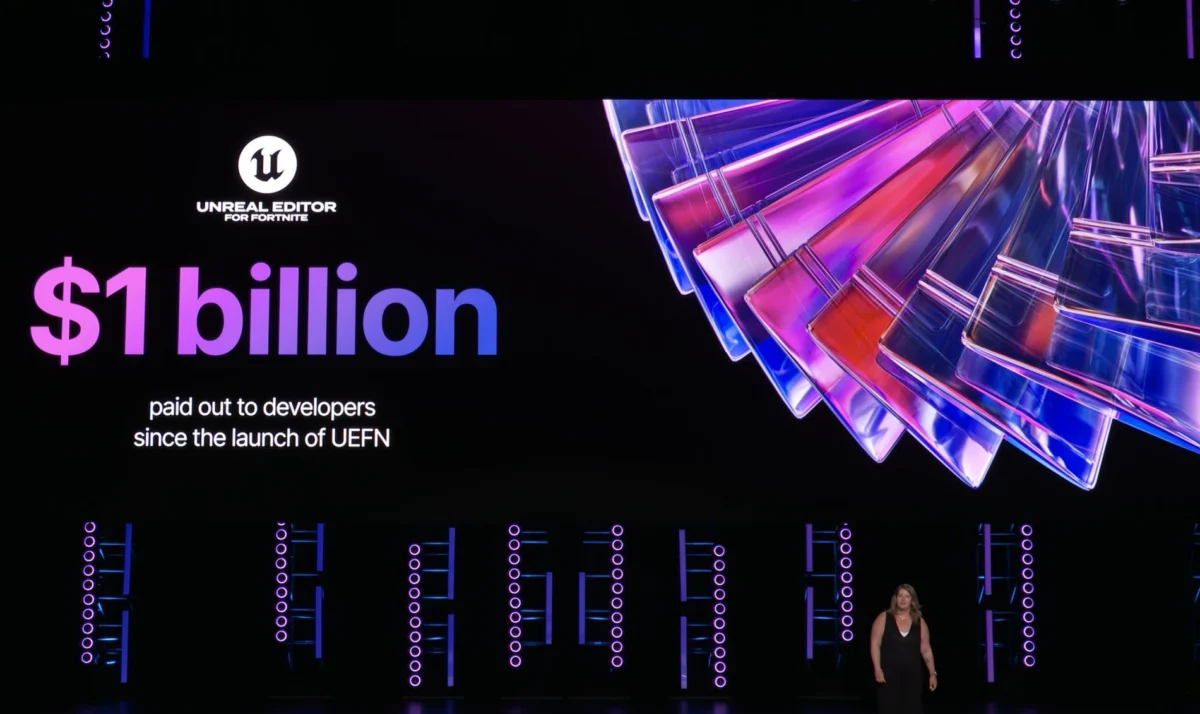
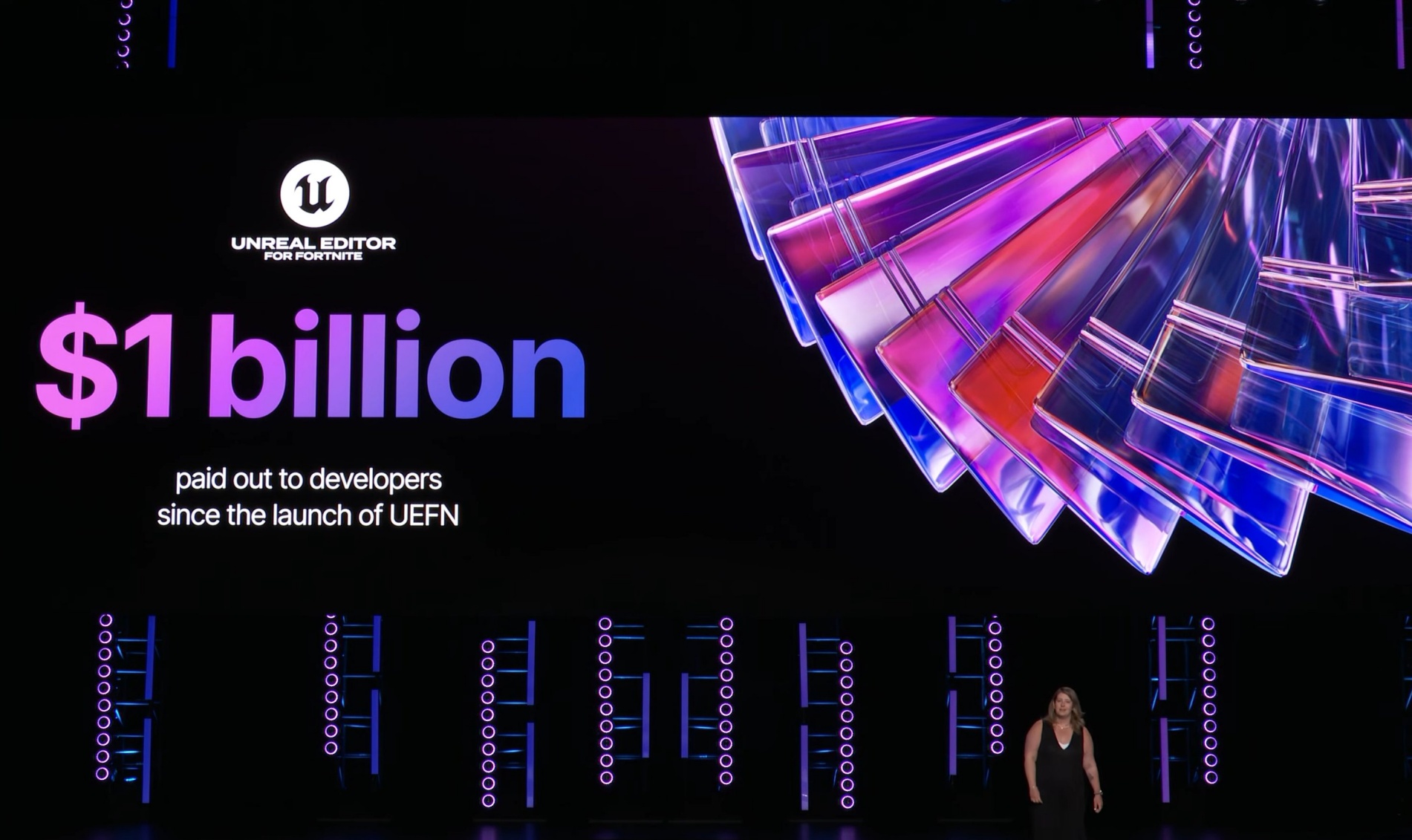
Three years after the debut of the Unreal Editor for Fortnite (UEFN), the landscape of interactive digital entertainment has fundamentally shifted. At the recent Unreal Fest in Chicago, Epic Games Director of Fortnite Developer Relations, Hannah Lowry, announced a watershed moment for the platform: creators building within the Fortnite ecosystem have now earned a collective $1 billion since the program’s inception in 2023. This milestone solidifies Fortnite’s transition from a singular battle royale phenomenon into a sprawling, creator-led metaverse, positioning Epic Games as the primary challenger to the established dominance of Roblox.
The Evolution of the Creator Ecosystem: A Chronology
To understand the magnitude of this $1 billion figure, one must look at the rapid trajectory of Epic Games’ strategic pivot.
2023: The Foundation. When Epic Games launched UEFN, the industry was skeptical. The company, already known for the industry-standard Unreal Engine, sought to give creators the same professional-grade tools used to build AAA games. By offering a 40% revenue share on "Island" engagement, Epic incentivized developers to move beyond simple maps and into complex, interactive experiences.
2024: The Acceleration. Within just one year of the tool’s release, the impact was immediate. By March 2024, Epic Games reported that it had paid out $320 million to creators. This period marked the professionalization of the ecosystem; individual creators began evolving into full-fledged development studios. Figures like Andre "Typical Gamer" Rebelo, who leveraged his YouTube success to launch the professional studio JOGO, exemplified the transition from content creator to game developer.
2025: Expanding the Revenue Toolkit. As the platform matured, Epic realized that engagement-based payouts were only one piece of the puzzle. The company began integrating in-game item sales, allowing developers to monetize their Islands more directly. This move was a tactical response to the limitations of the original payout model, which favored only the largest, most viral maps.
2026: The Billion-Dollar Benchmark. The announcement at Unreal Fest signals that the ecosystem is no longer experimental—it is a self-sustaining engine of digital commerce. The $1 billion threshold serves as a testament to the fact that third-party developers now view Fortnite not just as a game, but as a primary platform for business.
Supporting Data: By the Numbers
The metrics behind the $1 billion milestone reveal a platform in a state of high-velocity growth. Currently, Fortnite serves more than 75 million monthly active users, a massive audience that serves as the lifeblood for the thousands of creator-built Islands.
The Shift in Monetization
Perhaps the most telling data point shared by Hannah Lowry at Unreal Fest is the performance of the newer monetization models. For approximately 3,000 active Islands, in-game transactions have already surpassed the revenue generated by the traditional engagement-based payout model. This suggests a healthy maturation of the platform: creators are finding that they can build niche, highly-engaged communities and monetize them through custom items, rather than relying solely on the general pool of player engagement hours.
Comparing the Titans: Fortnite vs. Roblox
While the $1 billion figure is impressive, context is vital. Industry analysts note that Roblox remains a formidable juggernaut. In 2025 alone, Roblox paid out over $1 billion to its creators—a figure that equals Epic’s three-year total in just twelve months.
However, the nature of these two platforms differs significantly. In Fortnite, the core "Battle Royale" experience still commands a massive portion of total user playtime. In contrast, the vast majority of time spent on Roblox is dedicated to user-generated experiences. Therefore, Epic’s $1 billion achievement is arguably more "efficient," as it was built alongside an existing, dominant first-party game, rather than being the exclusive engine of the platform.
Official Responses and Strategic Vision
Hannah Lowry’s address at Unreal Fest was as much a celebration as it was a roadmap. Acknowledging the "day one" creators who helped debug the initial tools, Lowry emphasized the symbiotic relationship between Epic and its community.
"Your feedback has really helped shape the tools, and your creativity has shifted how more than 75 million monthly active users experience Fortnite," Lowry noted. This sentiment underscores Epic’s strategy: treating their creator base as partners rather than mere content providers. By iteratively updating UEFN based on creator feedback, Epic has successfully lowered the barrier to entry for high-fidelity game development.
The company’s commitment to this model is further evidenced by its aggressive revenue splits. By maintaining a 40% payout structure, Epic has managed to attract talent from traditional game development backgrounds, ensuring that the quality of "Islands" continues to climb.
Implications for the Future of Gaming
The ascent of the Fortnite creator economy has profound implications for the gaming industry at large.
1. The Professionalization of UEFN
We are witnessing the death of the "hobbyist" era in UGC (User Generated Content). As millions of dollars flow into the pockets of studios like JOGO, the standard of quality for a "Fortnite Island" has reached a point where it rivals standalone indie titles on Steam or consoles. This professionalization forces Epic to continue upgrading the engine, potentially leading to a cycle where the line between "game" and "platform" disappears entirely.
2. The Battle for the Metaverse
Epic Games and Roblox are currently engaged in a high-stakes competition for the next generation of gamers. While Roblox has the lead in volume, Epic has the lead in visual fidelity and engine technology. Epic’s strategy of allowing in-game item sales with favorable revenue splits through 2027 is a clear attempt to keep developers within their orbit, even as broader economic challenges—including layoffs in the tech sector—impact the industry at large.
3. Sustainability in the Creator Economy
The fact that 3,000 islands are seeing higher revenue from direct item sales than from engagement payouts is a crucial indicator of long-term sustainability. It suggests that smaller, highly-engaged communities are becoming profitable. This "long-tail" effect is essential for any platform; it ensures that the ecosystem is not just a "winner-take-all" environment where only the top ten most popular maps survive.
Conclusion: A New Frontier
The $1 billion milestone is more than just a marketing headline for Epic Games; it is a validation of a new business model for the digital age. By opening the doors of Unreal Engine to the masses, Epic has effectively democratized game development on a global scale.
As the platform moves forward, the focus will likely shift toward further refining discovery, improving monetization tools for smaller developers, and integrating even more complex mechanics into the UEFN toolset. For the millions of users who inhabit the "Islands" of Fortnite, the game has evolved. It is no longer just a place to fight for a Victory Royale; it is an infinite, evolving library of experiences, built by the community, for the community, and—most importantly—profitable for those who dare to build.
For those interested in joining the ranks of these creators, resources remain available through the official Fortnite Creator Program, which continues to serve as the gateway for the next generation of digital architects. As the gap between the professional studio and the bedroom coder continues to shrink, one thing is certain: the next billion dollars will likely be generated even faster than the first.

