

For many gamers, the Yakuza—or Like A Dragon—franchise represents a monumental mountain of narrative density. With an overarching saga spanning decades, dozens of interconnected characters, and a sprawling, labyrinthine plot, the barrier to entry for newcomers can feel insurmountable. The sheer commitment required to catch up on the life of Kazuma Kiryu and the subsequent evolution of the series is enough to deter even the most dedicated completionist.
Enter Stranger Than Heaven, the upcoming standalone prequel that promises to strip away the baggage of the modern era while retaining the soul of the franchise. Set in the early 20th century, this title offers a clean slate for both veterans and series neophytes. I recently went hands-on with the game at Summer Game Fest, and if my initial time with it is any indication, Sega’s latest experiment is poised to redefine how we approach the iconic criminal underworld of Japan.
Main Facts: A Bold New Era for a Storied Franchise
Stranger Than Heaven serves as an origin story for Makoto Daito, long before he orchestrates the rise of the Tojo Clan. Unlike the mainline titles that keep players tethered to the neon-soaked streets of modern Kamurocho or Isezaki Ijincho, this prequel transports players to a volatile, pre-war Japan.
The game is built upon three distinct pillars: "Combat," "Adventuring," and "Showbiz." My demo focused almost exclusively on the combat system, which introduces a radical departure from the traditional button-mashing or turn-based systems found in the franchise’s history. Instead of pre-set combos, the game utilizes an independent limb-control system, tasking players with managing Makoto’s left and right sides separately. It is a tactical, high-stakes approach that transforms every street brawl into a frantic dance of survival.
Chronological Evolution: Three Eras of Violence
The demo provided a vertical slice of the game, divided into three chronological segments that showcase how the combat mechanics mature alongside the protagonist’s journey.
1915: The Streets of Kokura, Fukuoka
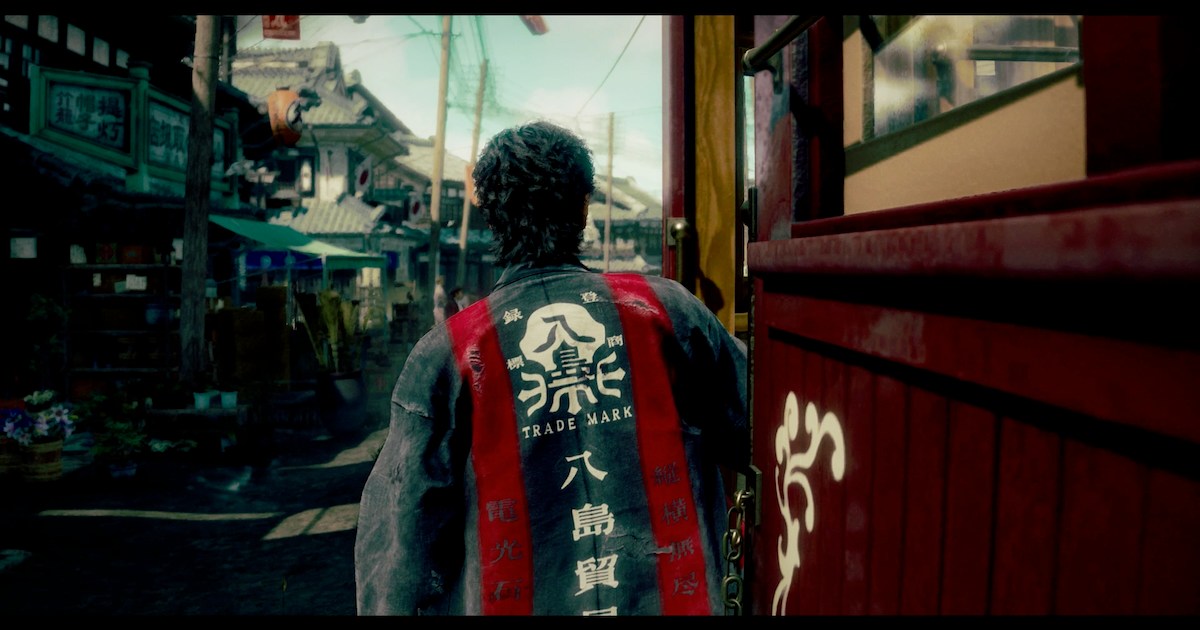
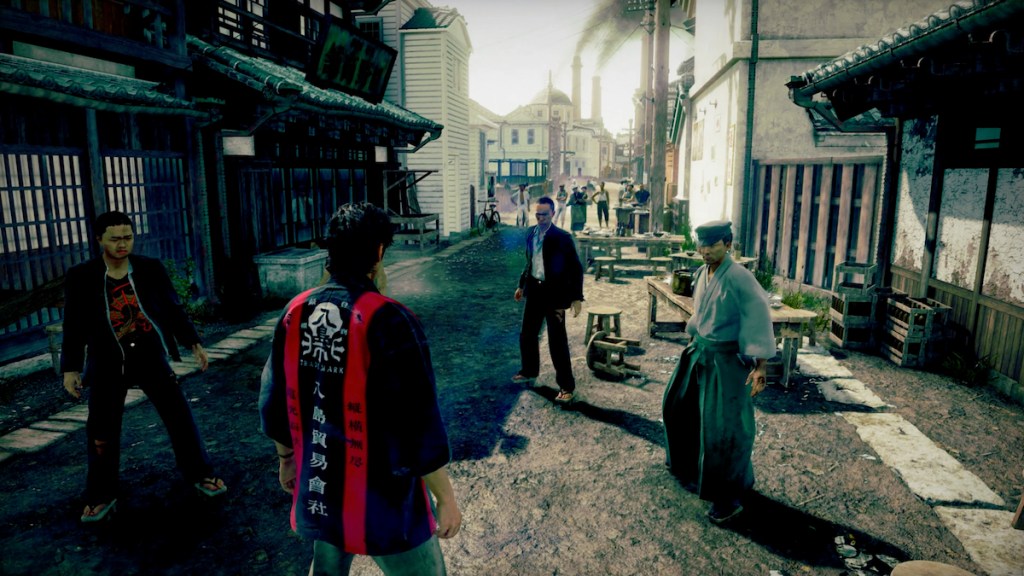
The experience began in the muddy, bustling streets of 1915 Kokura. Here, we meet a younger, raw version of Makoto. The environment is dense with period-accurate architecture, providing a stark contrast to the modern skyscrapers of later Like A Dragon titles. The combat was straightforward but punishing. As Makoto defends a local citizen from street toughs, the game introduces the dual-input scheme.
The left bumper and trigger govern light and heavy strikes for the left hand, while the right bumper and trigger do the same for the right. This allows for manual control over every punch, block, and grapple. Despite being outnumbered five-to-one, the mechanics felt intuitive, rewarding rhythmic, deliberate strikes rather than wild flailing.
1929: The Frozen Streets of Kure
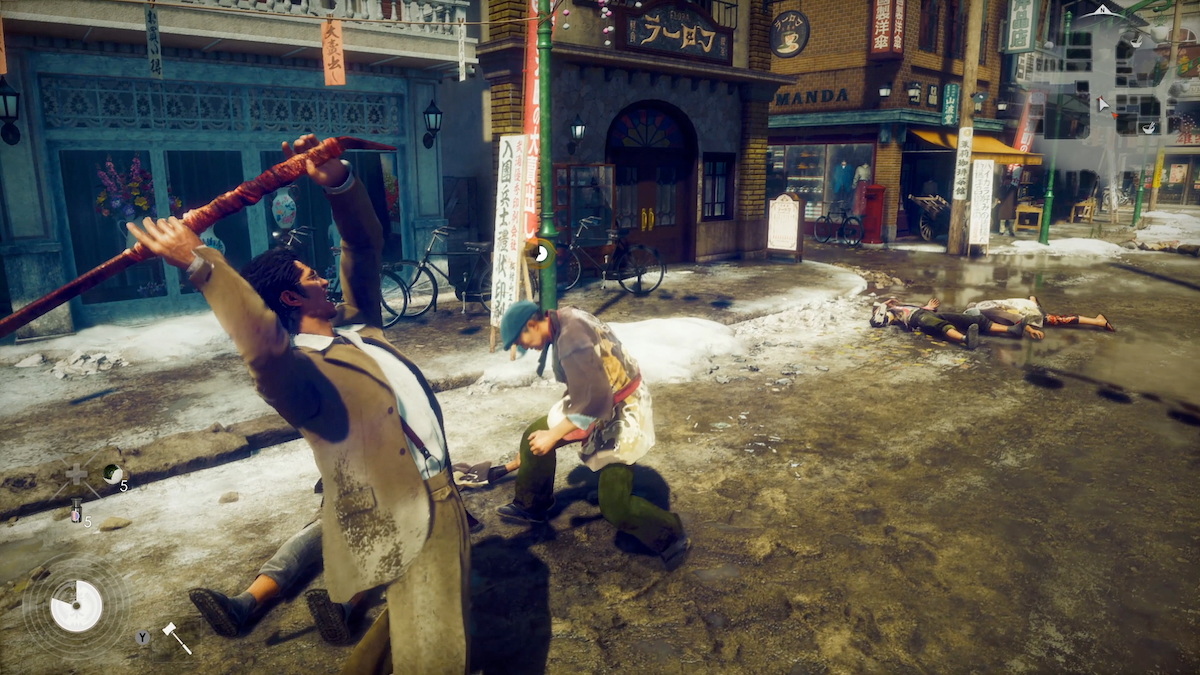
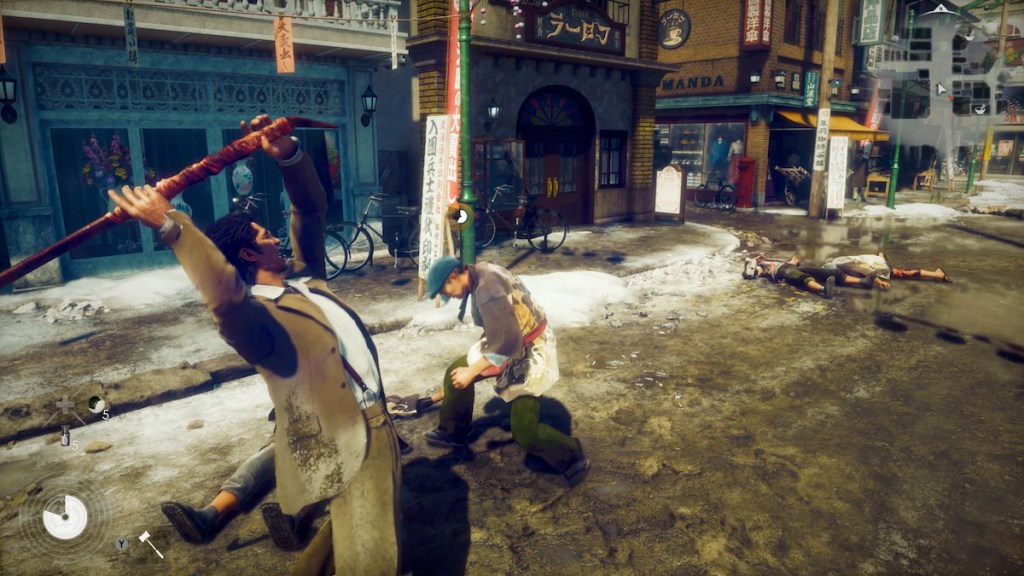
Fast-forwarding fourteen years to 1929, the atmosphere shifts to the snow-dusted, industrial landscape of Kure, Hiroshima. The difficulty spike was immediate. The enemies here were more organized, utilizing superior positioning and numbers to crowd the player.
During this encounter, I had access to a crowbar. Wielding a weapon significantly changes the physics and tempo of the combat. Makoto becomes slower and more deliberate, emphasizing the weight of the object in hand. The stamina management system became the focal point here; blocking indiscriminately led to rapid fatigue, forcing me to learn directional blocking—holding a bumper while timing the defense to the incoming strike’s angle.
1943: The Tense Atmosphere of Minami, Osaka
The final segment of the demo brought us to 1943 Osaka. The air felt heavy with the looming shadow of the Second World War. Facing off against a sword-wielding yakuza enforcer, the game shifted into a high-speed duel. This encounter was a masterclass in risk-reward mechanics. Parrying became the primary defensive tool, though, as a developer noted, some attacks are unblockable. Success required a blend of patience, precise parries, and strategic dodging, forcing me to utilize my limited healing items with surgical precision.
Supporting Data: The Mechanics of Combat
The combat system in Stranger Than Heaven is more than a mere gimmick; it is a structural commitment to realism. By decoupling the limbs, Sega has essentially created a "physics-lite" brawler that demands high levels of player engagement.
- Independent Limb Mapping: Each arm has distinct light/heavy triggers, with dual-trigger activation for grapples and holds.
- Directional Defense: Blocking is no longer a "hold and hope" mechanic. Players must align their block with the incoming force to preserve their stamina bar.
- Weapon Variability: With a planned twelve unique weapon types at launch, the game intends to differentiate combat styles significantly. From the reach of a katana to the blunt, momentum-heavy impact of a crowbar, each tool changes the player’s movement profile.
- Stamina Economy: The stamina bar acts as the game’s primary governor. It dictates the limit of aggressive maneuvers, forcing the player to pace their offense to avoid being left vulnerable.
Official Responses: A Different Kind of Yakuza
Sega has been careful to frame Stranger Than Heaven not as a replacement for the mainline series, but as an expansion of the Like A Dragon universe’s historical depth.
"We wanted to challenge the player’s muscle memory," a spokesperson mentioned during the event. "The Yakuza series has always been about the weight of the protagonist’s actions. By putting control of every movement into the player’s hands—literally—we wanted to emphasize the visceral nature of fighting for one’s life in an era before modern weaponry and tactical armor."
Regarding the "Showbiz" pillar, which was largely absent from the demo, the developers hinted at a management simulation component that allows players to take on the role of a stage manager. This suggests that the game will balance the grit of the underworld with the high-stakes drama of the entertainment industry, staying true to the series’ tradition of quirky, multifaceted gameplay.
Implications: A New Gateway to the Series
For the uninitiated, the implication of Stranger Than Heaven cannot be overstated. By setting the game in 1915, Sega has effectively bypassed the need for 30 years of narrative homework. There are no younger versions of legacy characters to confuse newcomers; the story is self-contained, focusing on the formation of the underworld hierarchies that will eventually shape the series we know today.
Furthermore, the game’s aesthetic direction suggests a shift toward historical drama. The transition from the muddy streets of Kokura to the sun-kissed, tension-filled Osaka of 1943 demonstrates an attention to period detail that rivals the most high-budget historical films.
If the full game can maintain the quality of the combat encounters I experienced, Stranger Than Heaven will likely serve as the perfect entry point for a new generation of players. It manages to feel like a Yakuza game in spirit—the same brawling intensity, the same high-stakes confrontations, and the same focus on the intersection of crime and culture—without the overwhelming narrative barrier.
As we look toward the launch on January 15, 2027, the excitement is palpable. Stranger Than Heaven isn’t just another spin-off; it is a potential reinvention of a legendary franchise, proving that even after decades of storytelling, there are still new, untold chapters in the history of the underworld. For those who have been waiting for the right time to dive into the world of Like A Dragon, the wait is almost over.

